
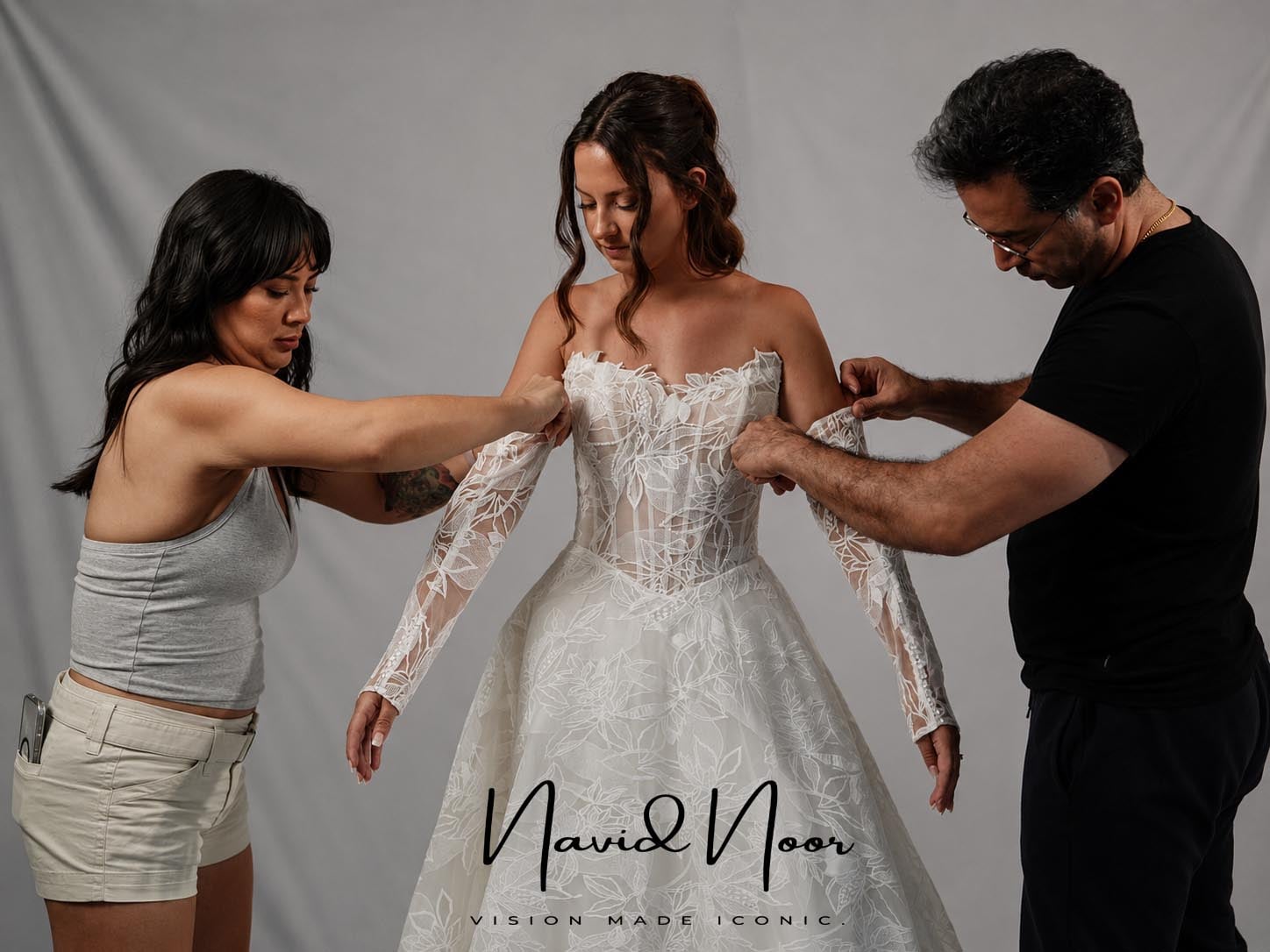
Beyond the Rack: Wedding Dress Custom Design Guide 2026
A wedding dress has always carried more meaning than fabric alone. It holds memory before the memory has happened. It becomes the shape of a bride’s entrance, the atmosphere of a room, the photograph her family will return to for decades. In 2026, bridal fashion is moving with unusual confidence toward one essential idea: the most unforgettable gown is not the one everyone recognizes. It is the one that could only belong to her.
That is the heart of this wedding dress custom design guide. Custom bridal design is not simply a more luxurious version of shopping. It is a different language entirely. Instead of choosing from a rack and adapting the body to the dress, the atelier begins with the bride herself: her posture, her proportions, her ceremony setting, her cultural references, her emotional vision, and the way she wants to feel when she steps into the aisle.
A custom wedding gown is a living piece of wearable art. It begins as a conversation, becomes a sketch, takes form through muslin fittings, and eventually emerges in silk, lace, beading, structure, and movement. For a bride who wants more than a beautiful dress, couture offers something deeper: authorship.
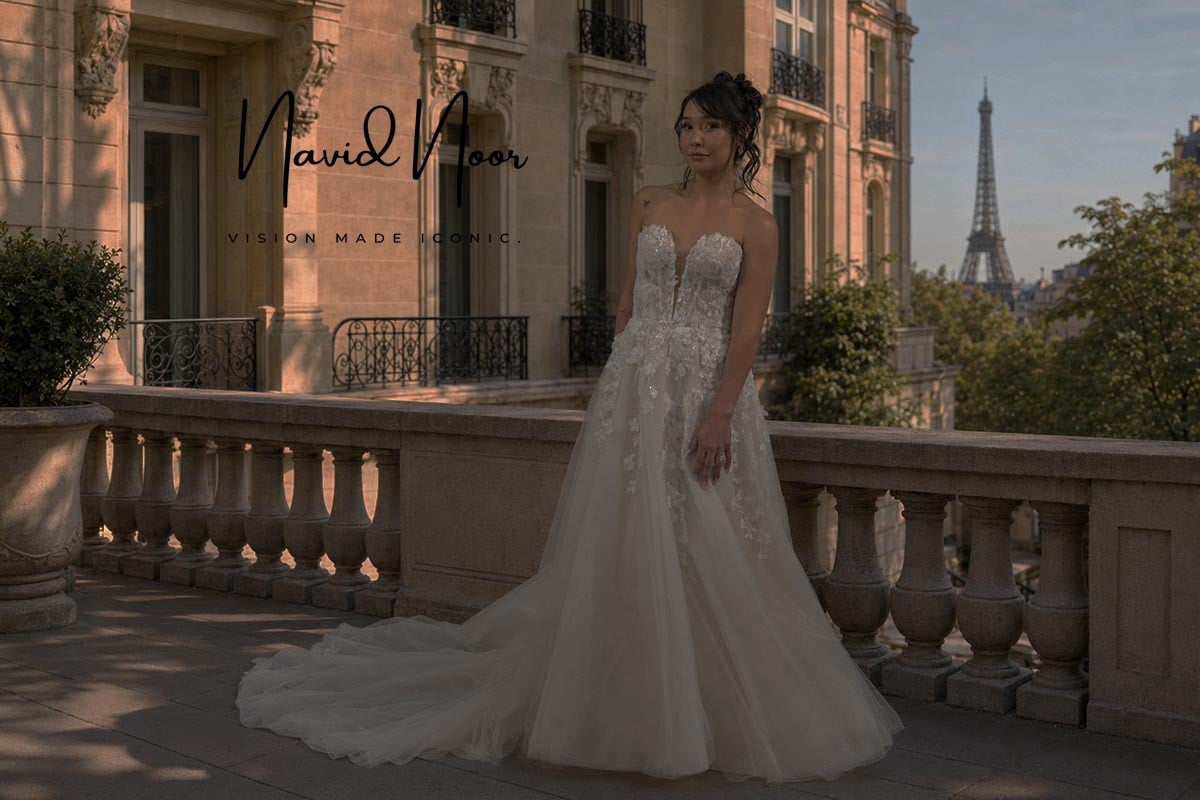
At Bridal and Tuxedo Galleria, this philosophy is embodied through Navid Noor Couture, where the custom wedding dress process is guided by firsthand design expertise, atelier craftsmanship, and the trained eye of Head Designer Navid Noor. His work is not about excess for the sake of spectacle. It is about precision, proportion, intimacy, and a gown that feels inevitable the moment the bride sees herself in it.
The Shift Toward Bespoke Bridal Luxury
The modern bride is no longer content with being styled into a pre-existing idea of bridal beauty. She is more visually literate, more intentional, and more aware of how fashion communicates identity. She has seen runway references, archival couture, editorial bridal photography, destination weddings, minimalist ceremonies, cathedral veils, sculptural basques, detachable sleeves, corseted bodices, and gowns that move between ceremony and reception with cinematic ease.
This has changed the bridal market. Off-the-rack gowns still serve an important purpose, especially for brides who find a silhouette that already feels close to perfect. Yet for many discerning brides, mass-produced options can feel restrictive. Standard sizing rarely honors the full complexity of a real body. A gown may fit at the bust but not the waist, skim the hip but pull through the bodice, or require extensive alterations that compromise the original line. The bride may love a neckline from one gown, a sleeve from another, a train from a third, and a fabric that is not available in any of them.
Bespoke bridal luxury answers that tension. It replaces compromise with composition.
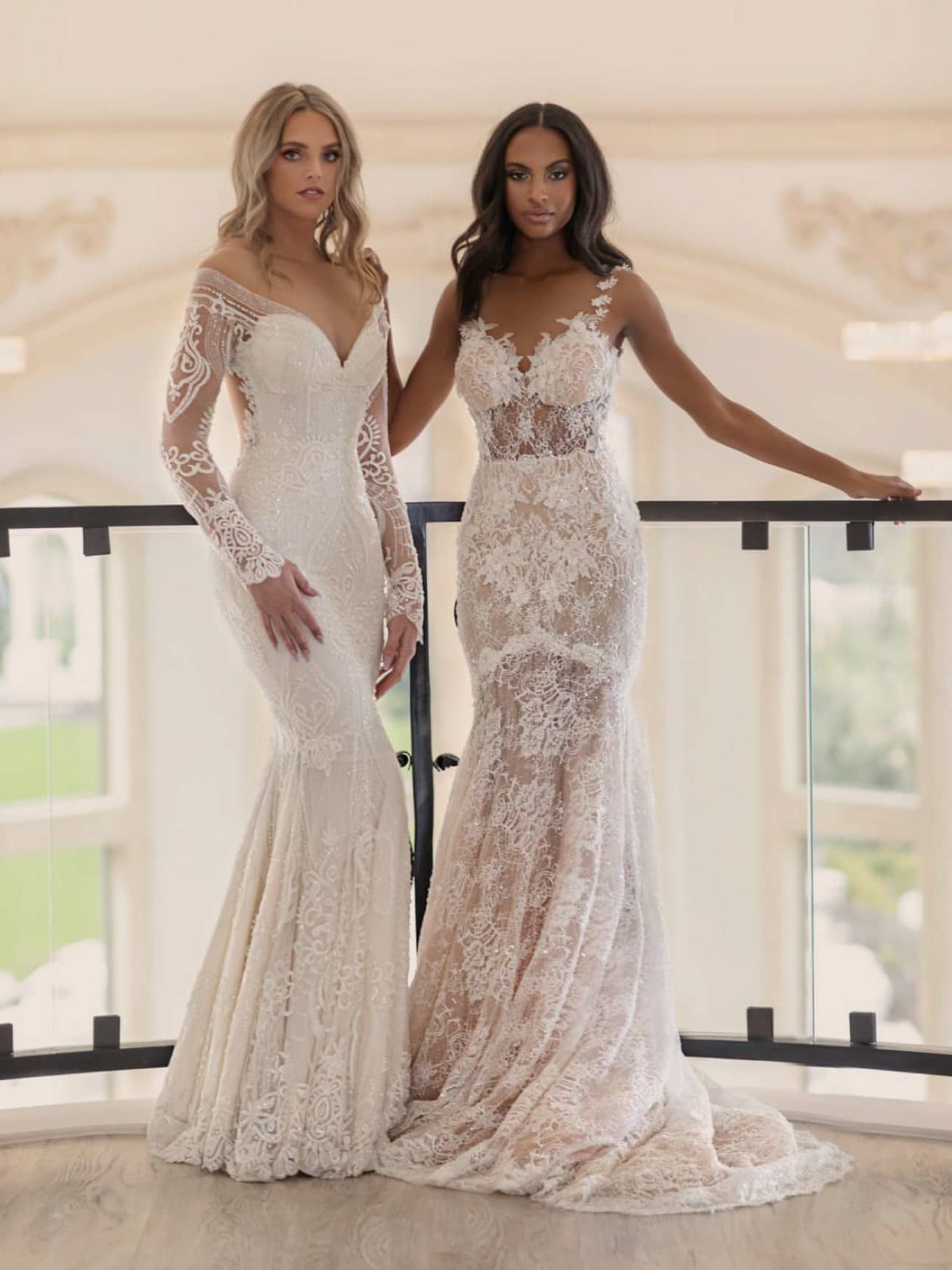
A custom wedding dress allows the bride to participate in the creation of her own visual language. The neckline can be softened to flatter the collarbone. The waistline can be placed precisely where the body naturally narrows. The skirt can be engineered to float, sculpt, or command. Lace can be placed according to the bride’s proportions rather than repeated according to factory efficiency. The gown can carry subtle references: a mother’s heirloom lace, a favorite architectural curve, a cultural textile memory, or a floral motif that echoes the wedding venue.
In the 2026 bridal landscape, individuality has become the true marker of luxury. The most sophisticated brides are not asking, “What is trending?” They are asking, “What feels like me, but elevated beyond anything I could find ready-made?”
That is where couture becomes powerful. It does not erase trend awareness. It refines it. A bride may be inspired by sculptural basque waists, liquid satin, high-neck lace, corsetry, detachable overskirts, or dramatic sleeves, but a custom gown transforms those references into something personal, balanced, and enduring.
The Artistry Behind Navid Noor Couture
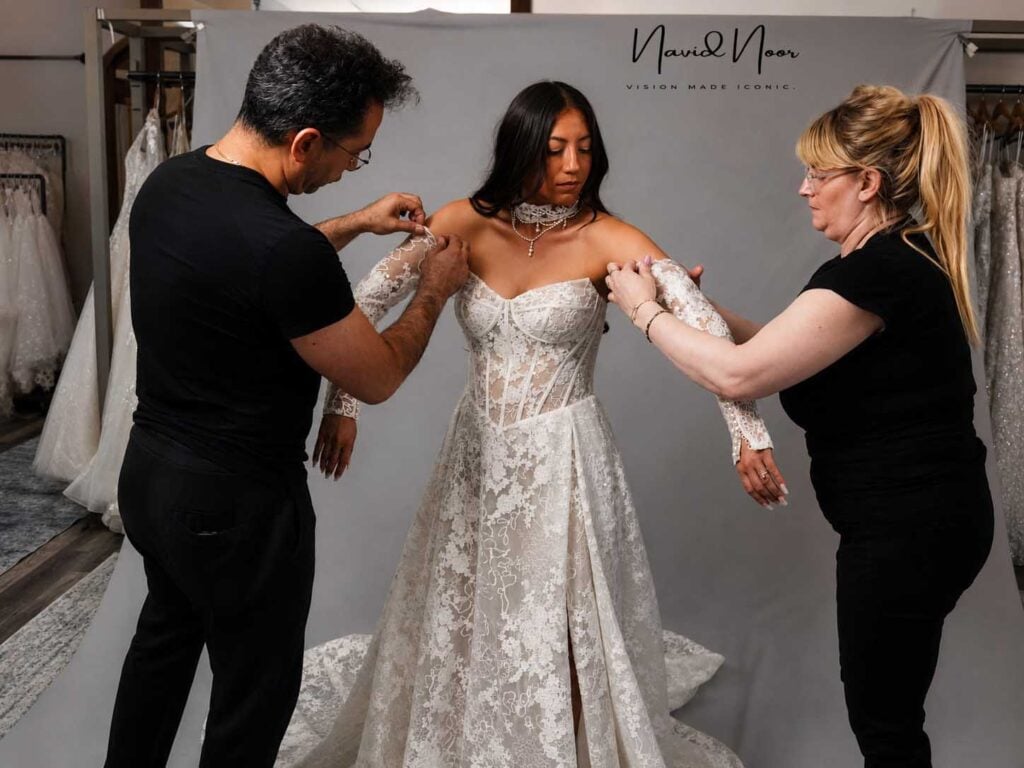
Inside a true bridal atelier, design is not rushed into production. It is studied. It is refined through proportion, fabric behavior, body architecture, and the emotional presence of the bride. Navid Noor Couture represents this atelier sensibility within the world of Bridal and Tuxedo Galleria: intimate, exacting, and deeply focused on the woman who will wear the gown.
The word “couture” is often used casually in bridal marketing, but true couture thinking requires more than embellishment. It requires construction knowledge. It requires understanding how a grainline affects drape, how corsetry changes posture, how lace placement can elongate the torso, how a skirt’s volume must be balanced against the bride’s height, and how a gown must perform under real wedding conditions: standing, walking, turning, sitting, embracing, dancing, and being photographed from every angle.
Navid Noor Couture approaches bridal design as both architecture and emotion. The gown must hold its shape, but it must also hold the bride’s story. It must be technically controlled yet visually effortless. It must feel secure without feeling heavy, dramatic without feeling theatrical, and personal without becoming overdesigned.
This is why the atelier experience matters. A bride is not handed a dress and asked to imagine what it could become after alterations. She is invited into a creative process where the gown is built around her from the beginning.
The Navid Noor Experience as Head Designer
Working with Navid Noor as Head Designer gives the custom bridal process a level of intimacy and authority that cannot be replicated by a standard retail appointment. His role is not distant or symbolic. His design oversight shapes the gown at the level where couture truly lives: the pattern, the silhouette, the balance of structure and softness, the finishing, and the final emotional impact.
Navid’s approach begins with listening. A bride may arrive with a folder of inspiration images, a few words, or only a feeling: timeless, regal, romantic, modern, modest, sensual, dramatic, soft. The role of a master designer is to translate that feeling into form. This requires more than taste. It requires the ability to see what a bride may not yet know how to describe.
A neckline becomes a decision about proportion. A sleeve becomes a decision about movement. A train becomes a decision about ceremony scale. A bodice becomes a decision about posture, confidence, and comfort. Under Navid’s direction, these elements are not treated as isolated design features. They are composed into one cohesive bridal identity.
His tailoring philosophy centers on the belief that a gown should honor the bride’s natural architecture rather than force her into a template. That may mean refining a waistline by a fraction of an inch, adjusting the slope of a shoulder seam, changing the placement of appliques to create verticality, or engineering inner corsetry so the bride feels supported without looking constrained.
This direct collaboration is one of the most meaningful differences between custom bridal design and conventional alterations. In a commercial alteration process, the goal is usually to make an existing gown fit better. In couture, the goal is to make the gown exist because of the bride.
The experience is also deeply reassuring. Many brides fear that custom design will feel overwhelming because there are so many choices. A strong head designer removes that pressure. Navid guides the process with a trained editorial eye, helping the bride distinguish between inspiration and excess, between what is beautiful in a photograph and what will be extraordinary on her body, in her venue, and in her wedding story.
Call Now

The Bespoke Bridal Journey from Sketch to Aisle
The bespoke bridal journey is one of the most romantic processes in fashion because it allows a gown to evolve slowly, deliberately, and personally. Unlike mass-market shopping, where the bride reacts to finished garments, custom design invites her into the making.
The journey begins with imagination and ends with presence. Between those two points is a sequence of careful atelier stages: concept development, fabric curation, sketching, pattern work, muslin fitting, construction, embellishment, refinement, and final dressing.
Each stage exists for a reason. Couture cannot be rushed because every decision affects the next. The fabric affects the silhouette. The silhouette affects the pattern. The pattern affects the fitting. The fitting affects the structure. The structure affects how the bride moves and how the gown photographs. A custom gown is not assembled; it is composed.
For the bride, this process becomes part of the wedding memory itself. She remembers the first sketch. The moment a fabric was placed against her skin. The first muslin fitting when the idea became visible. The quiet refinement of each appointment. The final fitting when everything that once existed only as language becomes a gown.
Initial Design Consultation and Fabric Curation
The first design consultation is where the custom wedding dress process begins to breathe. This is not merely a discussion about style preferences. It is an editorial discovery session where the bride’s references, body language, wedding setting, and emotional goals are translated into a design direction.
A bride may bring mood boards, runway images, family photographs, venue details, floral concepts, or even a single phrase. She may want “old-world romance,” “clean architectural drama,” “soft garden femininity,” or “a gown that feels like couture but not costume.” The designer’s task is to refine those instincts into silhouette, proportion, textile, and construction.
This is where fabric curation becomes essential. Luxury bridal fabrics are not interchangeable. Silk gazar offers sculptural volume with a refined, almost architectural hand. French Chantilly lace creates delicate transparency and heirloom softness. Italian crepe gives modern fluidity, quiet weight, and elegant restraint. Organza can create air and luminosity. Mikado can hold shape with regal polish. Tulle can soften a silhouette or create a layered illusion.
In a couture atelier, fabric is chosen not only for beauty but for behavior. How does it fall? How does it hold a seam? Does it support structure or require internal reinforcement? Will it photograph cleanly in natural light? Does it match the formality of the venue? Does it feel comfortable against the body for hours?
During this stage, Navid Noor’s role as Head Designer is especially important. Brides often respond emotionally to fabric, but a designer understands how that fabric will live as a completed gown. A lace that looks exquisite on a table may feel too busy across the bodice. A satin that photographs beautifully may not suit the bride’s desired movement. A dramatic overskirt may require a specific base silhouette to avoid visual heaviness.
The consultation transforms inspiration into a refined design blueprint. Sketches begin to define the gown’s architecture: neckline, waistline, bodice structure, sleeve concept, skirt volume, train length, veil pairing, and possible reception modifications. The bride leaves not with a generic promise, but with the beginning of a gown that is already becoming hers.
Fine Tailoring and Hand-Stitched Details
Once the muslin is perfected and the pattern is finalized, the gown enters the production phase inside the atelier. This is where craftsmanship becomes visible, but also where the most important work often remains hidden beneath the surface.
Fine tailoring begins with disciplined cutting. Luxury fabric must be handled according to its grainlines, weight, and natural movement. A gown cut slightly off-grain can twist, pull, or lose its intended drape. The structure must be planned before the surface decoration begins. Inner corsetry, boning, waist stays, bust support, lining, and seam finishing all contribute to how the gown feels on the body.
This internal architecture separates true couture from commercial alteration. A beautiful gown must not only look exceptional while the bride stands still. It must support her through the ceremony, portraits, dinner, and dancing. It must allow breath, movement, and confidence.
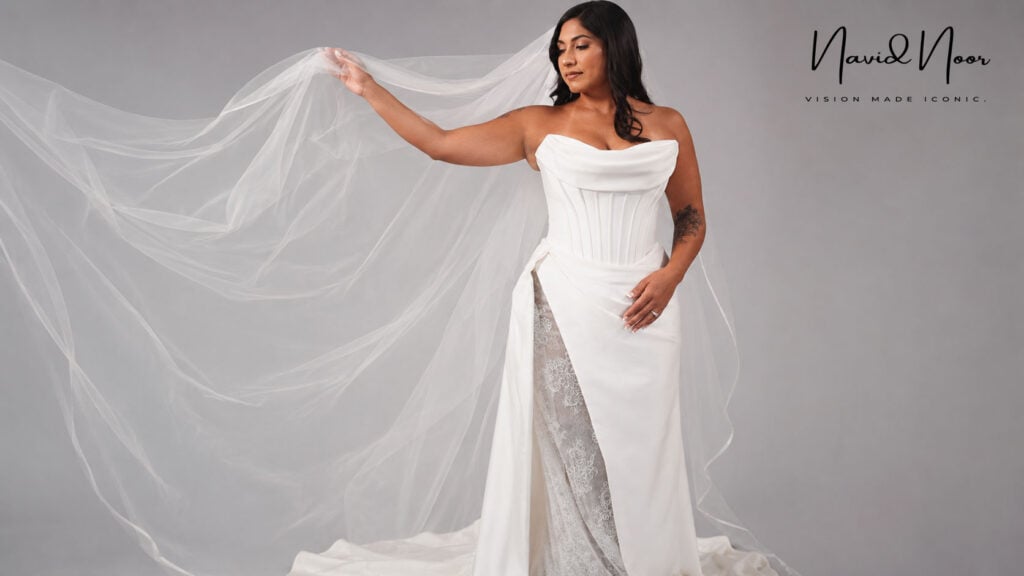
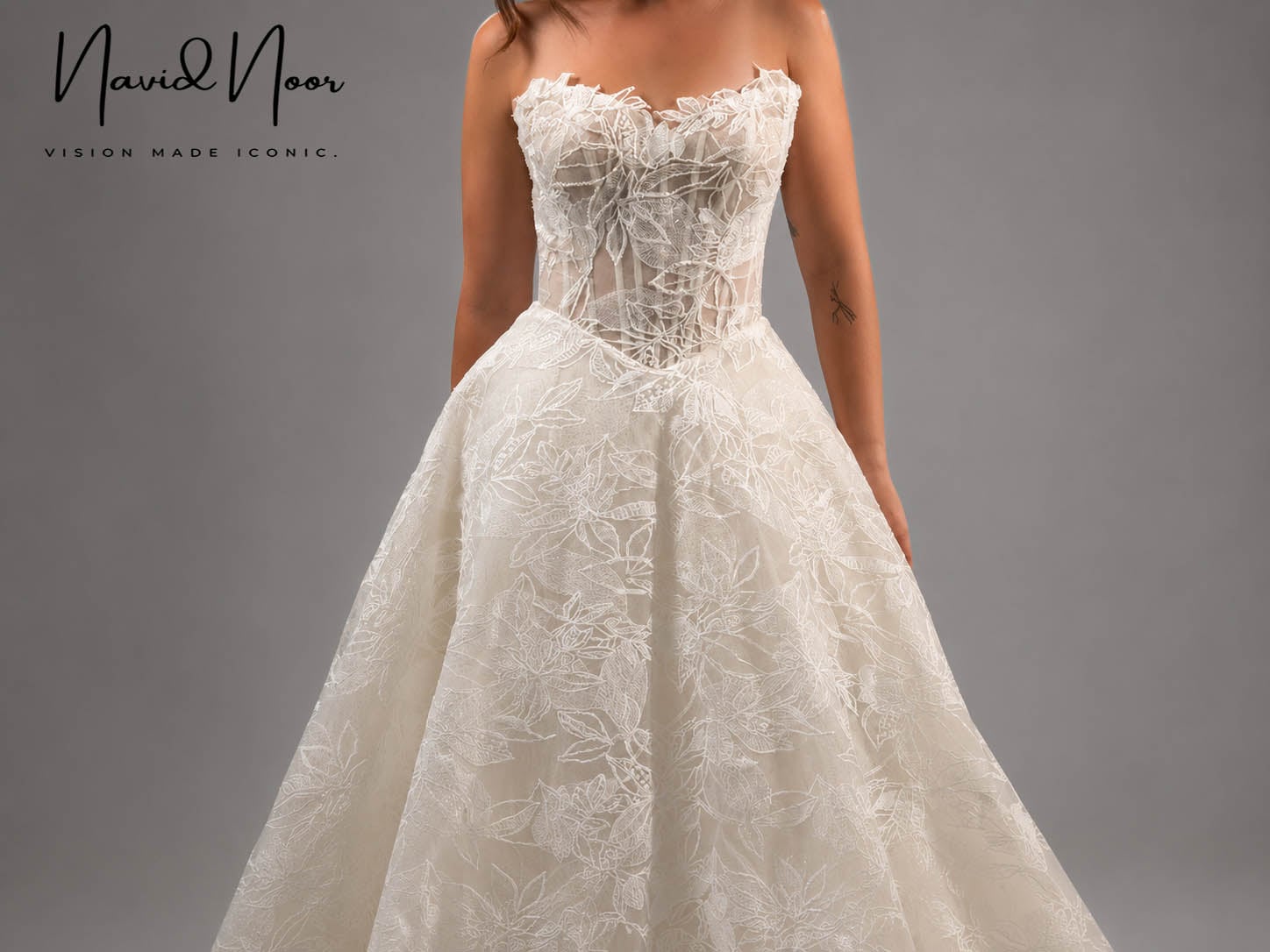
Then come the details that make the gown emotionally unforgettable. Lace appliques may be hand-placed to follow the bride’s natural lines rather than repeated mechanically. Beadwork may be applied to catch light with subtle dimension. Embroidery may be positioned to frame the waist, soften the shoulder, or create movement across the skirt. Buttons, loops, hems, and finishes are treated not as afterthoughts but as part of the gown’s total language.
Hand-stitched embellishments carry a different soul than mass-applied decoration. They allow for control, softness, and placement that respects the body. The atelier can create density in one area and airiness in another. It can make lace appear to grow organically from the bodice into the skirt. It can build shimmer that feels like atmosphere rather than sparkle.
Under Navid Noor’s design direction, these finishing choices remain disciplined. Couture is not about adding everything possible. It is about knowing what belongs. The final gown should feel inevitable, as though every stitch has been placed with intention.
Timeline and Budgeting for a 2026 Custom Gown
A custom gown requires time because it is created through design, development, fitting, construction, and refinement. For brides planning 2026 and 2027 weddings, the most important advice is to begin early enough to enjoy the process rather than compress it.
The table below compares the couture/custom process with a more conventional mass-market purchase and alteration path.
| Planning Factor | Custom Couture Wedding Dress | Mass-Market Gown with Alterations |
|---|---|---|
| Typical Timeline | Often 6 to 9 months for design, fabric sourcing, fittings, construction, and final refinements | Often 3 to 6 months depending on order time, shipping, and alteration availability |
| Design Control | Full creative direction over silhouette, neckline, sleeves, fabric, embellishment, train, and structural details | Limited to available designer styles, sizes, and alteration possibilities |
| Fit Philosophy | Pattern is developed around the bride’s proportions from the beginning | Existing gown is adjusted to fit the bride as closely as possible |
| Fabric Selection | Curated luxury textiles such as silk gazar, French Chantilly lace, Italian crepe, Mikado, organza, or custom embellishments | Fabric is predetermined by the manufacturer and cannot usually be changed |
| Fitting Process | Includes design consultation, muslin/toile fitting, construction fittings, and final couture refinement | Usually focuses on hemming, taking in seams, bustle, strap adjustments, and minor structural changes |
| Investment Factors | Designer expertise, pattern development, atelier labor, premium textiles, handwork, fittings, and one-of-one design | Retail gown price, shipping or rush fees, and separate alteration costs |
| Final Result | A gown created specifically for the bride’s body, wedding setting, and personal vision | A beautiful existing gown adapted to the bride’s measurements |
| Best For | Brides seeking originality, elite fit, heirloom quality, and a deeply personal design experience | Brides who find a ready-made gown they love and need standard tailoring |
A custom wedding gown should be viewed as a complete creative and technical process, not simply a product. The investment reflects the designer’s expertise, the atelier’s labor, the quality of the materials, and the precision required to create a gown that did not exist before.
Ideal Booking Windows for Modern Brides
For 2026 and 2027 weddings, the ideal booking window for a bespoke gown is generally 6 to 9 months before the wedding date. This allows enough time for the initial consultation, sketch development, fabric sourcing, muslin fitting, construction, embellishment, final fittings, and any refined adjustments needed before the wedding.
Brides with more elaborate visions should consider beginning even earlier. A gown with extensive hand-beading, custom lace placement, dramatic structural elements, detachable overskirts, cathedral trains, or heirloom integration may require additional development time. The more intricate the gown, the more valuable a relaxed timeline becomes.
The benefit of early booking is not only logistical. It also protects the emotional experience. A custom gown should feel exciting, intimate, and beautifully paced. When the timeline is too compressed, creative decisions can become rushed and fittings can feel stressful. When the timeline is properly planned, the bride has room to see the gown evolve and make thoughtful refinements along the way.
Expedited custom timelines may be possible depending on the design, atelier schedule, fabric availability, and complexity of construction. However, the most seamless couture experience comes from giving the process the time it deserves.
Understanding the Cost of Couture vs. Mass Market
The cost of couture is often misunderstood because brides may compare a custom gown to the retail price of a ready-made dress. In reality, the two are built on different models.
A mass-market gown is designed once and produced many times. Its cost is distributed across repeated production. A custom gown is designed, patterned, fitted, constructed, and finished for one bride. The investment reflects not only the final garment but the entire creative and technical journey behind it.
Couture pricing is shaped by several elements: the designer’s expertise, the number of fittings, the complexity of the silhouette, the textile selection, the amount of handwork, the structural engineering, and the time required inside the atelier. A minimalist silk crepe gown with flawless tailoring may require fewer embellishment hours but demands absolute precision in cut and fit. A lace gown with hand-placed appliques and beaded detail may require many hours of surface work. A sculptural gown with corsetry, overskirt, or detachable elements requires both design and engineering.
The value of couture is also found in what it prevents. Many brides purchase a gown and then face significant alteration expenses, fit limitations, or compromises that change the original design. With custom bridal design, fit is considered from the beginning. The gown is not forced into alignment after the fact; it is developed around the bride’s body from the first pattern stage.
This is why a couture gown should not be viewed as a luxury markup. It is an investment in artisanal labor, superior raw materials, structural excellence, and peace of mind. It gives the bride a gown created for her proportions, her vision, her movement, and her moment.
Perfect Harmony: Coordinating Bridal Designs with Tuxedo Styles
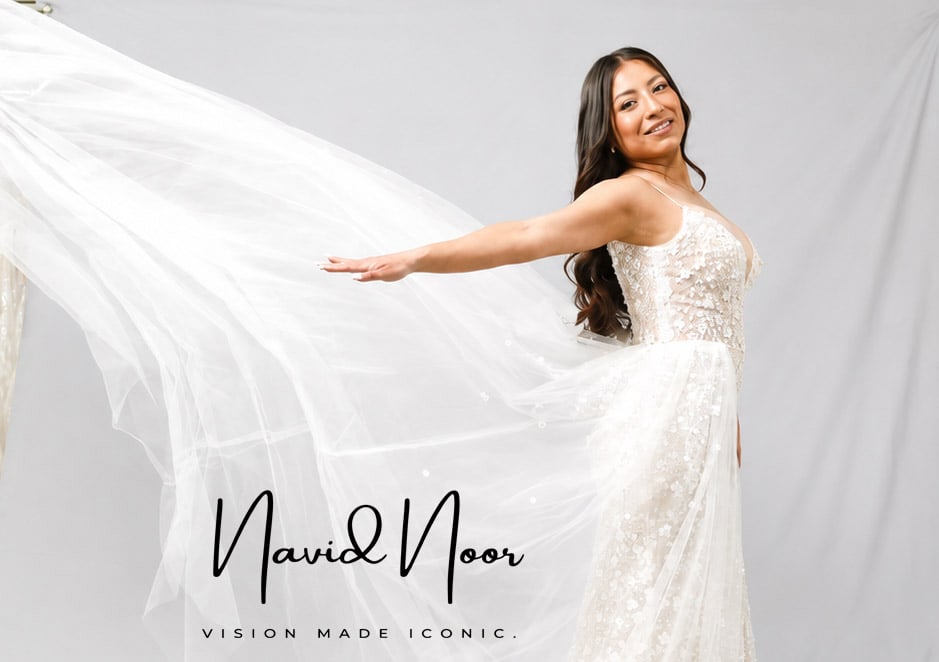
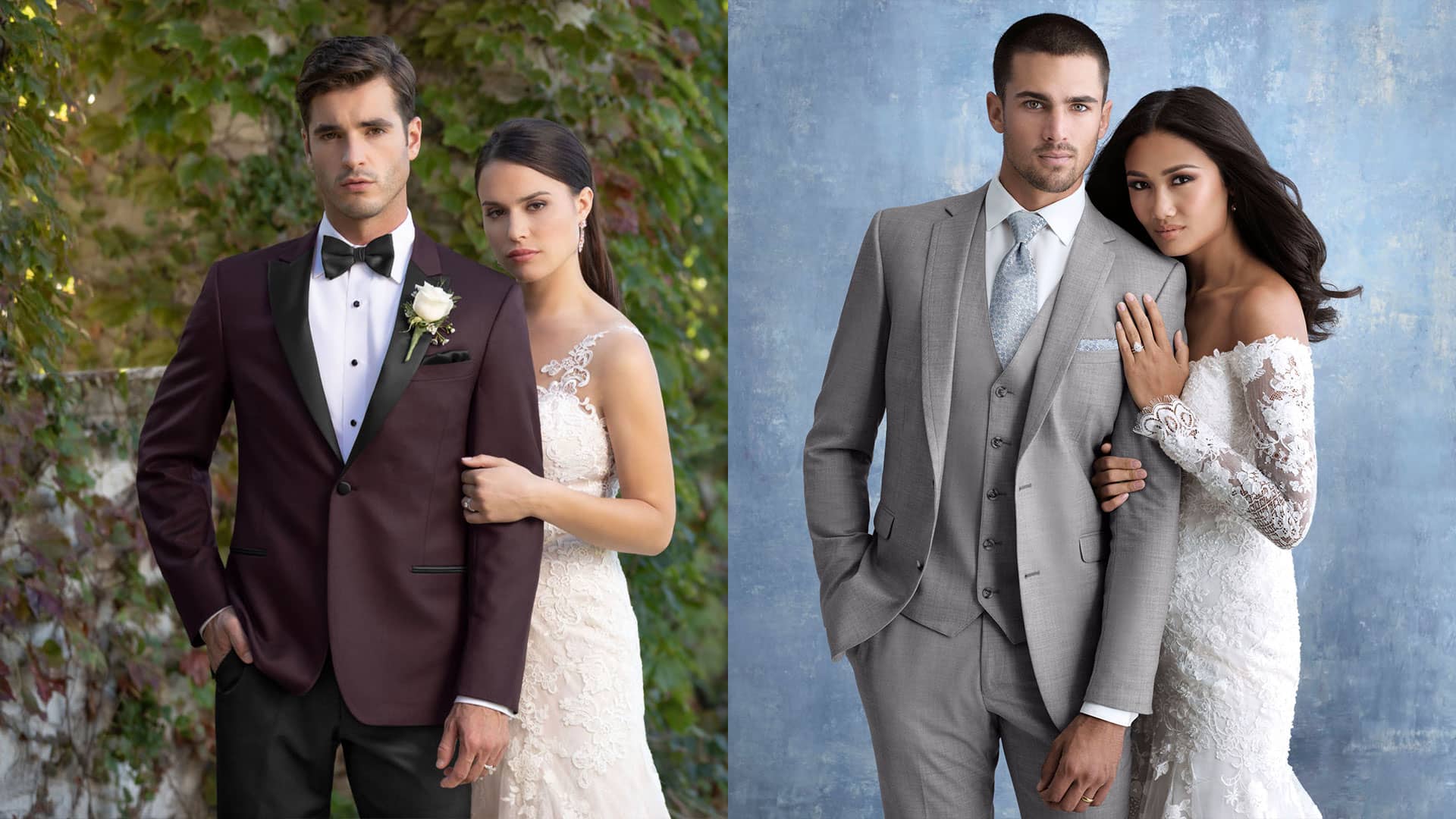
A wedding gown does not exist in isolation. At the altar, it enters into visual conversation with the groom’s suit or tuxedo, the venue, the florals, the lighting, and the formality of the ceremony. For a bridal and tuxedo gallery, this harmony is essential.
The custom gown should quietly inform the groom’s look without requiring the couple to appear overly matched. The goal is cohesion, not costume.
If the bride’s gown is architectural and modern, with clean lines in silk gazar or crepe, the groom may look strongest in a sharply tailored tuxedo with refined lapels, minimal accessories, and a disciplined monochrome palette. If the gown is romantic and lace-driven, with soft sleeves or vintage-inspired detailing, the groom’s styling may benefit from a warmer texture, a classic bow tie, or subtle formal softness. If the gown is regal, with a dramatic train or cathedral veil, the groom’s tuxedo should hold equal formality through proportion, fabric quality, and impeccable tailoring.
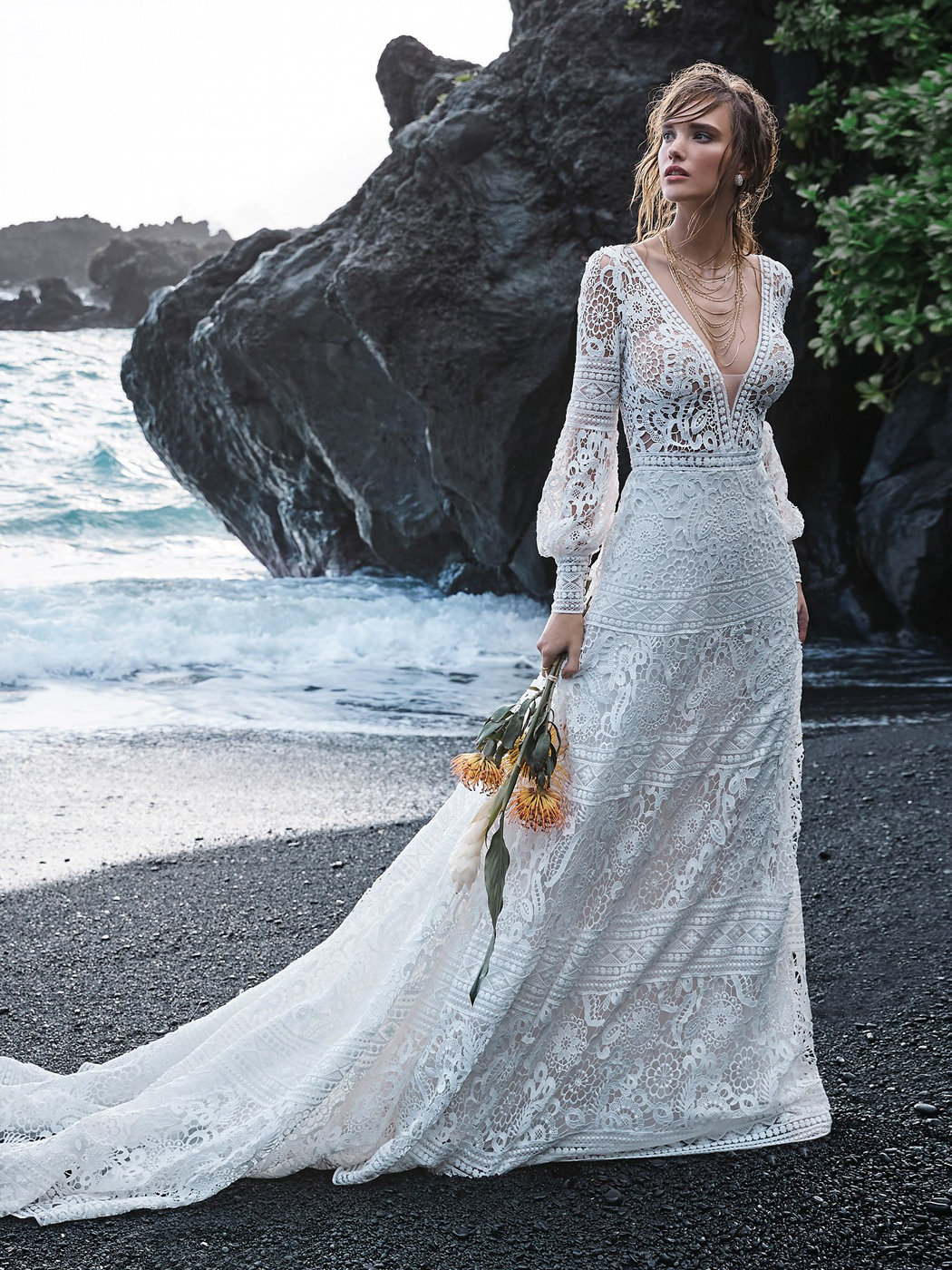
Fabric weight also matters. A light garden ceremony gown in airy tulle or Chantilly lace may feel visually disconnected from an overly heavy tuxedo. A formal ballroom gown in Mikado, satin, or structured lace can support a more polished black-tie look. For coastal or destination weddings, the level of structure, fabric finish, and color palette should reflect both the setting and the bride’s silhouette.
The bride’s custom design can also influence details such as shirt style, lapel shape, pocket square texture, boutonniere scale, and shoe formality. These choices should be subtle. A groom’s look should never compete with the gown, but it should respect its presence.
At Bridal and Tuxedo Galleria, this dual perspective is especially valuable. When the bride’s gown and the groom’s tuxedo are considered together, the couple’s visual story becomes more elevated. The photographs feel intentional. The altar feels balanced. The overall aesthetic becomes complete.
Custom Bridal Design Frequently Asked Questions
How long does the custom wedding dress process take?
The custom wedding dress process typically takes 6 to 9 months from initial consultation to final fitting. This timeframe allows for design development, fabric curation, muslin fitting, construction, hand-detailing, and final refinements.
Expedited timelines may be possible depending on the atelier schedule, gown complexity, and fabric availability. However, brides planning a 2026 or 2027 wedding should book early whenever possible to protect both craftsmanship and peace of mind.
A simple custom silhouette may require less time than a gown with extensive hand-beading, lace placement, corsetry, detachable sleeves, or a dramatic train. The safest approach is to schedule a consultation as soon as the wedding date, venue, and general bridal vision are known.
Can elements of an heirloom gown be integrated into a new design?
Yes, elements of an heirloom gown can often be integrated into a new custom design. Vintage lace, buttons, silk panels, embroidery, or sentimental trims can be carefully repurposed into a modern silhouette while preserving emotional meaning.
This process requires a designer’s technical judgment because older fabrics may be delicate, discolored, or structurally fragile. A couture atelier can evaluate which elements are strong enough to use and where they can be placed beautifully without compromising the new gown.
For example, heirloom lace may be used along a sleeve, bodice edge, veil, train detail, or hidden interior panel. Buttons from a mother’s or grandmother’s gown may be placed along the back closure. A piece of silk may be transformed into a lining detail or private keepsake sewn inside the gown. The result feels modern while carrying family history in a deeply personal way.
What should a bride bring to her first custom fitting?
A bride should bring inspiration images, venue details, chosen or estimated heel height, proper undergarments, and an open mind. These details help the designer understand the bride’s vision, proportions, posture, and wedding environment.
For the first consultation, mood boards are helpful but do not need to be perfect. A bride may bring images of gowns, fabrics, necklines, sleeves, veils, flowers, architecture, or even red-carpet looks that capture a feeling. The designer will identify the common thread and translate it into a bridal concept.
For fittings, the correct heel height is especially important because it affects hemline, posture, skirt proportion, and train balance. Undergarments should be close to what the bride expects to wear on the wedding day, especially if the gown will have a fitted bodice, low back, illusion detail, or internal corsetry.
Most importantly, the bride should arrive open to expert guidance. Custom design is collaborative. The most beautiful results often happen when a bride brings her dream and allows the designer to refine it through proportion, fabric, and couture technique.
Conclusion: Entrusting Your Vision to an Atelier Legacy
A custom wedding gown is one of the rare garments in life that is created for a single unforgettable day yet designed to live far beyond it. It becomes part of a bride’s personal archive. It holds the memory of the aisle, the touch of family hands, the movement of a first dance, and the stillness of a portrait that may one day become an heirloom.
Choosing custom bridal design is not only about having something unique. It is about being guided through a process where your vision is treated with seriousness, artistry, and care. Under the direction of a head designer like Navid Noor, the gown is not simply selected. It is discovered, sculpted, fitted, and refined until it feels inseparable from the bride herself.
That is the promise of Navid Noor Couture at Bridal and Tuxedo Galleria: an atelier experience where elite craftsmanship meets personal storytelling, where every pattern and stitch serves the bride, and where the final gown carries the authority of true design.
For the bride who wants more than a dress from the rack, the journey begins with a conversation. Book an exclusive consultation at the Galleria and begin creating a custom wedding gown that belongs not only to your wedding day, but to your history.
Author : Kayla Garett
Author bio :
Kayla brings more than 10 years of hands-on experience in bridal fashion and boutique styling, specializing in personalized bridal consultations and luxury client experiences. As the manager of the San Diego location of Bridal and Tuxedo Galleria, she is known for her keen eye for detail, deep understanding of couture wedding dress design, and ability to guide brides toward a gown that reflects their unique vision and wedding aesthetic. Her approach blends fashion expertise with genuine care, ensuring every bride feels confident, understood, and unforgettable on her wedding day
Call Now
Your Personalized Wedding Dress Shopping Experience in San Diego With over 30 years of styling expertise, our dedicated team is passionate about helping you find the perfect wedding dress and tuxedo.


Leave a Reply