
What Is a French Bustle? A Guide to Wedding Dress Style and Fit
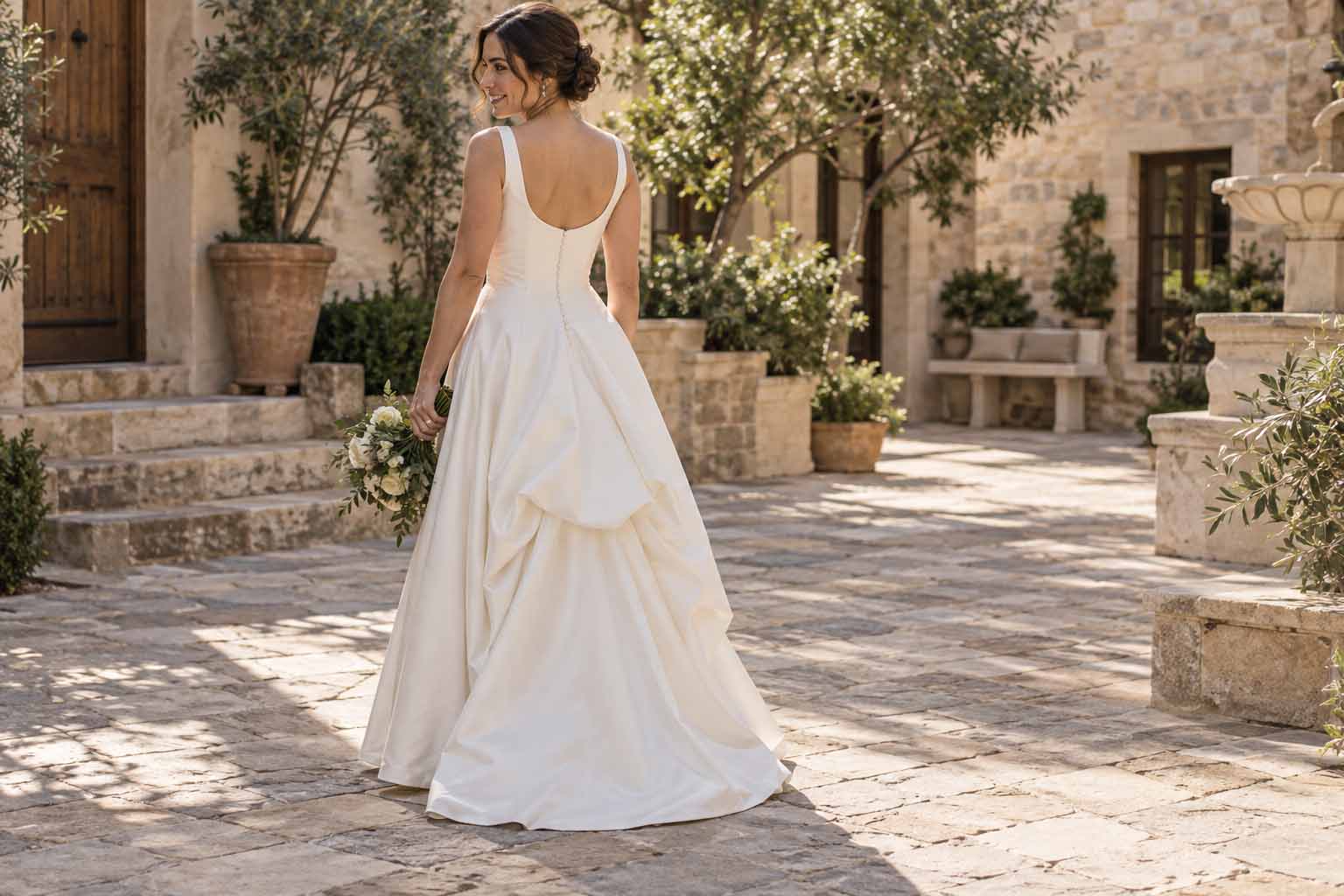
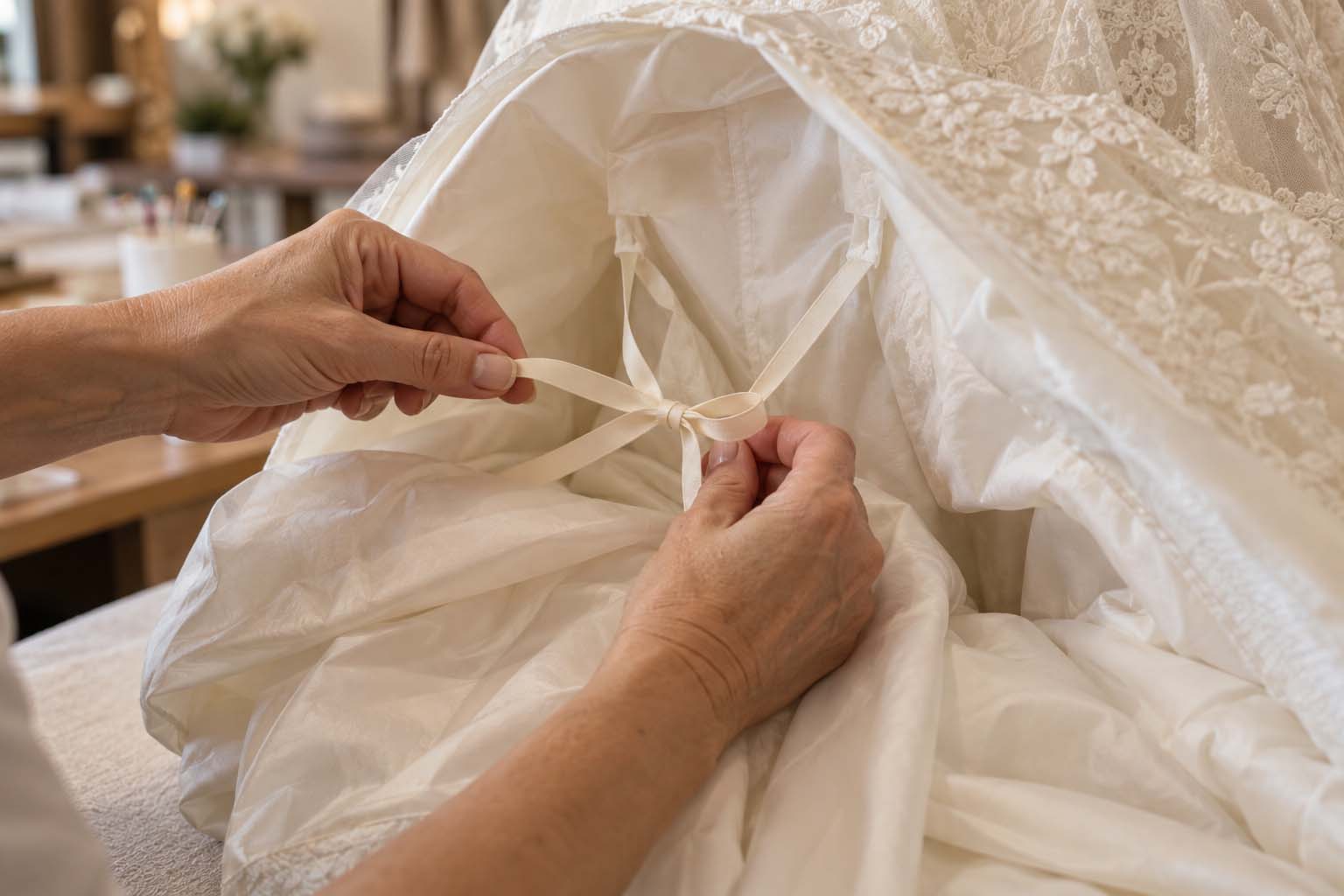
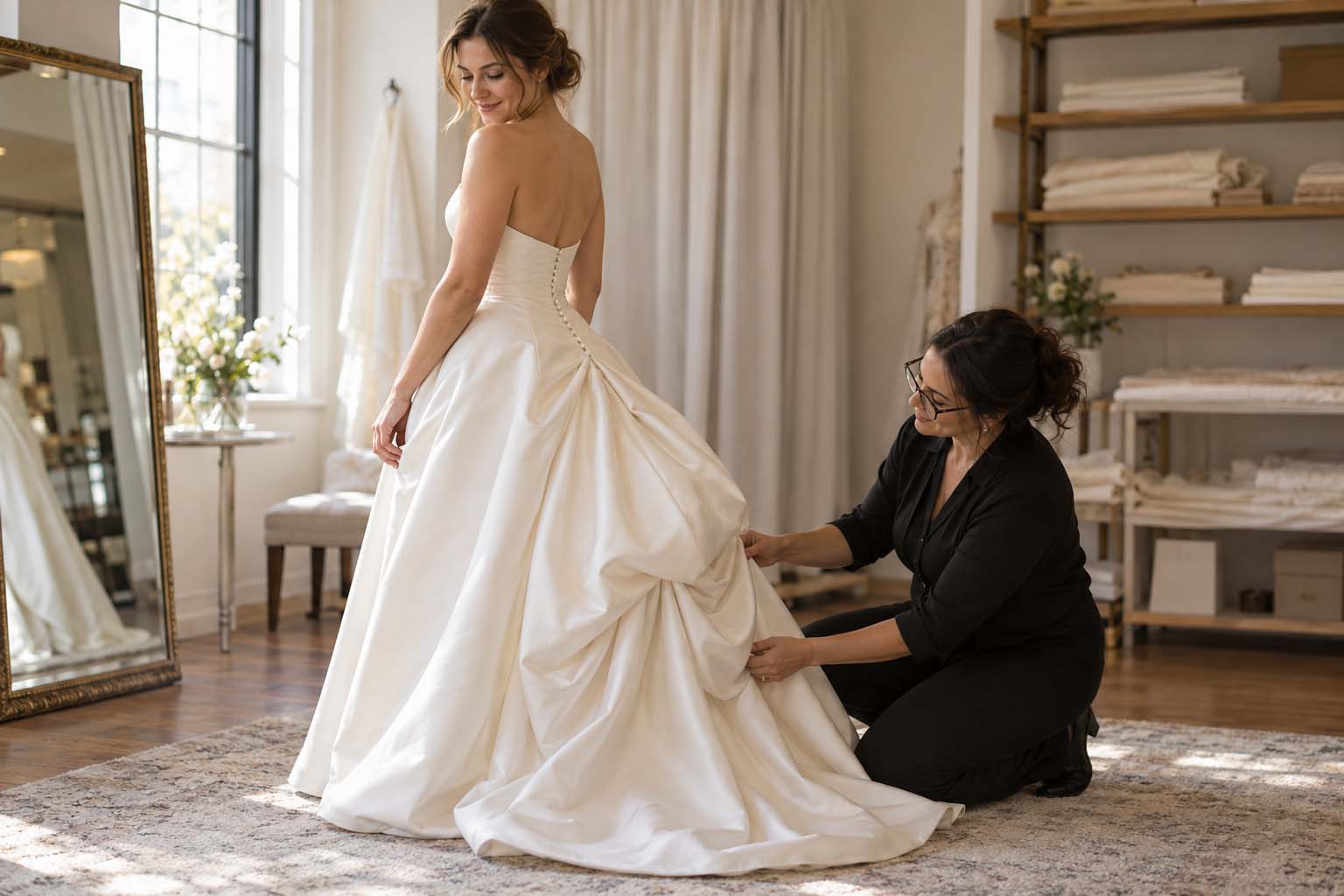
A French bustle, commonly called an underbustle, lifts and secures a wedding dress train beneath the skirt. Once fastened, the train creates draped folds or added volume at the back of the gown. Hidden ribbons or other attachments hold the fabric in place, with the arrangement tailored to the dress’s construction.
Choosing a bustle means considering how your gown will look and feel after the ceremony. A French bustle can create a beautiful reception silhouette, but the right choice depends on your dress, your preferences, and how comfortably you can move once the train is secured.
How a French Bustle Changes Your Wedding Dress
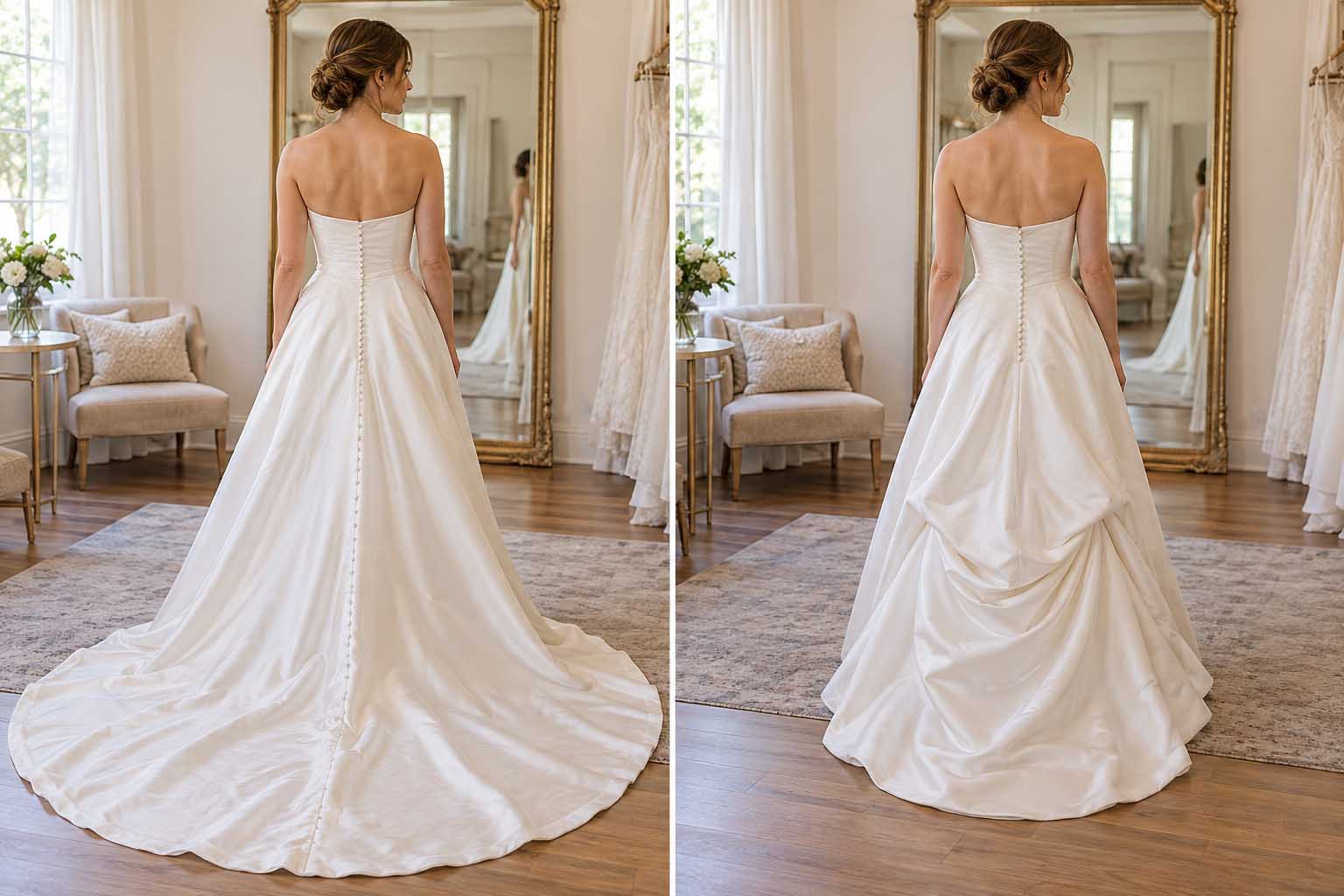
During the ceremony, your train extends behind you, displaying the gown’s fabric, lace, and finishing details. A French bustle brings that fabric underneath the skirt, lifting the train and arranging the excess into folds.
The result may appear softly gathered or more sculptural. Fabric weight, skirt layers, and attachment placement influence how much volume develops and where the folds fall.
Although the fastening system is usually concealed, the change in silhouette is visible. A French bustle does not necessarily preserve the appearance of your unbustled gown. If you love a particular lace pattern, an uninterrupted row of buttons, or a clean skirt outline, ask to see how those details look once the train is secured.
“French” refers to the bustle style, not where your wedding dress was made. Bridal professionals may also use different names for similar arrangements, so a demonstration is more useful than choosing by terminology alone.
The modern wedding-dress bustle serves a practical purpose: managing the train. It is different from the historical bustle undergarments used to support pronounced fullness behind nineteenth-century skirts.
Why Brides Choose a French Bustle
Draping That Complements the Gown
A French bustle can turn the folded train into an intentional part of your reception look. Its folds may introduce softness, dimension, or a more defined shape at the back of the skirt.
For brides who appreciate draped fabric, that change can be part of the appeal. The question is whether the arrangement complements the details you already love about your gown.
Describe your preferred effect during your fitting. You might want gentle folds, more sculptural volume, or a quieter finish. These preferences give your alterations specialist a clearer starting point.
More Manageable Reception Movement
An extended train can become difficult to manage while greeting guests, sitting down, or dancing. A bustle lifts and secures that fabric so you do not need to carry it throughout the evening.
Discuss when you expect to bustle your gown. You may prefer to leave the train down for ceremony photographs and portraits, then secure it before dinner or dancing.
A bustle helps manage the train, but it does not eliminate every possibility of catching, stepping on, or damaging the dress. Movement should still be tested during your fitting.
A Second Silhouette in the Same Dress
A French bustle allows you to consider two versions of your gown: the ceremony silhouette with the train extended and the reception silhouette with it secured.
Its relevance to contemporary bridal styling lies in that combination of practical function and visible draping. You can choose the style because you enjoy its appearance without needing to follow a particular fashion trend.
French Bustle vs. American Bustle
The main difference is where the train is secured. A French bustle folds the train underneath the skirt, while an American bustle lifts it over the outside of the gown.
| Feature | French Bustle | American Bustle |
|---|---|---|
| Train placement | Secured beneath the skirt | Lifted over the exterior of the skirt |
| Typical appearance | Underfolds and added volume | Visible exterior folds or cascading draping |
| Fastening details | Usually concealed underneath | Exterior points may be camouflaged within gown details |
| Design considerations | Folded volume, skirt layers, and internal support | Exterior draping, attachment placement, and visible embellishments |
| What to check at a fitting | Side profile, comfort, and the appearance of folded fabric | Balance, comfort, and how the drape frames the gown |
Neither style is universally better. Both need to be assessed against the actual gown and your desired reception appearance.
A ballroom bustle offers another option. It secures the train underneath to create a more uniformly floor-length appearance, generally emphasizing less visible draping. Its suitability and fastening arrangement also depend on the dress.
Ask your alterations specialist to demonstrate the options that are feasible for your gown. Seeing the comparison can make the decision much clearer.
Will a French Bustle Suit Your Gown?
A French bustle may suit your wedding dress if the construction supports the arrangement and you like the resulting silhouette. Fabric or dress style alone cannot determine the answer.
Train Length and Weight
Your alterations specialist will assess how much fabric needs to be lifted and how its weight can be supported.
A long train, dense embellishments, or several skirt layers can make the arrangement more involved. Train length is only one consideration; a shorter, heavily embellished train may require a different approach from a longer, lightweight one.
Ask to see the complete skirt secured so you understand what happens to every relevant layer.
Fabric and Skirt Construction
Satin, crepe, lace, and tulle can behave differently when folded. Some fabrics create defined shapes, while others produce softer draping.
Rather than assuming that one material requires a particular bustle, examine how your actual dress responds. Look at the folds from the back and sides, and ask whether the arrangement introduces more volume than you want.
Your specialist should explain which adjustments are feasible and which limitations come from the gown’s construction.
Lace and Embellishment Placement
Bustling changes how decorative details are displayed.
A lace motif may become partly concealed within a fold. Beaded sections may fall differently once the train is lifted. A distinctive border may be more visible with one arrangement than another.
Identify the details you want to preserve visually, then compare how each feasible option presents them.
Comfort and Reception Plans
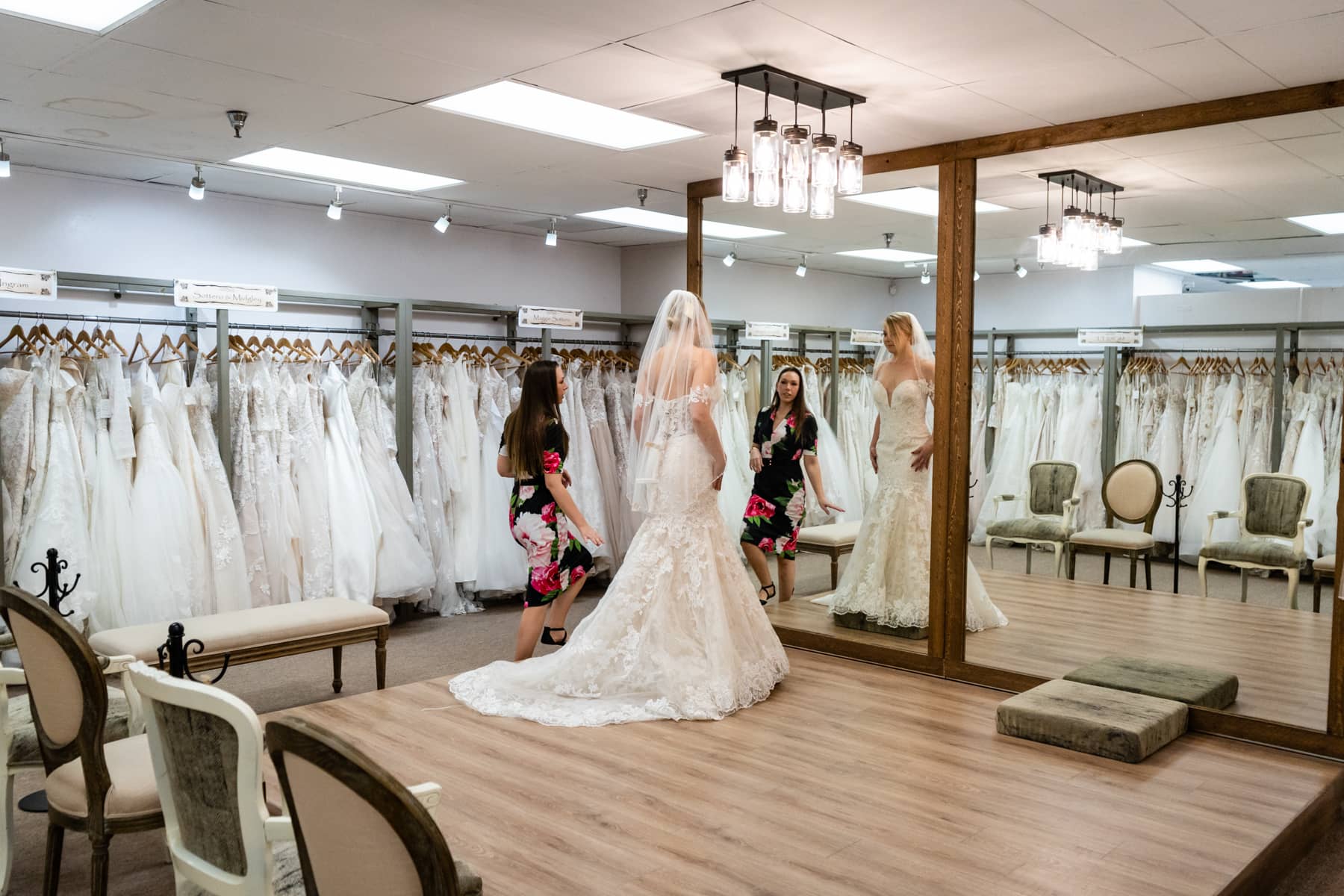
A bustle should be evaluated while you move, not only while you stand in front of a mirror.
Think about your reception plans. Will you spend much of the evening dancing? Are there stairs between event spaces? Do you plan to change into different shoes?
Share these details during your fitting so the conversation includes practical movement as well as appearance.
What to Check at Your Bustle Fitting
Wear the shoes and undergarments you intend to use on your wedding day. Bring up bustle options early in the alterations process so the final arrangement can work with the gown’s finished fit and hem.
Use this checklist during the demonstration:
- View the gown with the train extended and secured.
- Check the appearance from the back and both sides.
- Walk, turn, sit, and try a few gentle dance steps.
- Confirm that the secured train clears the floor appropriately.
- Mention pulling, catching, uneven weight, or uncomfortable bulk.
- Ask how to identify each attachment point.
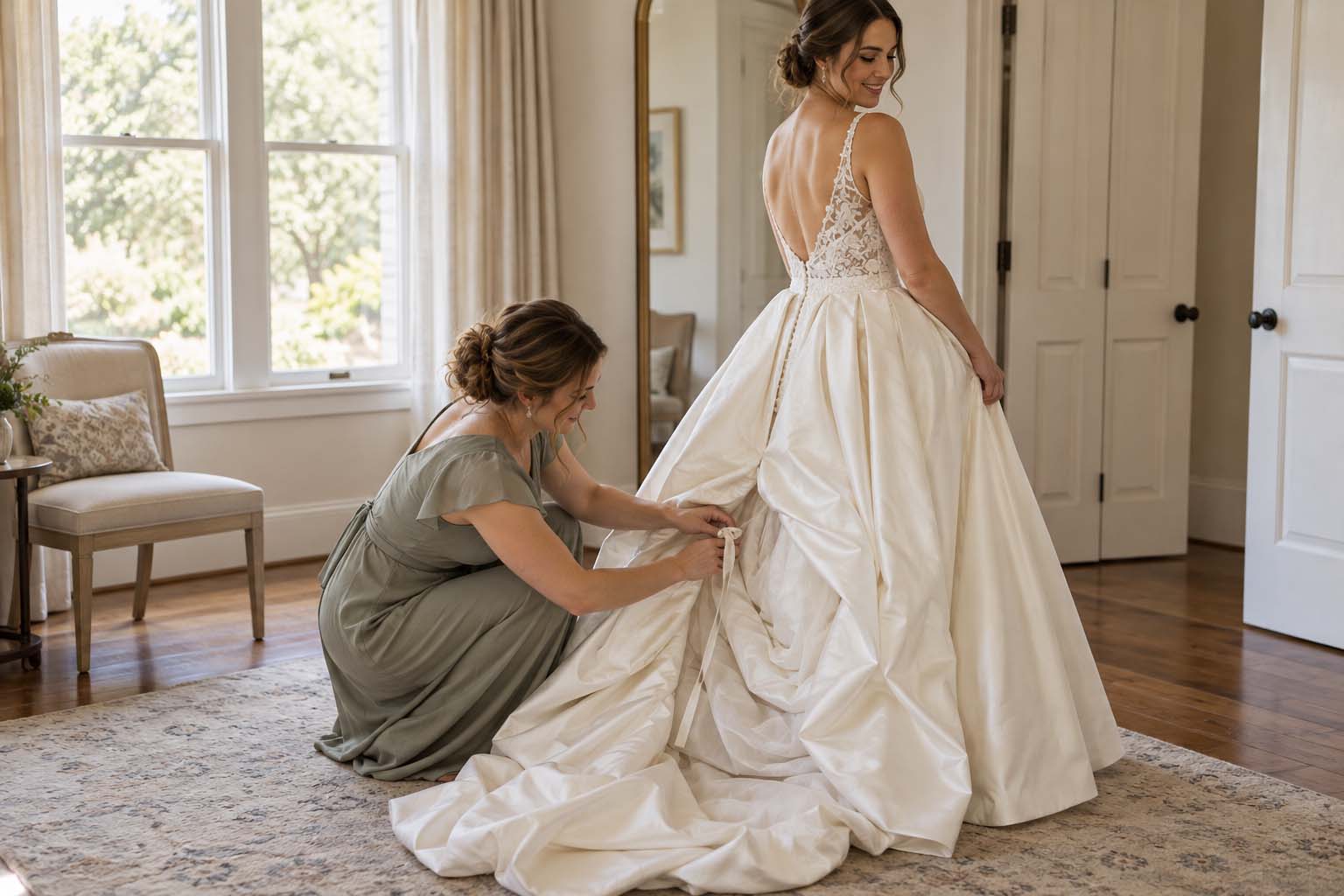
- Have your designated helper practice the fastening sequence.
- Record the demonstration with the team’s permission.
- Ask what to do if a fastening loosens.
Practice securing the installed bustle exactly as demonstrated. Different gowns can use different arrangements, so a generic online tutorial may not match your dress.
Questions to Ask at Your Fitting
- Why does this bustle arrangement work with my gown?
- Can I compare another feasible option before deciding?
- Which skirt layers need to be secured?
- Will changing my reception shoes affect floor clearance?
- What should my helper check after fastening the bustle?
Bridal & Tuxedo Galleria offers in-house wedding-dress alterations in San Diego, including French, American, ballroom, and custom bustle creation. An assessment of your gown can help you understand the available options.
What Affects French Bustle Cost and Timing?
The cost of a French bustle depends on the work your gown requires. Skirt layers, train weight, embellishments, attachment points, and finishing details can influence the estimate.
Ask whether bustle creation is included in your alterations quotation. Confirm whether the estimate covers all relevant layers and how additional design changes would be priced.
Discuss scheduling when you book. Share your wedding date, whether your gown has arrived, and any other alterations you are considering.
Useful questions include:
- When will my bustle options be assessed?
- When can I see the finished arrangement?
- Can my wedding-day helper attend the demonstration?
- Will there be time to discuss adjustments if needed?
A general online price or timeline cannot replace an assessment of your dress. Request a gown-specific estimate and appointment plan.
Couture Design and In-House Bridal Alterations
At Bridal & Tuxedo Galleria, custom bridal design and professional in-house alterations allow brides to consider fit, proportion, and movement together.
Head Designer and Owner Navid Noor creates couture wedding dresses and personalized bridal designs. The boutique’s offerings include Lumière by Navid Noor and Bridal Galleria Signature, alongside the couture work presented as Navid Noor Couture.
When exploring a custom wedding dress, discuss its reception appearance alongside the neckline, skirt shape, and train. Explain which details you want to remain visible and how you plan to move through your celebration.
Bridal & Tuxedo Galleria also provides alterations for gowns purchased elsewhere. If you already have your dress, bring it for an assessment rather than assuming a particular bustle style can be added.
Frequently Asked Questions About French Bustles
Can a French Bustle Be Added to an Existing Wedding Dress?
It may be possible, but the gown needs an assessment. Its skirt construction, internal support, train, and existing alterations determine which arrangements are feasible. A button or loop already on the dress does not necessarily mean a complete bustle is installed.
Will the Fastening Points Show When the Train Is Down?
French bustle fastenings are generally underneath the skirt, but concealment should be checked on your actual gown. Ask to inspect the dress with the train extended before approving the finished work.
Can a French Bustle Be Adjusted If I Dislike Its Appearance?
Discuss your concerns before the arrangement is finalized. Your alterations specialist can explain whether another placement or style is feasible and whether the change requires additional work.
Photographs of the demonstrated options can help you identify the exact fold or proportion you would like to change.
Who Should Secure the Bustle on the Wedding Day?
Choose a trusted helper who has learned your gown’s fastening system. Have that person attend a demonstration when possible and practice identifying the attachments. Keep any approved instructions or video available for the transition to your reception.
Is a Detachable Train an Alternative to a Bustle?
Yes, for a gown designed with a removable train or compatible overskirt. However, the underlying dress may still have a train that needs managing. Ask to see how the gown looks and moves after the detachable component is removed.
Explore Bustle Options for Your Wedding Dress
The right bustle brings together the appearance you enjoy, the support your gown needs, and the movement you want for your reception.
If you already have your dress, contact Bridal & Tuxedo Galleria about an alterations appointment. If you are still choosing your gown, book a bridal appointment to discuss fit, train design, and your wedding-day plans.

Author bio :
Kayla brings more than 10 years of hands-on experience in bridal fashion and boutique styling, specializing in personalized bridal consultations and luxury client experiences. As the manager of the San Diego location of Bridal and Tuxedo Galleria, she is known for her keen eye for detail, deep understanding of couture wedding dress design, and ability to guide brides toward a gown that reflects their unique vision and wedding aesthetic. Her approach blends fashion expertise with genuine care, ensuring every bride feels confident, understood, and unforgettable on her wedding day
Call Now

Your Personalized Wedding Dress Shopping Experience in San Diego With over 30 years of styling expertise, our dedicated team is passionate about helping you find the perfect wedding dress and tuxedo.

Leave a Reply