
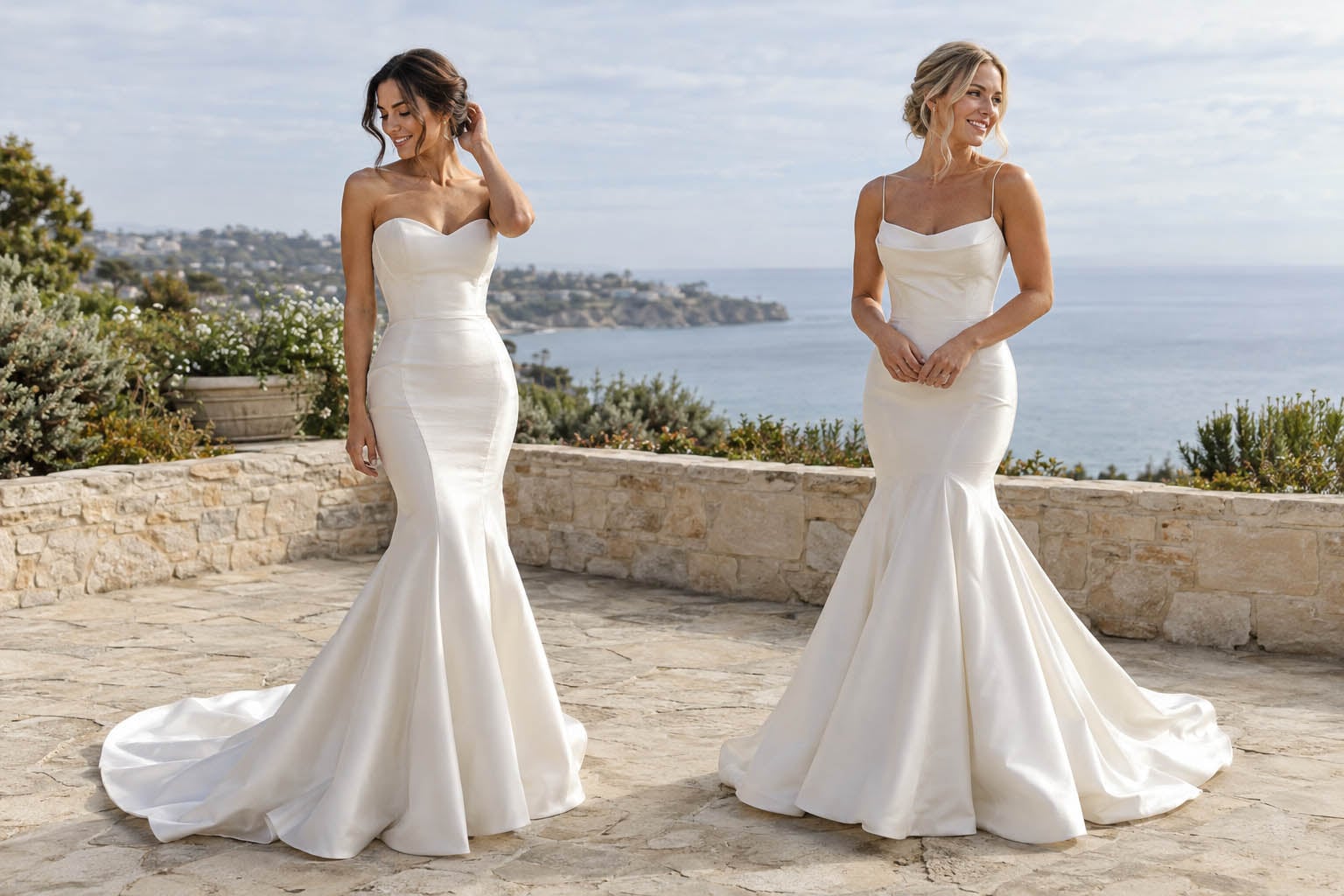
Mermaid vs Trumpet Wedding Dress: What’s the Difference?
The main difference in a mermaid vs trumpet wedding dress comparison is where the skirt begins to flare. Both are fitted bridal silhouettes, but a trumpet generally opens around mid-thigh, while a mermaid stays close to the legs until around the knee or below. That changes the outline and the room available for movement.
Designer terminology overlaps, so use the label as a starting point. Look at where the individual gown releases on your body and how it feels when you move. insideweddings.com
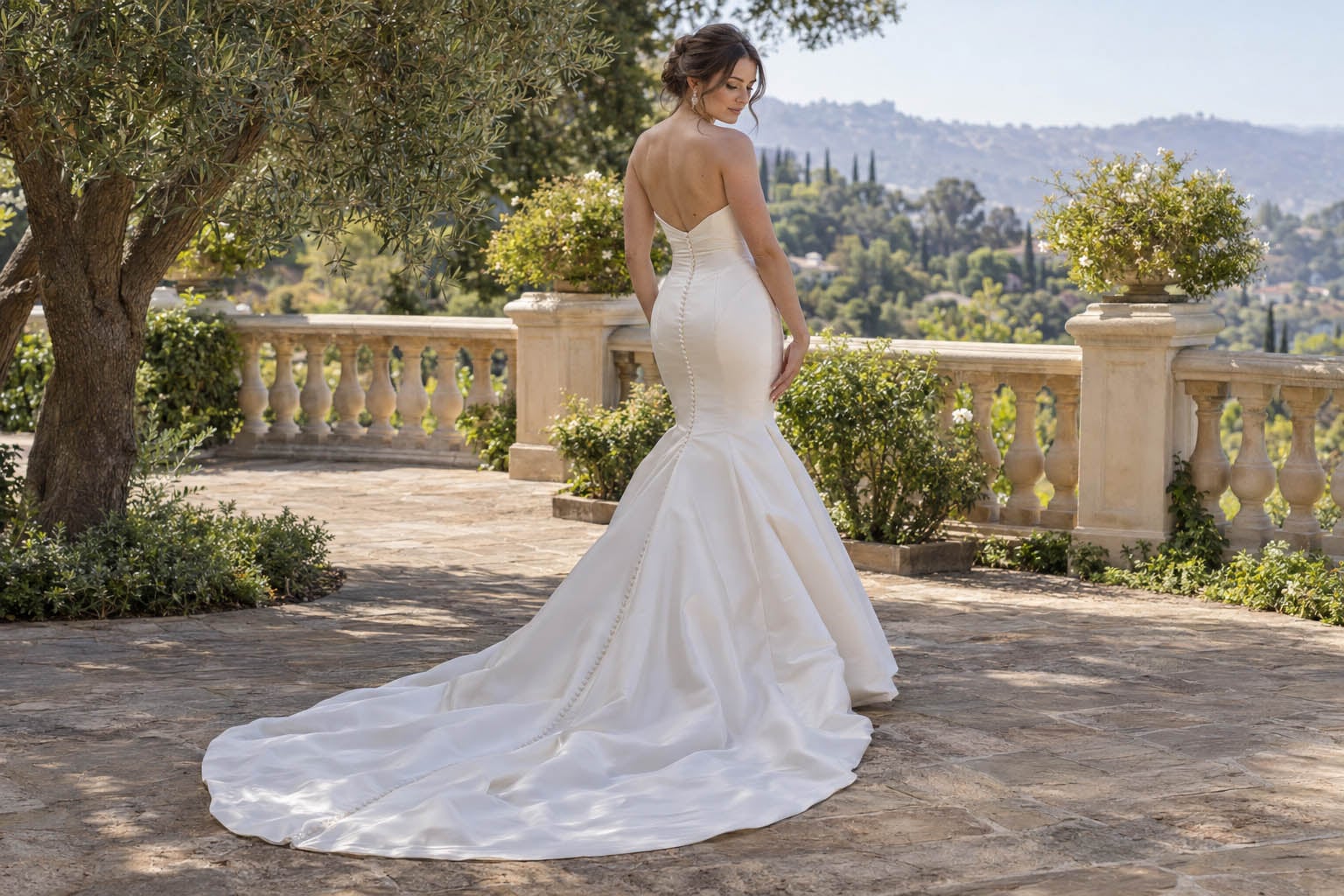
Mermaid vs Trumpet Wedding Dress: What Is the Main Difference?
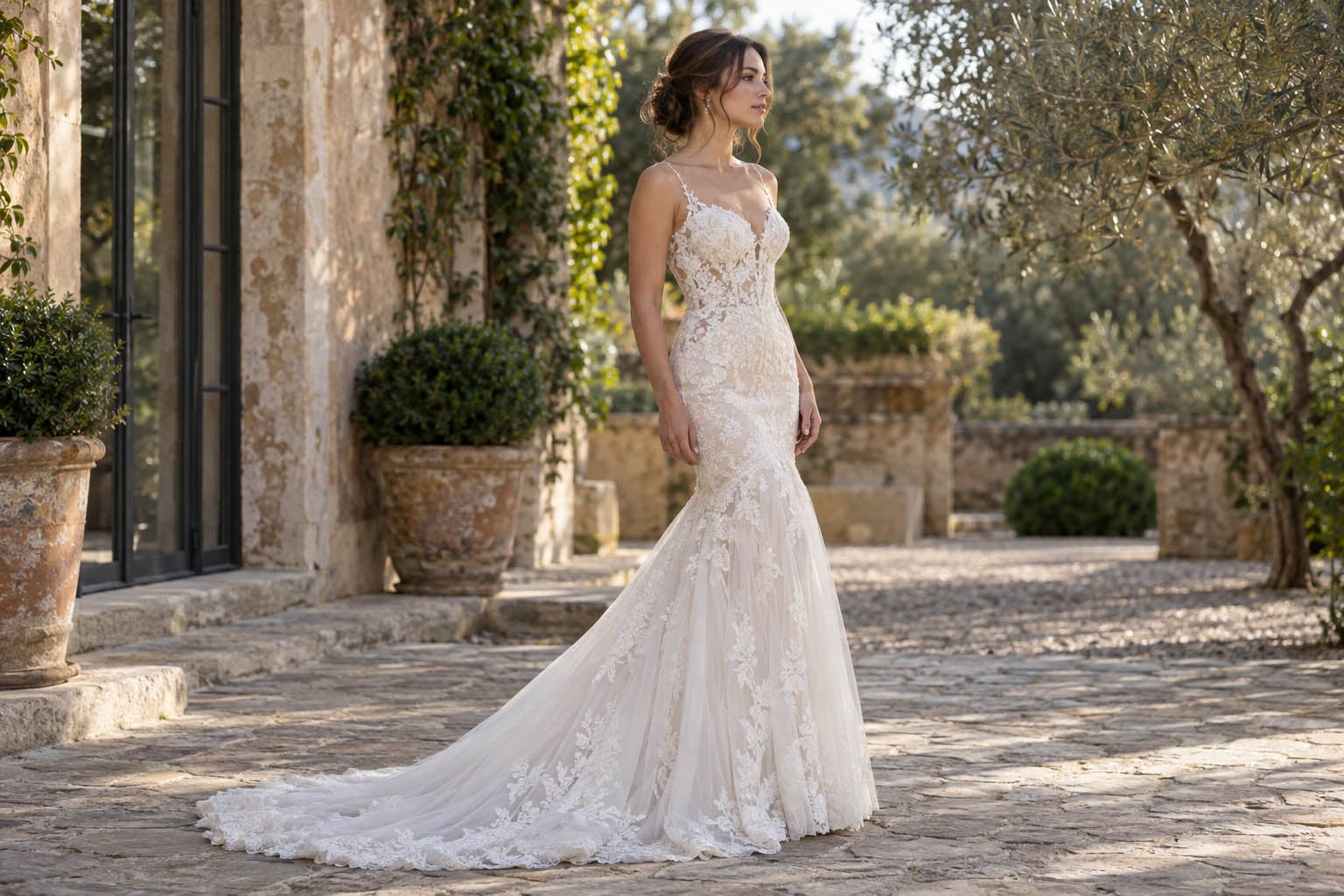
A mermaid wedding dress generally stays fitted through the thighs and flares around the knee or below. A trumpet wedding dress usually begins widening around mid-thigh. The earlier trumpet flare often provides more knee room, while the lower mermaid flare creates a sharper transition into the skirt. insideweddings.com
Mermaid vs Trumpet Wedding Dress at a Glance
| Feature | Mermaid wedding dress | Trumpet wedding dress |
|---|---|---|
| Flare point | Generally around the knee or below | Generally around mid-thigh |
| Fit | Closely follows the hips and most of the thighs | Follows the hips and upper thighs before widening |
| Overall effect | Stronger contrast between fitted body and lower skirt | A softer transition into skirt volume |
| Knee movement | Often more limited | Often more room |
| Walking | May require a shorter stride | Often allows a somewhat easier stride |
| Dancing | Test knee room, lining, and train management carefully | Test movement even when the flare begins higher |
| Visual focus | A pronounced lower flare | A more continuous curve through the skirt |
| Best choice | For the shape and movement you enjoy wearing | For the shape and movement you enjoy wearing |
These are general tendencies. Individual gowns can behave differently. Bridal & Tuxedo Galleria
Fabric stretch, lining, seam placement, internal support, skirt circumference, and tailoring all affect the experience. A flexible mermaid gown may feel easier to wear than a rigid trumpet.
Train management deserves its own assessment, too. Lifting the train for the reception changes how much fabric trails behind you; it doesn’t automatically create more room through the thighs.
What Is a Mermaid Wedding Dress?
A mermaid wedding dress follows the bodice, waist, hips, and thighs before opening into a lower skirt around the knee or below.
The defining feature is the length of that fitted section. Your eye follows the body farther down before reaching the flare, creating a pronounced change in width. Depending on the design, the lower skirt may open quietly or expand into substantial volume and a sweeping train.
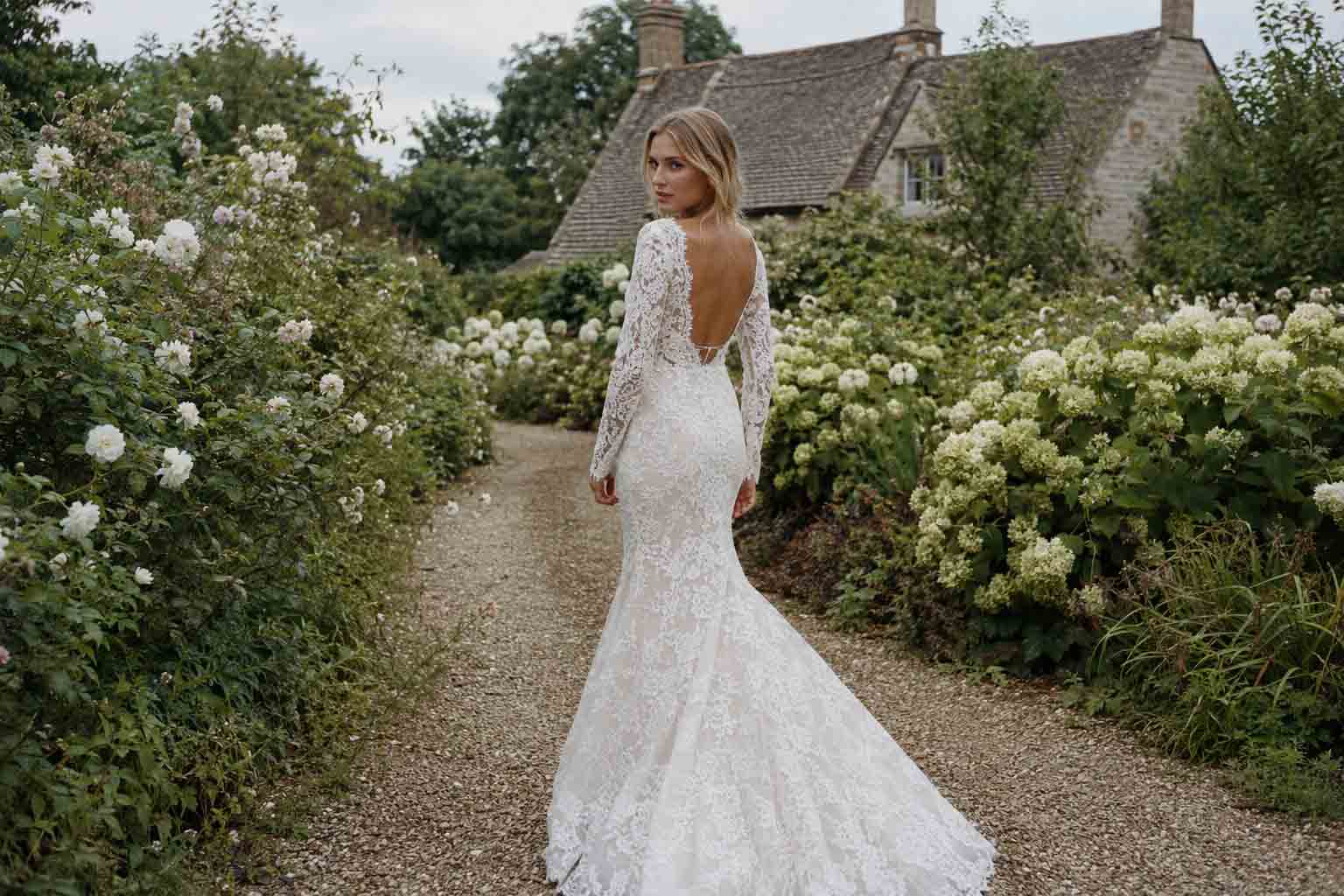
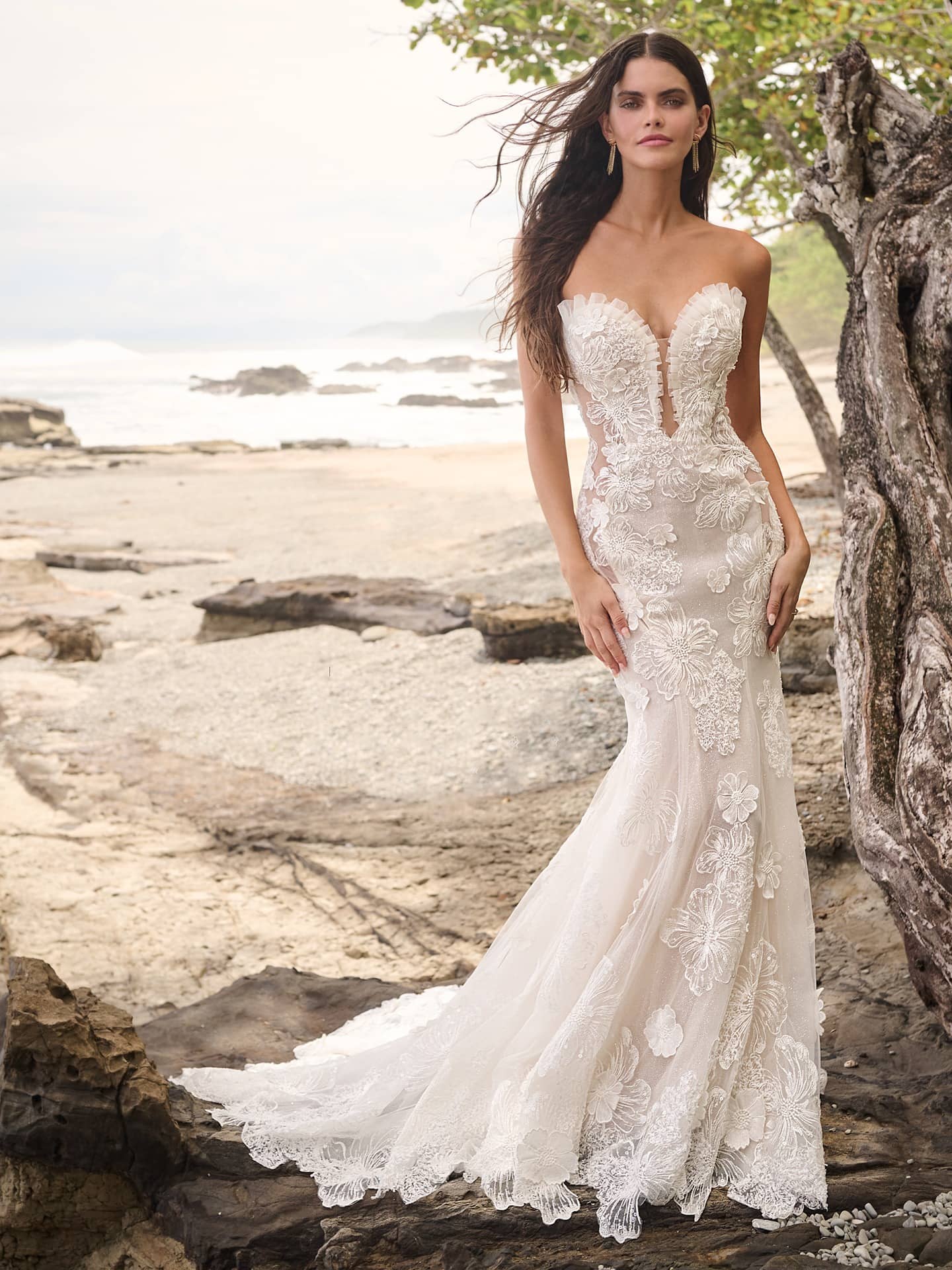
Mermaid gowns can be fluid in crepe, textured in lace, or more sculptural in satin and Mikado. The silhouette describes the shape; it doesn’t prescribe one fabric, neckline, or level of structure. Bridal & Tuxedo Galleria
To compare actual designs, explore mermaid wedding dresses and look for where each skirt starts opening.
What Is a Trumpet Wedding Dress?
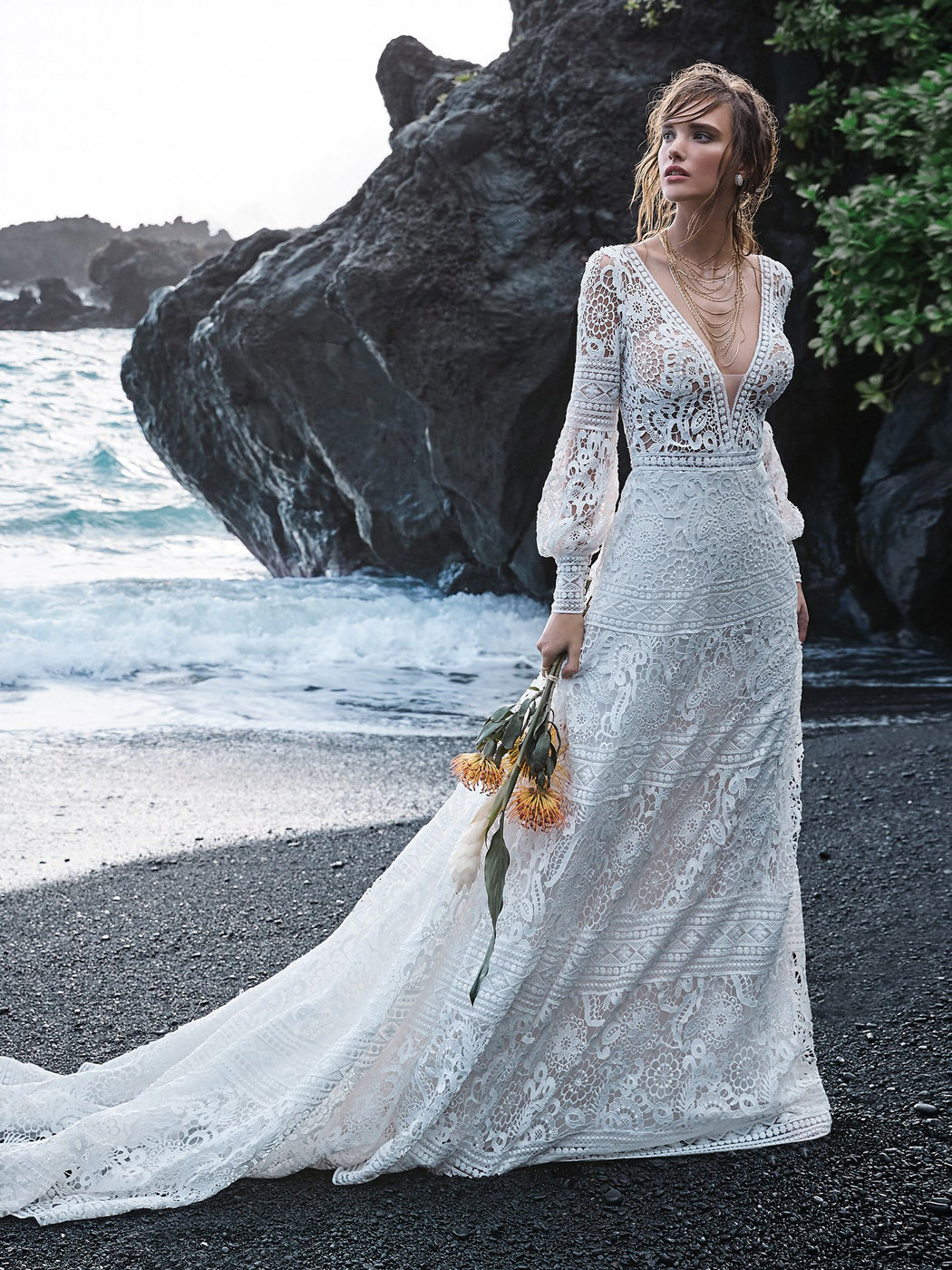
A trumpet wedding dress is fitted through the bodice, waist, hips, and upper thighs, then generally begins widening around mid-thigh.
Because the skirt releases higher, the transition into volume often looks more gradual. Many trumpet designs also leave additional space around the knees.
Trumpet is frequently confused with mermaid and fit-and-flare because the categories share a fitted upper shape. Some designers use fit-and-flare broadly enough to include trumpet styles, so the distinction becomes clearer when you examine the garment. Bridal & Tuxedo Galleria
You can explore trumpet wedding dresses to compare different interpretations of that earlier flare.
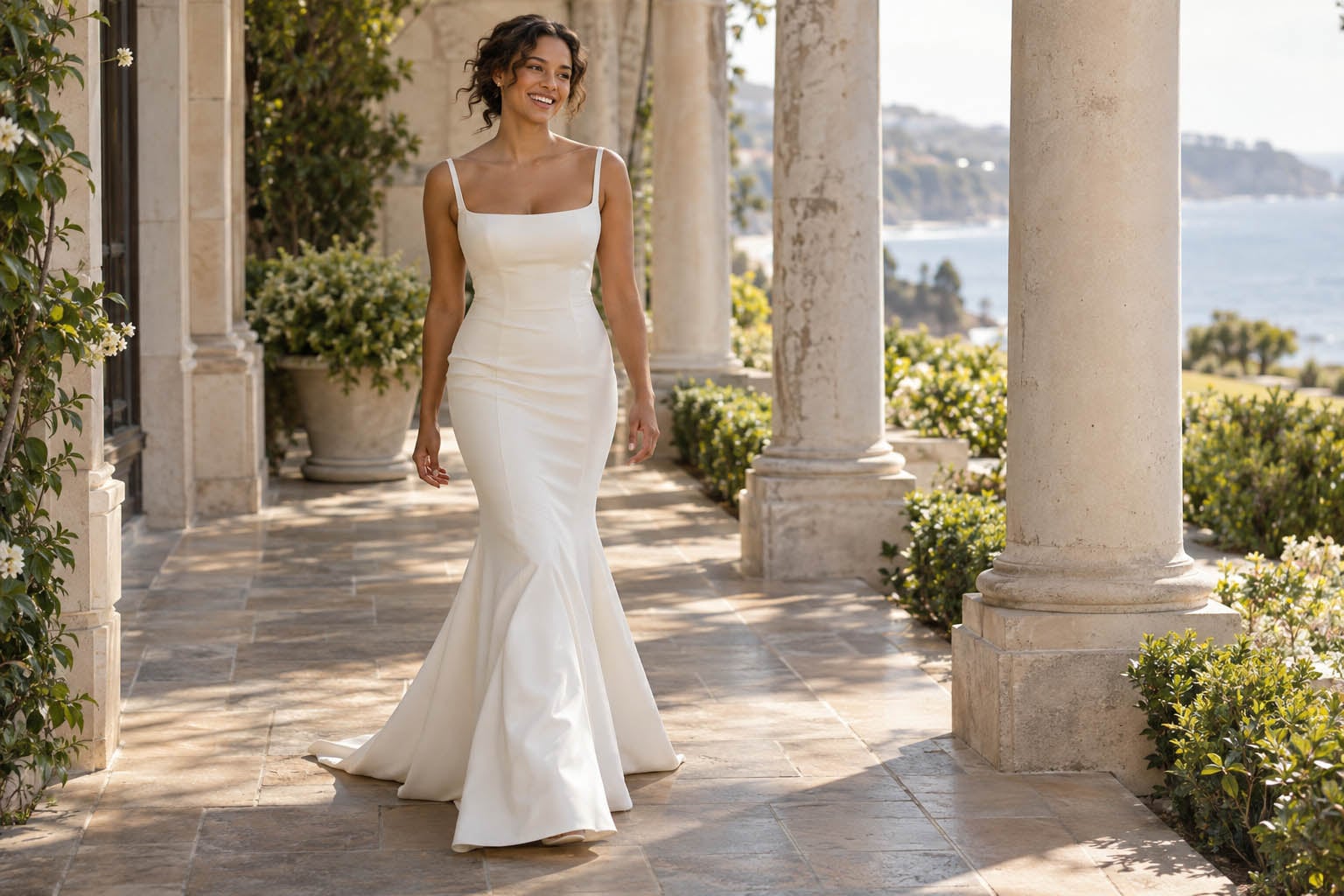
Mermaid vs Trumpet: The Flare Point Changes Everything
The flare point determines how long the skirt follows the legs before moving away from them.
With a mermaid, the narrow line continues farther toward the knees. From the front, that can make the lower skirt feel distinct and sculpted. From the side, you’ll notice a longer fitted thigh line before the fabric opens.
With a trumpet, the skirt begins moving outward higher on the leg. From the side and back, the transition into fullness often appears more continuous. insideweddings.com
During your appointment, ask to see both gowns from three angles:
- Front: Where does the skirt first move away from your legs?
- Side: Do you enjoy the relationship between the bodice length, hip line, and flare?
- Back: How does the fitted skirt transition into the train?
Then turn and walk. The silhouette you enjoy in a still photograph may feel different once the skirt starts moving around you.
Which Is More Dramatic: Mermaid or Trumpet?
A traditional mermaid usually creates the sharper silhouette because its fitted section continues farther down before the skirt opens.
A trumpet can still have considerable presence. A substantial train, structured fabric, corsetry, a pronounced neckline, or a full lower skirt may make one trumpet gown feel more dramatic than a softly constructed mermaid.
Decide which element you love: the low flare itself, the skirt volume, or the complete styling. Those are related choices, but they aren’t interchangeable. Bridal & Tuxedo Galleria
Which Is Easier to Walk In: Mermaid or Trumpet?
A trumpet wedding dress generally offers more knee freedom because the skirt begins widening higher on the thigh.
Actual walking room also depends on the circumference of the narrowest skirt section, fabric stretch, lining, seams, and alterations. A stretchy outer fabric can still feel restrictive if the lining underneath has little give. Jovani
Check the hem and train separately. If you’re stepping on excess sample length, ask the stylist to help manage it before judging the silhouette. Wear shoes close to your intended heel height and notice whether you can take your usual steps.
Bodice comfort matters here as well. A gown may allow leg movement while feeling too rigid through the torso.
What About Sitting and Dancing?
Both mermaid and trumpet gowns can work for sitting and dancing when the individual dress provides enough room and support.
Test the activities you expect during your celebration. A slow first dance asks something different of a gown than an evening of energetic dancing.
Wedding-Day Movement Test
With the stylist’s guidance and the sample secured appropriately:
- Walk several natural steps.
- Sit fully in a chair.
- Stand up without another person lifting you.
- Try a few steps or stairs, if safely available.
- Turn in both directions.
- Bend slightly as you might to adjust a shoe.
- Hug someone.
- Raise your arms naturally.
- Try a few familiar dance movements.
- Check whether the bodice remains secure afterward.
Notice pulling, riding up, twisting, or the need to repeatedly readjust the neckline. Ask which sensations come from the sample’s size and which come from the gown’s construction. Jovani
For the train, discuss the intended bustle or another suitable management option. A bustle can help with trailing fabric while leaving the fitted skirt’s original movement limits in place.
Want to compare the difference yourself? Bring both silhouettes into your bridal appointment and give each the same movement test.
Mermaid vs Trumpet for Different Bridal Styles
Neither silhouette is universally more flattering. The useful question is which combination of shape, support, and movement you enjoy.
Choose a Mermaid Direction If You Love:
- A closely sculpted line through the thighs.
- A pronounced contrast between the fitted skirt and lower flare.
- Full-length photographs that emphasize the lower-skirt shape.
- An editorial or formal silhouette.
Consider a Trumpet Direction If You Love:
- A defined waist and hip line.
- A flare that begins higher on the leg.
- A more gradual transition into fullness.
- Some additional room around the knees.
Height and body shape don’t assign you to either category. For an athletic or straighter frame, seam placement and waist treatment influence how much definition the gown creates. For a fuller figure, the relationship between support, cup fit, hip room, and skirt construction deserves the same individual attention.
These are starting points, not rules. Two gowns carrying the same silhouette label can feel completely different once you put them on.
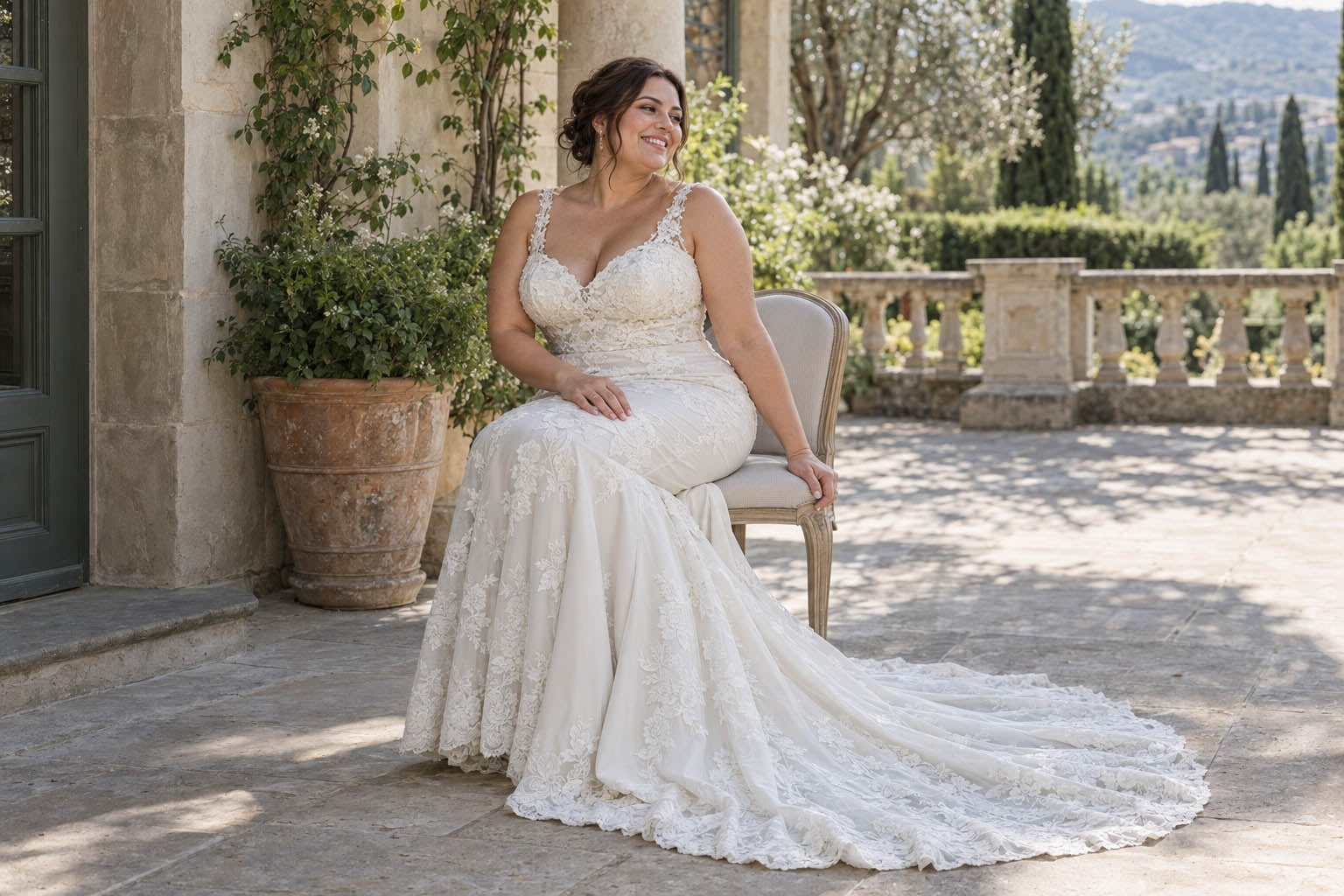
What Is the Difference Between Trumpet, Mermaid, and Fit-and-Flare?
When the terms are used separately, fit-and-flare generally opens higher and more gradually, trumpet releases around mid-thigh, and mermaid remains fitted toward the knee or below.
| Fit-and-flare | Trumpet | Mermaid |
|---|---|---|
| Often opens below the hips or around the upper thighs | Usually begins widening around mid-thigh | Usually opens around the knee or below |
| Generally a gradual release | A more defined fitted-to-flared transition | A longer fitted section before the flare |
| Also used as a broad category | May be grouped under fit-and-flare | May also appear within the broader fitted family |
Industry terminology overlaps. Maggie Sottero, for example, describes fit-and-flare as a general category and acknowledges its relationship to trumpet and mermaid styles. Maggie Sottero
If an earlier release appeals to you, compare fit-and-flare wedding dresses. For a wider view of bridal shapes, use the wedding dress silhouette guide.
Does Fabric Change How a Mermaid or Trumpet Dress Feels?
Yes. Fabric helps determine how closely the gown follows the body, how clearly the flare holds its shape, and how the skirt responds to movement.
| Fabric or finish | Effect on a fitted silhouette | What to check |
|---|---|---|
| Stretch crepe | Can create a close, fluid line with some give | Whether the lining stretches too |
| Satin | Can produce a smooth outline, with structure varying by weight and weave | How it bends through the hips and thighs |
| Mikado | Often supports a more architectural flare | Weight, rigidity, and the specific fabric’s flexibility |
| Lace | Adds texture and can soften the visible transition into the skirt | The construction underneath the lace |
| Tulle | Can build volume at the flare without an opaque surface | Layer count and how the layers move |
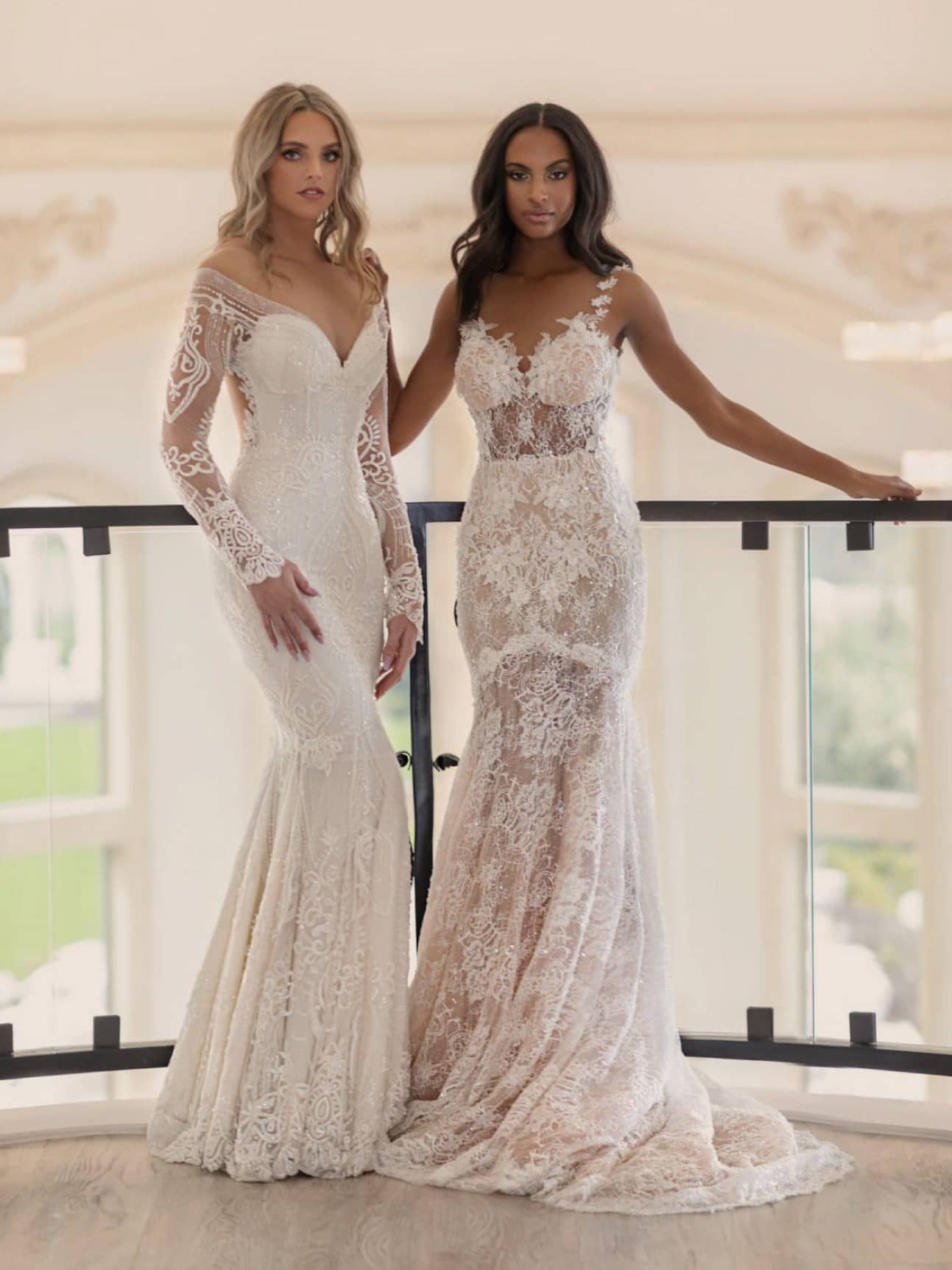
| Beaded fabric | Adds surface detail and potentially more weight | How the complete gown feels while walking and turning |
These are fabric tendencies, rather than guarantees about a finished dress. Maggie Sottero
To make the silhouette comparison clearer, ask to try a mermaid and trumpet in similar fabrics first. Then explore different materials once you know which flare placement you prefer.
How Corsetry and Bodice Construction Affect the Silhouette
Bodice construction influences where the gown sits and how secure it feels as you move.
Internal boning, cups, waist support, lining, and shaping seams may work together to hold the upper dress in position. Fitted gowns use different combinations of these features; every dress doesn’t require a separate corset.
A basque or dropped waist can extend the visual line of the bodice. That changes how you perceive the torso-to-skirt relationship, even if the skirt’s actual flare stays in the same place.
Ask the stylist to assess the cups, waist placement, side seams, and hip fit together. Making the dress tighter is only one possible adjustment, and it may not solve a placement or support issue. bridalandtuxedogalleria.com
Can Alterations Change a Mermaid or Trumpet Wedding Dress?
Some fit details can often be refined, but changing the actual silhouette may require substantial reconstruction.
Depending on the gown, alterations may address the waist, hips, thighs, straps, cups, bodice support, hem, or bustle. Neckline changes and train adjustments need their own construction assessment.
Moving the flare considerably higher or lower is a different request. It may involve new pattern work, additional fabric, reconstructed seams, lining changes, or repositioned lace. Available seam allowance and matching materials can limit what is practical. bridalandtuxedogalleria.com
Before purchasing a gown on the assumption that its shape can be changed, have an experienced bridal tailor evaluate the exact dress. Ask what can be refined, what would require rebuilding, and how the change could affect movement.
BTG’s bridal alterations and in-house tailoring services provide a place to discuss those questions before making a decision.
Which Silhouette Photographs Differently?
Mermaid gowns often show a more pronounced fitted thigh line and lower flare, while trumpet gowns tend to show a more continuous curve into the skirt.
Neither photographs better in every situation. Train placement, fabric texture, lighting, veil length, pose, and camera angle all influence the result.
For your own comparison, request a full-length front photograph, a side view, and a back view in each gown, if boutique photography is permitted. Keep your stance similar. Add a short walking video so you can see the skirt between poses.
Which Works Better for a San Diego Wedding?
Either silhouette can suit a San Diego wedding. Your venue’s walking surfaces and the way you plan to spend the day are more useful considerations than location alone.
| Wedding setting | What to consider during the fitting |
|---|---|
| Coastal ceremony | Breeze, sand or uneven paths, fabric weight, and how you’ll manage the train |
| Garden or estate wedding | Grass, stairs, longer portrait walks, and indoor-to-outdoor transitions |
| Ballroom or hotel wedding | Seated comfort, the aisle, skirt volume, and movement between tables |
| Resort wedding | Distances between preparation, ceremony, portrait, and reception spaces |
| Reception-focused celebration | Your preferred dance movements and whether you want one gown throughout |
A structured mermaid or trumpet can suit a formal setting; outdoor celebrations call for a closer look at weight and movement. Maggie Sottero
For a La Jolla coastal celebration, for example, describe the route you’ll actually walk. A paved terrace and a sandy shoreline create different practical questions.
Mermaid or Trumpet: Which One Should You Try First?
Try the silhouette you’re most curious about first, then compare the other while the experience is fresh.
Use similar shoes and undergarments, and ask for comparable fabric and support where possible. That helps you identify whether you prefer the flare placement or simply the feel of one particular dress.
Petite and tall brides may experience the same sample differently because its flare falls at a different place relative to their knees. Hemming changes length, but it doesn’t necessarily reposition the gown’s built-in flare.
Sample fit also needs interpretation. Clips can help you visualize a larger gown, but they cannot fully reproduce the balance and movement of the appropriate size. An overly small sample can make either silhouette feel more restrictive than intended. Jovani
Before changing dresses, record three short notes: the shape I see, the movement I feel, and the support I notice. Those details are easier to compare than a photograph alone.
A Stylist’s Fitting-Room Checklist
Use the same questions for both gowns:
- Where does the skirt actually begin to release on my body?
- Can I walk at my usual pace?
- Can I sit fully and remain comfortable?
- Can I bend enough for ordinary wedding-day movements?
- Does the bodice stay secure when I move?
- Do I enjoy the silhouette from the side?
- Do I like the back view with the train arranged naturally?
- Does the flare have the amount of drama I want?
- Does the complete gown feel suitable for my wedding setting?
- Which fit concerns come from the sample size?
- Can alterations realistically address the details I want changed?
- Does the gown still feel like me once I stop posing?
Try Mermaid and Trumpet Wedding Dresses in San Diego
Bridal & Tuxedo Galleria has served brides since 1994, bringing more than 30 years of bridal experience to its San Diego boutique. Its designer collections, one-on-one styling, and in-house alterations services allow brides to discuss appearance, construction, and final fit together. Bridal & Tuxedo Galleria
Browse the designer wedding dresses before your visit, and mention that you’d like to compare lower and higher flare points. Confirm current samples if you have particular gowns in mind.
For an appointment with additional privacy, explore the Princess Bridal Appointment, subject to availability. Bridal Shop San Diego
Mermaid vs Trumpet Wedding Dress FAQs
What is the main difference between a mermaid and trumpet wedding dress?
The main difference in a mermaid vs trumpet wedding dress comparison is flare placement. A mermaid usually opens around the knee or below, while a trumpet generally begins widening around mid-thigh. That affects the outline and available knee room.
Where does a mermaid wedding dress flare?
A mermaid wedding dress generally flares around the knee or below after fitting closely through the hips and thighs. The precise release varies by design and by where the gown’s proportions fall on the person wearing it.
Where does a trumpet wedding dress flare?
A trumpet wedding dress generally begins flaring around mid-thigh. The skirt moves away from the legs earlier than a traditional mermaid, often creating a gentler transition into fullness and more space around the knees.
Is trumpet the same as mermaid?
Trumpet and mermaid usually describe different flare placements within the fitted bridal family. Designers and retailers sometimes use the terms loosely, so check the actual cut and movement rather than making a decision from the label alone.
Is trumpet the same as fit-and-flare?
Trumpet is often included within the broader fit-and-flare family. When the terms are used separately, fit-and-flare generally describes an earlier, more gradual release, while trumpet suggests a more defined opening around mid-thigh. Terminology varies between designers.
Which is easier to walk in, mermaid or trumpet?
Trumpet gowns generally allow more knee room because they flare higher. A particular mermaid may still feel easier to walk in if its skirt, lining, and fabric provide more flexibility than the trumpet gown being compared.
Which is easier to dance in?
A trumpet often provides more freedom around the knees, but dancing comfort depends on the complete gown. Try your own dance movements and discuss train management before choosing; a higher flare alone cannot guarantee comfortable movement all evening.
Are mermaid dresses uncomfortable?
Mermaid dresses can be comfortable when the fit, support, fabric, and available movement suit the wearer. A close silhouette doesn’t need to feel excessively tight. Check sitting comfort and leg room, and distinguish sample-size issues from the design itself.
Can petite brides wear mermaid wedding dresses?
Yes, petite brides can wear mermaid wedding dresses. Focus on where the waist, bodice, and flare fall on your own proportions. Ask whether the ordered gown’s length options or proposed alterations will preserve the shape you enjoyed trying on.
Can curvy or plus-size brides wear mermaid or trumpet gowns?
Yes, curvy and plus-size brides can wear either silhouette. Cup fit, bodice support, hip and thigh room, and the gown’s construction deserve individual attention. Choose according to the shape and movement you enjoy rather than a body-type rule.
Which silhouette is more dramatic?
A traditional mermaid usually creates the sharper transition into the lower skirt. A trumpet can be equally expressive through substantial volume, structured fabric, embellishment, or a long train. Compare the complete designs rather than ranking drama by silhouette alone.
Can a mermaid wedding dress be altered into a trumpet shape?
Sometimes, but the change may require significant reconstruction. Seam allowance, matching fabric, lace placement, lining, and the original pattern affect feasibility. Have a bridal tailor assess the individual gown before purchasing it with a silhouette conversion in mind.
Where can I try mermaid and trumpet wedding dresses in San Diego?
Bridal & Tuxedo Galleria in San Diego offers fitted designer bridal styles and one-on-one styling appointments. Request a comparison of mermaid and trumpet shapes when booking, and confirm sample availability if you want to try specific gowns.
Choose the Gown You Enjoy Moving In
The most useful mermaid vs trumpet wedding dress comparison happens when you see where each gown releases on your body, then walk, sit, and turn. Let the shape you enjoy and the movement you need guide the decision.
Try both directions with a stylist at Bridal & Tuxedo Galleria in San Diego, and bring your questions about fabric, support, and tailoring into the fitting room.

Author bio :
Kayla brings more than 10 years of hands-on experience in bridal fashion and boutique styling, specializing in personalized bridal consultations and luxury client experiences. As the manager of the San Diego location of Bridal and Tuxedo Galleria, she is known for her keen eye for detail, deep understanding of couture wedding dress design, and ability to guide brides toward a gown that reflects their unique vision and wedding aesthetic. Her approach blends fashion expertise with genuine care, ensuring every bride feels confident, understood, and unforgettable on her wedding day
Call Now

Your Personalized Wedding Dress Shopping Experience in San Diego With over 30 years of styling expertise, our dedicated team is passionate about helping you find the perfect wedding dress and tuxedo.

Leave a Reply