What is the Difference Between an A-line Wedding Dress and a Ball Gown?
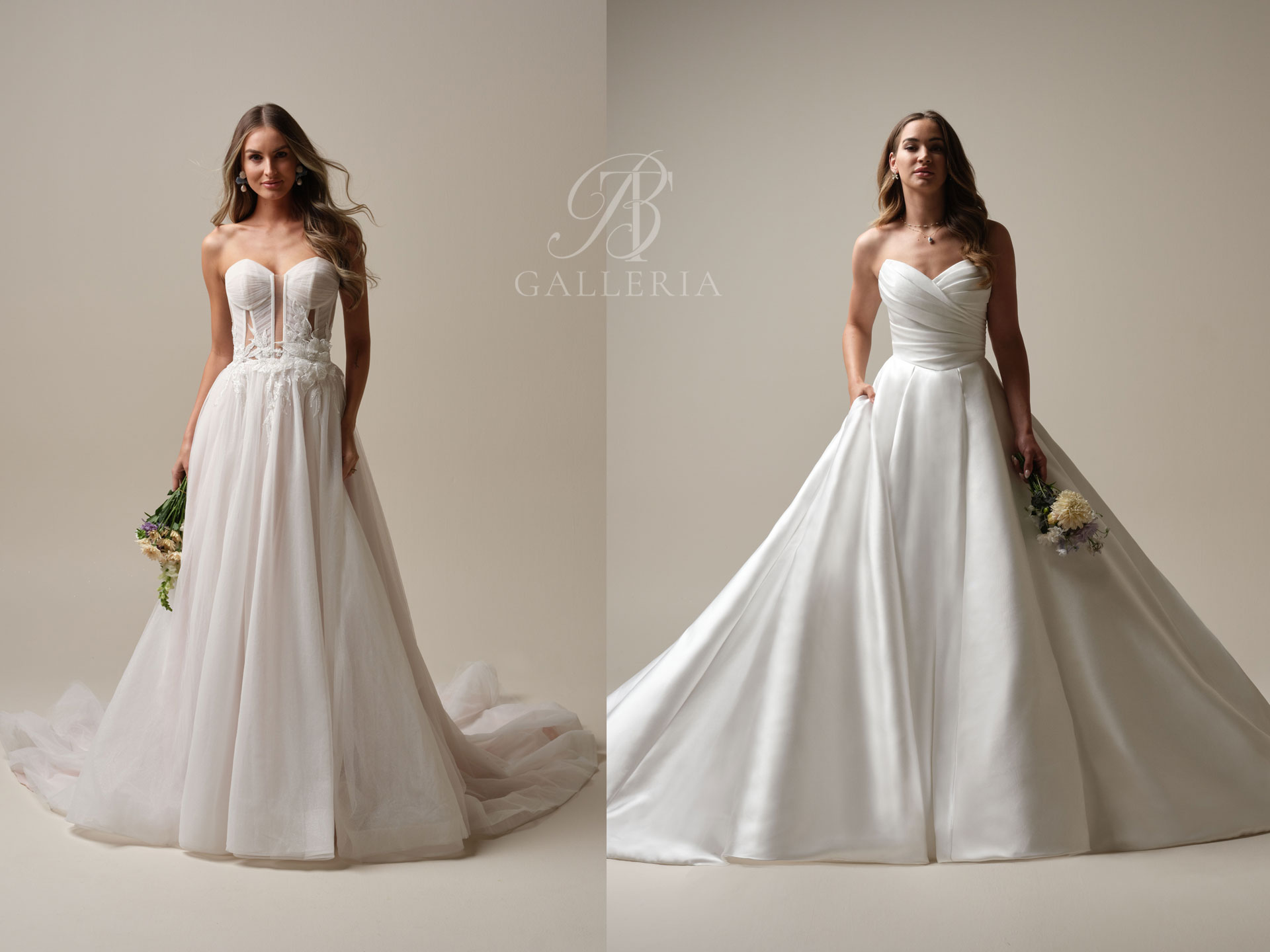
A ball gown and an A-line wedding dress may look similar on a hanger, but they create very different experiences when worn. An A-line skirt widens gradually from the waist or upper hip, while a ball gown creates a more immediate, dramatic transition from a fitted bodice to a full skirt.
The best choice depends on more than body shape. Consider how much volume you enjoy, how you want to move, the structure of the bodice, your venue, your fabric preferences, and how you feel when you see the complete silhouette.
At Bridal & Tuxedo Galleria in San Diego, brides can compare both shapes during a dedicated bridal appointment rather than trying to make the decision from photographs alone. The boutique’s stylists help brides evaluate proportion, support, movement, fabric, and final fit.
Compare A-Line and Ball Gown Styles During a Private Appointment
What Is the Main Difference Between a Ball Gown and an A-Line Wedding Dress?
The primary difference is where and how dramatically the skirt expands.
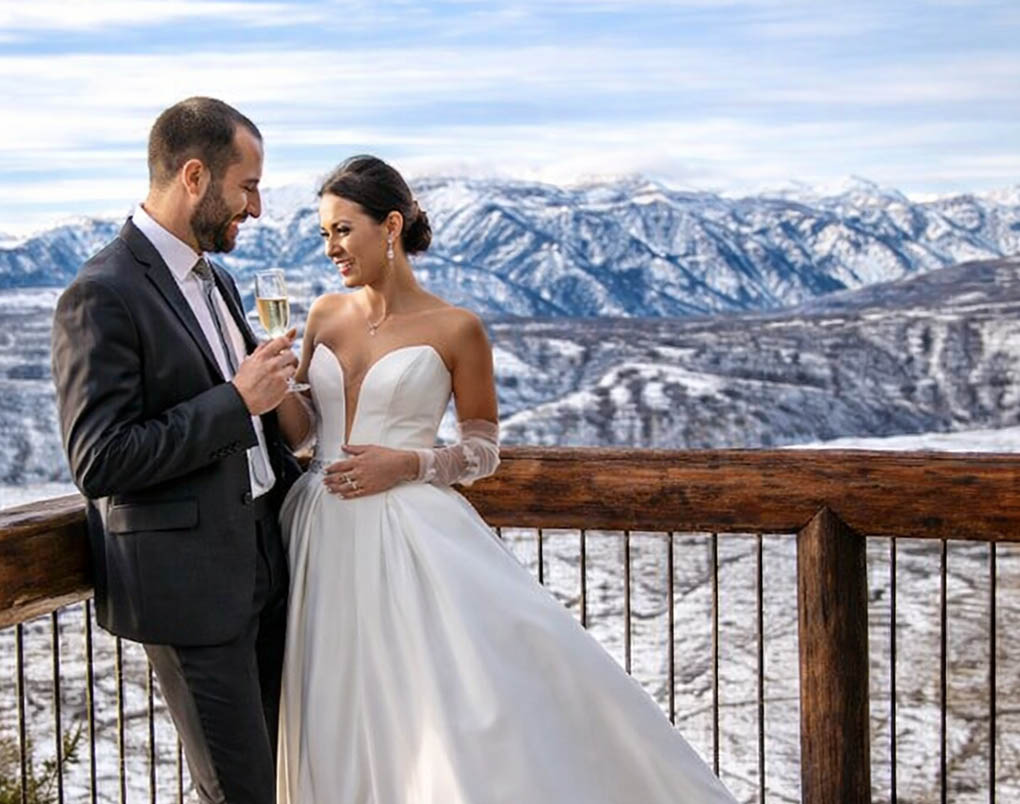
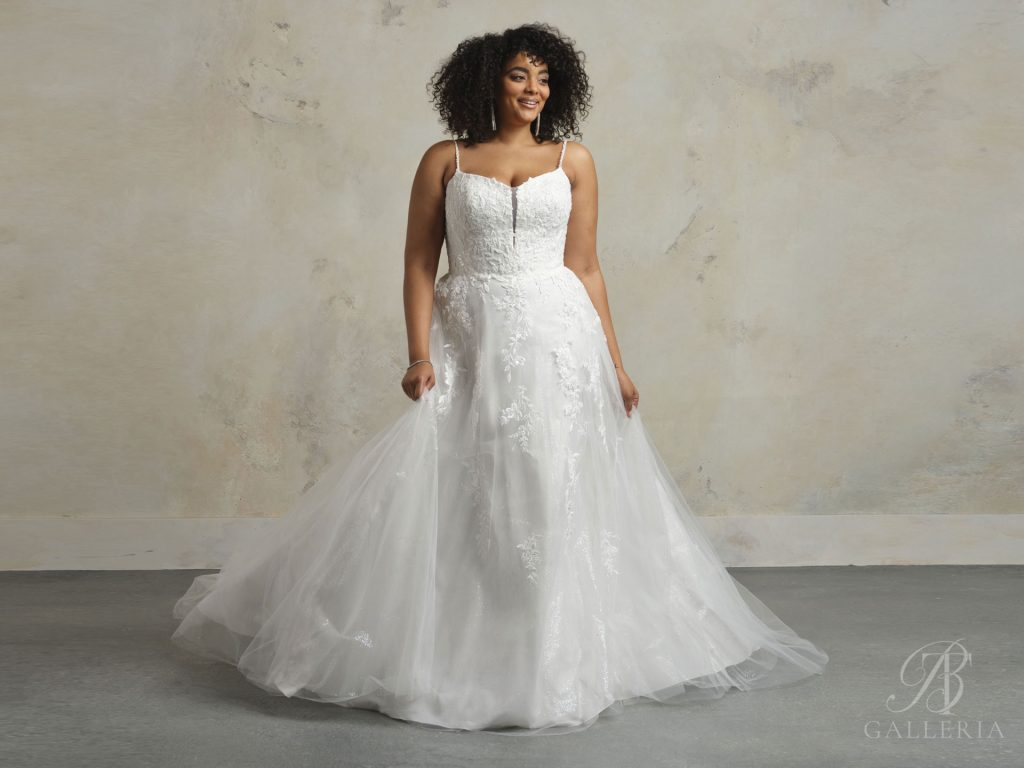
An A-line wedding dress has a fitted or softly structured bodice and a skirt that gradually becomes wider toward the hem, creating the outline of the letter “A.”
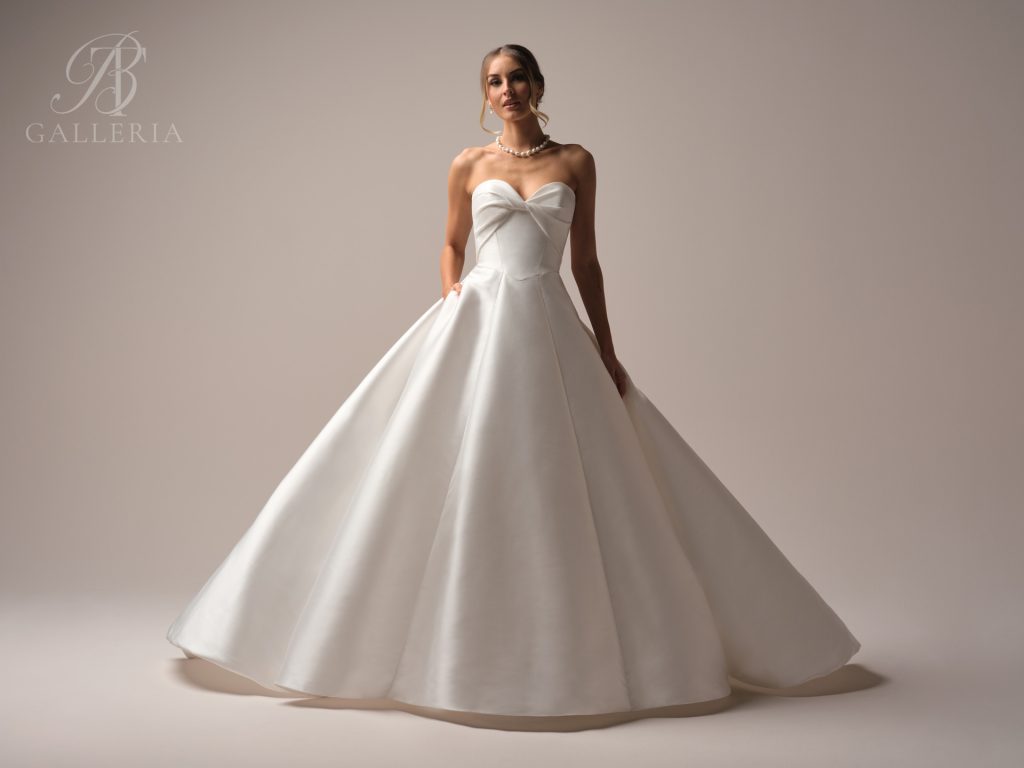
A ball gown also has a fitted bodice, but the skirt becomes noticeably fuller at or near the natural waist. Its volume may be created through layers of tulle, organza, structured fabric, crinoline, a petticoat, or an engineered underskirt.
What Is the Main Difference Between a Ball Gown and an A-Line Wedding Dress?
The primary difference is where and how dramatically the skirt expands.
An A-line wedding dress has a fitted or softly structured bodice and a skirt that gradually becomes wider toward the hem, creating the outline of the letter “A.”
A ball gown also has a fitted bodice, but the skirt becomes noticeably fuller at or near the natural waist. Its volume may be created through layers of tulle, organza, structured fabric, crinoline, a petticoat, or an engineered underskirt.
Ball Gown vs. A-Line Wedding Dress at a Glance
| Feature | A-Line Wedding Dress | Ball Gown Wedding Dress |
|---|---|---|
| Skirt shape | Gradual, continuous flare | Immediate, full expansion |
| Waist transition | Soft or moderately defined | Strongly defined |
| Overall presence | Refined, fluid, versatile | Dramatic, regal, architectural |
| Typical movement | Usually easier through narrow spaces | Requires more awareness of skirt volume |
| Fabric possibilities | Chiffon, crepe, lace, satin, tulle, organza or Mikado | Tulle, organza, satin, Mikado, lace or layered fabrics |
| Venue flexibility | Works across informal and formal settings | Especially impactful in spacious or formal settings |
| Underskirt | Often minimal or optional | Frequently used to support volume |
| Photography | Long, balanced vertical line | Strong waist definition and expansive visual impact |
| Best for | Brides who want graceful movement and adaptable styling | Brides who want ceremony drama and a defined bridal statement |
Neither silhouette is automatically more elegant, more comfortable, or more flattering. The fabric, waist placement, neckline, train, internal structure, and tailoring can completely change how each gown looks and feels.
What Is an A-Line Wedding Dress?
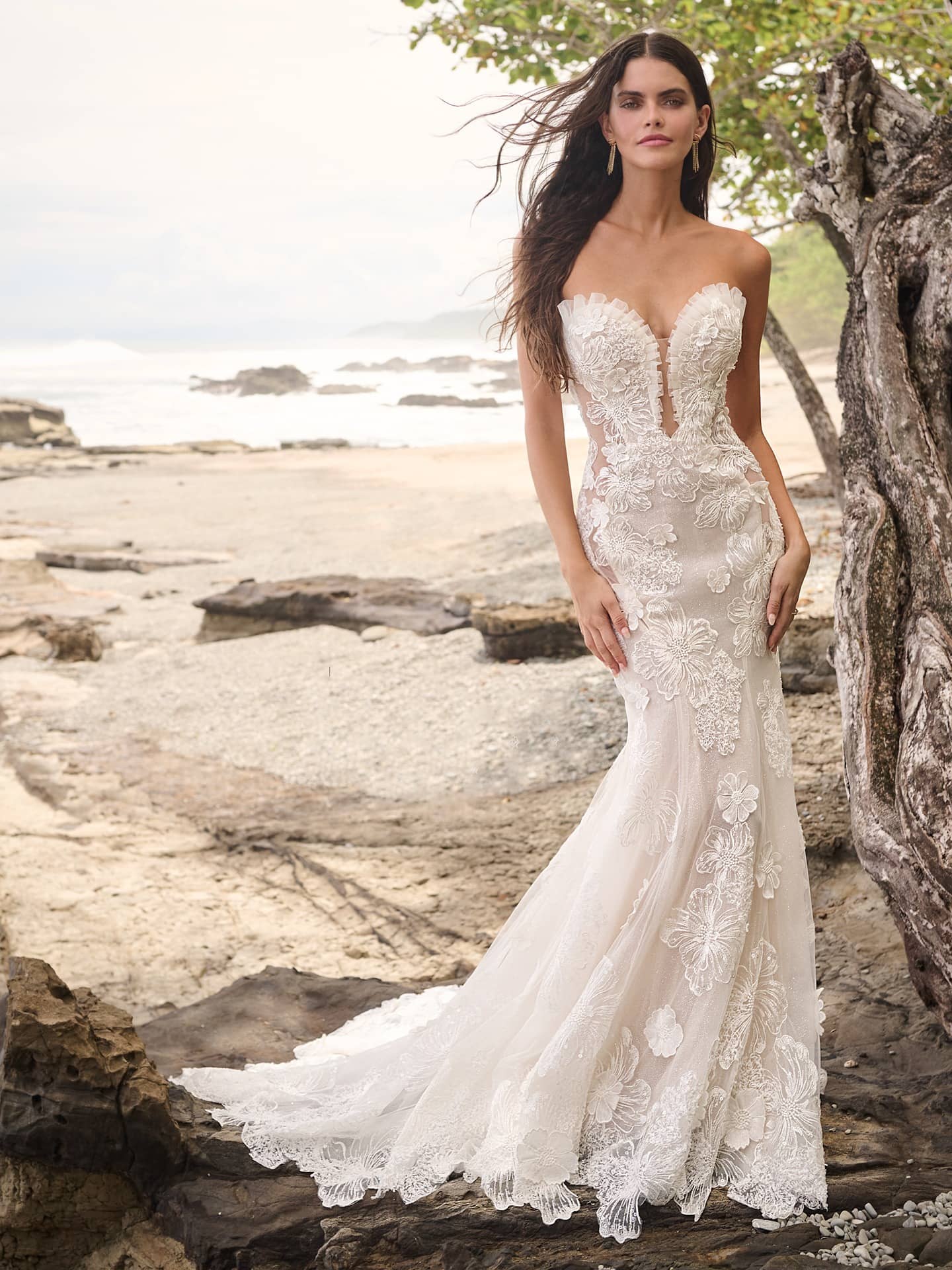
An A-line wedding dress follows a clean, widening line from the fitted bodice toward the floor. The flare may begin at the natural waist, slightly below the waist, or near the upper hip, depending on the gown’s pattern and construction.
Some A-line gowns are light and flowing. Others are made from structured satin or Mikado and can create considerable volume while maintaining a smoother transition than a traditional ball gown.
A-line silhouettes are often chosen by brides who want:
- Definition through the bodice and waist
- Graceful movement while walking
- A skirt that feels bridal without being highly voluminous
- Flexibility for coastal, garden, estate, resort or ballroom weddings
- A silhouette that can appear romantic, minimalist, classic or couture
Explore BTG’s curated collection of A-line wedding dresses in San Diego and Orange County. The collection includes fluid, lace, satin, structured and personalized interpretations rather than one standard A-line shape.
What Is a Ball Gown Wedding Dress?
A ball gown wedding dress combines a closely fitted bodice with a visibly full skirt. The transition at the waist is usually more pronounced than it is on an A-line gown, creating a strong contrast between the bodice and skirt.
The volume does not always mean excessive weight. Modern ball gowns can use lightweight tulle, horsehair braid, engineered underskirts and strategic fabric layering to create shape without relying entirely on heavy crinoline.
Brides often choose ball gowns when they want:
- A distinctly formal or ceremonial presence
- Strong waist definition
- A skirt that creates movement in photographs
- A grand entrance in a ballroom, cathedral, estate or resort venue
- A sculptural or couture-inspired silhouette
- The emotional feeling of a traditional bridal gown
Explore ball gown wedding dresses at Bridal & Tuxedo Galleria to compare structured satin, romantic lace, layered tulle and contemporary couture designs.
Is an A-Line Wedding Dress Less Full Than a Ball Gown?
Usually, yes—but the distinction is not always absolute.
A narrow A-line may fall softly from the waist with very little internal support. A fuller A-line may include several layers of tulle, horsehair trim or a detachable underskirt and can visually approach the scale of a soft ball gown.
Similarly, not every ball gown is extremely large. A gown can retain a defined ball-gown waist while using controlled volume and lightweight construction.
When comparing dresses, look at these details rather than relying only on the product label:
- Where the skirt begins to expand
- How quickly it becomes full
- Whether the skirt has an underskirt or petticoat
- How much fabric gathers at the waist
- Whether the volume is concentrated at the sides, back or entire skirt
- How the skirt changes when the gown is bustled
A stylist may describe a gown as a “full A-line,” “soft ball gown” or “modified ball gown” when its construction falls between traditional categories.
Which Wedding Dress Is Easier to Walk and Dance In?
An A-line is generally easier to manage because it usually contains less skirt volume. However, comfort depends on much more than the name of the silhouette.
A properly constructed ball gown may keep fabric away from the legs with a supportive underskirt, making it easier to walk than a heavy, unstructured gown. A poorly fitted A-line can still restrict movement if the waist, lining, hem or inner layers are not adjusted correctly.
During your appointment, test both silhouettes by:
- Walking at your normal pace
- Sitting in a chair
- Stepping onto a platform or low step
- Turning without lifting the entire skirt
- Bending slightly to greet or hug someone
- Raising your arms naturally
- Practicing a few dance movements
- Checking whether the bodice remains secure
Do not judge mobility while standing still in front of a mirror. Your wedding dress needs to support the entire celebration—from the aisle and portraits to dinner and dancing.
BTG Fitting Insight
The most useful comparison is not simply “Which gown looks smaller?” It is “Which gown gives me the presence I want while allowing me to move naturally?”
A professionally clipped sample provides a better impression of the final fit, but it is still not identical to a gown ordered in the correct size and refined through alterations.
Which Silhouette Creates More Waist Definition?
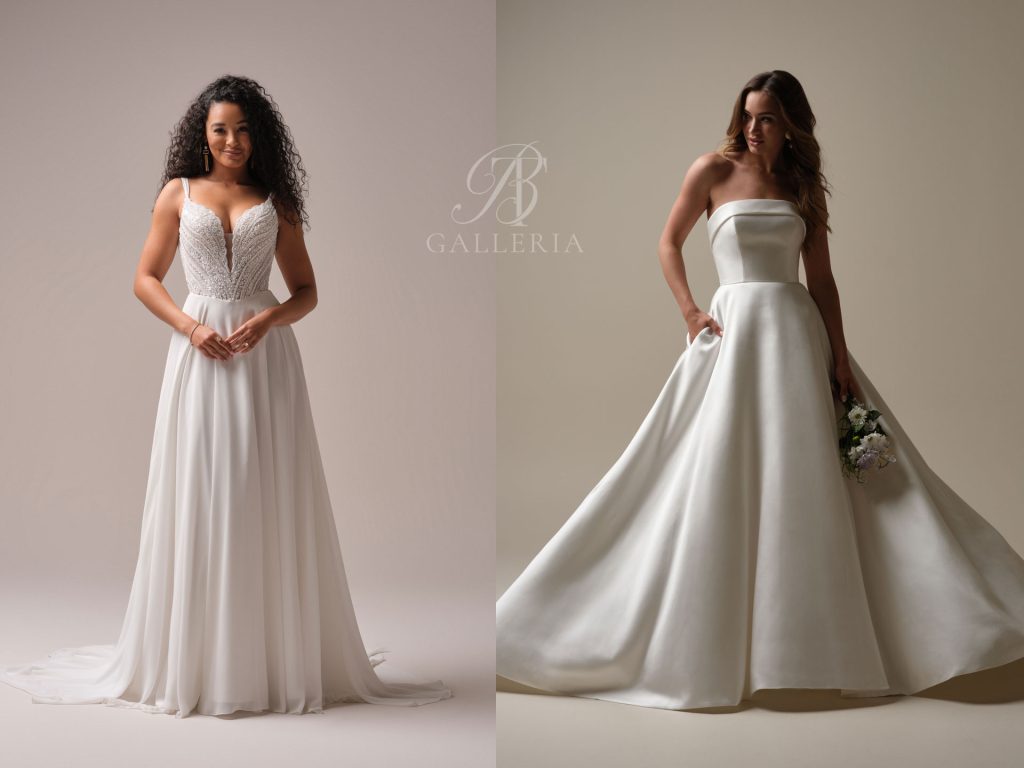
Ball gowns generally create stronger waist emphasis because their skirts expand more dramatically beneath the fitted bodice.
A-line dresses can also define the waist beautifully, especially when they include:
- A corseted bodice
- A basque or dropped waist
- Strategic seaming
- A contrasting belt
- Structured satin or Mikado
- Lace placement that directs attention toward the waist
- A gradual flare beginning immediately below the waistline
Waist placement matters as much as skirt volume. A seam positioned slightly higher, lower or in a pointed basque shape can change the proportions of the entire gown.
This is one reason two dresses labeled “A-line” can look completely different on the same bride.
Is a Ball Gown or A-Line Better for My Body Type?
There is no silhouette reserved for one body type.
Petite, tall, curvy, athletic, straight and plus-size brides can wear either an A-line or a ball gown. What matters is how the individual gown’s waistline, bodice length, neckline, skirt scale and fabric relate to your proportions.
Instead of following a strict body-shape rule, ask:
- Does the waistline sit in a natural and comfortable position?
- Does the bodice provide the support I need?
- Does the skirt feel proportional from the front, side and back?
- Can I see myself rather than only the dress?
- Do I enjoy the amount of volume?
- Does the complete silhouette reflect my wedding vision?
- Do I feel secure while sitting, walking and moving?
For brides seeking inclusive sample options, explore BTG’s plus-size wedding dress collection, which includes A-line, ball gown and other silhouettes that can be evaluated through real in-person fitting rather than restrictive body formulas.
A-Line vs. Ball Gown for Petite Brides
Petite brides do not need to avoid ball gowns. The key is controlling proportion.
A ball gown may work beautifully when it has:
- A bodice length suited to the bride’s torso
- A clearly placed waistline
- Volume distributed vertically rather than only at the sides
- A train and skirt scaled to the bride
- A neckline that keeps the upper body visually open
- Lightweight layers that do not overwhelm movement
A-line gowns can create a longer continuous line, but an excessively low waist or heavy skirt can also affect petite proportions.
The correct hem, waist placement and bodice length are more important than choosing a silhouette based only on height.
A-Line vs. Ball Gown for Curvy and Plus-Size Brides
Both silhouettes can provide excellent structure and support.
An A-line can create a smooth transition from the bodice through the skirt, while a ball gown can establish strong waist definition and distribute volume through the lower half of the gown.
Pay particular attention to:
- Cup shape and bust support
- Boning placement
- Waist-stay construction
- Strap or sleeve positioning
- Bodice length
- Fabric strength
- Skirt weight
- The way the gown behaves when seated
The objective is not to conceal the body. It is to find construction that feels secure, balanced and expressive of the bride’s personal style.
Which Silhouette Works Best for a San Diego Wedding Venue?
Your venue can influence fabric, volume and mobility, but it should not dictate your dress.
Coastal and Beach Weddings
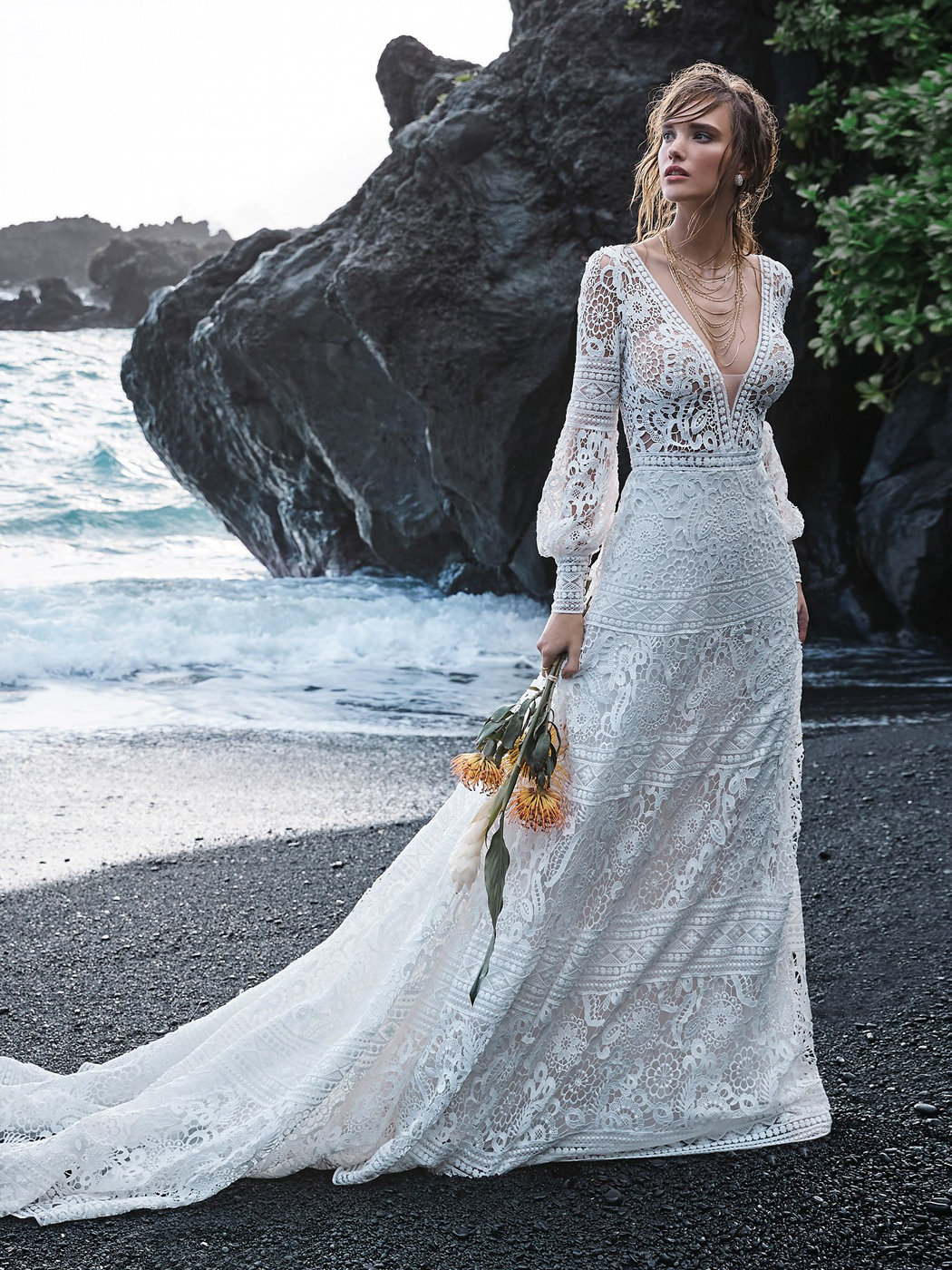
For ceremonies in La Jolla, Coronado, Del Mar or other coastal locations, a lighter A-line may be easier on sand, pathways and outdoor terrain.
A ball gown can still work for a coastal wedding, particularly at a resort or formal oceanfront property. Consider lighter internal layers, a manageable train and a reliable bustle.
Garden Weddings and Historic Estates
Both silhouettes complement gardens, historic architecture and estate settings.
A romantic A-line can move softly through outdoor spaces, while a controlled ball gown can create a beautiful contrast against greenery and traditional architecture.
Ballroom and Luxury Resort Weddings
A ball gown naturally fills the scale of a large ballroom and creates a strong ceremony entrance.
A structured satin or Mikado A-line can offer an equally sophisticated alternative for brides who prefer a cleaner, more modern line.
Vineyard and Destination Weddings
An A-line is often practical for varied surfaces and transportation. A ball gown may be ideal when the destination includes a formal indoor reception or spacious ceremony location.
Review BTG’s guide to matching wedding dresses with San Diego wedding venues for additional local inspiration.
How Fabric Changes an A-Line or Ball Gown
Silhouette describes shape, but fabric determines how that shape behaves.
Tulle
Tulle creates airy volume and is commonly used in both A-line and ball gown skirts. Several layers can create drama without the visual weight of a dense woven fabric.
Mikado
Mikado provides structure, clean folds and a polished surface. It can create an architectural A-line or a highly defined ball gown.
Satin
Satin may appear fluid or structured depending on its weight. A satin A-line can feel minimal and graceful, while a full satin ball gown creates strong visual presence.
Organza
Organza provides volume with a lighter, crisper quality. It is useful for brides who want movement and dimension without extremely dense layers.
Chiffon
Chiffon is most commonly associated with soft A-line gowns because it falls close to the body and moves easily.
Lace
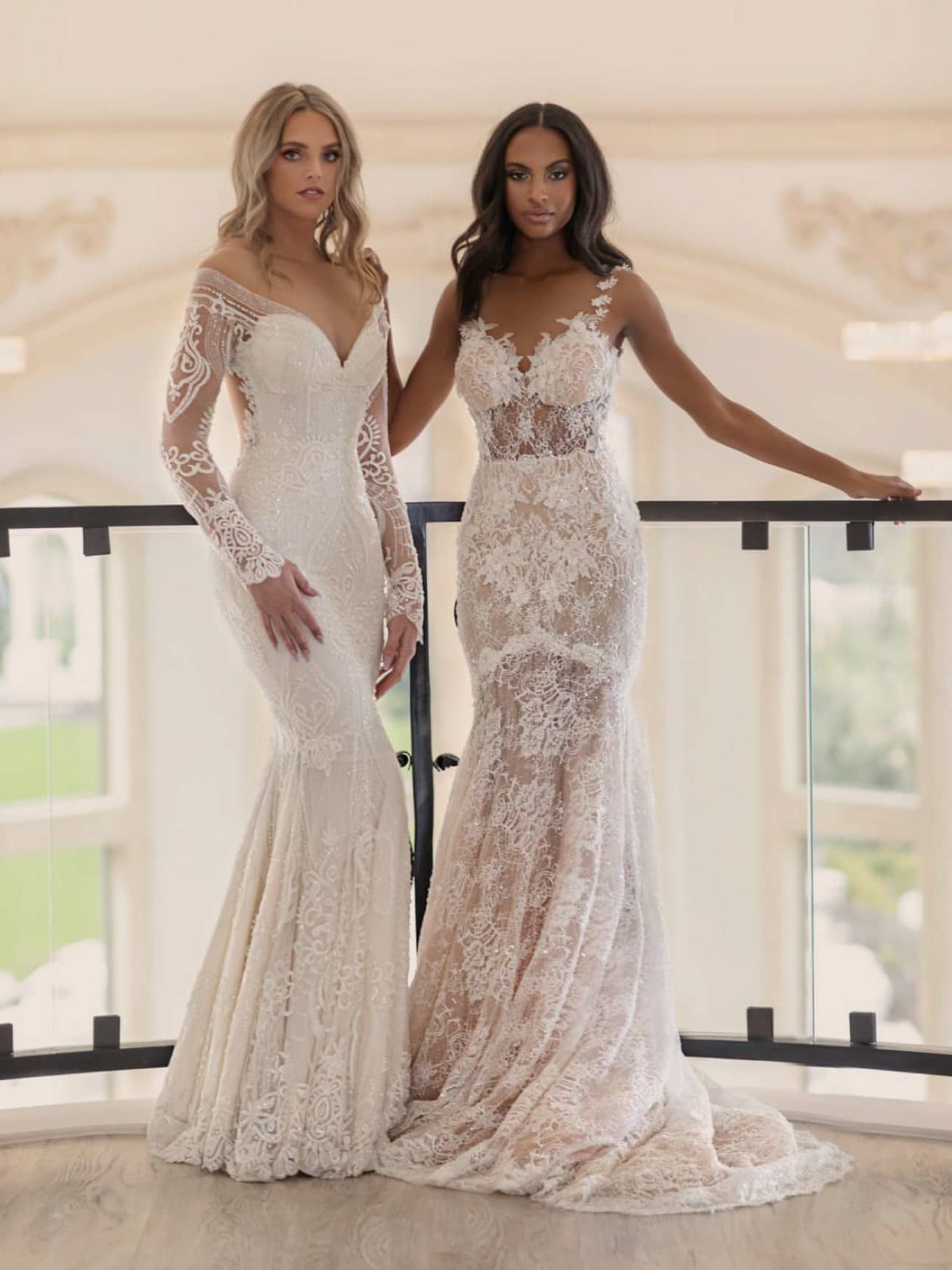
Lace does not determine the silhouette by itself. Its pattern, placement and base fabric influence whether the gown feels soft, dimensional, traditional or modern.
When trying on a gown, notice not only how the fabric looks but how it feels against the skin, responds to movement and holds its shape over time.
Can Alterations Make an A-Line Fuller or a Ball Gown Smaller?
Some skirt-volume adjustments are possible, but not every gown can be transformed into a completely different silhouette.
Depending on the construction, an alterations specialist may be able to:
- Add or remove a petticoat
- Adjust selected layers of tulle
- refine the hem and train
- Rebalance skirt layers
- Improve the bustle
- Reshape the bodice
- Adjust the waist seam
- Add internal support
- Modify straps or sleeves
- Improve how the skirt falls from the waist
Changing a narrow A-line into a true ball gown may require substantial pattern and structural work. Dramatically reducing a ball gown can also affect its seams, lace placement, proportions and train.
Bridal & Tuxedo Galleria offers professional in-house alterations, including bodice adjustments, corset work, hem refinements, bustle construction and structural balancing for heavier gowns.
Learn more about bridal alterations and in-house tailoring before planning a major silhouette change.
The In-Person Silhouette Test
Try one true A-line and one true ball gown before deciding—even when you believe you already know which one you prefer.
Evaluate each gown from several perspectives.
In the Mirror
- Does the waist sit where you expect?
- Do you like the scale of the skirt?
- Does the dress feel balanced from shoulder to hem?
In Photographs
- Take front, side and back photos.
- Compare the gown from both close and full-room distances.
- Check whether the silhouette still feels like you when viewed in a photograph.
While Moving
- Walk, sit, turn, bend and raise your arms.
- Notice whether you are adjusting the bodice.
- Test whether you can manage the skirt without assistance.
Emotionally
- Do you feel elegant, romantic, modern, regal or relaxed?
- Does the gown match the energy of your celebration?
- Are you excited by the dress, or only trying to satisfy a styling rule?
The strongest choice is usually the gown that supports both the visual experience you want and the way you want to feel throughout the day.
Ball Gown or A-Line: A Simple Decision Guide
An A-line wedding dress may be right for you when you want:
- A gradual, balanced silhouette
- Easier movement through varied spaces
- Flexible styling across different venue types
- Soft or moderate skirt volume
- A gown that can move from ceremony to reception with minimal adjustment
A ball gown wedding dress may be right for you when you want:
- A dramatic ceremony entrance
- Strong waist definition
- A full and expressive skirt
- A regal or architectural presence
- A gown designed to occupy a large visual setting
You may also discover that your ideal gown is between the two—a full A-line, modified ball gown or gown with a removable overskirt.
Explore the complete wedding dress lookbook or review BTG’s wedding dress silhouette guide before your visit.
Compare Both Silhouettes During a San Diego Bridal Appointment
The clearest way to choose between an A-line and a ball gown is to try both with professional guidance.
During a bridal appointment at Bridal & Tuxedo Galleria, a dedicated stylist can help you compare:
- Gradual versus dramatic skirt volume
- Natural, basque and dropped waistlines
- Structured versus fluid fabrics
- Bodice support and corsetry
- Train lengths
- Petticoat and overskirt options
- Movement and comfort
- Potential customizations
- The sample fit versus the final tailored fit
Bridal & Tuxedo Galleria has served Southern California brides for more than 30 years and offers designer wedding dresses, couture options, personalized styling and in-house alterations from its San Diego boutique.
Bring photos of your venue, two or three inspiration images, your preferred heel height and an open mind. Many brides discover that the silhouette they love in person is different from the one they originally saved online.
Book Your Private Bridal Appointment in San Diego
Frequently Asked Questions About Ball Gown vs. A-Line Wedding Dresses
Is an A-line wedding dress the same as a ball gown?
No. An A-line skirt widens gradually from the waist or upper hip, while a ball gown creates a fuller and more immediate expansion from a fitted bodice. Some full A-line gowns can resemble soft ball gowns, so the exact distinction depends on the gown’s pattern, skirt layers and internal structure.
Is an A-line or ball gown more flattering?
Neither silhouette is universally more flattering. The result depends on the gown’s waist placement, bodice length, neckline, support, fabric and skirt proportions. Brides of every height and body shape can wear either style. The better choice is the gown that feels balanced, secure and aligned with your personal vision.
Is an A-line wedding dress easier to walk in?
A-line dresses are generally easier to manage because they tend to contain less fabric and skirt volume. However, a well-constructed ball gown with a supportive underskirt may also allow comfortable movement. Always walk, sit, turn and practice a few dance steps before making your decision.
Can a petite bride wear a ball gown?
Yes. Petite brides can wear ball gowns beautifully when the bodice length, waist placement, train and skirt volume are proportional. Lightweight layers and controlled volume can provide drama without overwhelming the bride. Professional hemming and bodice alterations are especially important for achieving the intended proportions.
Is a ball gown too formal for an outdoor wedding?
Not necessarily. A ball gown can be worn at a garden, estate, resort or coastal wedding when its fabric, train and internal layers suit the setting. Consider terrain, weather, transportation and bustle requirements. A lighter ball gown or removable overskirt can provide ceremony drama with greater reception flexibility.
Can an A-line wedding dress be made fuller?
Sometimes. Depending on its construction, an A-line gown may accommodate a petticoat, additional tulle, horsehair trim or a detachable overskirt. These additions can increase volume, but they may not turn every A-line into a true ball gown. Consult an experienced bridal alterations specialist before planning a structural change.
Are ball gowns always heavier than A-line dresses?
No. Fabric and construction determine weight. A layered tulle ball gown may feel lighter than a heavily beaded A-line. Modern underskirts, horsehair trim and strategically placed support layers can create significant volume without excessive weight.
Which silhouette is best for a beach wedding?
A lightweight A-line is often easier to manage on sand and outdoor pathways, but a ball gown is not prohibited. Brides choosing a fuller gown should consider skirt weight, train length, wind, transportation and whether the ceremony will take place directly on the sand or at a nearby resort.
Can I add a removable overskirt to create a ball-gown look?
Many gowns can be paired with a detachable overskirt, allowing a bride to create a fuller ceremony silhouette and reveal a lighter gown for the reception. The overskirt must be designed or selected to work with the original gown’s waistline, fabric, closures and train.
Where can I try A-line and ball gown wedding dresses in San Diego?
Bridal & Tuxedo Galleria offers A-line, ball gown and other designer wedding-dress silhouettes at its San Diego boutique. Brides can schedule a dedicated appointment to compare fabrics, waistlines, support, movement, skirt volume and alteration possibilities with guidance from a bridal stylist.
Find the Silhouette That Feels Like You
The difference between an A-line and a ball gown is easy to describe, but the right choice can only be understood when you experience the gown in motion.
An A-line offers a gradual, versatile shape. A ball gown delivers a stronger transition and greater visual drama. Both can be soft, modern, romantic, minimalist or couture depending on the fabric and construction.
Rather than choosing according to a body-shape formula, focus on proportion, support, movement and your emotional response to the complete gown.
Explore designer gowns, couture options and personalized styling at Bridal & Tuxedo Galleria, then compare both silhouettes during a private San Diego bridal appointment.