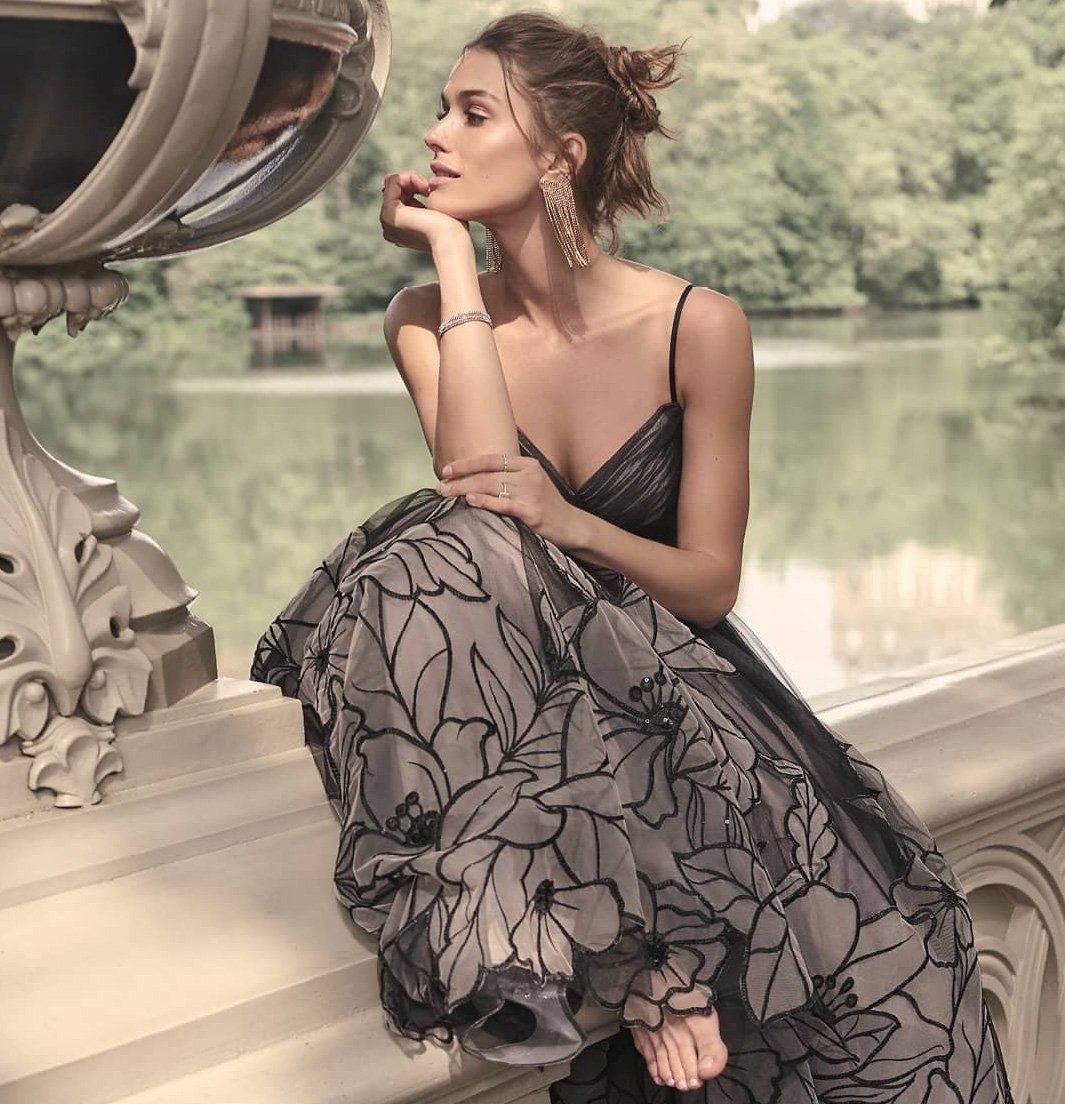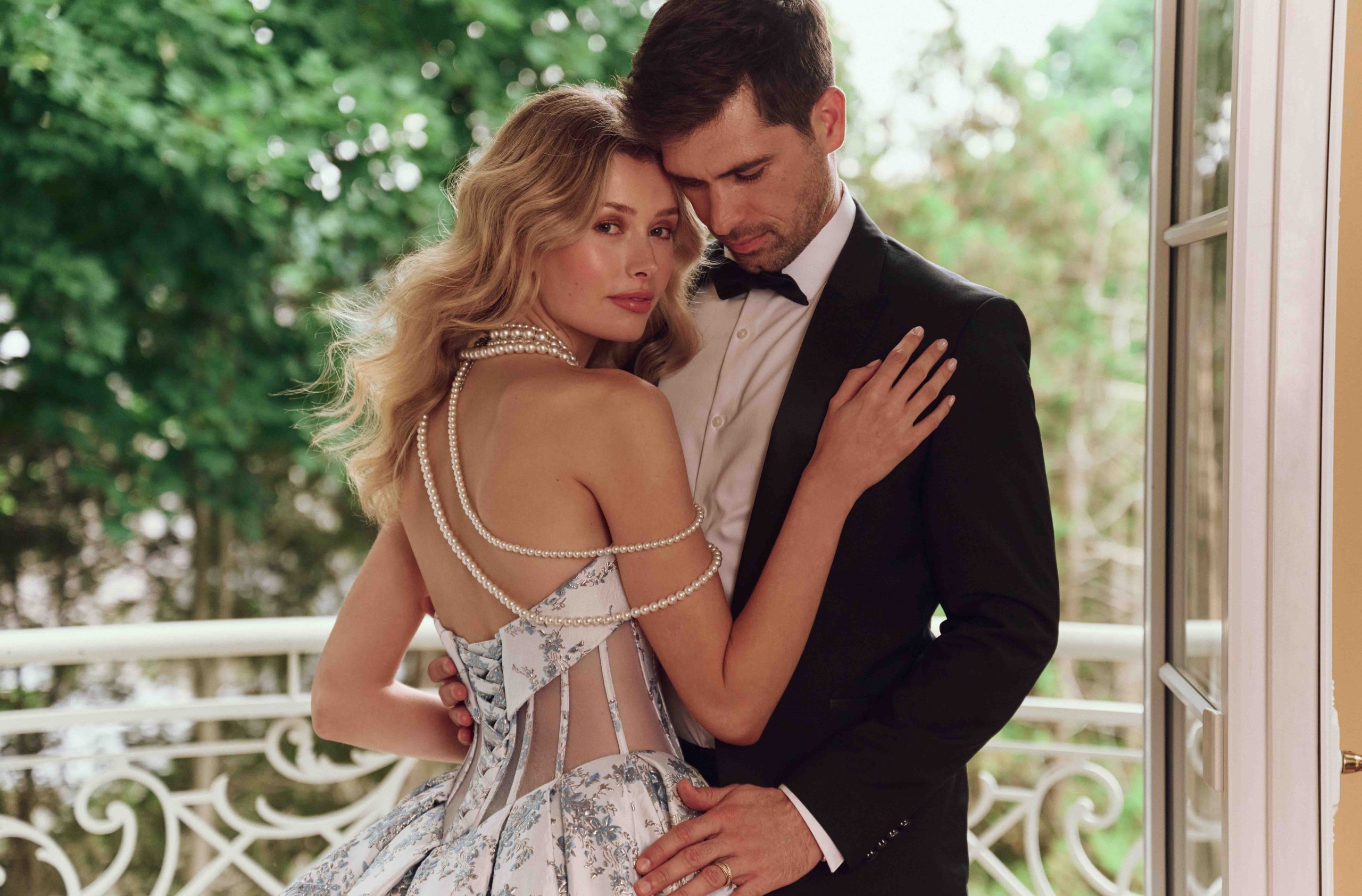
Wedding Dress Styles Explained: How to Choose Your Silhouette at 2026
A wedding dress silhouette is the overall shape a gown creates from bodice to hem. The primary silhouettes are A-line, ball gown, sheath or column, fit-and-flare, mermaid and trumpet. Silhouette establishes the outline, while fabric, internal construction, neckline and detailing determine how the dress looks, supports you and moves.
For more than 30 years, Bridal & Tuxedo Galleria has helped Southern California brides compare gowns through personalized styling at its San Diego boutique.
Wedding Dress Silhouettes at a Glance
| Silhouette | Shape | Skirt volume | Movement | Common fabrics | What to notice when trying it on |
|---|---|---|---|---|---|
| A-line | Fitted through the bodice and gradually widens toward the hem | Light to full | Usually provides a comfortable stride | Chiffon, tulle, lace, satin, Mikado and organza | Waist placement, skirt weight and how easily the layers move |
| Ball gown | Fitted bodice with a distinctly full skirt | High | Room through the legs, but a larger physical footprint | Tulle, satin, Mikado, organza and lace | Skirt weight, sitting comfort and train control |
| Sheath or column | Falls close to the body in a relatively straight line | Minimal | Depends on stretch, lining and hem width | Crepe, satin, lace, charmeuse and chiffon | Stride length, fabric cling and tension through the hips |
| Fit-and-flare | Follows the torso and hips before gradually releasing | Low to medium | Often more flexible than a lower-flaring mermaid | Crepe, lace, satin and stretch lining | Where the skirt releases and whether you can sit comfortably |
| Mermaid | Closely fitted through the hips and thigh or knee before flaring | Medium to dramatic | May restrict longer steps before the flare | Structured crepe, satin, lace and tulle | Knee room, seated comfort and internal support |
| Trumpet | Fitted through the hips with a flare commonly beginning around mid-thigh | Medium | Often offers more stride than a low-flaring mermaid | Lace, crepe, satin, organza and tulle | Exact flare point and how the skirt responds when walking |
Silhouette names are useful starting points, but bridal designers do not always categorize fitted gowns in precisely the same way. Pay attention to the gown’s actual flare point, construction and movement rather than relying only on its label.
Explore wedding dress silhouettes available through Bridal & Tuxedo Galleria. Because samples, sizes and individual gown availability can change, contact the boutique if you hope to try a particular style.
What Is a Wedding Dress Silhouette?
A wedding dress silhouette describes the gown’s outer shape: where it follows the body, where it releases and how much volume it creates. It is only one part of the complete design.
- Silhouette refers to the overall outline, such as A-line or mermaid.
- Style describes the broader visual expression, such as minimalist, romantic, vintage-inspired or couture.
- Fabric influences weight, drape, texture, shine and movement.
- Neckline and sleeves frame the upper body without defining the skirt silhouette.
- Structural fit comes from the pattern, seams, boning, cups, lining and internal support.
This is why two dresses with the same silhouette can look and feel completely different. A chiffon A-line may fall softly and move easily in a breeze, while a Mikado A-line can create a crisp, architectural shape. A stretch-crepe sheath may allow more movement than a satin column with limited give.
The category provides a starting point. The actual experience comes from how the entire gown is constructed.
The Main Types of Wedding Dress Styles
A-Line Wedding Dresses
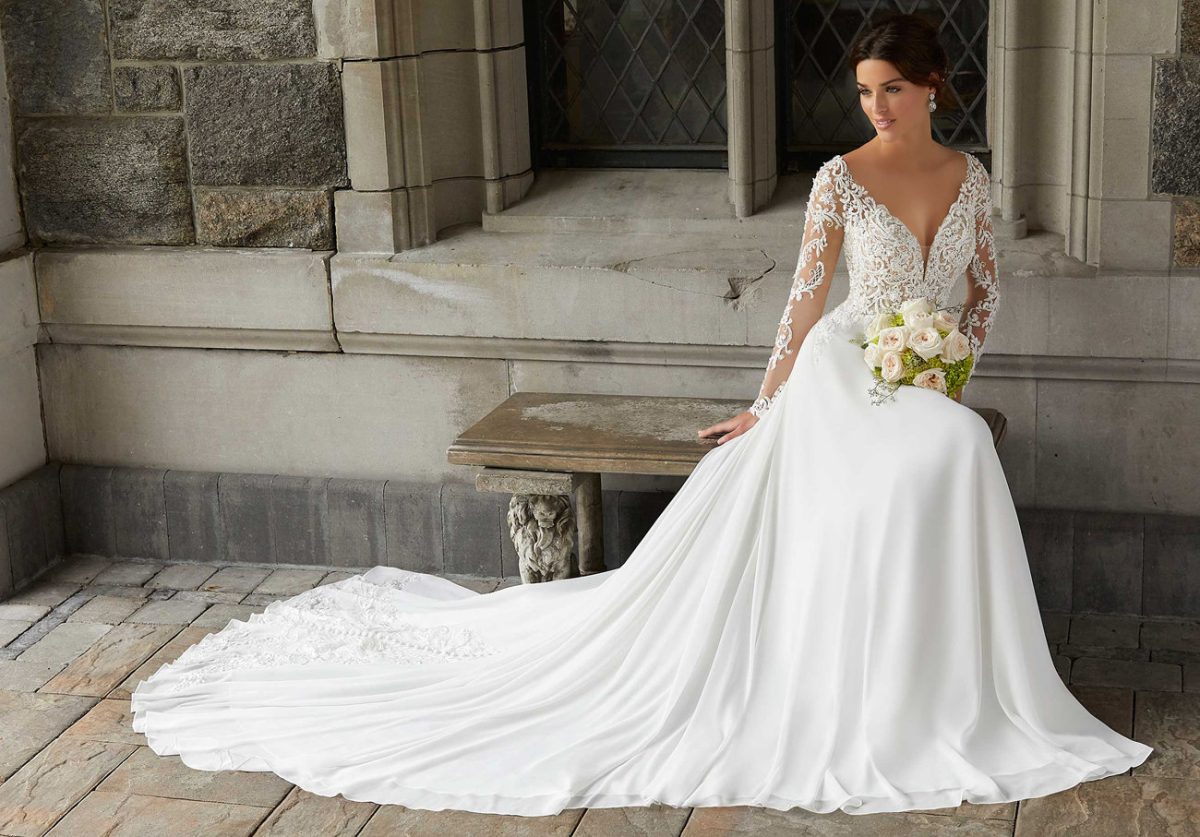
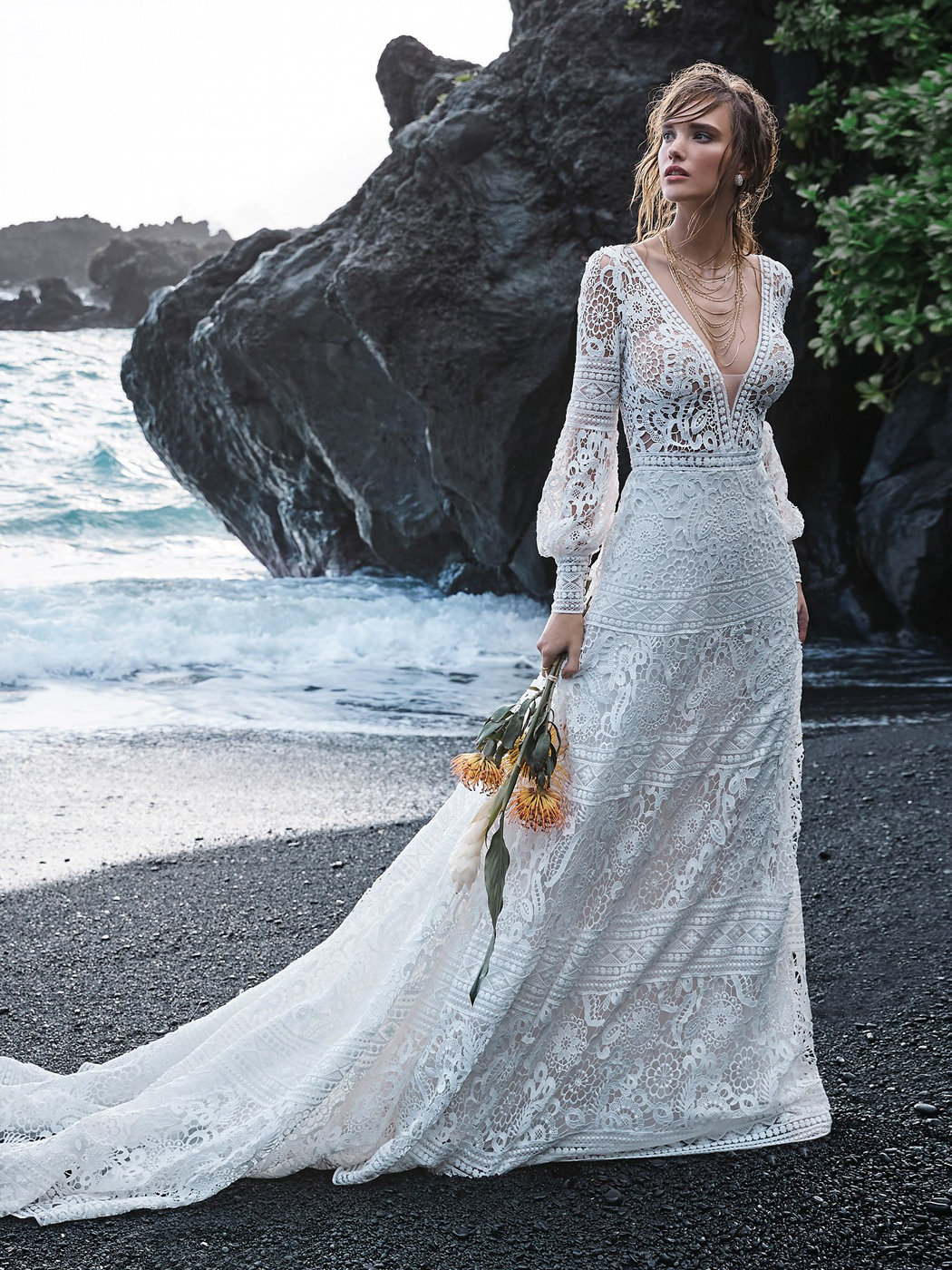
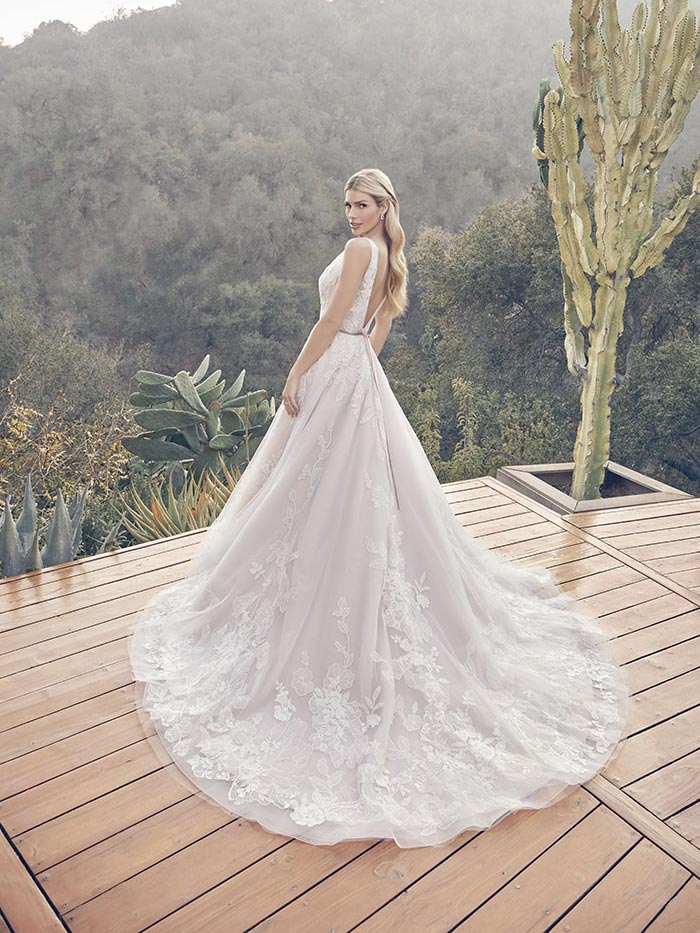
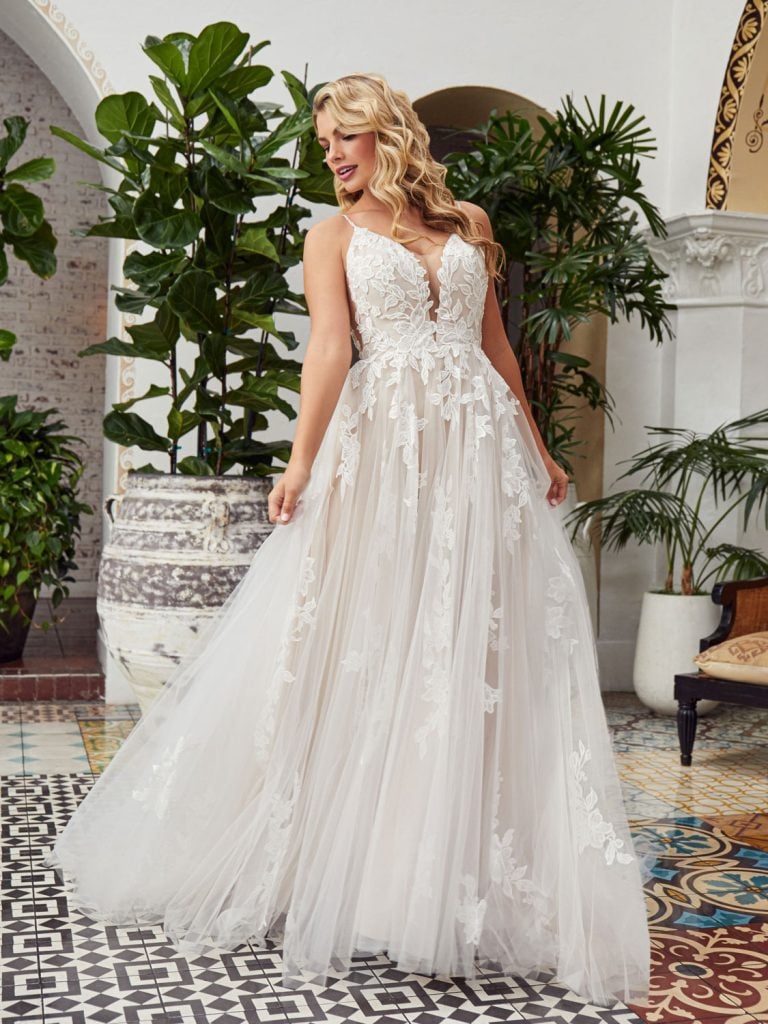
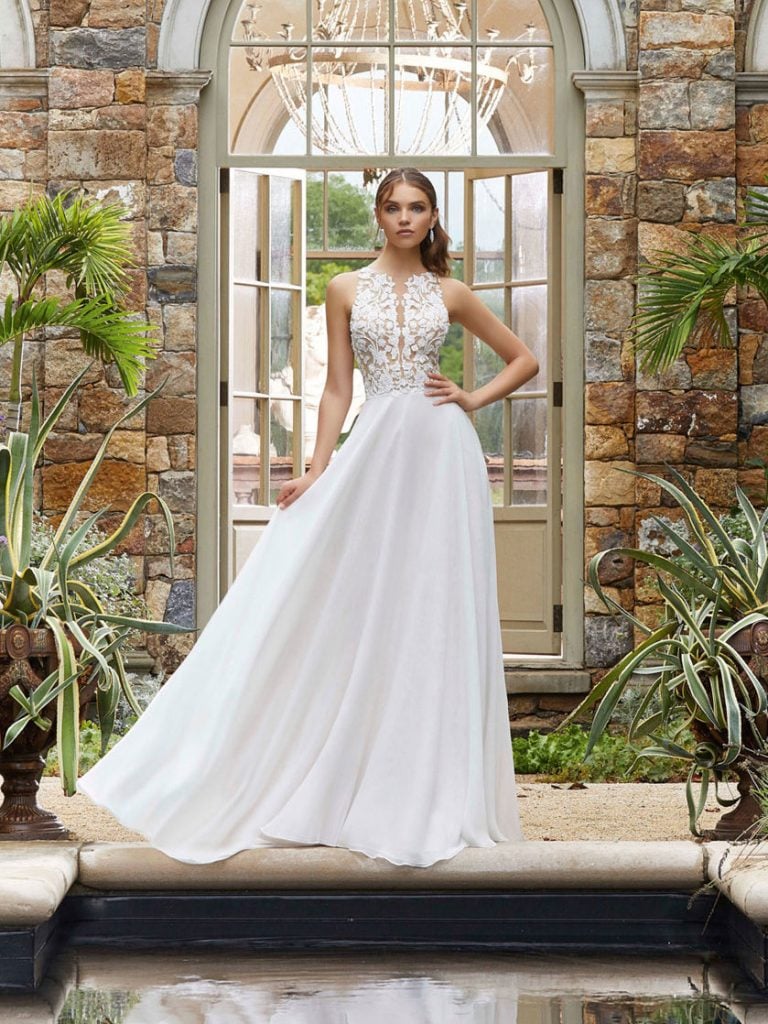
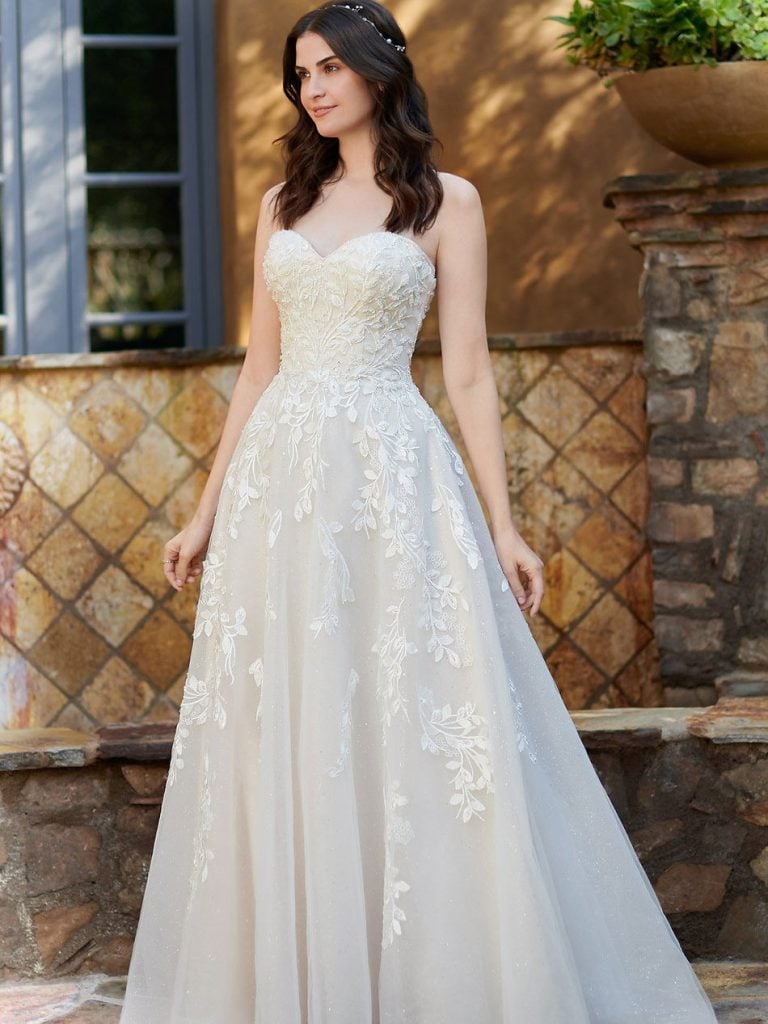
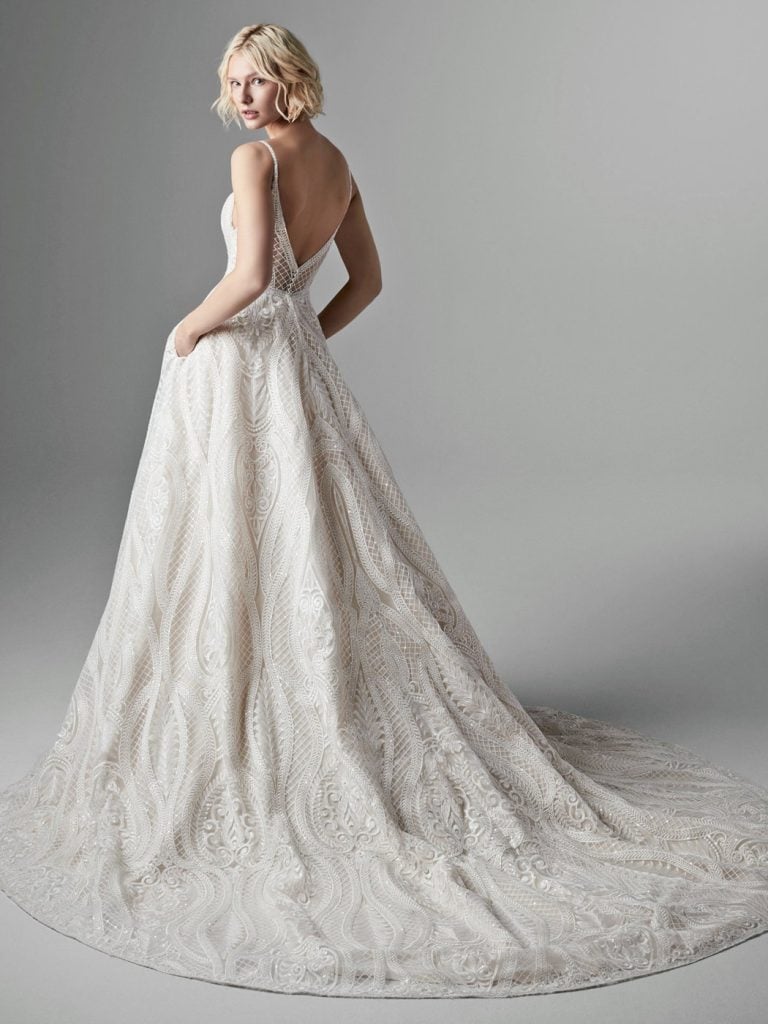
An A-line wedding dress is fitted through the bodice and opens gradually toward the hem, creating an outline similar to a capital A. Many versions release at the natural waist, although basque-waist, drop-waist and seamless constructions can change where that transition appears.
Skirt volume can range from a narrow sweep to multiple layers of tulle. Chiffon produces a softer, more fluid effect, while satin or Mikado gives the same general silhouette more definition and presence. Lace appliqués, sleeves, slits and detachable overskirts can all be incorporated without changing the recognizable A-line shape.
Because the skirt does not remain closely fitted through the legs, many A-line gowns provide room for walking and dancing. However, comfort still depends on the weight of the fabric, number of layers, train length, lining and final alterations.
The silhouette can work in garden, coastal, ballroom and destination settings because its overall effect changes substantially with fabric and construction.
Explore A-line wedding dresses and compare how different fabrics influence the shape.
Ball Gown Wedding Dresses
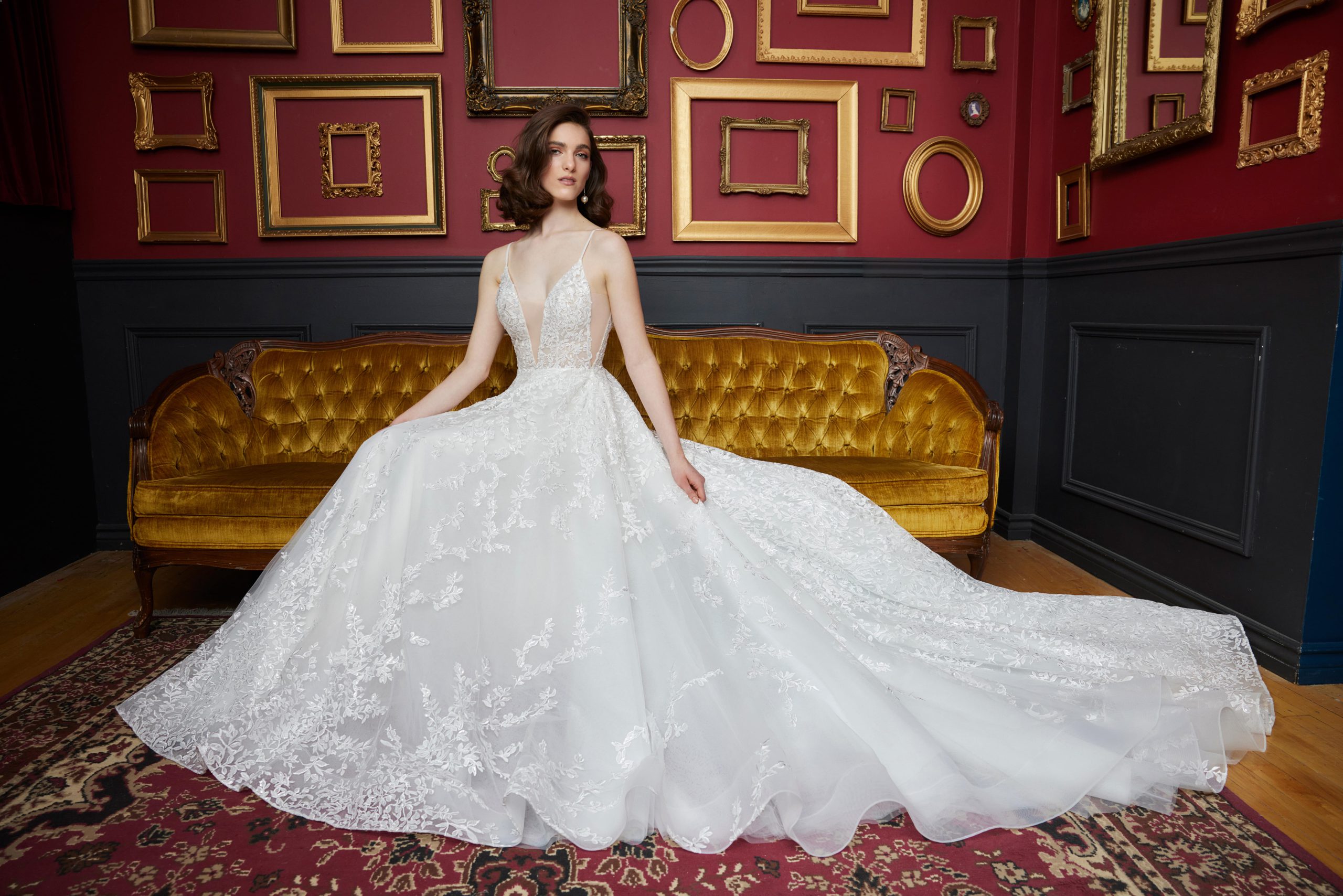
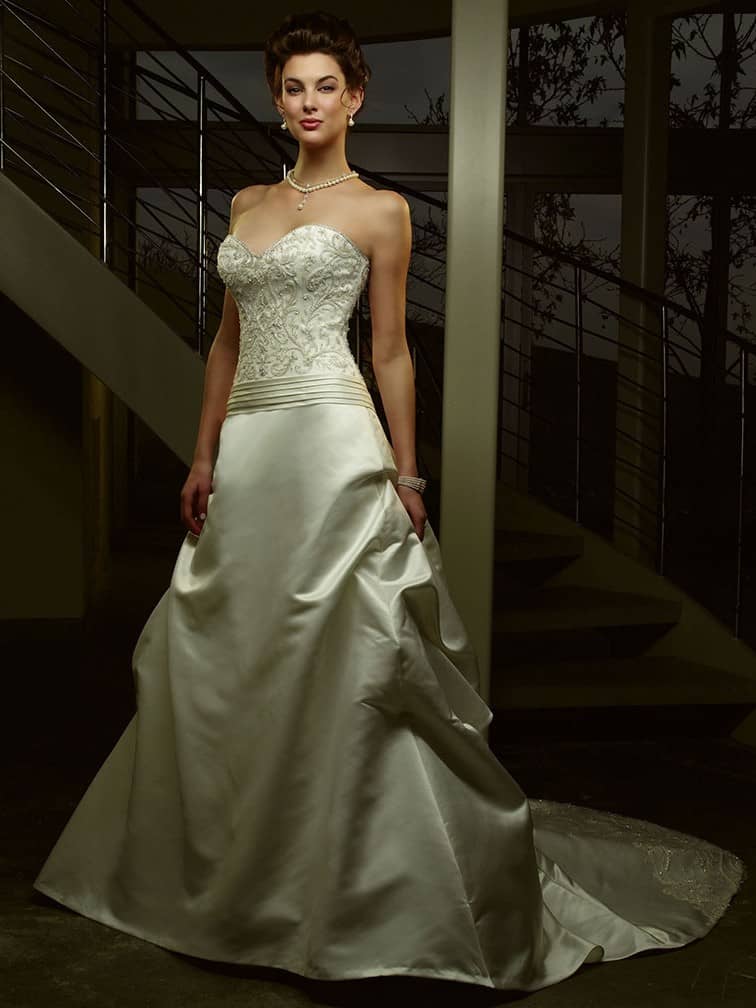
A ball gown combines a fitted bodice with a distinctly full skirt. Although ball gowns and A-line dresses share some characteristics, their volume is distributed differently. An A-line expands gradually, while a ball gown generally creates a more immediate and substantial change in volume near the waist.
Layers of tulle can create light-looking fullness, while pleated Mikado or structured satin produces broader, more architectural folds. The bodice may incorporate boning, cups or corsetry to support the contrast between the fitted upper section and voluminous skirt.
A ball gown can offer considerable room through the legs, but the volume has a larger physical footprint. During an appointment, try sitting, turning, walking through a doorway and moving in a smaller space. Also consider how the skirt and train will be managed during the ceremony and reception.
View ball gown silhouettes if you are interested in a defined waist and greater skirt volume.
Sheath and Column Wedding Dresses
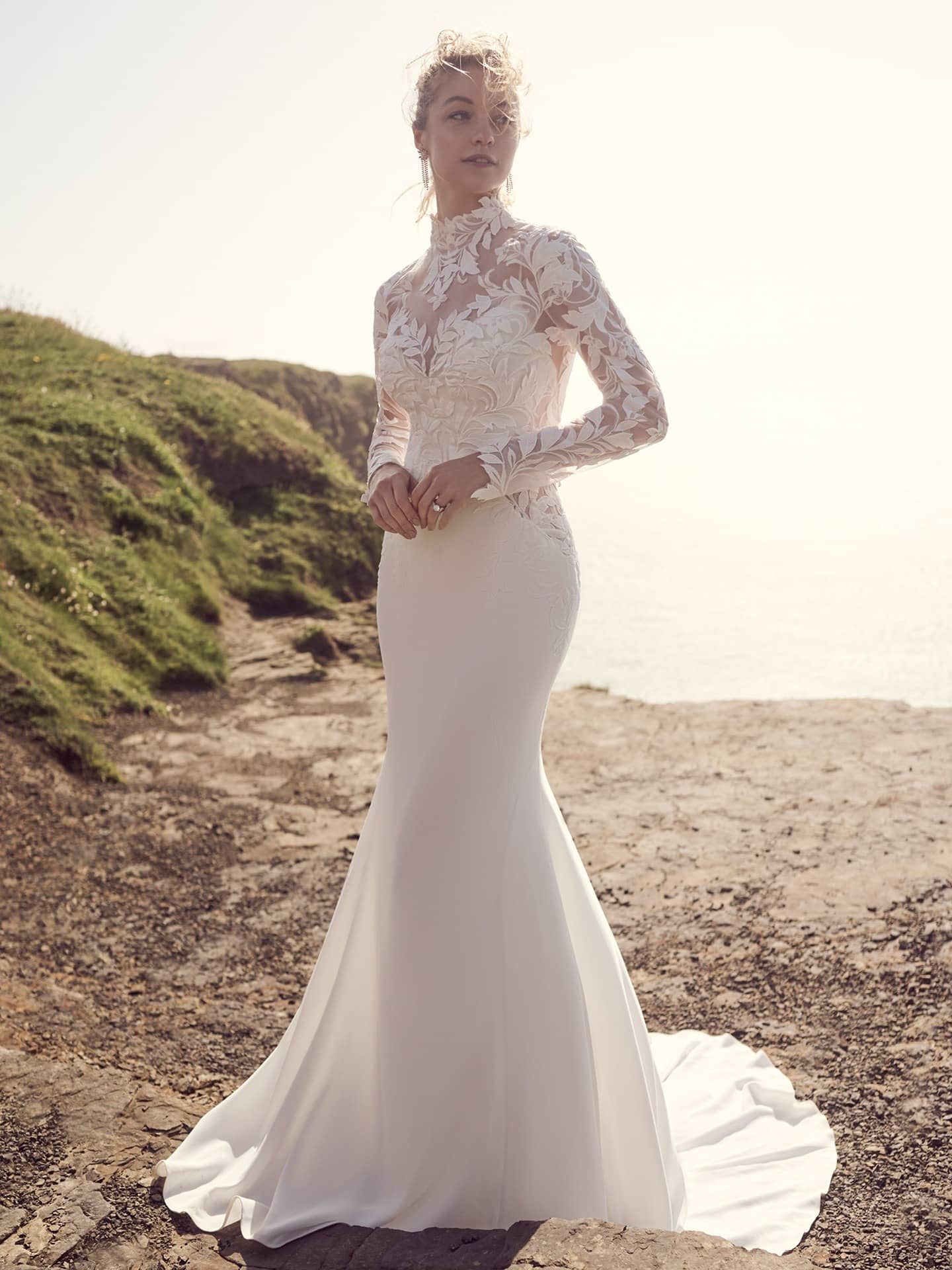
A sheath wedding dress follows the body’s vertical line and falls toward the hem with minimal added volume. The term “column” is sometimes used for an especially straight, narrow shape, although designers and retailers may use sheath and column interchangeably.
Fabric plays a particularly visible role in this silhouette. Crepe can emphasize clean, uninterrupted lines. Lace introduces texture and can visually soften seams. Satin and charmeuse reflect more light and reveal the gown’s drape.
Minimal skirt volume does not automatically mean unrestricted movement. The lining, stretch, hem circumference, back vent and fit through the hips and thighs all affect comfort. Take a long step and sit in the actual gown rather than judging movement from its appearance on the hanger.
Compare sheath wedding dresses in different fabrics and constructions.
Fit-and-Flare Wedding Dresses
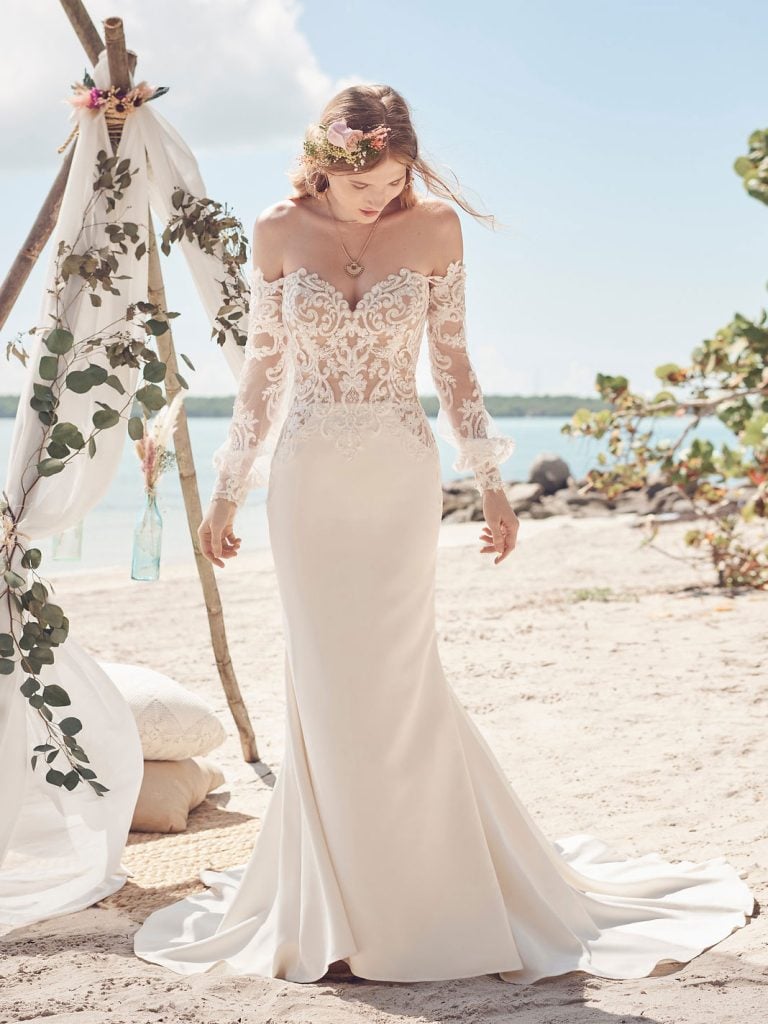
A fit-and-flare gown follows the torso and hips before gradually widening into the skirt. Its release usually begins higher and more softly than the flare of a dramatic mermaid gown, which can provide a defined shape with additional room for movement.
The category includes a wide range of designs. One gown may release immediately below the hips, while another remains fitted farther down the thigh. Vertical seams, lace placement and stretch panels can also change how the silhouette looks and functions.
When trying on a fit-and-flare dress, identify where the skirt actually begins to release. Then sit, walk and turn to make sure that the fitted portion supports you without creating uncomfortable tension.
Explore fit-and-flare wedding dresses to see how the shape varies among designs.
Mermaid Wedding Dresses
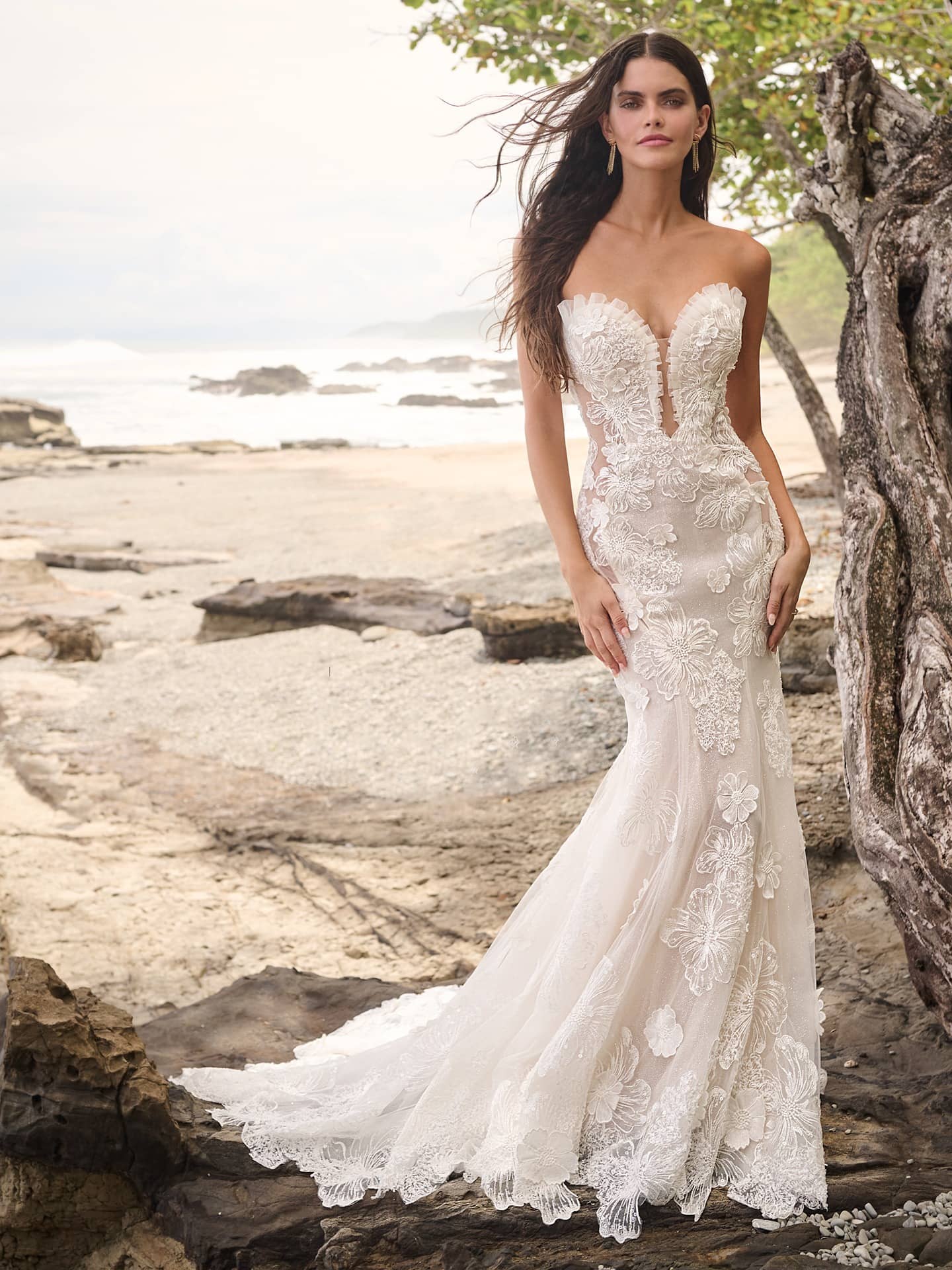
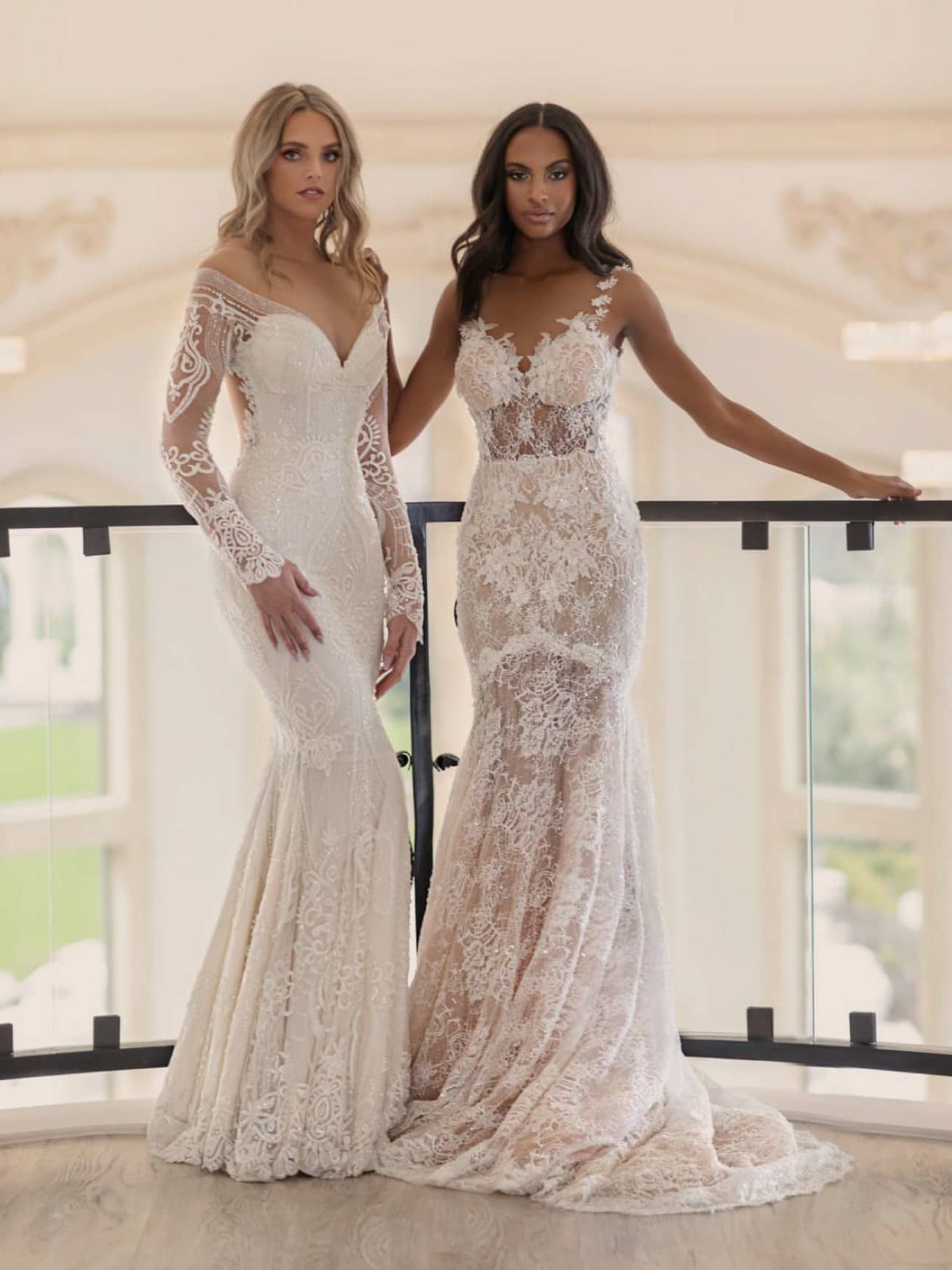
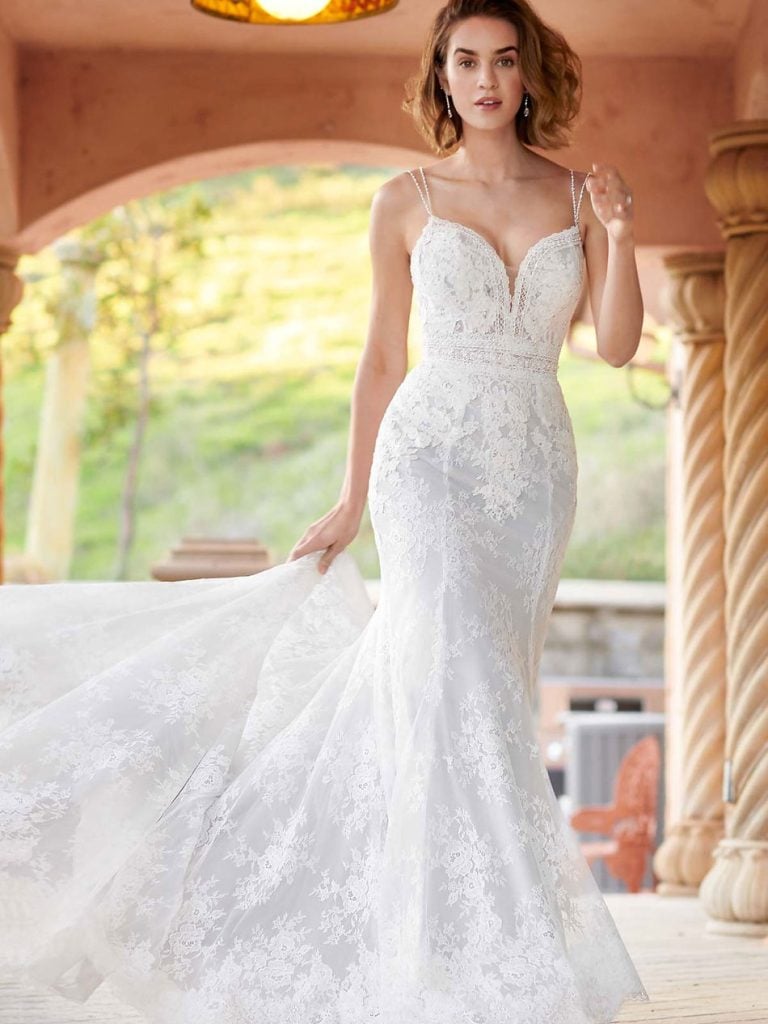
A mermaid silhouette is closely fitted through the bodice, waist and hips and generally remains narrow into the lower thigh or knee before opening into a pronounced flare. This contrast creates a sculpted and dramatic outline.
Boning, shaped seams, firm fabric and fitted lining may be used to maintain the form. The lower the flare begins, the more important it becomes to test stride length, stairs, sitting and dancing. Some designs use stretch or strategically placed godets to increase ease, while others prioritize firmer structure.
A bustle can help manage the train during the reception, but it does not change the fitted section around the legs. Evaluate torso support and lower-body movement separately.
View mermaid wedding dresses if you prefer a defined silhouette with a lower, more pronounced flare.
Trumpet Wedding Dresses
A trumpet gown follows the torso and hips before beginning to flare, commonly around the middle of the thigh. It usually releases earlier and more gradually than a classic mermaid gown, creating a softer transition while retaining a fitted appearance.
Trumpet and fit-and-flare are closely related, and designer terminology can vary. Compare three practical details:
- Where the skirt stops fitting closely
- How much volume the flare creates
- Whether the construction allows a natural stride
Compare trumpet wedding dresses before deciding which fitted silhouette is closest to your preferred look.
Bridal Look & Confidence
- Highlights your best features without overwhelming your figure
- Ideal for brides wanting a mix of romance and comfort
- A timeless bridal gown style that never goes out of trend
How Fabric Changes a Wedding Dress Silhouette
Silhouette supplies the outline, but fabric determines how firmly or softly that outline appears.
Mikado and Structured Satin
Mikado and structured satin can give an A-line crisp edges, defined folds and a more architectural presence. In ball gowns, these materials can create volume through deliberate pleating rather than numerous airy layers.
Chiffon
Chiffon makes an A-line appear lighter and more fluid. The fabric responds visibly to walking and air movement, although the gown’s lining and number of layers still determine its total weight.
Crepe
Crepe can emphasize the clean, uninterrupted lines of a sheath or fitted gown. Crepe fabrics differ in weight and stretch, so examine how the particular material drapes and recovers after sitting.
Lace
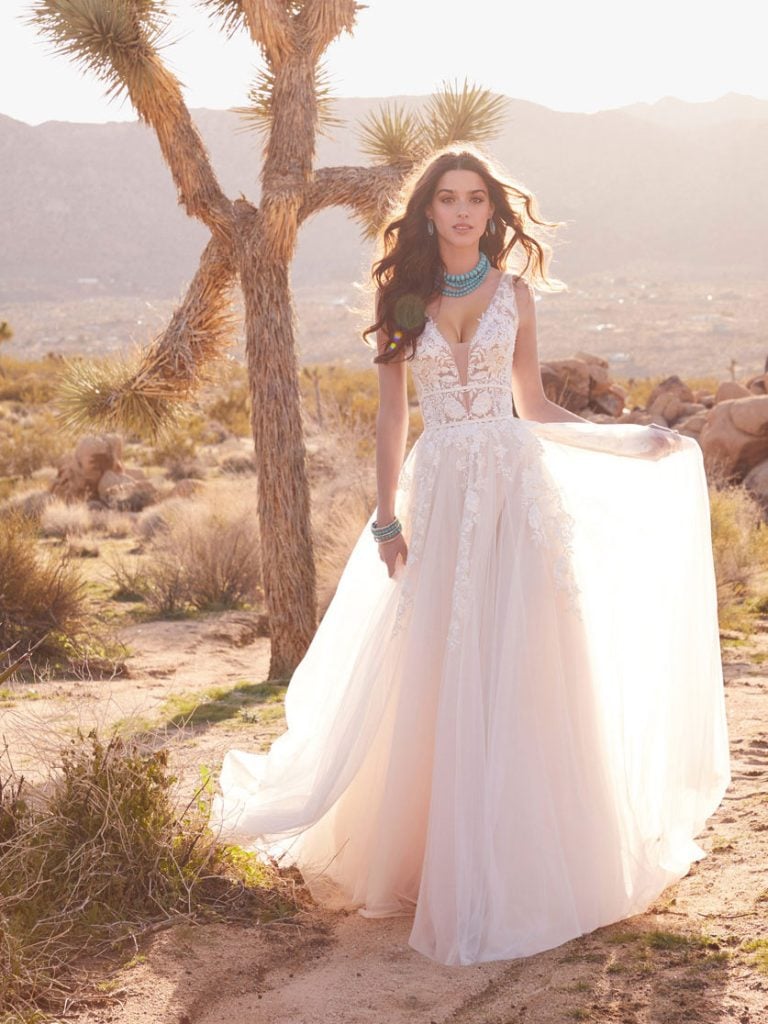
Lace placement can change the visual balance of a gown. Appliqués extending from the bodice into the skirt may soften the waist seam, while dense motifs around the hem can make the lower portion feel more grounded.
Tulle
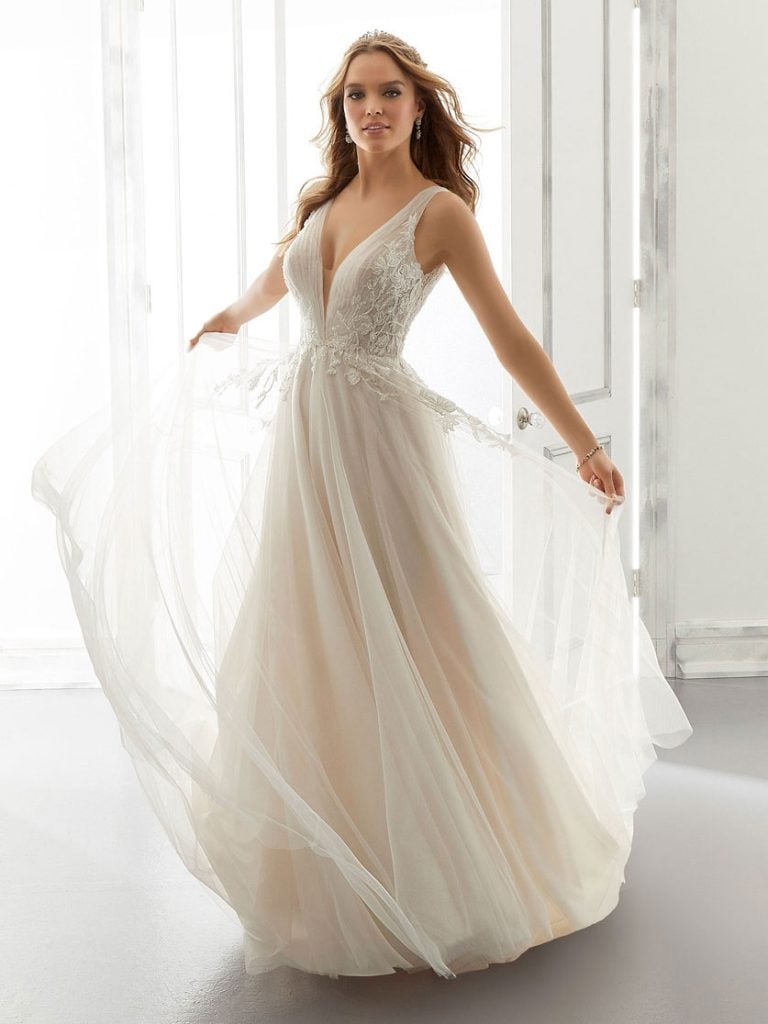
Layers of tulle create volume through lightness and space between the layers. The result looks different from the broad, structured folds produced by heavier satin.
Organza
Organza can retain shape while appearing lighter and more translucent than many satins. It can give an A-line or ball gown crisp volume without the same visual weight as a dense fabric.
Always consider what is beneath the visible textile. Lining affects opacity and glide, boning and cups support the bodice, and interfacing helps a fabric retain its intended shape.
How Fabric Changes a Wedding Dress Silhouette
Silhouette supplies the outline, but fabric determines how firmly or softly that outline appears.
Mikado and Structured Satin
Mikado and structured satin can give an A-line crisp edges, defined folds and a more architectural presence. In ball gowns, these materials can create volume through deliberate pleating rather than numerous airy layers.
Chiffon
Chiffon makes an A-line appear lighter and more fluid. The fabric responds visibly to walking and air movement, although the gown’s lining and number of layers still determine its total weight.
Crepe
Crepe can emphasize the clean, uninterrupted lines of a sheath or fitted gown. Crepe fabrics differ in weight and stretch, so examine how the particular material drapes and recovers after sitting.
Lace
Lace placement can change the visual balance of a gown. Appliqués extending from the bodice into the skirt may soften the waist seam, while dense motifs around the hem can make the lower portion feel more grounded.
Tulle
Layers of tulle create volume through lightness and space between the layers. The result looks different from the broad, structured folds produced by heavier satin.
Organza
Organza can retain shape while appearing lighter and more translucent than many satins. It can give an A-line or ball gown crisp volume without the same visual weight as a dense fabric.
Always consider what is beneath the visible textile. Lining affects opacity and glide, boning and cups support the bodice, and interfacing helps a fabric retain its intended shape.
How to Choose a Wedding Dress Style
Begin With How You Want to Feel
Choose a few descriptive words such as relaxed, defined, light, formal, understated, dramatic or secure. These preferences provide more useful direction than selecting a gown according to restrictive body-shape rules.
Decide How Much Structure You Prefer
If you like a held and sculpted feeling, try bodices with boning, supportive cups or firmer fabrics. If you prefer softness, compare lighter construction and more fluid textiles. Correct fit matters in both cases.
Consider Your Movement Needs
Think about the entire event. Will you climb stairs, walk on grass, sit through a long ceremony or dance energetically? Hem width, train length, skirt weight and fabric stretch may affect your experience as much as the silhouette name.
Use the Venue as a Practical Guide
A ballroom accommodates a full skirt differently from an intimate restaurant or garden venue. For a San Diego coastal or outdoor ceremony, consider the ground surface, breeze, temperature at the ceremony time and how the train will be managed.
The venue should inform practical decisions without dictating your personal style.
Compare Fabrics in Person
Photographs cannot fully communicate fabric weight, texture, opacity or movement. Try more than one fabric within your preferred silhouette before deciding whether the shape works for you.
Plan the Ceremony-to-Reception Transition
Ask whether a bustle, detachable overskirt, removable sleeves or a change in accessories can adapt the gown for the reception. Test detachable elements during the appointment so you understand how they attach and feel.
Discuss Alterations Before Ordering
Common adjustments may include the hem, straps, bodice fit, cups and bustle placement. Changing a flare point, heavily beaded seam, lace border or fundamental bodice structure can be more complicated.
The available options depend on the pattern, seam allowance, fabric and embellishment. Learn more about Bridal & Tuxedo Galleria’s in-house bridal alterations and request guidance for the specific gown you are considering.
Try One Unexpected Silhouette
A gown on a hanger is static. Once worn, it interacts with posture, movement, fabric and proportion. Trying an unexpected silhouette can clarify what you value, even if it does not become your final choice.
Your physical comfort and emotional response matter as much as any visual guideline.
Call Now

A-Line vs. Sheath Wedding Dress Style: Finding the Perfect Silhouette
Different wedding dress styles have the power to shape not only a bride’s appearance but also how she feels on her wedding day. From dramatic ball gowns to sleek modern sheaths, each silhouette tells its own story. Among the most beloved choices are the A-line and the sheath, two silhouettes that have stood the test of time while continuing to inspire brides around the world.
When brides begin their wedding dress shopping journey, they often encounter a dazzling variety of different wedding dress styles, each with its own advantages. The A-line is celebrated for its universally flattering fit, with a defined natural waistline and a gently flared skirt that offers both grace and comfort. In contrast, the sheath provides understated sophistication, closely following the body’s natural shape to create a sleek, modern bridal look.
Exploring different wedding dress styles like these allows brides to discover gowns that reflect not just fashion but also their individuality. The right silhouette highlights best features, complements personal style, and fits seamlessly into the chosen wedding theme.
At Bridal & Tuxedo Galleria, we believe that trying on different wedding dress styles in person is the best way to find the gown that feels truly meant for you. Whether you are drawn to the romantic flow of the A-line or the chic simplicity of the sheath, the journey toward your perfect silhouette begins with exploring different wedding dress styles that bring your dream dress to life.
The Bridal Appointment Movement Test
Do more than stand in front of the mirror. With the stylist’s guidance, use these tests to understand how a gown will function throughout your wedding.
- Walk naturally. Check your stride length, the movement of the skirt and whether the bodice shifts.
- Sit in a chair. Notice pressure around the waist, ribs and hips and whether the neckline remains in position.
- Take a long step. This reveals restrictions that short fitting-room steps may hide, especially in sheath and fitted silhouettes.
- Raise both arms. See whether the straps, sleeves or neckline pull, gap or limit comfortable movement.
- Turn and examine the back. Look at seam tension, the closure, train placement and the transition from bodice to skirt.
- Test the train’s weight. Ask how the train will be lifted or bustled and how its weight will be distributed during the reception.
- Try a few dance movements. A turn, side step and gentle bend can reveal whether the bodice and skirt move with you.
- Notice pressure points. Pay attention to boning ends, armholes, waist seams, fitted hip seams and the zipper.
- Ask what can realistically be altered. Discuss the hem, straps, cups, sleeves, bodice, flare point and lace placement.
- Photograph the front, side and back if permitted. Compare your posture and the gown’s lines, remembering that phone angles can distort proportions.
A boutique sample may not fit the same way as an ordered and professionally altered gown. Ask which sensations are caused by temporary sample fit and which come from the dress’s underlying construction.
Advice From a San Diego Bridal Stylist
BTG expert input required before publication: Add a verified observation from Navid Noor or a senior Bridal & Tuxedo Galleria stylist addressing the following points:
- What brides commonly misunderstand about A-line and sheath gowns
- Which differences become clear only after walking or sitting
- How San Diego coastal and outdoor venues affect fabric considerations
- Which structural alterations should be discussed before ordering
- Why some brides prefer a silhouette different from their original inspiration
Do not attribute a quotation or observation to a BTG professional until the individual has provided and approved it.
The Sheath Dress Silhouette: Sleek Sophistication
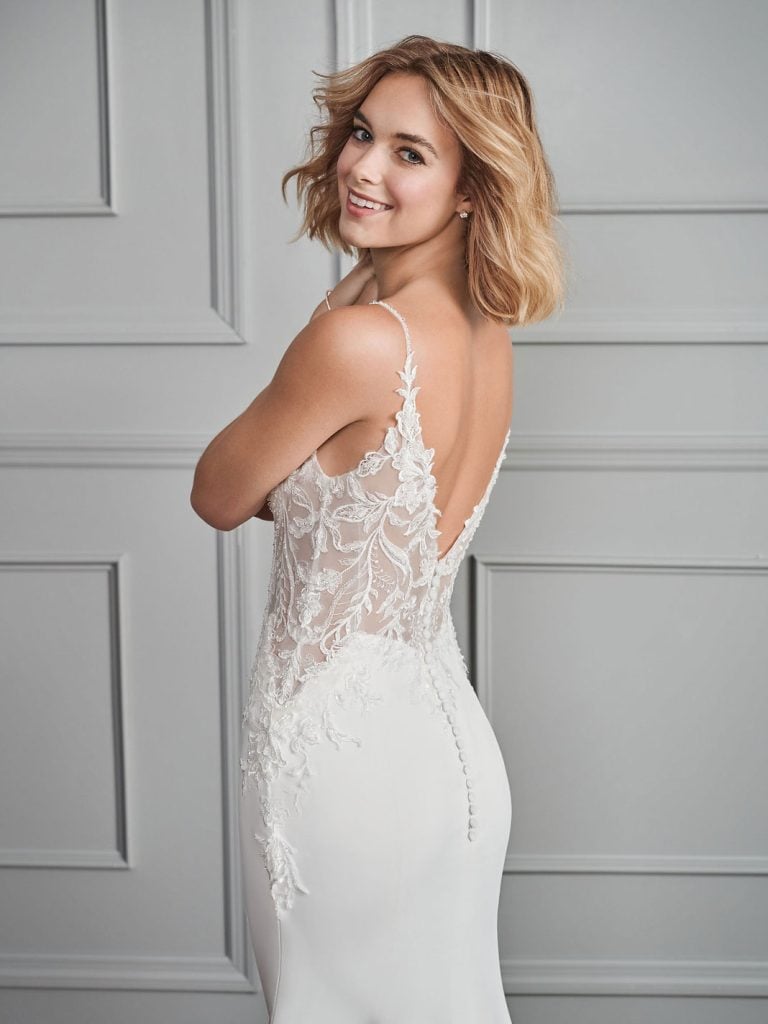
When brides explore different wedding dress styles, the sheath gown often captures attention for its refined simplicity. Unlike fuller silhouettes, the sheath follows the body’s natural line from bust to hem, creating a sleek, elongated effect. This minimal yet elegant design is ideal for brides who value comfort, ease of movement, and modern sophistication on their wedding day.
The beauty of the sheath silhouette lies in its ability to highlight a bride’s natural figure without distraction. Fabrics such as silk, satin, or crepe enhance its fluid lines, while details like a halter neck, high neckline, or delicate cap sleeves bring unique personality to the gown. Petite brides especially love the sheath because it visually lengthens the frame, while those with an hourglass body type find it accentuates their curves gracefully.
As part of different wedding dress styles, sheath gowns adapt beautifully to both casual and formal settings. From intimate beach ceremonies to chic city weddings, this silhouette feels effortless yet memorable. Many brides even choose a sheath as a second look, appreciating its lightweight elegance.
Ultimately, trying different wedding dress styles like the sheath ensures every bride can find a gown that balances timeless beauty with contemporary charm.
How Other Silhouettes Compare
While the A-line and sheath are among the top wedding dress styles, other wedding gowns also play a role in the bridal shopping experience. For instance, the mermaid silhouette and trumpet silhouette hug the body closely before flaring out, creating dramatic mermaid styles and a bold flare wedding dress effect. Brides with an hourglass body type often gravitate toward a mermaid wedding dress or mermaid gown, while those who want drama may consider a flare gown.
For the bride who dreams of fairytale grandeur, a ball gown wedding dress with layers of tulle provides the ultimate princess moment. These ball gown silhouettes add volume and romance, making them one of the most popular wedding dresses for traditional ceremonies.
Creating Your Dream Dress Moment
The bridal shopping experience is about more than trying on gowns—it’s about discovering your individuality. At Bridal & Tuxedo Galleria, our expert stylists guide brides through different silhouettes, helping them explore line dresses, mermaid styles, and everything in between until they find their dream dress. Whether it’s an A-line, sheath, flare wedding dress, or even a ball gown wedding dress, we believe the best way to choose is to step into each gown and feel the transformation.
Your gown should highlight your best features, reflect your personal style, and give you the confidence to shine on your special day. Whether you find your perfect silhouette in an elegant sheath or a romantic A-line, your perfect dress is waiting at our bridal salon.
Designers Who Elevate Every Silhouette
Bridal & Tuxedo Galleria partners with world-renowned designers who understand the artistry behind different wedding dress styles. From Morilee’s romantic lace A-lines to Maggie Sottero’s contemporary sheath gowns, each piece reflects thoughtful craftsmanship. Casablanca brings couture-level detail, while Justin Alexander infuses timeless elegance into every stitch. With such diverse artistry, brides can experience the finest of both sheath and A-line worlds.
Ask us best designer different wedding dress styles now
Call Now
Styling Tips for Sheath and A-Line Gowns
When you fall in love with a sheath gown, consider pairing it with delicate jewelry and sleek hairstyles that mirror its streamlined elegance. For A-line gowns, accessories can vary—romantic veils, statement earrings, or even floral crowns work beautifully with this universally flattering silhouette.
At Bridal & Tuxedo Galleria, we help you not only choose your gown but also style it to perfection. The magic of different wedding dress styles lies not just in the design itself but in how it reflects your individuality.
Frequently Asked Questions about Different Wedding Dress Styles
Frequently Asked Questions About Wedding Dress Styles
What are the main wedding dress silhouettes?
The six primary silhouettes are A-line, ball gown, sheath or column, fit-and-flare, mermaid and trumpet. They differ according to how closely the dress follows the torso and hips, where the skirt releases and how much volume it creates.
What is the difference between A-line and ball gown?
An A-line dress expands gradually from the bodice or waist toward the hem. A ball gown creates a fuller and more immediate change in volume around the waist. Fabric and underskirt construction can make either silhouette appear softer or more structured.
What is the difference between sheath and mermaid?
A sheath maintains a relatively straight, close-to-body line with minimal skirt volume. A mermaid remains fitted through the hips and lower thigh or knee before opening into a pronounced flare.
Are fit-and-flare and trumpet dresses the same?
The categories overlap, and designers do not always use the terms consistently. Fit-and-flare broadly describes a gown that follows the body before releasing. Trumpet usually refers to a fitted gown that begins flaring around the middle of the thigh.
Which wedding dress silhouette is easiest to move in?
No silhouette is always the easiest. A-line gowns often provide legroom, while a lightweight sheath may have less fabric to manage. Hem width, lining, stretch, train length, skirt weight, shoes and fit all influence movement.
How does fabric change the shape of a wedding dress?
Firm fabrics such as Mikado hold defined folds and structured volume. Chiffon creates fluid movement, crepe emphasizes continuous lines, and layered tulle produces airy fullness. Lining, boning, interfacing and the number of layers also influence the final shape.
Should I choose a wedding dress based on my venue?
Let the venue guide practical choices rather than dictate your silhouette. Consider the aisle, stairs, flooring, outdoor conditions, temperature and train management. A bustle or detachable overskirt may help adapt a more dramatic gown to the setting.
How many silhouettes should I try during an appointment?
There is no required number. Begin with three contrasting options: one similar to your saved inspiration, one with more or less volume and one unexpected silhouette. Once you identify your preferred structure and movement, compare variations within that category.
Why Visit Bridal & Tuxedo Galleria?
- More than 30 years of bridal styling experience
- Personalized bridal appointments
- Designer and exclusive collections
- In-house alterations
- Convenient San Diego boutique
Explore Wedding Dress Silhouettes
Try Wedding Dress Styles in San Diego
Silhouette names can help you create a shortlist, but the differences become clearer when you compare fabric weight, structure, movement and fit in person.
Bridal & Tuxedo Galleria offers personalized styling, designer and exclusive collections, and in-house alterations at its San Diego bridal boutique. Individual samples, sizes and gown availability can change, so contact the boutique before visiting if you are interested in a particular dress.
Experience Bridal & Tuxedo Galleria
Every bride deserves to explore different wedding dress styles in an environment that celebrates her uniqueness. Our boutique in San Diego provides a luxury experience with warm guidance, stunning collections, and a commitment to helping you discover the gown that makes your heart race.
Whether you dream of a sheath wedding dress that embodies minimalist sophistication or an A-line gown that radiates timeless romance, Bridal & Tuxedo Galleria is where your story begins. Visit us today to try on these different wedding dress styles and let our designers’ artistry inspire your most memorable look.
Call Now