
How Wedding Dress Alterations Change Fit, Movement and Proportion
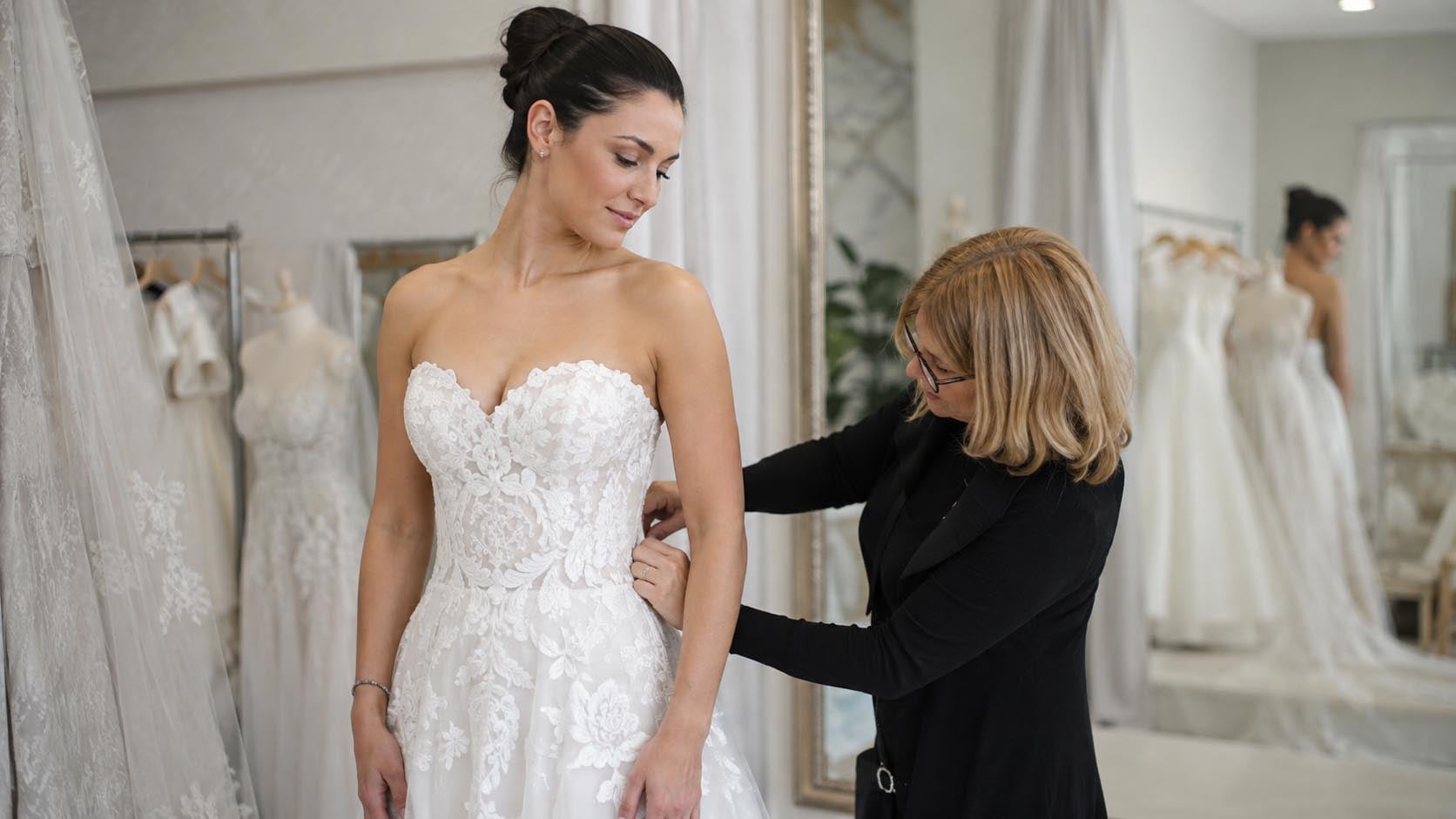
A wedding gown can look beautifully aligned while you are standing still and reveal an entirely different set of fit questions the moment you walk, sit, raise your arms, turn, hug someone or take a few dance steps.
That is why wedding dress alterations should never be viewed as simply making a gown smaller, shorter or tighter. Bridal tailoring is the stage where standardized designer sizing begins adapting to your individual proportions, posture, support needs and movement.
A successful alteration preserves the design language of the gown while refining how its structure sits on your body and behaves in motion.
How do wedding dress alterations change a gown?
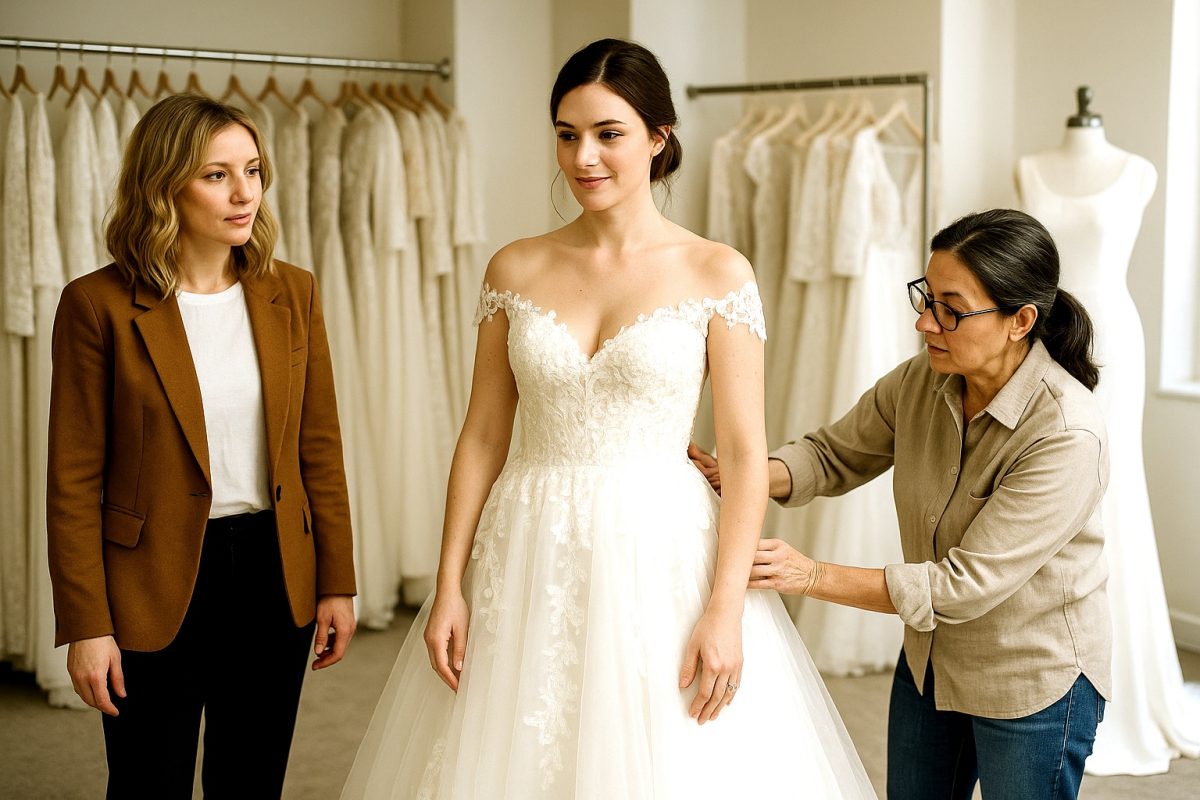
Professional wedding dress alterations can change where a gown sits on the bust, waist and hips, how securely the bodice stays in place, how the skirt falls and how freely the bride can walk, sit and dance. Good tailoring also preserves visual proportion between the neckline, bodice, waist, skirt and train.
What Do Wedding Dress Alterations Actually Change?
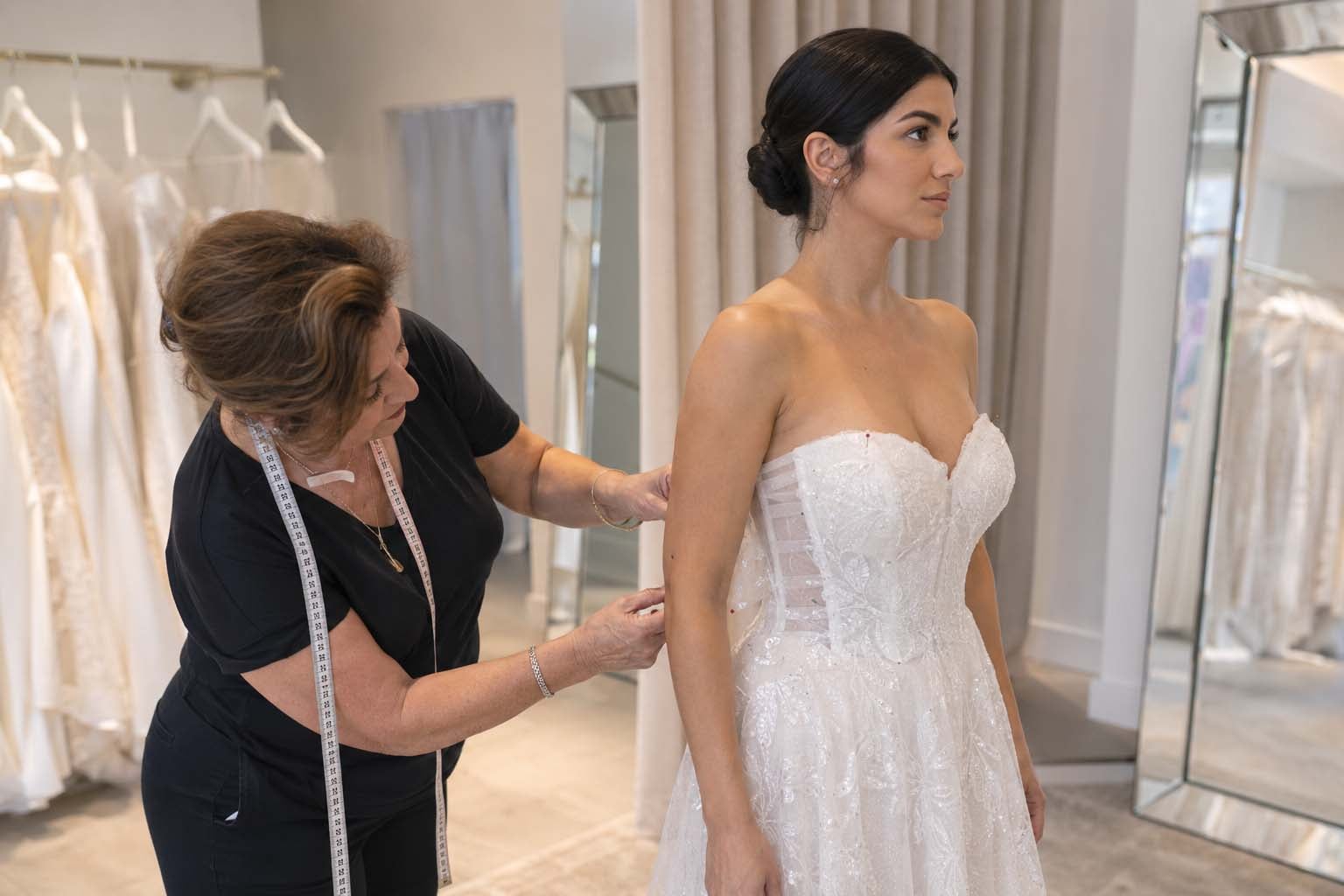
Alterations change more than garment dimensions. They can influence support, alignment, ease, shape, balance, length and movement, and those variables often affect one another.
There is an important difference between size correction and fit refinement.
Size correction addresses measurable excess or shortage: a waist may need more room, a side seam may need to come in, or a hem may need shortening.
Fit refinement asks more complex questions. Are the cups sitting at the correct height? Does the natural waist of the gown meet the bride’s waist? Are the side seams hanging vertically? Does the neckline remain stable when she moves? Does the skirt fall from the waist as the designer intended?
| Alteration Area | What Changes Physically | What the Bride May Notice |
|---|---|---|
| Straps | Bodice height and tension | Greater stability or a different neckline position |
| Bust/cups | Support and bust position | Improved security and shape |
| Waist | Garment alignment | More intentional torso-to-skirt proportion |
| Side seams | Circumference and contour | Different fit through bust, waist or hip |
| Hem | Ground clearance and skirt fall | Easier, more natural walking |
| Bustle | Train position | More practical reception movement |
The most successful bridal tailoring treats these areas as an interconnected system rather than six unrelated repairs.
Fit Is About Placement, Not Just Tightness
A wedding dress can close completely and still not sit correctly.
Professional fitting evaluates where the construction lines of the garment land. The bust apex of the gown should relate appropriately to the wearer’s bust. Cups, underarm curves and neckline edges should work together. Side seams should not be pulled dramatically toward the front or back. The waist seam should intentionally relate to the gown’s design, whether that means a natural waist, basque waist, drop waist or another construction.
The same principle applies lower on the gown. Hip placement affects fitted silhouettes, while the center front and center back help reveal whether the garment is hanging squarely.
“Secure” also does not mean “as tight as physically possible.”
A bodice can be firm enough to remain stable while still allowing breathing, sitting and natural upper-body movement. Likewise, comfortable ease is not necessarily excess fabric. Some ease is necessary for the garment to move with a person rather than behave like a stationary display piece.
How Alterations Change the Bodice
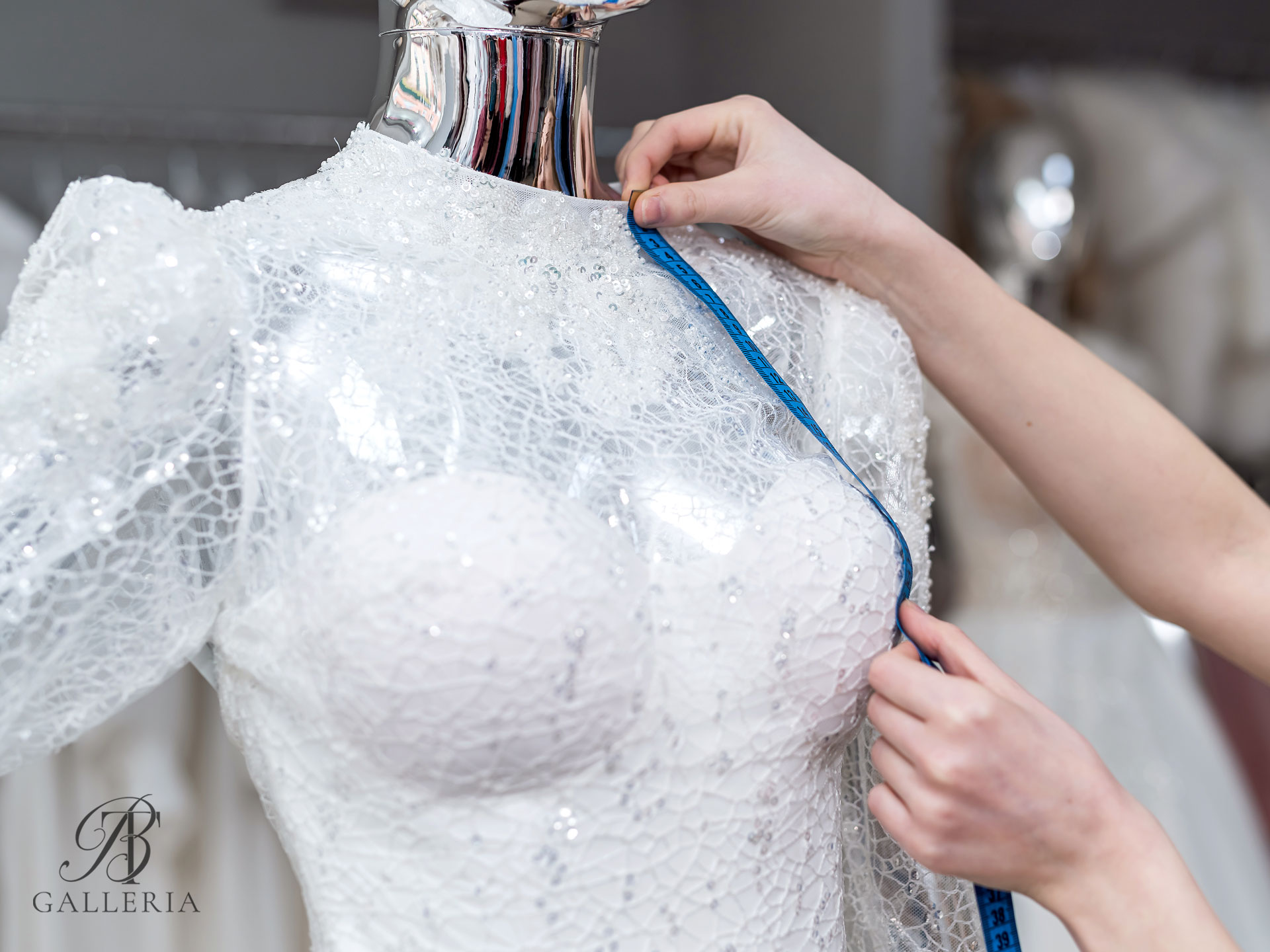
The bodice is one of the most interconnected areas of a bridal gown. A change to circumference can influence cups, neckline position, lace placement, back tension and internal support.
Taking In or Letting Out the Bodice
Taking in a bodice is not always a matter of removing the same amount of fabric from both side seams.
A bridal alteration specialist may need to determine where the excess actually originates. The bust may need a different adjustment from the waist. Princess seams may provide a more appropriate shaping point than side seams. Lace motifs, boning or sheer panels may limit where a seam can be changed invisibly.
Letting a bodice out similarly depends on the available seam allowance and construction.
Cup and Bust Adjustments
Cup position influences support, bust placement, cleavage, neckline stability and the relationship between the bust and waist.
A cup that sits too high or low cannot always be solved by changing the strap. The alteration specialist may evaluate cup dimensions, the bust apex, internal structure, neckline edge and the surrounding bodice together.
Corset and Boning Adjustments
Boning helps distribute structural support through the bodice. Its purpose is not simply to make the gown tighter.
Changing the surrounding seams, cups or waist can alter how that structure behaves. In highly engineered gowns, substantial changes may require more than circumference adjustment because the internal foundation must continue supporting the intended silhouette.
Back Adjustments
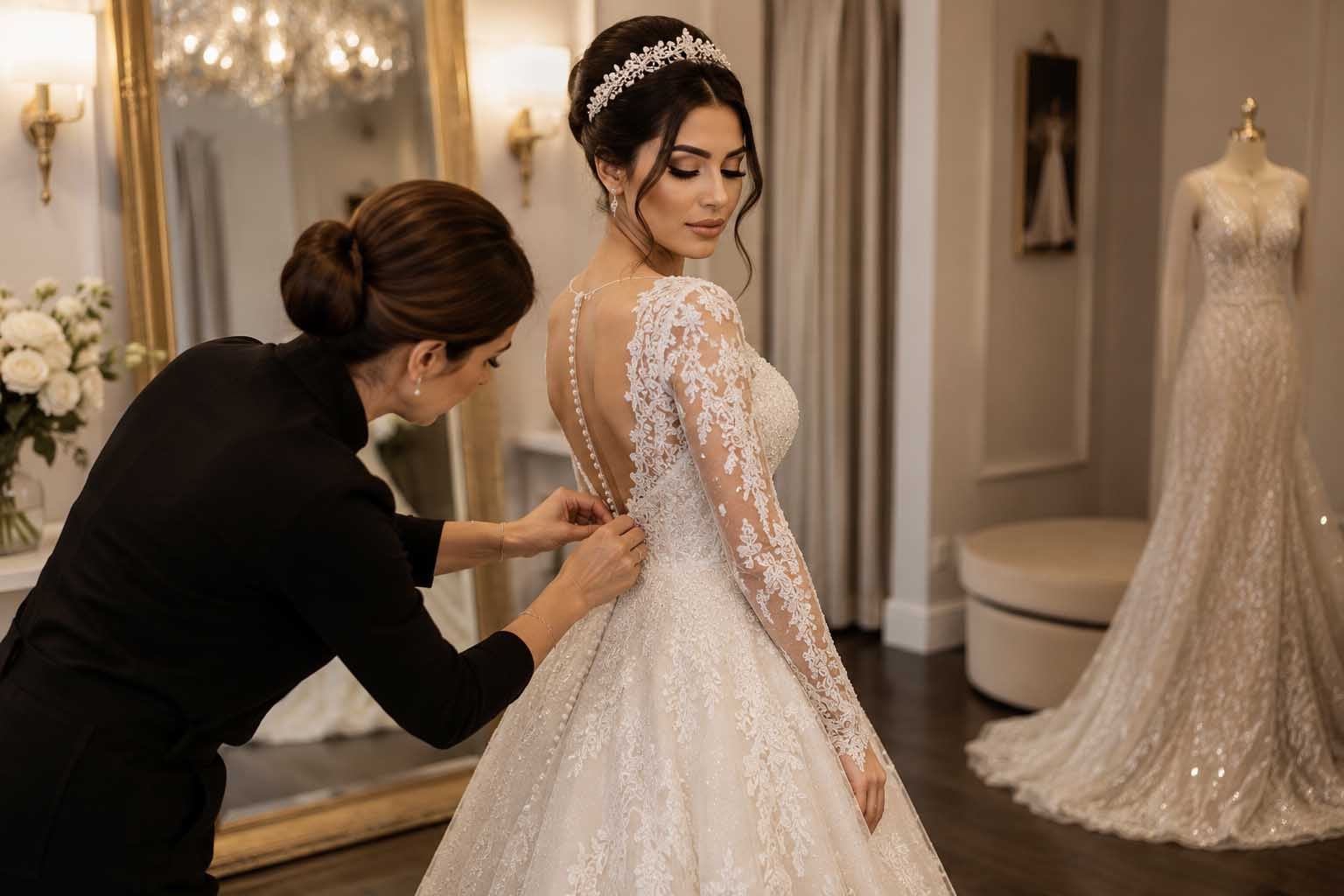
Zippers, buttons, corset backs and low-back constructions all participate in overall bodice tension.
Changing the center back or back neckline can therefore influence what happens at the front. A smoother back fit that creates excessive front tension is not necessarily an improvement; the whole bodice has to remain balanced.
Why Strap Alterations Can Change More Than the Straps
Shortening a wedding-dress strap can raise the entire bodice. That can move the cups, raise the neckline, alter the armhole and increase pressure beneath the arm.
It may also change the back neckline and shoulder tension.
That is why straps should not automatically be shortened whenever the bodice feels loose.
Spaghetti straps have different structural influence from wider straps. Lace straps may require motif repositioning. Illusion straps involve delicate sheer material. Off-the-shoulder and detachable designs must also be evaluated for mobility and intended placement.
Tailoring principle: A strap is connected visually and structurally to the bodice. Altering its length can affect several other fit points at once.
If you cannot tell whether looseness originates from the straps, cups or bodice itself, a professional bridal alteration fitting in San Diego can help identify the cause before permanent changes are made. BTG currently offers professional in-house bridal alterations by appointment.
How Neckline Alterations Change the Proportions of a Wedding Dress
Changing neckline depth or shape can modify the visual relationship between the upper torso, bust and waist.
A deeper V or sweetheart curve may create more vertical openness. Raising coverage can create a different visual stopping point. Changing a straight neckline to a curve changes not only coverage but the geometry of the entire upper bodice.
With illusion panels, lace or beading, the visual neckline and structural neckline may not even be the same line.
Possibilities depend heavily on the original gown. Boning location, cups, seam placement, lace motifs and embellishment can restrict how far a neckline can be reshaped without meaningful reconstruction.
A bridal specialist should therefore inspect the actual gown before determining whether a neckline change is technically sensible.
Waist Placement May Be the Most Underrated Fit Decision
The waist is the visual transition between bodice and skirt, making its placement disproportionately important.
A natural-waist gown sitting too high can make the bodice appear shorter and the skirt begin sooner than intended. When the waist sits too low, the torso-to-skirt relationship changes in the opposite direction.
The effect becomes even more pronounced with architectural waistlines.
A basque waist intentionally dips below the natural waist. A drop waist extends the fitted bodice farther toward the hips. An empire line is intentionally positioned above the natural waist.
The goal is therefore not to move every wedding dress toward the same waist position. It is to make the original architecture of that specific gown sit intentionally on the bride.
How Wedding Dress Alterations Change Hip Fit and Skirt Shape
Hip adjustments can change both mobility and silhouette.
A sheath or column gown generally depends on clean vertical fall and controlled ease. Fit-and-flare and mermaid designs rely more heavily on the relationship between hip contour and the point where the skirt begins to release.
An A-line behaves differently because its volume expands progressively from the waist, while a ball gown usually creates considerably more volume through structural layers or skirt construction.
For fitted gowns in particular, taking in the hips can alter:
- stride length,
- sitting comfort,
- fabric tension,
- seam direction,
- wrinkle formation,
- and the point at which the skirt begins to flare.
A mermaid silhouette tailored tightly for a dramatic standing shape may behave very differently when walking or sitting. The correct amount of ease depends on the specific construction, fabric and bride’s preferences, not a universal measurement.
Hemming Changes More Than Wedding Dress Length
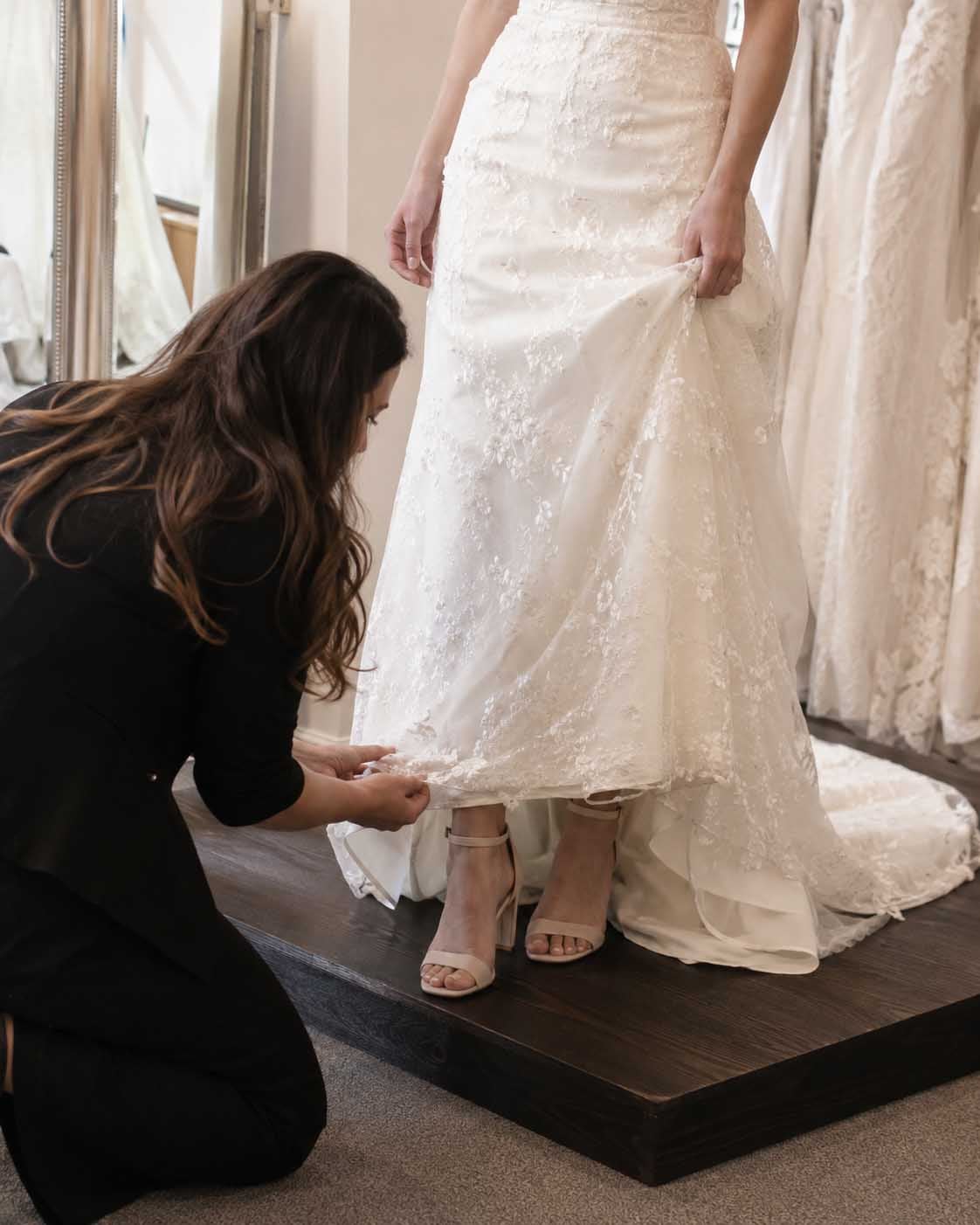
A bridal hem establishes the relationship between the skirt, shoes, floor and train.
That relationship can involve numerous layers: lining, tulle, organza, crinoline, lace edging, appliqué and horsehair braid—a firm woven tape sometimes used inside the hem to help create shape.
Shoes are particularly important. A change in heel height changes the bride’s distance from the floor and therefore changes how a finished hem behaves.
For this reason, bring your intended wedding shoes to the fitting whenever possible, or shoes with the same effective heel height.
Hemming also influences photographs. A front hem that is too long may collapse onto the floor rather than allowing the skirt shape to read clearly, while an overly short hem may visually disconnect the gown from the ground.
When lace borders or decorative motifs cross the hemline, shortening may involve far more work than simply cutting away fabric.
How Alterations Change the Movement of a Wedding Dress
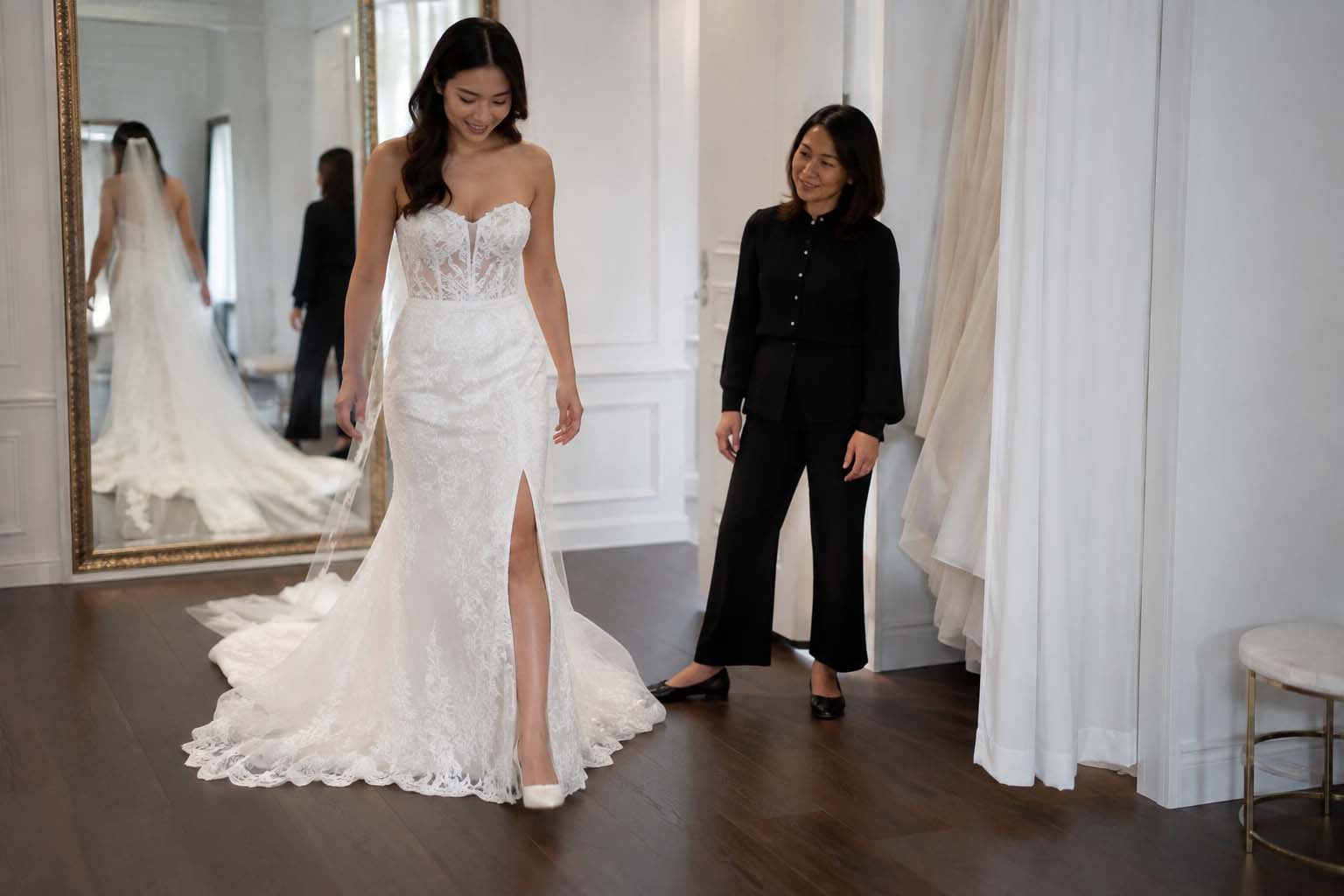
A wedding gown should be evaluated while moving, not simply while standing in front of a mirror.
Research published in the peer-reviewed journal Fashion and Textiles found that professional apparel fit models evaluate garments in multiple postures and movements, including standing, sitting and raising the arms. The study also identifies comfort, movement and placement as important parts of fit evaluation. View the study in Fashion and Textiles.
That principle is particularly relevant to bridalwear.
Walking
The tailor evaluates hem clearance, stride, front lining, skirt restriction and how the train follows behind the wearer.
Sitting
Sitting can expose waist pressure, hip restriction, boning pressure, neckline movement or excessive tension at the back closure that was not apparent while standing.
Raising the Arms
Arm movement can reveal issues with straps, sleeves, armholes and side seams. If raising the arms pulls the entire bodice upward, the specialist may need to identify whether the limitation originates in sleeve construction, armhole shape or another fit point.
Hugging
Wedding gowns need to function during normal human interaction. Reaching forward to embrace someone places different demands on the shoulders, armholes, back and neckline than standing with the arms relaxed.
Stairs
Stairs introduce several variables at once: shoes, hem clearance, skirt volume and train management.
Dancing
Reception movement can test hip mobility, bust security, straps, sleeves and the train. Thoughtful wedding dress alterations should therefore consider the ceremony look and the way the gown needs to perform hours later at the reception.
Bustle Alterations Can Transform Reception Movement
A bustle temporarily lifts and secures the train so the gown can function more easily after the ceremony.
Its placement depends on train length, fabric weight, skirt construction, decorative elements and the desired back silhouette.
A lightweight train and a heavily embellished multilayer train may require very different solutions.
The bustle is also aesthetic. Once secured, it changes how the back of the dress looks, which means it should be assessed both for function and visual balance.
Rather than duplicating an entire bustle guide here, brides can compare the construction and visual differences in BTG’s dedicated guide to wedding dress bustle types. BTG’s current guidance emphasizes choosing bustle construction around the individual train, weight, layers and gown structure.
How Alterations Change Visual Proportion
Proportion is where bridal alterations move beyond measurements.
Consider these relationships:
Bodice length vs. skirt length: Moving the apparent waist changes how much of the total gown is visually assigned to the torso or skirt.
Bust position vs. waist position: Cup placement influences how intentional the bodice looks between neckline and waist.
Hip fit vs. skirt flare: In a fitted gown, moving the transition point between fitted fabric and flare changes the entire silhouette.
Hem vs. shoe height: Shoes influence the amount of gown visible above the floor and the front-to-back relationship of the skirt.
Train vs. silhouette: A long train adds visual weight and extension to the back of a gown.
Sleeve length vs. neckline: Sleeves change how much visual emphasis sits around the upper gown.
Strap placement vs. bodice width: Moving or reshaping straps alters the geometry of the neckline and shoulders.
The objective is not to force the bride toward a predetermined visual ideal.
The goal is to make the gown’s construction lines sit intentionally on the individual bride.
| Alteration | Possible Proportion Change | What a Bridal Tailor Evaluates |
| Shortening straps | Raises bodice visually | Cup and neckline position |
| Shaping waist | Defines bodice/skirt transition | Seam placement and comfort |
| Adjusting neckline | Changes upper-bodice openness | Support and original construction |
| Hemming | Changes skirt-to-floor relationship | Shoes and train balance |
| Reshaping hips | Changes fitted-to-flare transition | Mobility and seam position |
| Adding sleeves | Changes upper-gown visual weight | Attachment and arm movement |
Results always depend on individual gown construction.
Brides in San Diego and throughout Southern California can have gowns professionally evaluated through Bridal & Tuxedo Galleria’s wedding gown alteration service, including brides whose dresses were purchased elsewhere.
What Happens When a Wedding Dress Is Altered Several Sizes?
There is no responsible universal rule for how many sizes every wedding gown can be altered.
Feasibility depends on seam allowance, pattern construction, waist seams, boning, cups, zipper placement, back design, fabric, lace motifs, beading and the skirt.
More substantial resizing may require more than taking in or releasing seams. A tailor may need to rebalance princess seams, reposition appliqué, adjust bust structure, recenter decorative details or reconsider waist placement.
If you are evaluating a designer gown specifically, BTG has a separate guide on altering a designer wedding gown without losing its intended shape.
The garment must be physically inspected before feasibility can be determined.
Fabric Determines How Much an Alteration Can Change the Final Look
Different bridal fabrics reveal tailoring differently.
Mikado
Mikado has enough body to support architectural shapes, but its structure can also make inaccurate seam alignment noticeable.
Satin
Its smooth, often reflective surface can reveal pulling, puckering and seam tension under light.
Crepe
Crepe can create a beautifully clean fitted line, which also means excess tension or distortion may be especially visible.
Tulle
A tulle skirt may contain numerous layers requiring separate consideration at the hem. Altering one visible outer layer does not necessarily resolve the behavior of the layers beneath it.
Organza
Organza combines translucency with structure. Small changes can influence how volume is distributed through a skirt.
Lace
Pattern flow matters. Opening a lace-covered seam can require motifs to be removed and repositioned.
Beaded Fabric
Beads may have to be carefully removed before a seam is opened and restored after the fit is changed.
Illusion Tulle
Because illusion tulle is fine and often positioned around necklines, sleeves or sheer bodices, both fit and finish require precision.
Wedding Dress Alterations for Lace, Appliqué and Beading
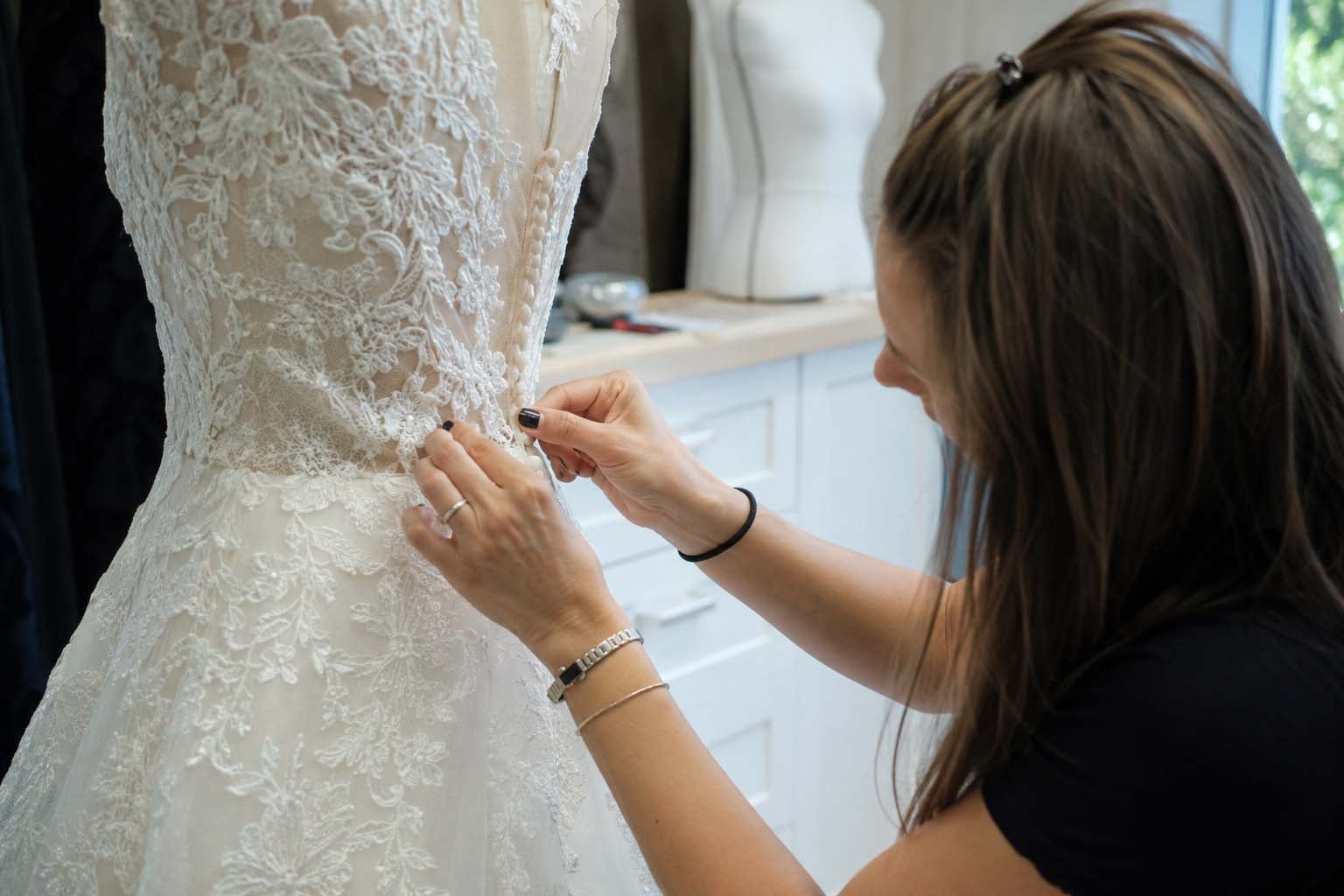
Decorative surfaces can turn an apparently simple seam adjustment into layered work.
An appliqué may cross the exact seam that needs to be altered. The motif can need to be removed before the seam is opened, then repositioned after the new fit is established.
The specialist may also need to preserve symmetry and pattern flow so that the alteration does not leave an obvious visual interruption.
With beading, opening a seam can require temporary removal and later replacement of embellishment.
This is one reason bridal-specific experience becomes increasingly valuable as construction and surface detail become more complex.
How Sleeve Alterations Affect Comfort and Movement
Sleeves should be evaluated in motion.
Long lace sleeves that look close and elegant with the arms relaxed can become restrictive at the elbow or shoulder. Illusion sleeves may respond differently because the underlying material is lighter and more delicate. Cap sleeves, off-the-shoulder constructions and detachable sleeves each place tension in different areas.
During an appropriate fitting stage, the alteration specialist may assess:
- elbow flexion,
- forward reaching,
- arm raising,
- shoulder movement,
- underarm comfort,
- and whether the sleeve pulls the bodice out of position.
The goal is not simply to produce the narrowest possible sleeve. It is to preserve the intended visual line while maintaining appropriate functional movement.
Can Alterations Make a Wedding Dress More Comfortable?
Yes. When technically appropriate, alterations can improve comfort by correcting support, hem length, strap tension, cup position, sleeve mobility, hip ease and train management.
Comfort and visual fit should be evaluated together.
A gown should allow the bride to breathe naturally and sit without severe compression. Straps should not carry responsibilities that belong to the bodice structure. Underarm areas should not pinch excessively. A fitted skirt should preserve the movement required for the bride’s ceremony and reception plans.
Comfort is not an optional luxury added after appearance. It is part of whether the gown functions successfully as clothing.
What Should Not Be “Fixed” Just Because It Feels Different?
Many brides are wearing corsetry, substantial boning, long trains or multilayer skirts for the first time. Those garments can naturally feel different from everyday clothing.
Different does not automatically mean incorrect.
A structured bodice may feel firmer. A train requires greater awareness behind the body. A ball gown occupies more physical space. Multiple layers change how a bride approaches stairs, chairs and doorways.
However, communicate pain, pinching, restricted breathing, persistent slipping, severe movement restriction, gaping, strong pressure or skin irritation to the alteration specialist rather than assuming you simply have to tolerate it.
The Difference Between a Dress That Fits and a Dress That Feels Tailored
A dress that technically fits may close, reach the floor and stay on the body.
A professionally refined bridal fit goes further.
It considers where the bust structure sits, whether the waistline lands intentionally, whether side seams remain balanced, how the skirt releases from the body, what the neckline does when the bride moves, and how the silhouette reads from the front, side and back.
It also considers how the train behaves and how the bride will transition from ceremony to reception.
That difference is subtle, which is exactly why professional fitting involves more than checking a size label.
Why Professional Bridal Alterations Matter for Designer Wedding Dresses
Designer wedding gowns may combine internal corsetry, boning, multiple linings, specialty fabrics, appliqué, beadwork, sheer panels and engineered trains in one garment.
Changing one part of that construction can influence another.
Because bridal gowns can involve specialized construction, brides may benefit from choosing a professional with specific experience altering wedding dresses rather than evaluating the gown like an ordinary day dress.
For more detail on preserving silhouette during significant tailoring, see BTG’s designer gown alteration guide.
The Bridal & Tuxedo Galleria Approach to Wedding Dress Alterations
Bridal & Tuxedo Galleria offers professional in-house bridal alterations in San Diego, and its current service information states that alteration services are available for wedding gowns whether they were purchased at BTG or elsewhere.
Established in 1994, Bridal & Tuxedo Galleria has more than 30 years of bridal experience. Navid Noor is identified by the boutique as its Head Designer and Owner, connecting bridal styling, gown construction and final tailoring within the broader BTG bridal experience.
For brides comparing gowns as well as tailoring options, BTG’s San Diego wedding dress collection and private bridal appointment options provide the next step.
Wedding Dress Alterations for San Diego and Orange County Brides
Southern California weddings can move through dramatically different environments in a single day, from outdoor ceremonies to formal indoor receptions.
For coastal or outdoor weddings, brides may want to discuss train management, wind, lightweight skirt layers and the surfaces they expect to walk across.
At garden and estate celebrations, grass, stone, stairs and longer outdoor routes can make hem clearance and bustle planning especially practical considerations.
Hotel, ballroom and resort weddings may involve long periods of standing followed by seated dinner service and hours of dancing. A structured gown that looks impressive during the ceremony still needs to function through that transition.
Bridal & Tuxedo Galleria is located in San Diego; Orange County is a regional audience rather than a second BTG location. Brides traveling from Orange County can schedule fitting and alteration appointments at the San Diego boutique. BTG’s current contact information lists its location at 4242 Camino del Rio North, Suite 14, San Diego.
What to Bring to a Wedding Dress Alteration Appointment
Bring the items that can materially change gown placement:
- Wedding shoes, or shoes with equivalent heel height
- Intended wedding undergarments
- Shapewear if you plan to wear it
- Accessories that affect neckline, shoulder or bodice placement
- Your veil when train or bustle interaction needs evaluation
- Photos showing a particular fit concern
- Questions about sitting, walking, hugging and dancing
For scheduling questions rather than fit mechanics, use BTG’s dedicated wedding dress alteration timeline guide instead of relying on generalized timing advice.
Questions to Ask During Your Alteration Fitting
Useful fitting questions include:
- What is causing this area to gap or pull?
- Will changing this seam affect another area?
- If we shorten the straps, what happens to the neckline and cups?
- How should the bodice feel when I sit?
- Can I comfortably raise my arms?
- How will this alteration affect lace or beading?
- Where will the bustle points be placed?
- Can we safely test the bustle before completion?
- How does my shoe height affect the final hem?
- Does this adjustment preserve the gown’s intended proportions?
Questions like these help shift the fitting conversation from “Can this be tighter?” to “What is this alteration actually changing?”
Common Wedding Dress Alteration Mistakes to Avoid
A few fitting decisions deserve extra attention:
- Focusing only on tightness instead of placement
- Evaluating the gown only while standing
- Changing heel height after hemming
- Switching undergarments without discussing the effect
- Shortening straps without reevaluating the entire bodice
- Tightening a fitted skirt until normal walking becomes difficult
- Forgetting to test bustle function
- Treating a pinned fitting as though it were the completed garment
- Waiting until the final stage to mention discomfort
- Assuming every neckline or structural redesign is straightforward
- Comparing an actual gown with highly edited social-media imagery
- Optimizing one camera angle while ignoring the gown from the side and back
What Alterations Can, and Cannot, Reasonably Change
Many wedding gowns can be refined significantly, but technical feasibility always depends on construction.
Commonly Adjustable Areas May Include
Hem, straps, side seams, bust fit, waist fit, cups, bustle placement and some sleeve or neckline refinements.
Changes That May Require More Significant Reconstruction
Major neckline redesign, substantial size changes, reshaping corsetry, dramatic waist relocation, adding complex sleeves, major train modification and changes through heavily beaded seams.
None of these should be promised based solely on a photograph or dress size.
The final decision should follow physical inspection by an experienced bridal alteration professional.
When Is a Wedding Dress Finished Being Altered?
A gown is not finished simply because the last seam has been stitched.
From a quality-control perspective, the completed fit should be evaluated for visual alignment, security, comfort, movement, hem behavior, bustle function, fastenings, sleeve mobility, strap placement and fabric behavior.
The bride should also view the gown from front, side and back.
The number and timing of fittings vary according to the gown and work required. BTG already covers that separate search intent in its guide to how many wedding dress fittings may be needed, so this page should remain focused on final fit quality rather than repeating timeline content.
How to Know Your Wedding Dress Is Ready for the Wedding Day
By the final fitting, you should understand and feel confident about:
- neckline security,
- bust support,
- waist comfort,
- strap placement,
- sleeve mobility,
- hip mobility,
- normal walking,
- sitting,
- hem clearance,
- bustle operation,
- and train handling.
When appropriate, the person who may help secure your bustle at the reception should understand the system as well.
The Fit–Movement–Proportion Framework
A useful way to evaluate bridal tailoring is to consider three connected questions.
1. FIT
Does the gown sit correctly on the bust, waist, hips and shoulders?
Look beyond whether the zipper closes. Consider cups, seams, neckline, waist placement and structural alignment.
2. MOVEMENT
Can the bride walk, sit, turn, hug and celebrate comfortably?
A gown that looks balanced while motionless should not lose its structure or become severely restrictive through normal wedding-day movement.
3. PROPORTION
Do the neckline, bodice, waist, skirt and train maintain intentional visual balance?
An alteration in one area should be evaluated for its effect on the rest of the gown.
A strong alteration decision should ideally satisfy fit, movement and proportion together.
The 7-Movement Wedding Dress Fitting Test
Always ask the alteration specialist which movements are safe while the gown is pinned or temporarily fitted. Never make forceful movements in an unfinished gown without permission.
1. Walk Naturally
Evaluates hem clearance, stride, skirt restriction and train behavior.
2. Sit Fully
Evaluates waist and hip pressure, boning comfort, neckline security and the back closure.
3. Raise Both Arms
Evaluates straps, sleeves, armholes and whether the bodice shifts upward.
4. Hug Someone
Evaluates forward shoulder movement, back tension and upper-bodice stability.
5. Turn From Side to Side
Evaluates whether the gown moves naturally with the torso rather than twisting around it.
6. Take Several Dance-Style Steps
When the specialist confirms it is safe, this can reveal hip restriction, bodice instability and sleeve limitations.
7. Walk With the Bustle Secured
Evaluates reception movement, train clearance and whether the bustled back remains balanced.
Frequently Asked Questions About Wedding Dress Alterations
1. Can wedding dress alterations change how a dress fits?
Yes. Alterations can change where the bodice sits, how the cups support the bust, where the waistline lands, how the hips are shaped and how the skirt hangs. Good bridal tailoring evaluates these points together because changing one structural area can influence another.
2. Can alterations make a wedding dress more comfortable?
They often can. Depending on construction, tailoring may improve strap tension, bust support, underarm comfort, hip mobility, hem clearance, sleeve movement or train management. Comfort should be assessed together with support and silhouette rather than achieved by simply making the entire gown looser.
3. Can wedding dress alterations improve movement?
Yes, when the gown’s construction allows the appropriate changes. Hemming, hip ease, sleeve fit, strap position, bodice security and bustle design can all influence movement. The gown should be evaluated during safe, natural motions such as sitting, walking and raising the arms—not only while standing.
4. Can a wedding dress be altered if it is too big?
Often, but the amount of possible reduction depends on seam placement, internal structure, lace, beading, cups, boning and the overall pattern. Significant resizing can require design details and structural elements to be repositioned rather than merely removing equal amounts from the side seams.
5. Can a wedding dress that is too small be altered?
Possibly. The available seam allowance is an important factor, but it is not the only one. Back construction, side seams, lace motifs, boning, waist structure and fabric all affect feasibility. An alteration specialist should inspect the gown before promising that it can be safely enlarged.
6. Does shortening wedding dress straps change the neckline?
It can. Shortening straps may raise the bodice, cups and neckline while also changing armhole depth, underarm comfort and back tension. If a bodice feels loose, the correct solution may involve the bodice or cup structure rather than automatically shortening the straps.
7. Can a tailor change the waistline of a wedding dress?
Some waist refinements are possible, but dramatically moving a waistline can require significant reconstruction. Natural, basque, drop and empire waists are part of the original pattern architecture, so changes need to be evaluated against the bodice, skirt, seams and internal support.
8. Can wedding dress alterations change the silhouette?
Yes. Changes through the waist, hips, skirt, hem or internal structure can influence how a silhouette reads. The amount of change possible depends on the original pattern and construction. Significant reshaping should be evaluated carefully so the gown does not lose the intended relationship between bodice and skirt.
9. Should I test sitting and dancing during my wedding dress fitting?
Yes—when your alteration specialist says the gown is at a safe stage for those movements. Sitting, raising the arms and controlled movement can reveal fit issues that may not be visible while standing. Never dance or make large movements while a gown contains exposed pins or temporary fittings.
10. Where can I get professional wedding dress alterations in San Diego?
Bridal & Tuxedo Galleria provides professional wedding dress alterations in San Diego by appointment. The boutique states that it works with gowns purchased at BTG as well as wedding dresses purchased elsewhere. Brides can review the alteration service or book an appointment online.
A Beautiful Wedding Dress Should Fit the Way You Move
Correct bridal fit is multidimensional.
Tightness alone does not tell you whether a gown fits. The bust has to sit correctly. The waist has to relate intentionally to the design. The skirt needs to move. The hem has to work with the shoes. Straps, sleeves and necklines should remain stable through natural movement. A bustle needs to function after the ceremony without looking like an afterthought.
Most importantly, wedding dress alterations should not be treated as isolated fixes.
Changing straps can change the neckline. Changing the bodice can affect bust placement. Reshaping the waist can alter torso-to-skirt proportion. Hemming changes movement. Bustling changes how the train behaves.
Professional bridal tailoring considers the gown as one interconnected design.
Book Your Wedding Dress Alteration Appointment
If your gown gaps, pulls, slips, restricts movement, or simply does not sit where you expected—have the construction evaluated before deciding what needs to change.
Bridal & Tuxedo Galleria offers bridal-specific fitting and alteration services in San Diego for gowns purchased at BTG or elsewhere.
Book your bridal alteration appointment to evaluate fit, mobility and proportion with the actual gown on your body.

Author : Kayla Garett
Author bio :
Kayla brings more than 10 years of hands-on experience in bridal fashion and boutique styling, specializing in personalized bridal consultations and luxury client experiences. As the manager of the San Diego location of Bridal and Tuxedo Galleria, she is known for her keen eye for detail, deep understanding of couture wedding dress design, and ability to guide brides toward a gown that reflects their unique vision and wedding aesthetic. Her approach blends fashion expertise with genuine care, ensuring every bride feels confident, understood, and unforgettable on her wedding day
Call Now

Your Personalized Wedding Dress Shopping Experience in San Diego With over 30 years of styling expertise, our dedicated team is passionate about helping you find the perfect wedding dress and tuxedo.


Leave a Reply