
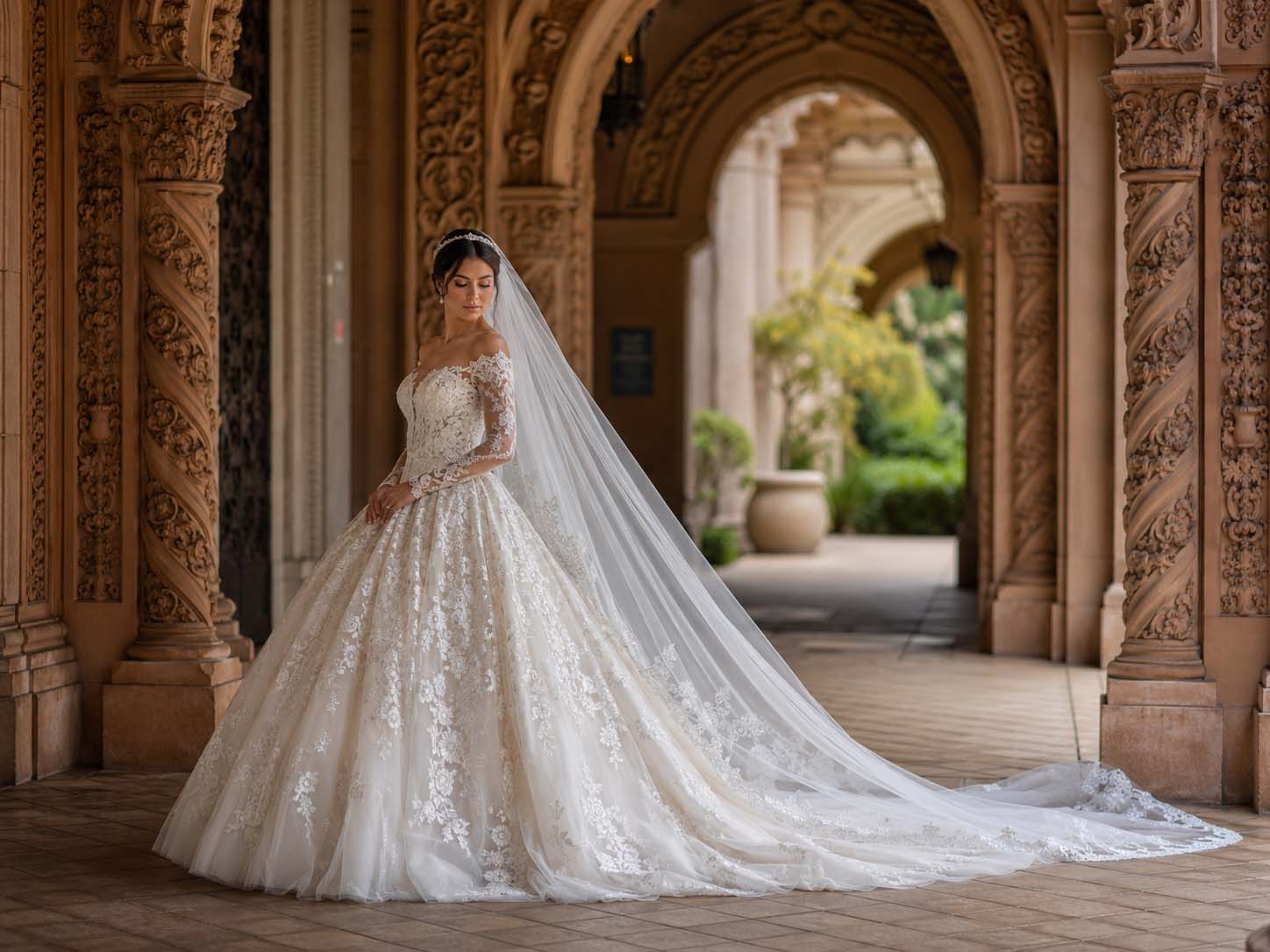
Custom Design Wedding Dresses: From Your Vision to the Final Fitting
For brides considering custom design wedding dresses, the process begins differently from traditional bridal shopping. Instead of selecting a completed gown and adapting it afterward, the dress is developed around the bride through creative direction, proportion, fabric behavior, construction, fittings, and final tailoring.
Custom design is collaborative, not limitless. Every decision must work with the body, materials, wedding setting, comfort priorities, timeline, and practical realities of gown construction.
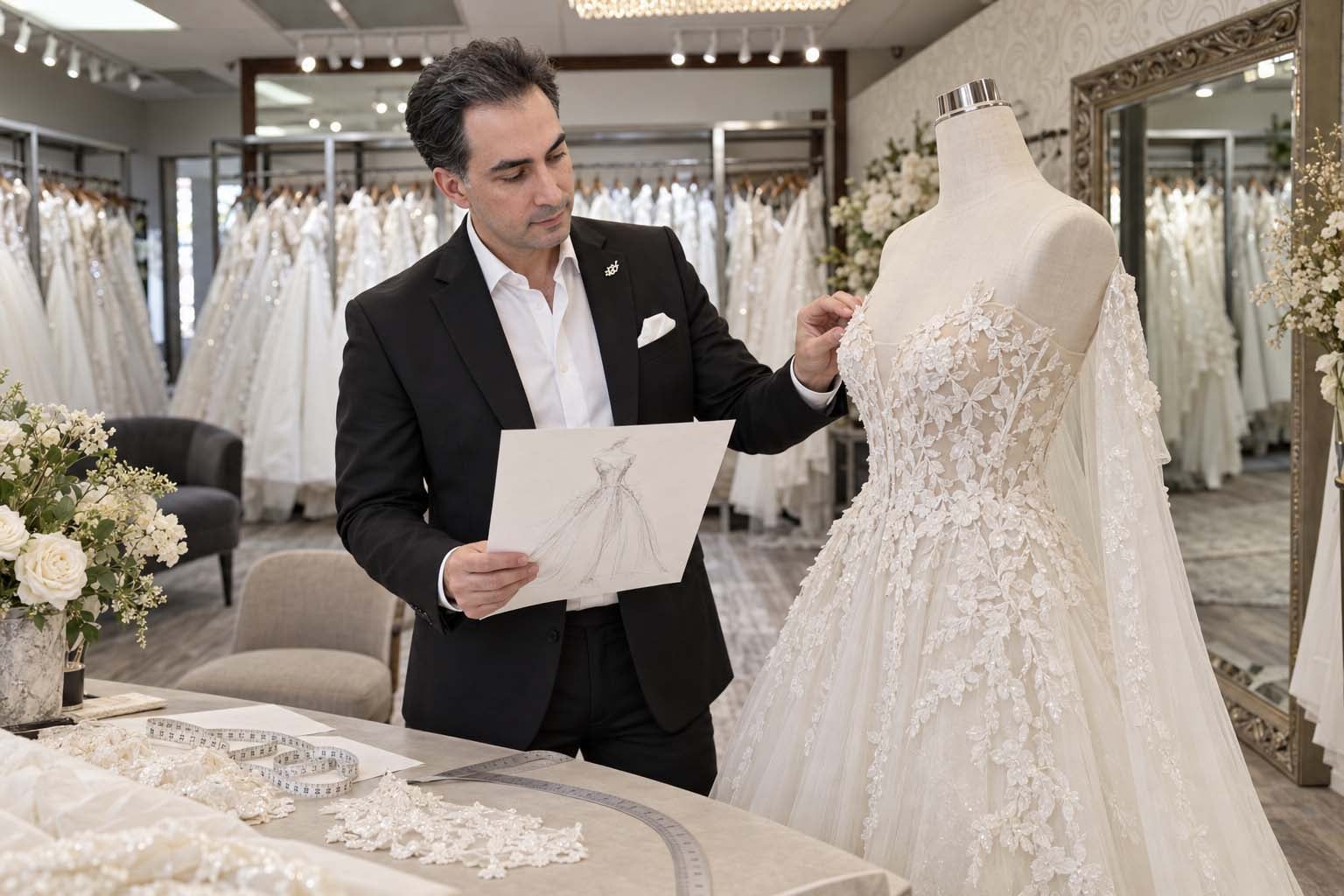
At Bridal & Tuxedo Galleria in San Diego, brides can explore custom bridal design with Head Designer Navid Noor while also comparing designer gowns and in-house alteration possibilities. Established in 1994, the boutique has more than 30 years of bridal experience and offers personalized appointments, designer collections, custom-design services, and bridal-specific tailoring.
There is a meaningful difference between recognizing a beautiful gown and recognizing yourself in it. Custom design becomes relevant when the dress in your mind, or the way you want to feel in it, does not fully exist on a rack.
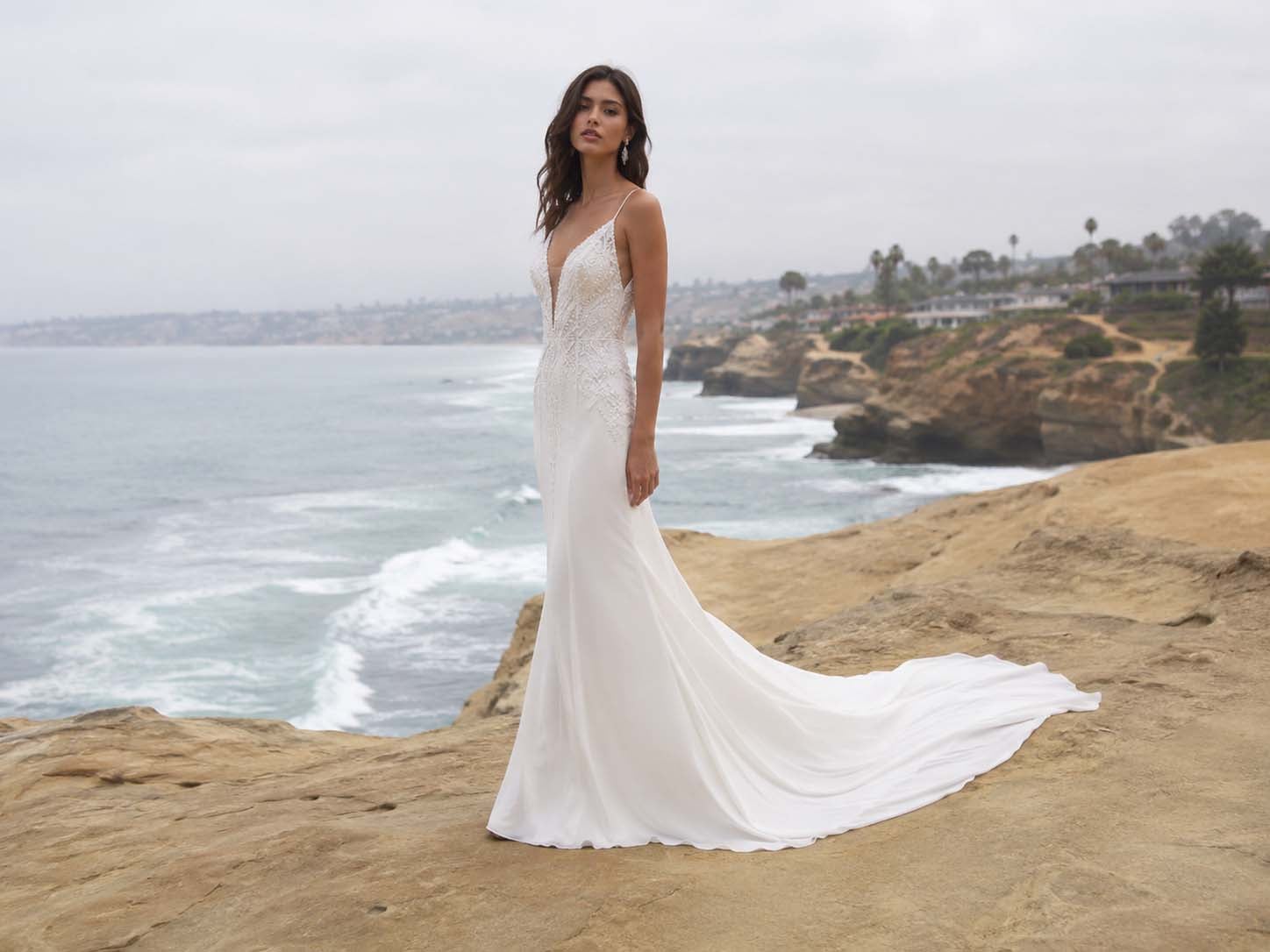
What Are Custom Design Wedding Dresses?
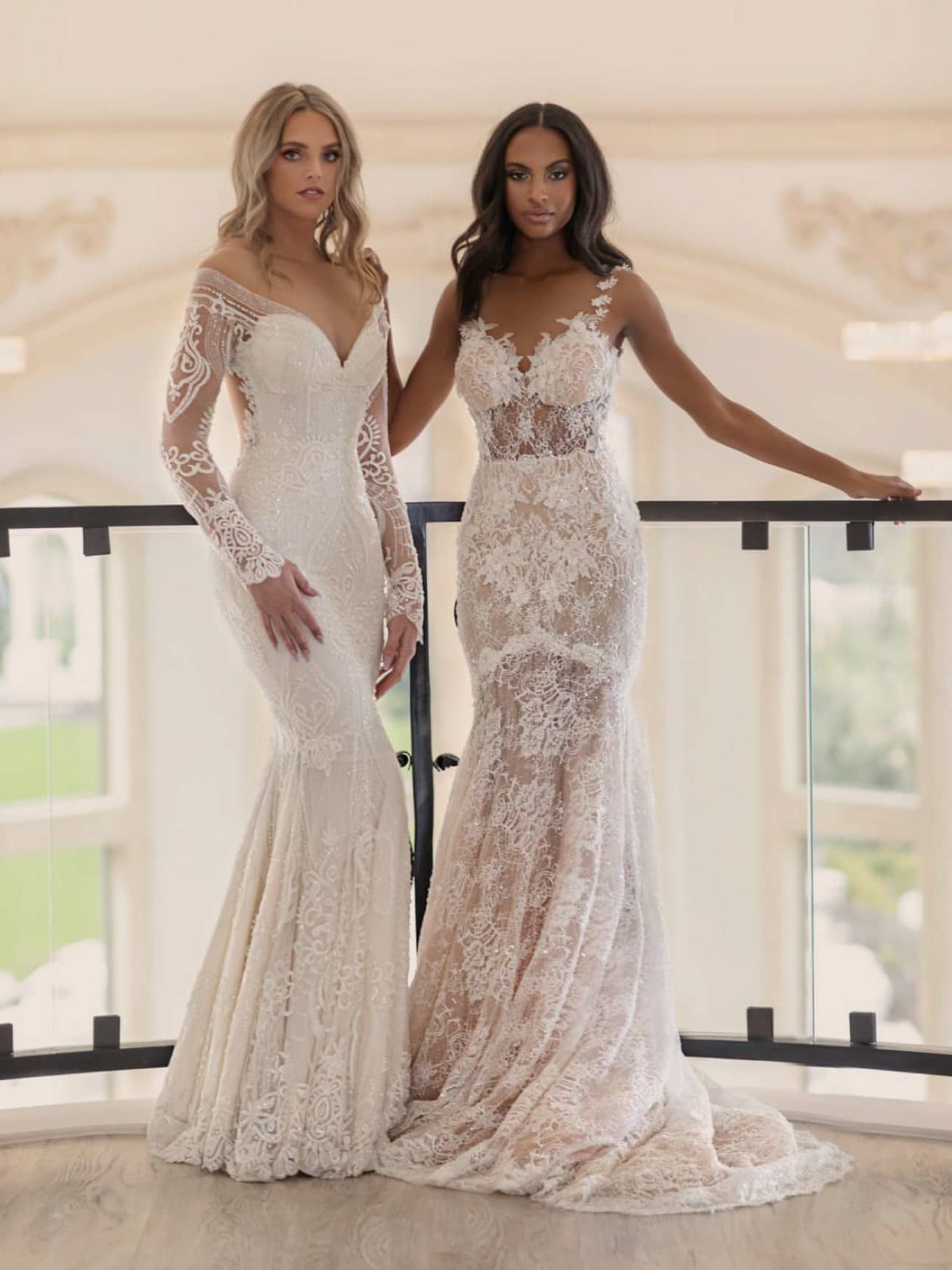
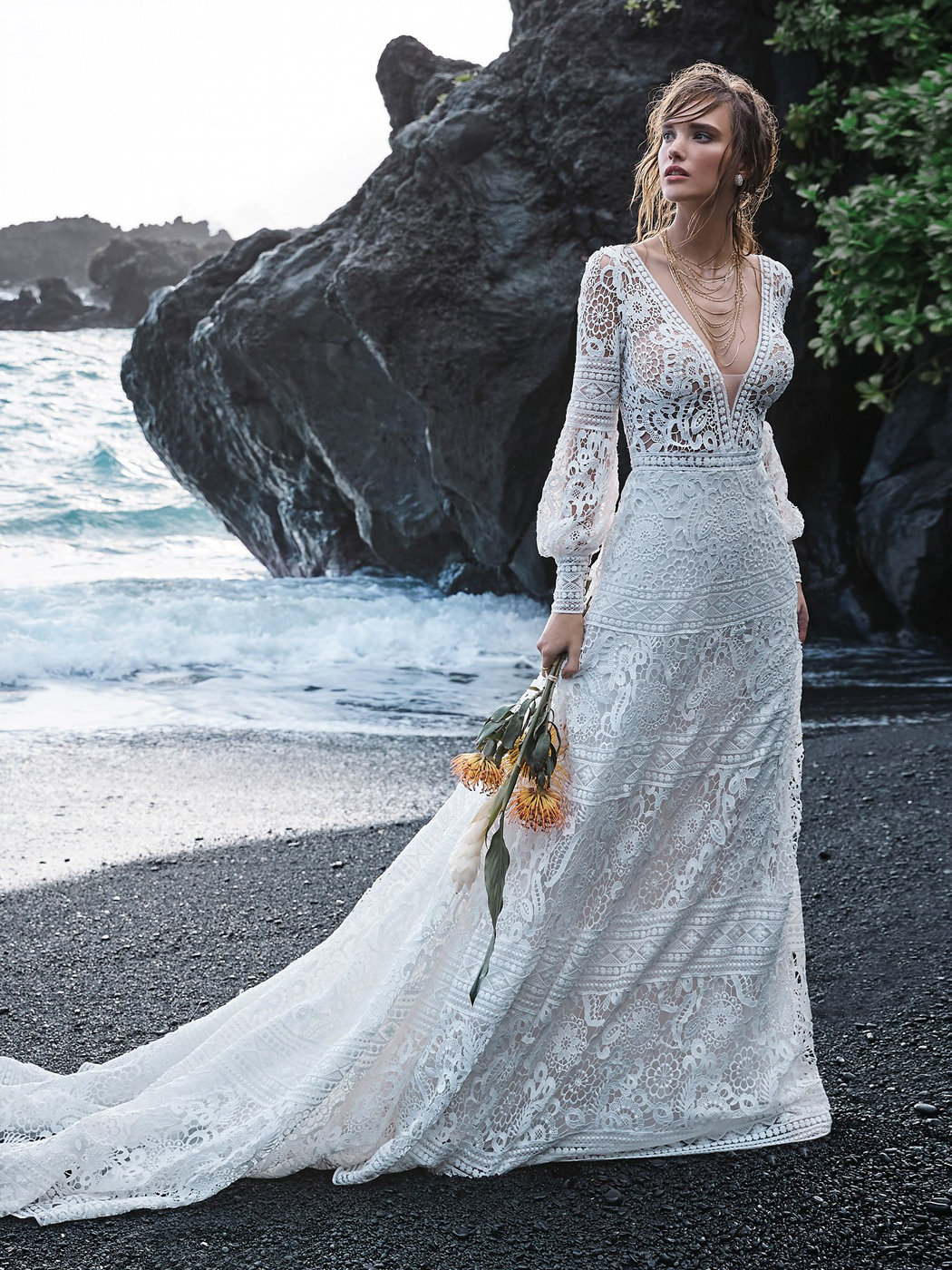
Custom design wedding dresses are gowns developed around one bride’s aesthetic, proportions, comfort needs, wedding setting, and design priorities rather than selected as finished products. Depending on the atelier, the process may include consultation, sketching, fabric selection, pattern development or adaptation, fittings, construction, and final tailoring.
A fully custom gown may involve decisions about:
- The front and back neckline
- Sleeve or strap placement
- Bodice length and internal support
- Waistline position
- Skirt silhouette and volume
- Train length and structure
- Fabric, lining, lace, or embellishment
- Detachable ceremony and reception elements
- Closures, buttons, corsetry, or illusion panels
- Final fit, balance, hem, and bustle
Measurements are only one part of the process. Posture, torso length, bust placement, shoulder position, waist location, preferred heel height, movement, and the visual relationship between the bodice and skirt can all affect the design.
The exact process differs among designers. Some begin with a new pattern, while others adapt a proprietary base pattern or an existing house design. A mock-up or muslin may be used before the final material is cut, but that step should not be assumed unless the atelier confirms it. Vogue’s guide to creating a custom wedding dress similarly notes that fittings may involve muslin, draping, and gradual silhouette refinement.
Custom Does Not Mean Every Possibility Is Practical
A productive custom-design experience includes creative freedom and professional editing.
A low, open back may conflict with the support required by a heavily structured bodice. A delicate chiffon sleeve may not behave like a fitted lace sleeve. An extremely long train may be difficult at a coastal venue with stairs, wind, or uneven ground. Several favorite design references may rely on incompatible fabrics or entirely different internal structures.
The designer’s responsibility is not to approve every request automatically. It is to explain how fabric, structure, budget, comfort, movement, timing, and construction feasibility influence the finished gown.
Custom, Bespoke, Made-to-Measure, Semi-Custom, or Altered?
Bridal businesses do not always use these terms consistently. Before committing, ask what the boutique’s version of “custom” actually includes.
| Service Type | Starting Point | Level of Design Control | Fit Process | Best Suited For | Important Limitation |
|---|---|---|---|---|---|
| Off-the-rack | A completed gown available in-store | Low | The existing gown is fitted and altered | Short timelines or brides who love an available dress | Size, fabric, and structural options are limited |
| Made-to-order | An established designer style ordered in a standard size | Low to moderate | Alterations normally occur after delivery | Brides who want a specific collection gown | Ordering a size does not create a body-specific pattern |
| Made-to-measure | An established design adjusted to individual measurements | Moderate | Measurements guide fit before final tailoring | Brides who love an existing design but need more individualized sizing | The original design architecture usually remains |
| Semi-custom | An existing design with approved options | Moderate to high | Standard construction plus personalized fittings | Brides who want selectable sleeves, fabrics, trains, or details | Choices are limited to what the designer can offer |
| Extensive alteration | A completed gown reconstructed or modified | Moderate, depending on the gown | Multiple fittings may be required | Brides who love most of an existing dress | Original seams and internal construction limit feasibility |
| Full custom or bespoke | A new design direction developed for the individual | High | Measurements, pattern work, fittings, construction, and refinement may be involved | Brides with a defined need or distinctive vision | Requires trust, decisions, time, and a clearly documented process |
Who Should Consider a Custom Wedding Dress?
A custom bridal gown may be appropriate when an existing collection repeatedly requires meaningful compromise.
Consider this path when you:
- Have a clear concept that is unavailable in current collections
- Love compatible elements from several gowns and need help combining them
- Require intentional coverage, support, mobility, or proportion
- Want culturally meaningful, religious, or family-inspired elements
- Prefer a collaborative design experience
- Want a distinctive gown rather than a recognizable trend
- Need detachable sleeves, an overskirt, or another ceremony-to-reception transition
- Would like heirloom fabric or lace evaluated for possible integration
- Are comfortable approving a design before seeing the completely finished garment
- Want the gown developed in relationship to your venue, accessories, and movement needs
Custom may not be the strongest option when the wedding date is extremely close, an available gown already feels complete, or you need to see the exact finished garment before making a decision.
It may also be unsuitable when the goal is to duplicate another designer’s gown precisely. Inspiration photographs can clarify preferences, but a responsible designer should interpret references rather than reproduce someone else’s work line for line.
An undefined budget can also make the process difficult. You do not need to know every cost before the consultation, but you should be willing to prioritize what matters most if the desired fabric, detailing, structure, and construction exceed the original investment range.
Explore before deciding: Brides comparing custom design wedding dresses with an existing gown can review designer wedding dresses in San Diego and learn more about BTG’s custom bridal design options. The first goal is to identify the right service path, not to force a custom commission.
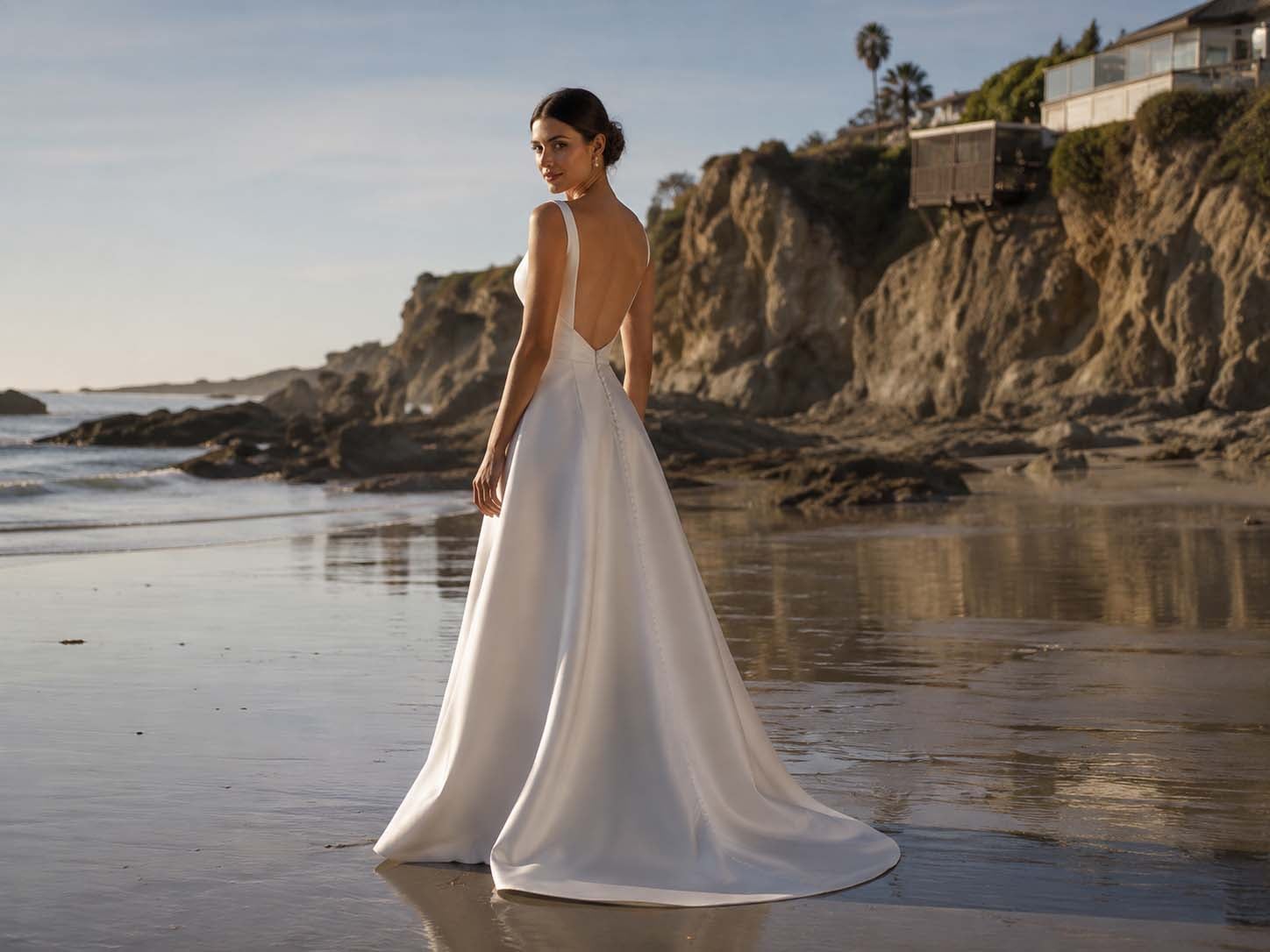
Why Brides Choose Custom Design Wedding Dresses
Uniqueness is only one reason to choose a custom gown. More often, the decision is connected to control, comfort, identity, or the desire to avoid compromising between several nearly right dresses.
A bride might want:
- A specific level of coverage without losing a light, modern appearance
- A bodice that provides support without looking overly rigid
- A minimalist fabric paired with a dramatic architectural train
- A modest ceremony layer that can be removed for the reception
- A neckline developed around jewelry or an heirloom veil
- A gown informed by family history or cultural tradition
- A skirt proportioned for an estate, ballroom, garden, or coastal setting
- A distinctive back that remains secure while walking, sitting, and dancing
The strongest custom gowns feel cohesive. They do not appear to be a sweetheart bodice, bishop sleeve, basque waist, lace motif, and cathedral train assembled from unrelated references. Every line should contribute to one visual idea.
The Custom Wedding Dress Process, Step by Step
The stages below describe professional bridal-design principles. BTG-specific timing, fitting frequency, deliverables, and approval procedures must be confirmed before publication.
1. Discovery and Design Consultation
The first consultation should uncover priorities rather than merely collect images.
Useful topics include:
- Wedding date and location
- Ceremony type and level of formality
- Indoor and outdoor conditions
- Photography plans
- Walking surfaces and stairs
- Preferred coverage
- Bust and bodice support
- Sleeve mobility
- Comfort while sitting
- Cultural or religious requirements
- Accessories and heirloom pieces
- Desired visual mood
- Features the bride does not want
Three or four well-chosen adjectives—such as architectural, romantic, restrained, or dramatic—may communicate more than a folder containing fifty unrelated dresses.
Harper’s Bazaar’s bridal-shopping guidance similarly recommends understanding the elements you love, including silhouette, neckline, textile, and detailing, before moving deeper into the process.
2. Editing the Inspiration
A designer studies why each reference appeals to the bride.
One image may be loved for its neckline, another for its fluid skirt, and a third for the feeling of its photography rather than the dress itself. Those references may involve conflicting waistlines, materials, levels of support, or proportions.
Editing means identifying the strongest shared direction and removing details that weaken it. This stage turns inspiration into a design language rather than a shopping list.
3. Initial Sketch and Design Direction
A sketch may show:
- Front and back views
- Neckline depth and shape
- Sleeve or strap direction
- Waist placement
- Bodice seaming
- Skirt volume
- Train length
- Closures
- Detachable elements
- Embellishment placement
- The relationship between the gown and veil
A fashion sketch communicates concept and proportion. It cannot fully demonstrate the weight, transparency, movement, texture, or exact fit of the finished material. Brides should ask which parts of the drawing are illustrative and which are contractual design decisions.
4. Fabric and Material Selection
Fabric does not simply cover a silhouette; it helps create it.
Mikado and heavier satins can support sculpted seams and clear architectural volume. Crepe often creates a closer, more fluid line. Organza is lightweight but can retain more shape than chiffon. Tulle may create soft volume, illusion coverage, or internal skirt support. Chantilly lace is generally delicate and open, while guipure lace tends to be heavier and more graphic.
Embroidered tulle, appliqué, beaded textiles, lining, boning, illusion mesh, and horsehair braid also affect weight, transparency, support, texture, and movement.
Brides should evaluate fabrics in person and under more than one type of light. A reflective satin may look very different beside a window than it does under ballroom lighting. A heavily beaded textile may feel comfortable for several minutes but demanding after hours of wear.
The Brides wedding-dress fabric guide offers useful editorial context on how crepe, chiffon, organza, lace, Mikado, satin, and tulle differ in drape, weight, and structure.
Do not describe a textile as silk unless its fiber content has been verified.
5. Measurements, Pattern Development, or Muslin Fitting
Measurements establish dimensions, but a pattern must also interpret the body in motion.
The designer may evaluate:
- Posture and shoulder position
- Bust placement
- Torso length
- Natural waist
- Back shape
- Hip placement
- Skirt balance
- Hem relationship to the intended shoes
- How the gown settles after walking or sitting
Some custom processes use a muslin or mock-up to test balance, seams, volume, and neckline position before cutting the final fabric.
[Confirm whether Bridal & Tuxedo Galleria uses a muslin or mock-up stage for each category of custom commission.]
The intended shoes and undergarments should be selected or discussed early because heel height and support garments can affect the hem, posture, and bodice fit.
6. Construction and Internal Architecture
Couture-informed construction is not defined by visible decoration alone.
The less visible elements may include:
- Boning that stabilizes the bodice
- Cups positioned for the gown’s neckline
- A waist stay that helps distribute weight
- Corsetry or support panels
- Interlining that gives fabric more body
- Seam direction that shapes the torso
- Closures that balance security and appearance
- Skirt supports that control volume
- Internal engineering for a detachable train or overskirt
A successful bodice should not depend on the bride standing completely still. It should remain secure during breathing, turning, hugging, and sitting without creating avoidable pressure.
7. Fittings and Design Refinement
During fittings, the team may assess:
- Neckline height and symmetry
- Bust support
- Bodice security
- Waist placement
- Sleeve mobility
- Arm movement
- Back height
- Skirt balance
- Hem length
- Train behavior
- Closure tension
- Appliqué placement
- Comfort while sitting and walking
The process for custom design wedding dresses works best when feedback is specific. “I feel pressure at the lower edge of the bodice when I sit” is more actionable than “something feels wrong.”
Major late-stage design changes may affect the pattern, materials, construction sequence, price, and completion date. Changes should be documented and approved rather than handled through informal assumptions.
8. Final Tailoring and Wedding-Day Preparation
The final stage may involve:
- Hem confirmation
- Bustle placement
- Closure testing
- Final movement assessment
- Accessory coordination
- Pressing or steaming guidance
- Transport instructions
- Storage recommendations
- Dressing assistance instructions
- An emergency kit
- A plan for managing detachable elements
Only services confirmed by BTG should be listed as included in a custom-design agreement. Bridal & Tuxedo Galleria separately offers in-house wedding-dress alterations and bridal fittings by appointment.
What Parts of a Wedding Dress Can Be Customized?
Necklines and Bodices
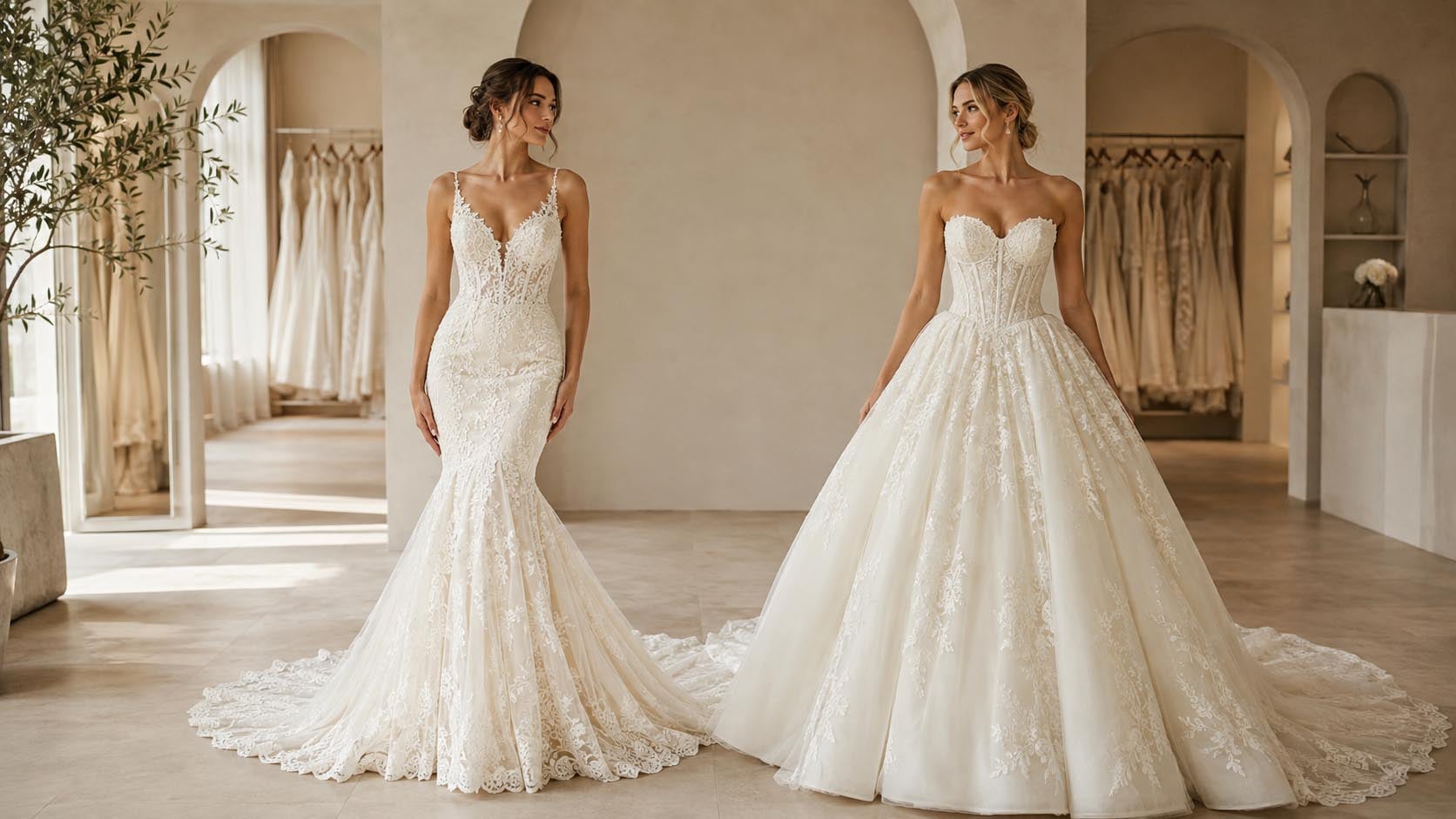
Possible directions include sweetheart, scoop, square, V-neck, straight, high-neck, illusion, asymmetric, corseted, draped, or structured minimalist bodices.
A neckline affects more than style. It changes bust support, strap positioning, back construction, coverage, jewelry placement, and the visual relationship between the face, shoulders, and waist.
Brides comparing options can begin with BTG’s wedding-dress neckline guide.
Sleeves and Straps
Options may include spaghetti straps, wider straps, off-the-shoulder draping, cap sleeves, fitted long sleeves, bishop sleeves, detachable sleeves, lace overlays, boleros, or bridal jackets.
Sleeve decisions must account for the armhole, bodice support, shoulder movement, fabric stretch, and whether the bride can raise her arms comfortably.
A detachable sleeve should look intentional both when attached and removed. The attachment method should also be easy for a trusted person to manage on the wedding day.
Waistlines and Torso Proportions
A natural waist, basque waist, drop waist, empire-influenced line, elongated corset, or curved seam can change the entire composition.
The correct placement is not determined by trend alone. It depends on the bride’s proportions, the bodice length, skirt shape, seam logic, and desired visual effect.
Skirt Silhouettes
Custom possibilities may include A-line, ball gown, fit-and-flare, mermaid, trumpet, sheath, column, tea-length, or overskirt designs.
An A-line wedding dress can create gradual volume, while a fit-and-flare silhouette follows the body before releasing lower on the skirt. A ball gown requires a different approach to weight distribution, waist emphasis, and movement.
Backs, Closures, and Trains
A gown may feature a low back, illusion back, covered buttons, zipper, corset closure, chapel train, cathedral train, Watteau train, detachable train, or bow detail.
Back height and closure choice are often connected to front-bodice support. A dramatic low back may reduce the available structure for a strapless or heavily embellished bodice.
Train length should be considered in relation to the aisle, stairs, transportation, ceremony surface, photography, and reception plan—not scale alone.
Surface Details
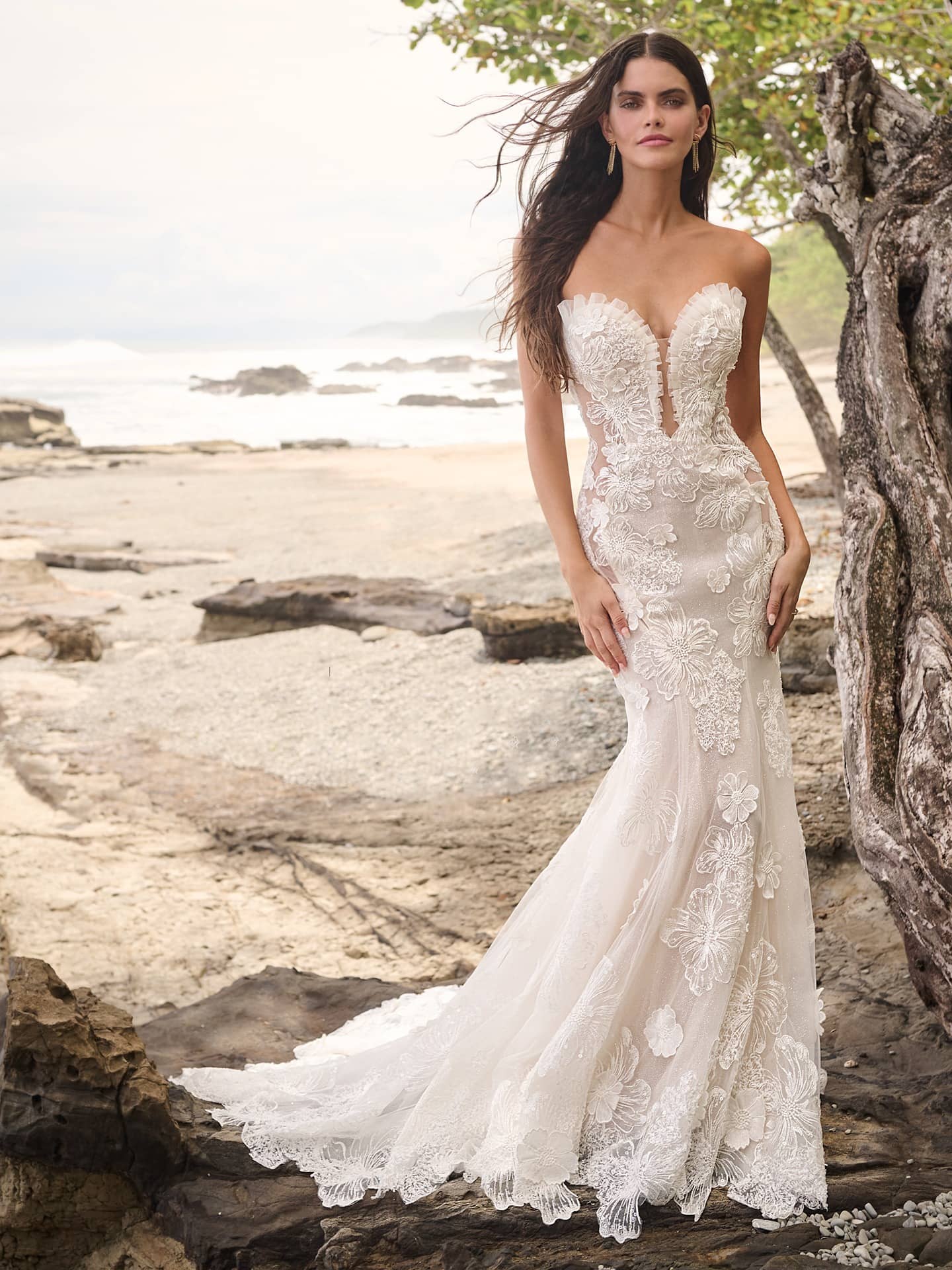
Personalization may involve lace placement, embroidery, pleating, draping, beading, pearls, dimensional florals, appliqué, clean seams, covered buttons, or contrasting textures.
Surface detail should reinforce the gown’s focal points. Dense embellishment around every area can flatten the visual hierarchy, while carefully placed detail can draw attention to the neckline, waist, sleeve, or train.
How Does a Designer Create One Cohesive Gown?
A designer creates cohesion by treating the gown as one composition rather than combining favorite details without editing.
A neckline from one dress, sleeves from another, a skirt from a third, and embellishment from a fourth may rely on completely different structures and proportions. The designer must consider:
- Visual hierarchy
- Repeated lines and motifs
- Fabric compatibility
- Seam logic
- Waist placement
- Balance between detail and negative space
- Focal points
- Movement
- Construction feasibility
- The emotional character of the whole design
A successful gown may include several sources of inspiration, but they should no longer feel visibly separate in the final result.
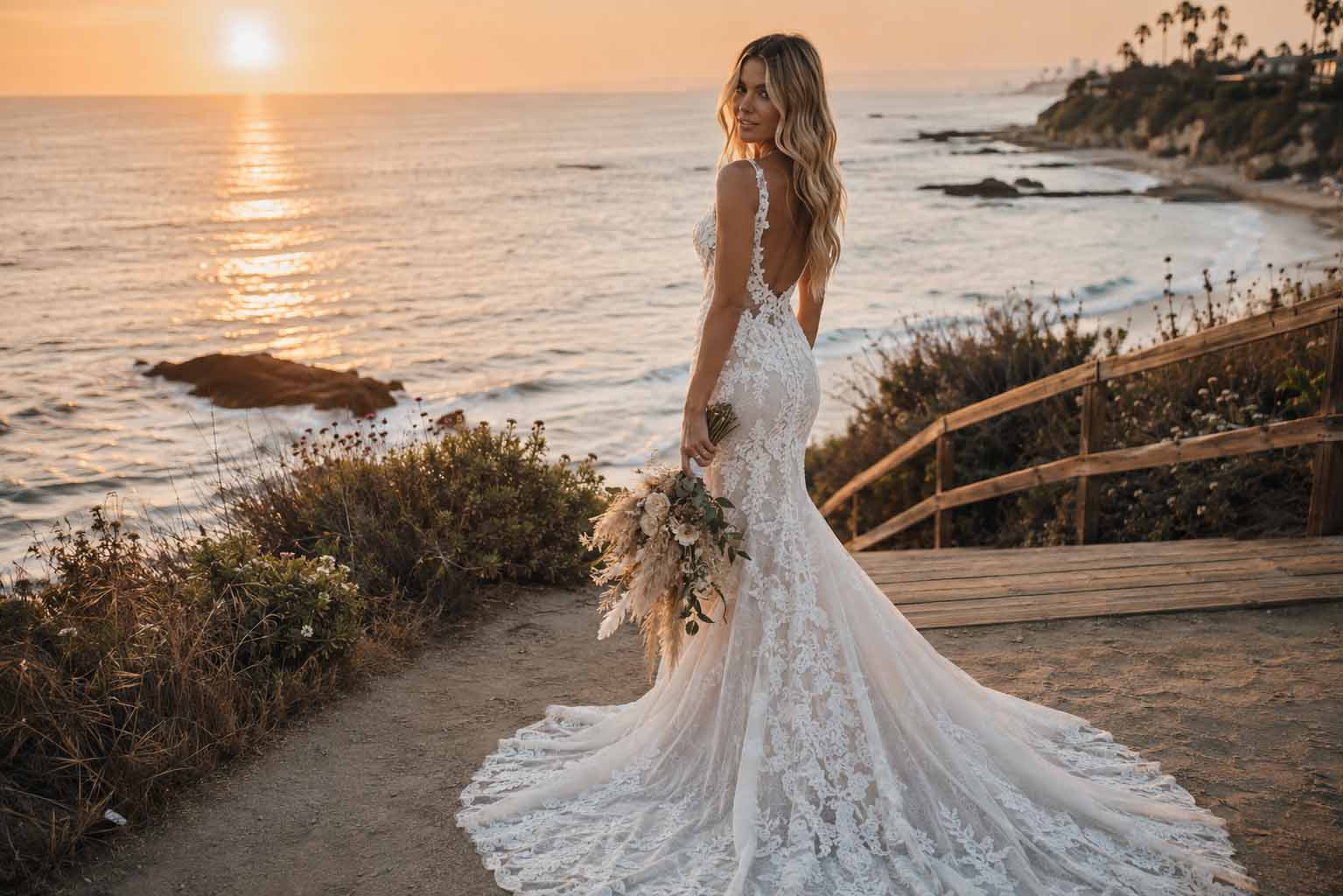
Custom Wedding Dress Versus Altering a Designer Gown
Both approaches can produce excellent results, but they begin from different places.
| Consideration | Full Custom Design | Existing Designer Gown With Alterations |
| Starting point | A new concept, pattern direction, or house-custom design | A completed designer style |
| Visualization | Requires sketches, samples, fittings, and trust | The overall gown can be seen before purchase |
| Design control | Higher, within practical limits | Limited by the original pattern and materials |
| Fit | Developed progressively through the custom process | Refined after the gown is ordered or purchased |
| Fabric choice | May be selected for the commission | Usually fixed |
| Structural changes | Considered before construction | May require partial reconstruction |
| Decision process | Progressive approvals | Primarily selection, followed by tailoring decisions |
| Predictability | The finished gown develops over time | The original appearance is more predictable |
| Best candidate | Bride with a clear need or distinctive vision | Bride who already loves most of an available gown |
Common alterations may include adjusting straps, adding cups, refining neckline depth, hemming, creating a bustle, or adding a detachable sleeve.
Changing back coverage, reconstructing a bodice, replacing the primary fabric, or turning one skirt silhouette into another may be substantially more complex—or impractical. Feasibility depends on the gown’s seams, available allowances, fabric, embellishment, pattern, and internal structure.
Vogue’s wedding-dress alteration guide provides additional context on why bridal tailoring requires specialized evaluation of cost, timing, and construction.
Discuss your options in person: Bring the gown you are considering—or references for the gown you want—to a private bridal appointment. A consultation can clarify whether full custom design, semi-custom modification, or expert alteration is the most coherent and responsible path.
How Long Does a Custom Wedding Dress Take?
The timeline depends on the design and the atelier’s process. No general industry estimate should be presented as a BTG guarantee.
Timing may be affected by:
- Design complexity
- Fabric and trim sourcing
- Pattern development
- Mock-up requirements
- Fitting availability
- Embellishment
- Detachable components
- Production capacity
- Approval speed
- Late design changes
- Wedding travel
- Rush-service availability
Publication placeholder:
[Add Bridal & Tuxedo Galleria’s verified recommended custom-design booking window, production timeline, approval deadlines, and rush policy.]
Brides planning intricate gowns or destination weddings should begin the conversation early. Early planning creates room for thoughtful decisions; it should not be framed as artificial urgency.
How Much Does a Custom Wedding Dress Cost?
A responsible estimate requires understanding the design.
Custom pricing may reflect:
- Concept and design development
- Pattern work
- Mock-ups
- Fabric and lining
- Lace or beaded materials
- Internal structure
- Construction complexity
- Train length
- Detachable features
- Fittings
- Finishing
- Revisions or change orders
Publication placeholder:
[Add BTG’s verified starting price, consultation policy, or explanation that a written estimate is prepared after the design consultation.]
Before signing, ask:
- Is the quoted amount a starting price or a complete estimate?
- What deposit is required?
- What is the payment schedule?
- Which materials are included?
- Are fittings included?
- Are final alterations billed separately?
- How are material upgrades priced?
- What happens when the design changes after approval?
- Are rush fees possible?
- Which payments are refundable or nonrefundable?
- What happens if a material becomes unavailable?
- How will every approved detail be documented?
The Custom Wedding Dress Movement Test
A gown should not be evaluated only while standing still in front of a mirror.
During the appropriate fitting stage, test:
- Standing naturally without holding the bodice
- Taking a deep breath
- Sitting upright
- Sitting in a lower chair
- Walking at ceremony pace
- Taking several longer steps
- Turning in both directions
- Raising both arms
- Hugging another person
- Bending slightly
- Using stairs
- Entering and exiting a vehicle
- Dancing
- Holding a bouquet
- Moving in the intended shoes
- Moving with the veil or overskirt
- Managing the restroom with realistic assistance
Note where the gown shifts, presses, pulls, twists, or restricts movement. A secure gown should support the bride without requiring constant adjustment.
A Custom Bridal Consultation Checklist
Prepare the following before your appointment:
Wedding Information
- Wedding date
- Venue
- Ceremony type
- Dress code
- Indoor and outdoor conditions
- Transportation needs
- Estimated formality and event scale
Design Direction
- A focused group of inspiration images
- Three to five words describing the desired style
- Details you dislike
- Preferred silhouettes
- Neckline and coverage preferences
- Sleeve or strap ideas
- Train preferences
- Veil and accessory ideas
Fit and Comfort Priorities
- Desired bust support
- Areas where clothing commonly feels uncomfortable
- Mobility concerns
- Intended shoes
- Planned undergarments
- Sensitivity to lace, beading, or certain textiles
- Ceremony requirements
Personal Elements
- Heirloom fabric, lace, jewelry, or veil
- Cultural or family references
- Meaningful motifs
- Reception transformation ideas
Practical Information
- Realistic budget range
- Timeline concerns
- Travel dates
- Decision-makers attending
- Questions about approvals, changes, fittings, and storage
Inspiration should communicate direction, not demand an exact copy. Bring enough information to explain your taste, but leave room for professional interpretation.
Questions to Ask a Custom Wedding Dress Designer
- What does “custom” include in your process?
- Who develops and approves the design?
- Will I receive a sketch or written design description?
- Which decisions must be finalized before construction?
- How will fabrics and embellishments be approved?
- Is a pattern or muslin created for my gown?
- How many fittings are expected?
- What happens if my measurements change?
- Which adjustments are included in the agreement?
- How are changes documented and priced?
- Who performs the construction and final tailoring?
- What happens when a requested detail is not structurally practical?
- How are deadlines and approval dates communicated?
- Can heirloom material be evaluated?
- Are detachable ceremony-to-reception elements possible?
- What should I bring to each fitting?
- How should the finished gown be transported?
- Who should learn to manage the bustle or detachable pieces?
Red Flags When Evaluating Custom Bridal Services
Potential concerns include:
- No clearly explained design process
- No written design description or approval record
- Pressure to commit immediately
- Guaranteed results before feasibility is assessed
- Vague or changing pricing
- Unclear responsibility for final alterations
- No discussion of internal support or movement
- No material-approval process
- Willingness to duplicate another designer’s gown exactly
- Unsupported claims about couture construction
- No written timeline
- No procedure for approving changes
- No explanation of measurement changes
- No relevant portfolio or material examples
A small atelier is not automatically less credible, and a larger bridal business is not automatically more capable. Evaluate the clarity of the process, communication, construction knowledge, documentation, and work relevant to your intended gown.
How In-House Alterations Support a Custom Bridal Gown
Continuity between design, styling, fittings, and tailoring can help preserve the original intention of the gown.
An in-house bridal alteration team may support:
- More direct communication
- Consistent interpretation of the silhouette
- Precise neckline refinement
- Bodice support
- Waist placement
- Sleeve attachment
- Lace and appliqué placement
- Train balance
- Bustle construction
- Movement and comfort
Bridal & Tuxedo Galleria offers bridal alterations and custom fit services in San Diego, including bodice adjustments, hemming, bustles, strap or sleeve changes, neckline reshaping, train modifications, corset installation, lace placement, and structural balancing. Fees and included services should be confirmed for each gown.
Brides preparing for fittings can also review BTG’s guide to how many wedding-dress fittings may be needed.
The Navid Noor Custom Design Approach
Bridal & Tuxedo Galleria identifies Navid Noor as its Head Designer and owner. The boutique connects his role with custom design, gown construction, proportion, fabrics, couture-informed details, and the development of its in-house bridal direction.
For publication, this section should be refined around verified firsthand principles such as:
- Listening before sketching
- Editing inspiration
- Establishing proportion
- Understanding fabric behavior
- Building support into the architecture
- Creating movement without losing form
- Balancing femininity and structure
- Using distinctive details selectively
- Designing for personal expression rather than excess
Editorial verification note: Before publication, have Navid Noor review this section and replace general editorial interpretation with one or two approved firsthand observations. Do not place quotation marks around a statement unless the exact wording has been supplied and approved.
Custom Design Wedding Dresses for San Diego Celebrations
Southern California venues do not dictate a single bridal style, but they can influence practical design decisions.
Coastal and Waterfront Weddings
Consider wind, veil security, train management, stairs, sand, uneven surfaces, bright natural light, and the number of layers.
A flowing fabric may create beautiful motion, while a more structured gown can offer a crisp silhouette against open scenery. Neither is automatically better. The decision depends on how the bride wants to move and how the garment behaves outdoors.
Estate and Garden Weddings
Grass, stone paths, steps, changing temperatures, and floral surroundings may influence the hem, train, footwear, and detachable layers.
Textured lace or dimensional appliqué can relate beautifully to a garden setting, but cleaner fabrics can create an equally compelling contrast.
Ballroom and Hotel Weddings
Ballrooms can support formal scale, structured textiles, architectural bodices, and dramatic trains. Air conditioning, lighting, reception movement, and the distance between spaces should also be considered.
A large train may create impact during the ceremony but require a well-designed bustle or detachable option for the reception.
Cultural and Religious Ceremonies
Coverage, sleeve length, neckline height, head coverings, family traditions, and ceremonial movement should be discussed respectfully from the first consultation.
Detachable sleeves, overlays, jackets, boleros, or modesty panels may create flexibility when thoughtfully integrated into the original design.
Brides seeking greater coverage can also explore BTG’s modest wedding-dress options.
Destination Weddings
Consider packing, garment weight, fabric recovery, access to steaming, transportation, local dressing assistance, and transitions between ceremony and reception locations.
The easiest gown to pack is not automatically the right gown. The goal is to understand the logistics early enough to design a responsible transport and preparation plan.
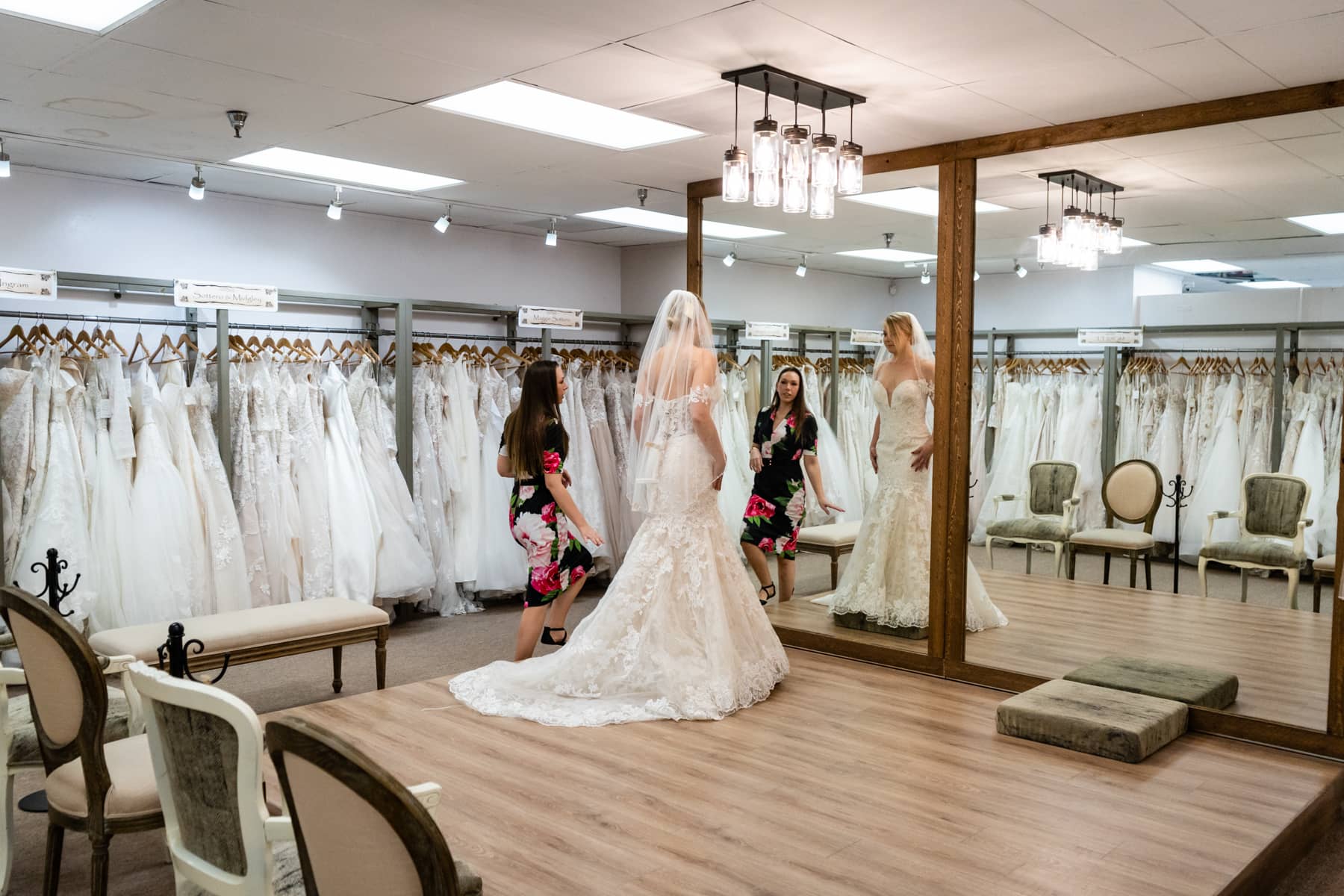
Local consultation: San Diego and Orange County brides can use a private appointment to compare custom possibilities, designer gowns, fabrics, and alteration paths in person. Schedule a couture bridal appointment to discuss the venue, support, coverage, movement, and design decisions that cannot be evaluated fully through photographs.
What to Expect at Bridal & Tuxedo Galleria
A private appointment can help a bride:
- Compare custom and designer-gown options
- Evaluate fabrics in person
- Review necklines and bodice structures
- Discuss support and coverage
- Explore the Navid Noor Collection
- Consider tailoring before selecting a gown
- Move in different silhouettes
- Evaluate the front, side, and back views
- Establish a realistic next step
The live appointment page states that BTG offers dedicated one-on-one guidance and allows brides to explore designer gowns, couture styles, the Navid Noor Collection, custom design, and in-house alterations. Appointment duration, current service options, fees, and preparation instructions vary and should be confirmed through the booking system.
For a time-sensitive question, contact the San Diego bridal boutique or call (619) 281-4696. The live contact page currently lists the boutique at 4242 Camino del Rio North, Suite 14, San Diego, CA 92108. Confirm hours before publication because older pages display conflicting schedules.
Is a Custom Wedding Dress Right for You?
Ask yourself:
- Have I found an existing gown that already feels complete?
- Am I drawn to one clear direction or many conflicting references?
- Is there a feature I cannot find in available collections?
- Are support, coverage, mobility, or proportion central priorities?
- Do I enjoy collaboration and progressive decision-making?
- Am I comfortable approving a concept before seeing the finished gown?
- Is my timeline realistic?
- Have I established an investment range?
- Do I need meaningful personalization or only minor changes?
- Does custom design solve a genuine need or preference?
A consultation does not need to begin with the assumption that full custom is the answer. The strongest recommendation may be a new custom design, a semi-custom Navid Noor direction, or an existing designer gown refined through expert tailoring.
Frequently Asked Questions About Custom Bridal Design
What are custom design wedding dresses?
Custom design wedding dresses are bridal gowns developed around an individual bride’s aesthetic, proportions, support needs, comfort, wedding setting, and priorities. Unlike standard alterations, the process begins before the final gown exists and may involve consultation, sketching, fabric selection, pattern development, fittings, construction, and final tailoring.
How are custom wedding dresses different from made-to-measure gowns?
A made-to-measure gown generally begins with an established design adjusted to the client’s measurements. A fully custom gown begins with a more individualized design direction and may involve new pattern development, fabric selection, structural decisions, and original detailing. Terminology varies, so brides should ask each designer what is—and is not—included.
Is a custom wedding dress worth it?
A custom gown may be worthwhile when it solves a genuine design, fit, coverage, support, cultural, or personal need that existing dresses cannot address effectively. It is not automatically better than a designer gown. The value depends on the designer’s process, construction quality, communication, the bride’s priorities, and the clarity of the agreement.
How long does a custom wedding dress take?
The timeline varies according to design complexity, material sourcing, pattern development, fittings, embellishment, detachable elements, revisions, production capacity, and the bride’s approval schedule. Bridal & Tuxedo Galleria’s custom-design booking window and current production timeline should be confirmed directly before a bride makes plans around a specific completion date.
How much does a custom wedding dress cost?
Pricing depends on design development, pattern work, fabric, lace, embellishment, internal structure, train length, detachable components, fittings, finishing, and revisions. Ask whether the quoted amount includes materials, alterations, fittings, design changes, and taxes. BTG’s verified starting price or consultation-based estimate policy should be added before publication.
How many fittings does a custom wedding gown require?
There is no universal number. Fitting frequency depends on the atelier’s process, whether a mock-up is used, the gown’s complexity, the number of structural or decorative elements, and whether measurements or design priorities change. Ask the designer for an expected fitting plan and which stages require the bride’s approval.
Can I combine details from several wedding dresses?
Yes, compatible ideas can inspire one original design. However, a designer must edit the references for proportion, fabric compatibility, structure, seam placement, support, and visual hierarchy. A neckline, sleeve, skirt, and train taken from different gowns will not necessarily work together without significant reinterpretation.
Can a designer copy a wedding dress from a photograph?
A responsible designer should use photographs to understand preferences rather than reproduce another label’s gown exactly. Images can communicate neckline, fabric, silhouette, proportion, or mood. The designer should then develop an original direction that respects the bride’s needs and the atelier’s own design language.
Can heirloom lace or fabric be used in a new gown?
Possibly. The designer must first assess the material’s quantity, strength, age, condition, width, pattern repeat, color, and compatibility with the new fabric. Fragile heirloom material may be better used as an appliqué, accessory, veil detail, or symbolic interior element rather than carrying structural stress.
Can sleeves or a higher neckline be added?
Often, but feasibility depends on the bodice, armhole, back, support structure, and available fabric. A sleeve should be integrated into the gown’s architecture rather than attached as an afterthought. Detachable sleeves, illusion overlays, boleros, or jackets may provide alternative solutions when permanent construction is not appropriate.
Can a custom wedding dress include detachable elements?
A custom gown may include detachable sleeves, straps, overskirts, trains, bows, jackets, capes, or modesty layers. Each component should look intentional when attached and removed. The designer should also explain the attachment method, added weight, movement, storage, and who will manage the transformation during the wedding.
What happens if my measurements change during the process?
Small changes may be manageable through fitting and tailoring, but the response depends on when the change occurs and how the gown is constructed. Ask how measurement changes are assessed, which adjustments are included, whether additional fittings or reconstruction may be required, and how related costs or timeline changes are documented.
Is custom design better than altering a designer wedding dress?
Neither path is universally better. Full custom provides more control before construction, while an existing designer gown offers greater visual predictability. Alterations are often ideal when a bride already loves most of a dress. Custom design is more relevant when the required changes would substantially reconstruct the existing gown.
What should I bring to a custom bridal consultation?
Bring the wedding date, venue information, a focused selection of inspiration images, disliked details, preferred silhouettes, coverage and support needs, movement priorities, intended shoes, veil or jewelry ideas, cultural requirements, heirloom pieces, a realistic budget range, timeline concerns, and questions about the designer’s process.
When should I begin designing my wedding dress?
Begin early enough to allow for consultation, design decisions, sourcing, construction, fittings, revisions, and final preparation. More complex gowns and destination weddings may require additional planning. Contact the boutique with your exact wedding date rather than relying on a generic online timeline.
Where can I design a custom wedding dress in San Diego?
Bridal & Tuxedo Galleria offers custom bridal design consultations in San Diego with Head Designer Navid Noor, alongside designer wedding dresses and in-house alteration services. Brides can use a private appointment to discuss their wedding setting, inspiration, support needs, fabrics, proportions, timeline, and whether custom design is the right path.
A Gown Designed Around the Bride
Selecting a completed gown and participating in a design process are two different bridal experiences.
A custom gown begins with questions: How should the dress move? Where should the eye rest? What level of support feels secure? Which details carry meaning? How should the bodice, waist, skirt, train, and fabric behave as one composition?
The strongest custom design wedding dresses balance imagination with construction. They consider proportion, comfort, support, movement, setting, and personal expression rather than treating customization as an unlimited collection of decorative choices.
At Bridal & Tuxedo Galleria in San Diego, Navid Noor and the bridal team can help you compare full custom design, the Navid Noor Collection, designer gowns, and in-house tailoring without asking you to decide before understanding the possibilities.
Bring your venue, inspiration, priorities, and honest questions to a private custom bridal consultation. The first appointment can establish which design path gives you the clearest, most cohesive foundation for the gown you will actually want to wear.

Author : Kayla Garett
Author bio :
Kayla brings more than 10 years of hands-on experience in bridal fashion and boutique styling, specializing in personalized bridal consultations and luxury client experiences. As the manager of the San Diego location of Bridal and Tuxedo Galleria, she is known for her keen eye for detail, deep understanding of couture wedding dress design, and ability to guide brides toward a gown that reflects their unique vision and wedding aesthetic. Her approach blends fashion expertise with genuine care, ensuring every bride feels confident, understood, and unforgettable on her wedding day
Call Now

Your Personalized Wedding Dress Shopping Experience in San Diego With over 30 years of styling expertise, our dedicated team is passionate about helping you find the perfect wedding dress and tuxedo.


Leave a Reply