
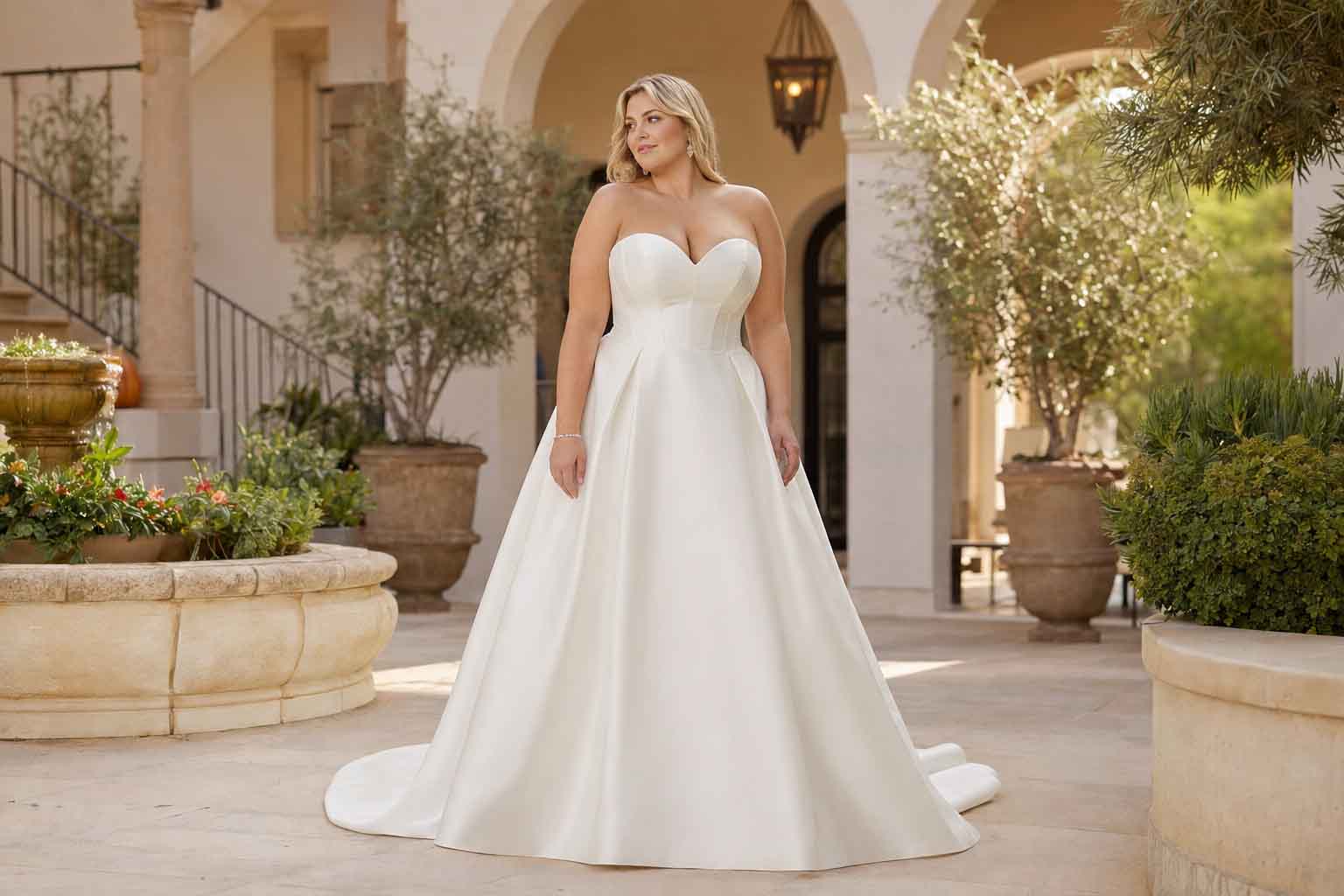
Plus Size Strapless Wedding Dress: Supportive, Flattering Styles That Stay in Place
Can a curvy bride wear a strapless gown without spending the entire wedding day pulling it up? Absolutely. The right plus size strapless wedding dress should feel secure through the bodice and waist, support your bust comfortably and remain stable as you walk, sit, hug and dance.
The secret is not choosing a gown that feels painfully tight. It is finding the right combination of professional sizing, thoughtful bodice construction, suitable neckline coverage and precise alterations.
At Bridal & Tuxedo Galleria, we help brides compare these details in person, because the most beautiful strapless gown is one you can wear confidently without constantly thinking about it.
Ready to discover which strapless construction feels best on you? Book a private bridal appointment in San Diego for one-on-one guidance from an experienced bridal stylist.
Can a Plus-Size Bride Wear a Strapless Wedding Dress?
Yes. Strapless wedding dresses are not reserved for one size, shape or bust measurement.
A secure strapless gown depends on how its bodice relates to your individual bust-to-waist proportions—not the number printed on the size label. A recent study using SizeUSA data found meaningful variation in bust, waist, hip and bra-cup measurements among women, reinforcing why one generalized body-shape rule cannot determine how a gown will fit. Read the study in Fashion and Textiles.
Instead of asking whether your body is “right” for strapless, ask whether the particular gown provides the structure, coverage and movement you want.
A supportive strapless wedding dress may include:
- A bodice that fits securely at the waist
- Internal corsetry or strategic boning
- Properly positioned cups
- Stable bodice fabric and seams
- A supportive zipper, lace-up or corset-back closure
- A neckline shaped for your preferred level of coverage
- Alterations tailored to your bust and waist proportions
These features vary by gown. Not every strapless wedding dress includes boning, molded cups, a corset or an internal waist stay, so inspect the actual construction rather than relying on the dress description alone.
How Do Plus-Size Strapless Wedding Dresses Stay Up?
A well-fitted strapless gown should not stay up by squeezing only around the top of the bust. Its support usually comes from the entire bodice working together.
1. The waist helps anchor the gown
When the fitted waist sits in the correct position, it helps prevent the dress from sliding downward. This waist anchoring is one reason an accurate bust-to-waist fit matters so much.
Some gowns also contain an internal waist stay, a hidden ribbon or band that fastens firmly around the waist. A waist stay can provide additional anchoring, but it is not included in every gown and may not be suitable for every bodice.
2. Boning helps maintain the bodice shape
Wedding-dress boning supports the vertical structure of a bodice. Depending on the gown, flexible or firmer boning may help distribute tension, keep seams aligned and prevent the bodice from folding or collapsing.
More boning does not automatically mean better support. Its position, length and relationship to the gown’s seams are equally important.
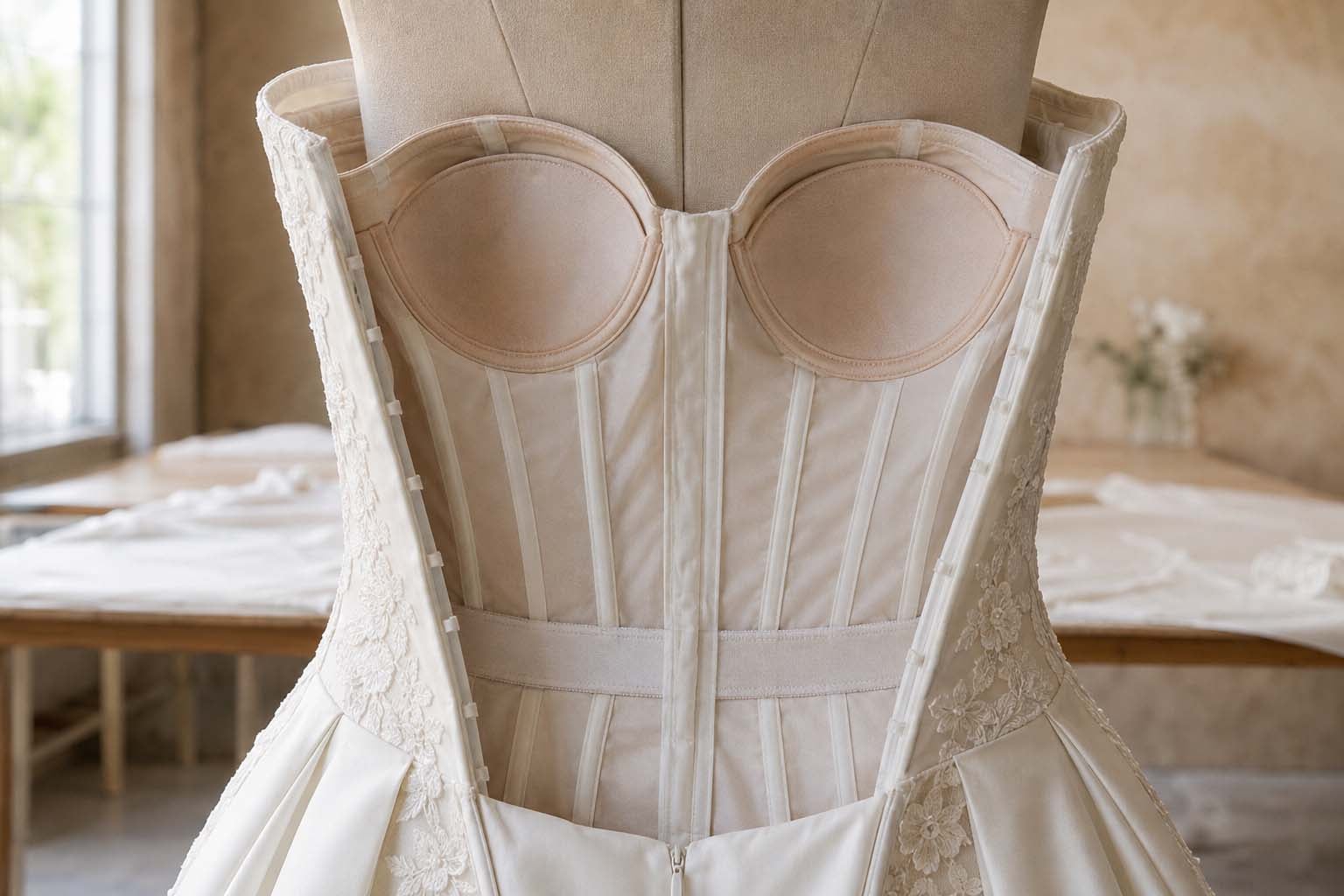
3. Cups help shape and position the bust
Sewn-in cups, molded cups or built-in bra cups can provide shaping and coverage. However, cups must match the wearer’s bust placement and volume. Cups that are too small, too large, too high or too low can create gaping, pressure or an unstable neckline.
4. The closure completes the support system
A corset-back wedding dress offers adjustable tension, while a zipper-back wedding dress can create a smooth, precisely tailored fit. Neither closure is automatically more supportive.
The best option is the one that works with the gown’s internal construction and fits your proportions correctly.
5. Stable fabrics reinforce the silhouette
Satin, Mikado and other structured fabrics can help a bodice maintain a sculpted shape. Lace, crepe, tulle, appliqués and beadwork may also be used successfully, but the support comes from the layers and construction beneath the visible fabric—not from decoration alone.
How Should a Plus Size Strapless Wedding Dress Fit?
A strapless wedding dress should feel firm and secure through the bodice, especially at the waist, but it should not cause pain or restrict normal breathing.
During your fitting, look for these signs of a secure bodice fit:
- The waistline remains in its intended position.
- The neckline rests smoothly without rolling outward.
- The center front stays aligned with your body.
- The cups sit at the correct bust level.
- The back closure lies evenly without excessive pulling.
- The bodice does not rotate when you move.
- You can take a full breath and sit comfortably.
- The dress stays in place when you raise your arms or dance.
Apparel fit is more complex than simply making a garment tighter. Technical fit assessments consider ease, balance, set, grain and line, while also allowing enough room for the wearer to move comfortably. Explore the garment-fit research in Fashion and Textiles.
Signs the bodice may need adjustment
Ask your stylist or bridal seamstress to examine the gown if:
- The neckline gaps when you stand naturally.
- The top edge digs into your skin.
- You feel pressure concentrated in one small area.
- The bodice gradually slides down.
- The cups do not align with your bust.
- The waistline rides above or below your natural waist.
- The fabric develops pronounced pulling or collapsing.
- You cannot sit, breathe deeply or lift your arms comfortably.
A few clips on a sample gown can help you visualize the fit, but they cannot fully reproduce the support of a correctly ordered and professionally altered dress.
Should You Size Down in a Strapless Wedding Dress?
No. Do not order a smaller gown simply because you believe extra tightness will keep it up.
Bridal sizing varies among designers, and your usual clothing size may not correspond to the designer’s size chart. Your stylist should take professional bust, waist and hip measurements, compare them with the specific designer’s chart and explain how the recommended size may affect alterations.
It is common for different measurements to correspond to different sizes. For example, your bust may align with one size while your waist or hips align with another. That does not mean anything is wrong with your body or the gown. It simply gives the stylist and alteration specialist the information needed to plan the fit.
A gown that is too small may:
- Distort the neckline or bodice seams
- Compress the cups incorrectly
- Place excessive strain on a zipper or closure
- Pull appliqués or beadwork out of alignment
- Restrict breathing and movement
- Leave insufficient seam allowance for correction
Order from professional measurements—not a hoped-for future measurement or a familiar retail size.
Which Strapless Bodice Offers the Most Support?
There is no single construction that works best for everyone, but certain features are worth comparing during your appointment.
| Construction feature | What it may provide | What to check |
|---|---|---|
| Structured corset bodice | Firm shaping and distributed support | Boning placement, comfort and range of movement |
| Corset-back closure | Adjustable tension across the back | Even lacing and stable waist placement |
| Zipper-back closure | Smooth, precise closure | No pulling, buckling or excessive strain |
| Internal boning | Vertical stability and shape retention | No sharp pressure or bending |
| Sewn-in cups | Bust shaping and coverage | Correct cup size, depth and placement |
| Internal waist stay | Additional waist anchoring | Comfortable tension and secure fastening |
| Stable fabric | A defined, sculpted silhouette | Enough ease for sitting and movement |
| Strategic seam construction | Better contouring through bust and waist | Smooth lines without drag or distortion |
A plus-size corset wedding dress can be an excellent option, but the word “corset” alone is not proof of support. Examine how the corsetry is constructed and how it feels when you move.
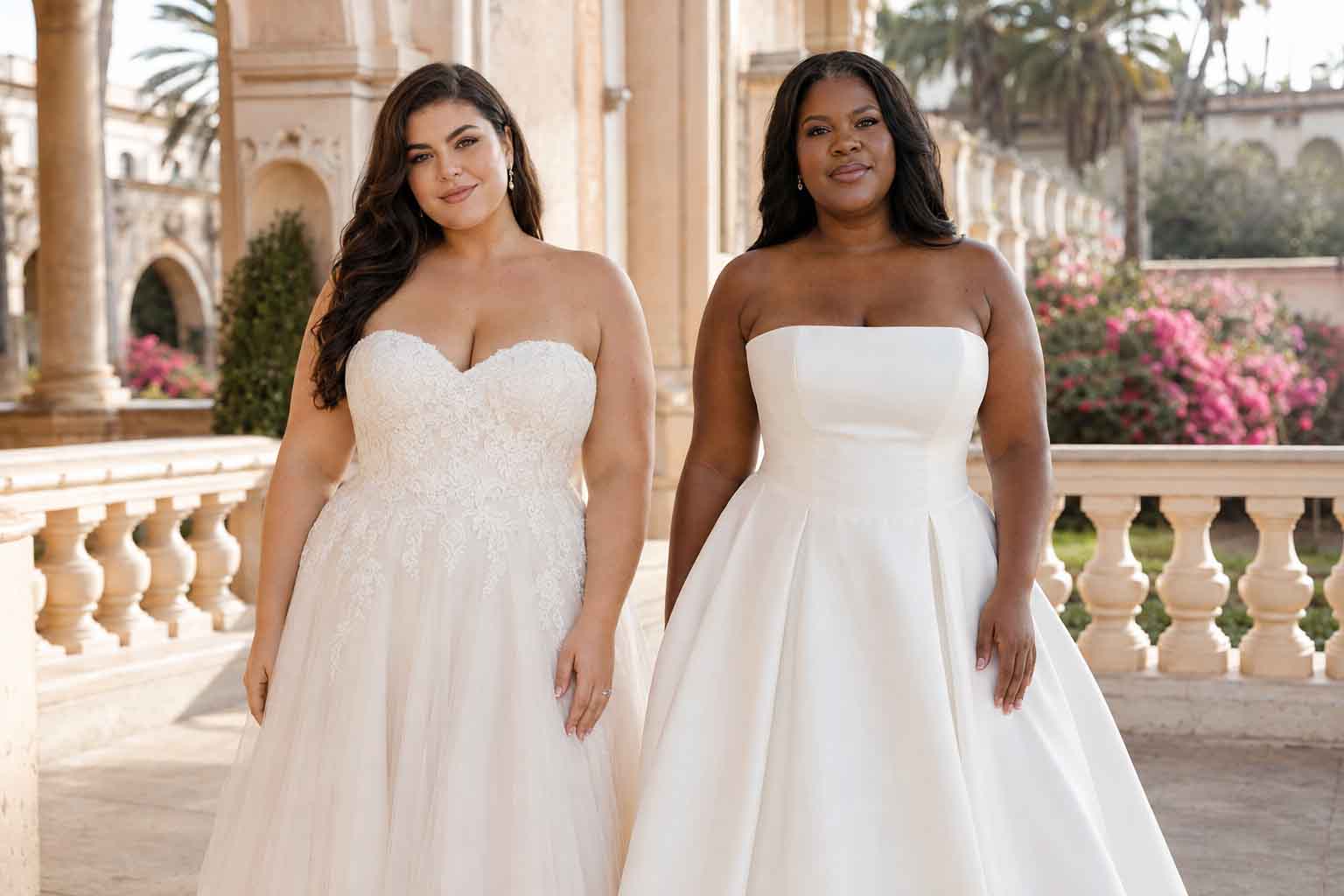
Which Strapless Neckline Offers the Best Coverage?
The best neckline is the one that gives you the coverage, support and visual style you want. Try several options before deciding.
Sweetheart neckline
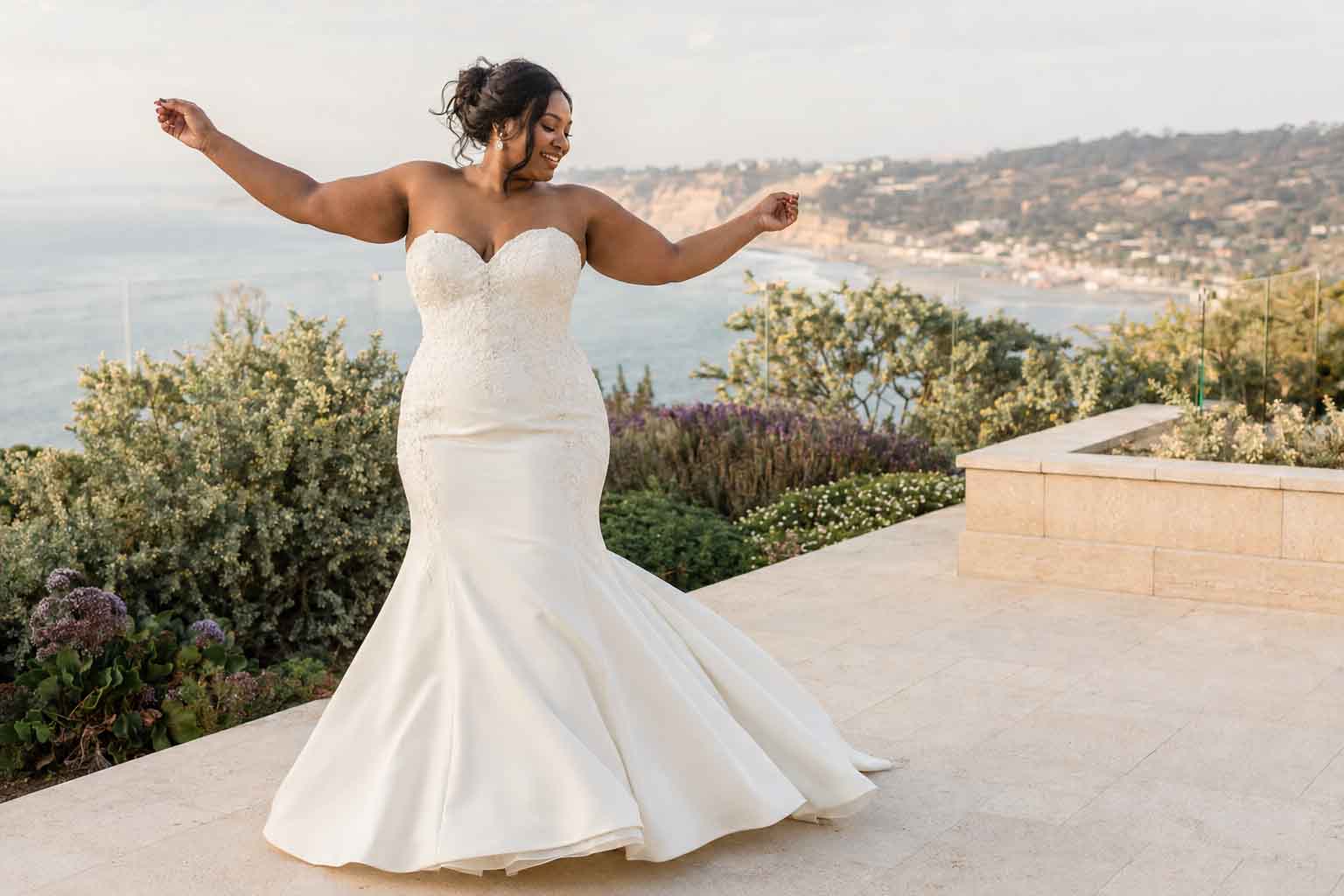
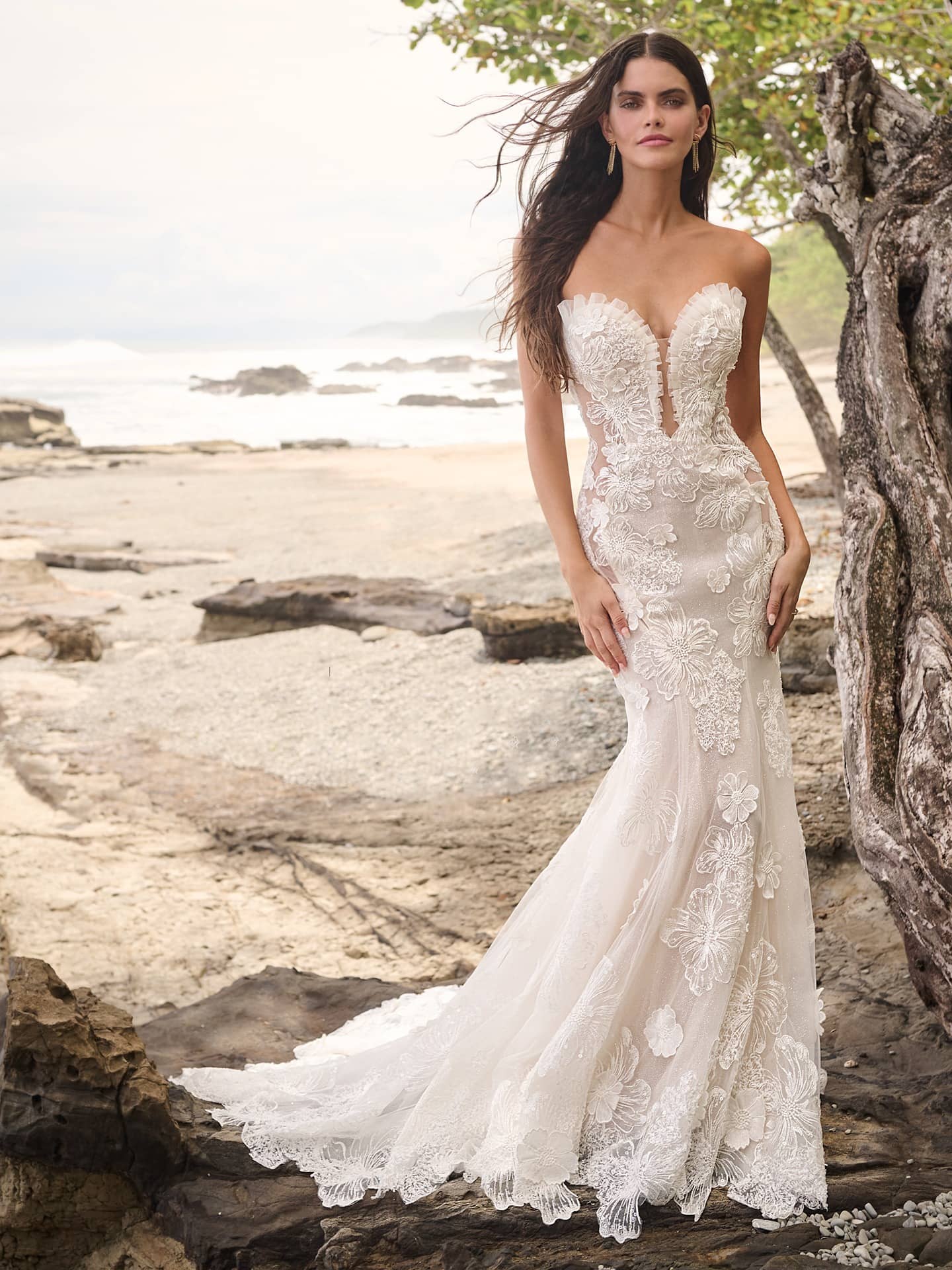
A strapless sweetheart wedding dress creates a curved shape over the bust. It can work beautifully for a fuller bust when the neckline follows your bust placement and the cups provide enough depth.
If the center dip feels too low, ask whether it can be raised, softened or reshaped without changing the design.
Straight-across neckline
A straight-across strapless neckline generally provides more visual coverage across the bust. It can feel clean, classic and secure, especially in structured satin or Mikado gowns.
The upper edge should lie smoothly. If it gaps or folds, the bodice may need resizing or reshaping.
Soft scoop or curved neckline
A soft scoop offers a gentler curve than a traditional sweetheart. It can create an open neckline while maintaining balanced coverage across the bust.
Sculpted or cat-eye neckline
A sculpted or cat-eye neckline adds a modern couture shape. These necklines can feel dramatic and fashion-forward, but the pointed edges must remain stable and symmetrical.
Plunge strapless neckline
A plunge strapless wedding dress creates a more revealing center front. Support depends on the plunge depth, illusion panel, cup placement and surrounding bodice structure.
If you love the look but want more coverage, ask whether illusion mesh or a modesty panel can be incorporated.
Stylist tip: Do not judge a neckline only from the front. Look at it from the side, sit down and raise your arms to see whether the coverage changes.
Which Strapless Silhouette Should You Try?
There are no off-limits silhouettes. Choose according to the look, movement and level of structure you want.
Plus-size strapless A-line wedding dress
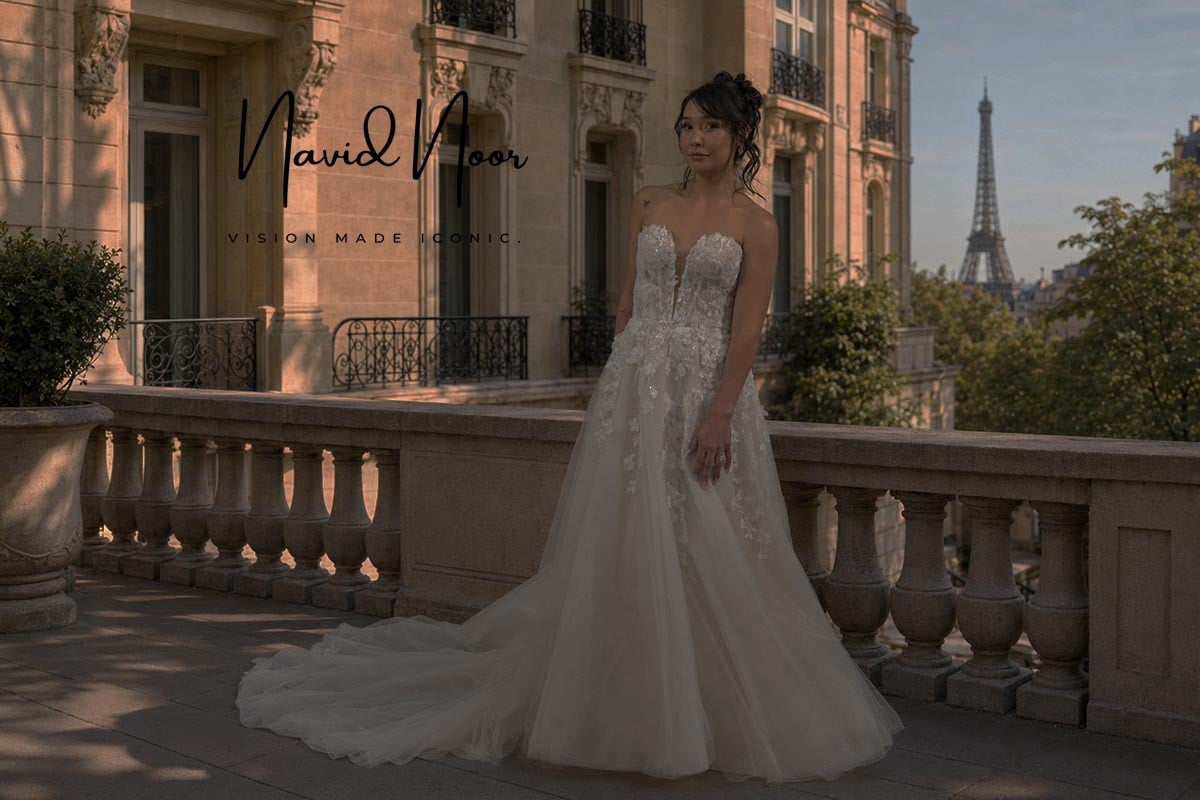
An A-line gown combines a fitted bodice with a skirt that widens gradually. It can offer comfortable hip movement and works beautifully in lace, satin, tulle and layered fabrics.
Plus-size strapless ball gown
A strapless ball gown creates a dramatic bridal silhouette with a fitted bodice and fuller skirt. Because the skirt may contain multiple layers, check that the bodice and waist remain properly balanced.
Plus-size strapless fit-and-flare gown
A fit-and-flare follows the body through the bodice and upper skirt before opening lower down. Test sitting, walking and dancing to determine whether the amount of ease suits your wedding plans.
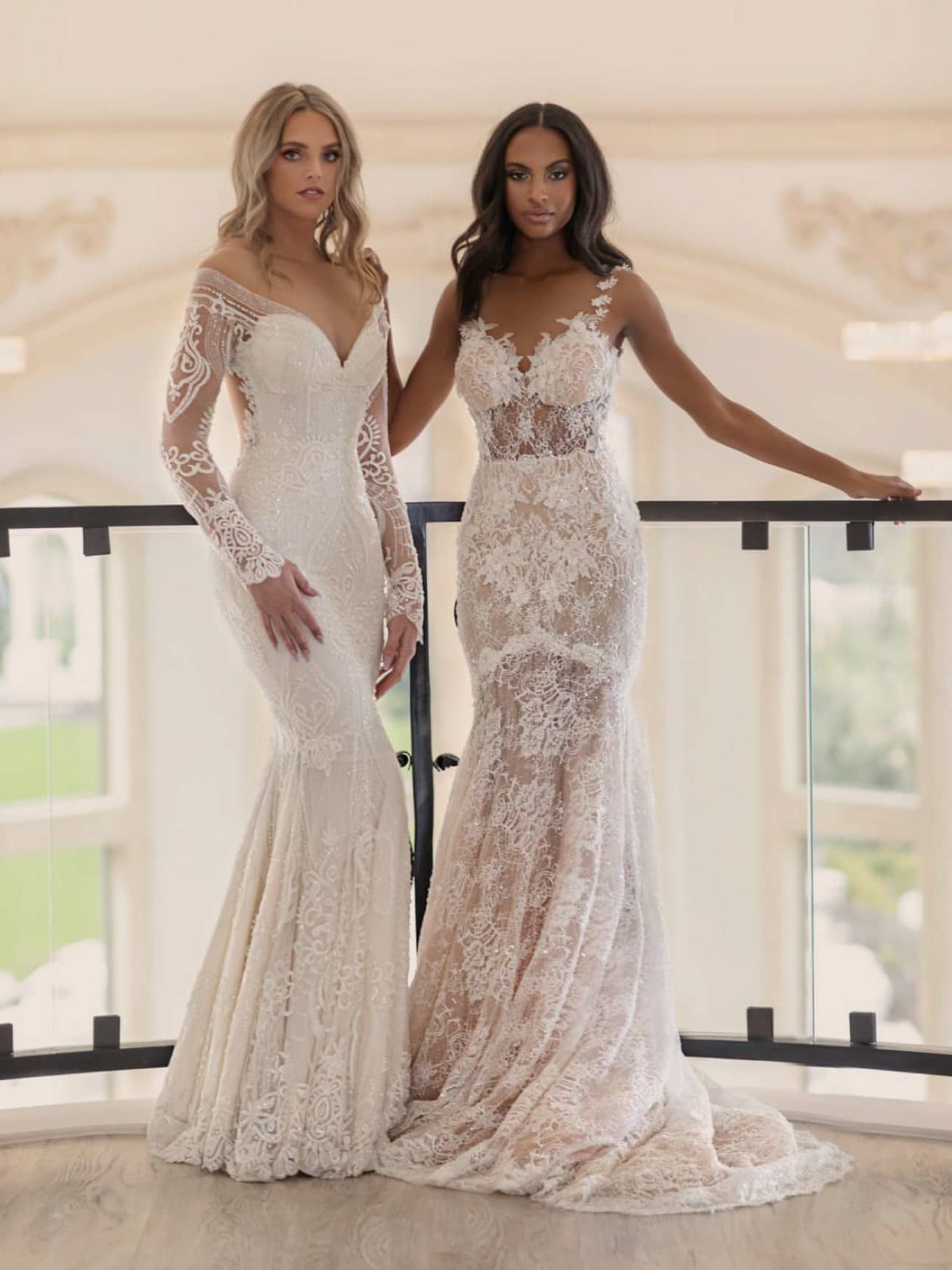
Plus-size strapless mermaid wedding dress
A mermaid gown creates a more defined fitted line before flaring around or below the knee. Precise waist, hip and thigh measurements are important for comfortable movement.
Minimalist strapless wedding dress
A minimalist satin, Mikado or crepe gown lets its neckline, seams and silhouette become the focal points. Because there may be fewer decorative details, expert tailoring is especially important for a clean finish.
Couture strapless wedding dress
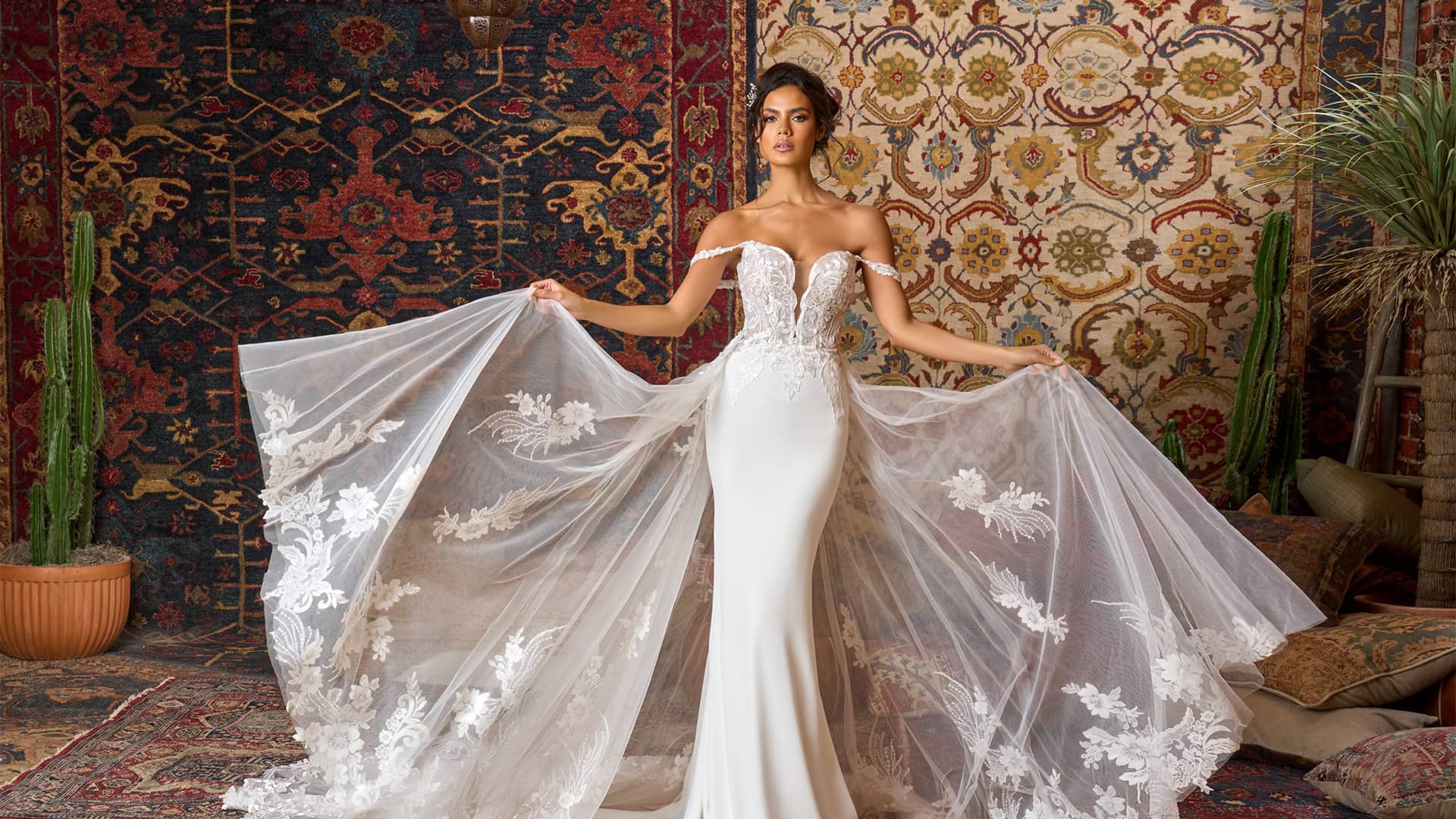
Couture and custom design can offer greater flexibility in neckline shape, internal structure, fabric and proportion. If you have a specific support or coverage requirement, explore BTG’s wedding-dress custom design process or compare couture wedding dresses and designer bridal gowns.
Do You Need a Bra Under a Strapless Wedding Dress?
Not always. Some structured gowns are designed to provide support through their own corsetry, cups and bodice construction. Others may work better with a longline bridal bra, bustier or another supportive undergarment.
Your best option depends on:
- The gown’s back and neckline
- The depth and position of its cups
- The amount of internal support
- Your preferred bust shape and coverage
- Your comfort during extended wear
- Whether the undergarment changes the bodice fit
Bring any planned bridal bra, bustier or shapewear to your alteration fittings. Changing undergarments later can change your bust placement, waist measurement and hem position.
Fashion tape may help control a small neckline edge or provide modesty in a particular area, but it should not be treated as the primary structural support for an unstable gown.
If your dress works best without a separate bra, your alteration specialist may recommend sewn-in bridal cups or another gown-specific solution.
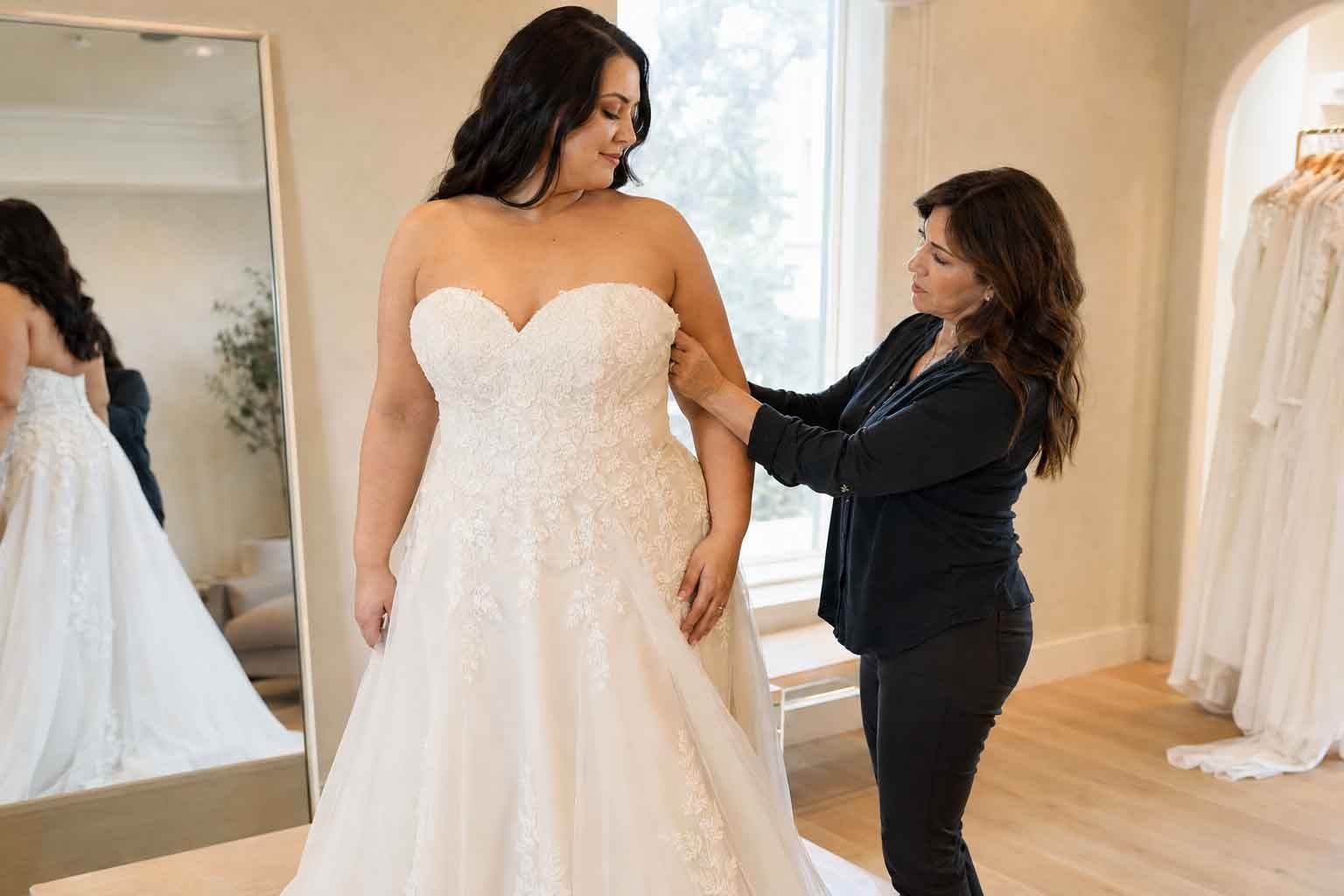
Can Alterations Stop a Strapless Wedding Dress From Slipping?
Often, yes, when the cause can be corrected within the gown’s construction.
Possible strapless wedding-dress alterations include:
- Taking in or reshaping the bodice
- Correcting cup size or placement
- Adding or replacing sewn-in cups
- Adjusting existing boning
- Adding structural support when appropriate
- Creating or adjusting a corset back
- Adding an internal waist stay when compatible
- Reshaping a sweetheart or straight neckline
- Correcting a gaping top edge
- Balancing the waistline
- Repositioning lace, beadwork or appliqués after alterations
Not every alteration is possible in every gown. Existing boning channels, seam allowance, fabric type, embellishment placement and neckline construction all affect what can be changed safely.
For delicate or heavily embellished gowns, work with a wedding-dress alteration specialist who can preserve the design while correcting the underlying fit. BTG offers in-house wedding-dress alterations in San Diego, including bodice adjustments, neckline reshaping, corset installation and structural balancing.
The Strapless Wedding-Dress Movement Test
A gown can look perfect while you are standing still and still require adjustments for real wedding-day movement.
Before purchasing—and again during your final fitting—perform this simple movement test:
- Breathe deeply. You should be able to take a comfortable full breath.
- Raise both arms. The bodice should remain in position.
- Reach forward. Check whether the neckline gaps.
- Sit normally. The waist should feel secure without painful pressure.
- Walk at different speeds. Notice whether the gown rotates or slides.
- Give someone a hug. Make sure the bust and back remain comfortable.
- Turn from side to side. Watch for twisting through the bodice.
- Practice a few dance movements. The neckline should stay stable.
- Lean slightly forward. Confirm that you still have your preferred coverage.
- Wear it for several minutes. Some slipping becomes noticeable only after the gown settles.
If you instinctively pull the dress upward after every movement, ask for a closer fit evaluation.
Questions to Ask During Your Bridal Appointment
Bring these questions with you when shopping for strapless wedding dresses:
- What provides support inside this particular gown?
- Does it contain boning, cups, corsetry or a waist stay?
- Can the cups be changed to fit my bust?
- Is the sample showing the true neckline placement?
- Can this neckline be raised or reshaped?
- How does the designer’s size chart compare with my measurements?
- Is a corset-back option available?
- How much seam allowance does the gown have?
- Can support be added without disturbing the lace or beadwork?
- Which undergarments should I bring to fittings?
- What alterations will likely be needed?
- Can I walk, sit and dance comfortably in this silhouette?
A knowledgeable stylist should be able to explain why a gown feels secure—not simply tell you that it does.
Where Can You Try Plus-Size Strapless Wedding Dresses in San Diego?
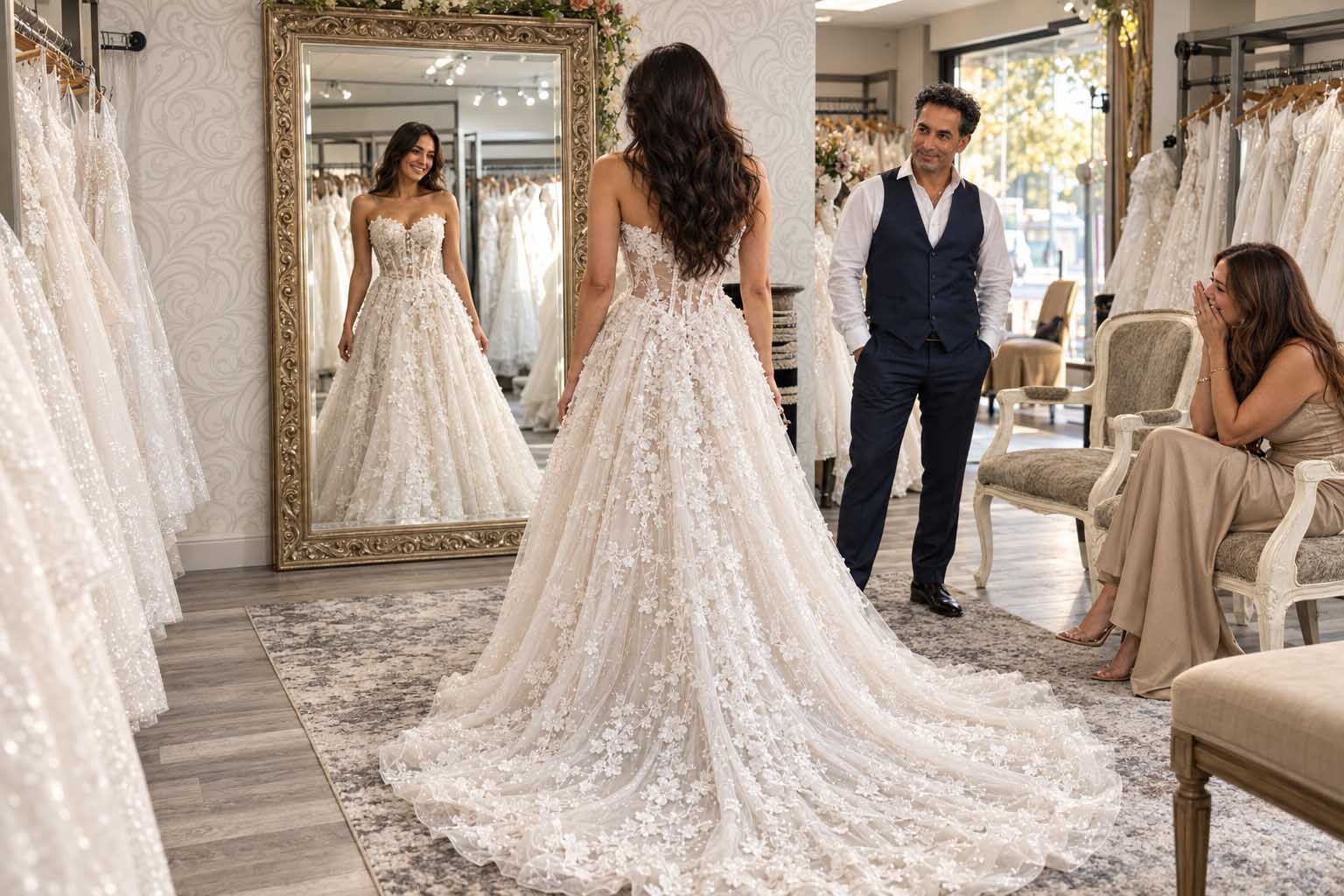
At Bridal & Tuxedo Galleria, brides can explore designer, couture and customizable gowns with personal guidance from experienced stylists. Your appointment is an opportunity to compare necklines, internal support, fabrics and silhouettes while discovering what feels most comfortable on your body.
Begin by exploring BTG’s plus size strapless wedding dress selection and broader plus-size bridal collection. During your appointment, tell your stylist:
- Your preferred neckline and coverage
- Whether you want a structured or softer silhouette
- What bust support feels comfortable
- Whether you plan to wear a bra, bustier or shapewear
- How much walking and dancing you expect
- Your venue, season and wedding style
- Any customization ideas you want to explore
Your stylist can then curate relevant gowns instead of asking you to search through every dress in the boutique.
You deserve more than a gown that looks beautiful for one photograph. You deserve one that feels secure through the ceremony, portraits, dinner and dancing. Book your bridal appointment at BTG San Diego and let us help you compare supportive strapless gowns in person.
Frequently Asked Questions
Are strapless wedding dresses supportive for a fuller bust?
They can be. Look for a secure waist fit, suitable cup placement and enough structure throughout the bodice. Support depends on the individual gown’s construction and fit—not the neckline label alone.
What type of strapless wedding dress offers the most support?
Many brides feel secure in gowns with a structured corset bodice, correctly placed boning, supportive cups and a stable waist. However, the most supportive option is the gown whose construction matches your proportions and is professionally fitted.
How tight should a strapless wedding dress feel?
It should feel firm enough to remain stable but not painful. You should be able to breathe, sit and move without sharp pressure, numbness or excessive restriction.
Is a corset-back wedding dress more supportive?
A corset back can provide adjustable tension, but it is not automatically more supportive than a zipper. Internal structure, waist fit, cup placement and proper lacing all affect the result.
Do I need a strapless bra under my wedding dress?
Not necessarily. Some gowns offer sufficient built-in support, while others may work better with a longline bra or bridal bustier. Decide with your stylist and seamstress before alterations begin.
What should I wear under a strapless bridal gown?
Wear the exact bra, bustier, shapewear or underwear you intend to use on your wedding day. Choose pieces that remain invisible under the gown and do not interfere with its internal support.
Can cups or boning be added to a wedding dress?
Sometimes. An alteration specialist must evaluate the bodice seams, lining, fabric and existing structure before recommending additional cups or boning.
Can alterations fix a gaping strapless neckline?
Often, yes. The solution may involve adjusting the bodice, repositioning cups, reshaping the neckline or correcting the waist fit. The appropriate alteration depends on why the gap is occurring.
Which strapless neckline provides more coverage?
A straight-across or higher curved neckline generally provides more visual coverage than a deep sweetheart or plunge. The actual coverage varies according to the gown’s cut and your bust placement.
Is a sweetheart neckline suitable for a fuller bust?
Yes. A sweetheart neckline can feel supportive and beautifully proportioned when the cups have sufficient depth and the neckline follows the bust correctly.
How do I keep a strapless wedding dress from slipping?
Start with the correct size and professional measurements. Then assess the waist anchoring, bodice structure, cup placement and neckline fit. Do not rely on ordering a smaller size or using fashion tape as the main solution.
How can I test a strapless gown before buying it?
Raise your arms, sit, walk, hug, turn, lean and practice a few dance movements. If the bodice slides, rotates, gaps or restricts breathing, ask your stylist to reassess the fit.
Find a Strapless Gown That Lets You Enjoy the Moment
The right plus size strapless wedding dress is not defined by one neckline, silhouette or type of corsetry. It is the gown that supports your bust, anchors securely at your waist, reflects your personal style and lets you move without hesitation.
Look beyond the size label. Pay attention to professional measurements, bodice construction, cup placement, neckline stability and alterations. Most importantly, notice how you feel when you stop posing and start moving.
At Bridal & Tuxedo Galleria, our stylists and alteration specialists can help you explore designer and couture strapless gowns, compare their support systems and refine the final fit for your wedding day.
Find the gown you can trust from the first look to the last dance. Book your private bridal appointment today.

Author : Kayla Garett
Author bio :
Kayla brings more than 10 years of hands-on experience in bridal fashion and boutique styling, specializing in personalized bridal consultations and luxury client experiences. As the manager of the San Diego location of Bridal and Tuxedo Galleria, she is known for her keen eye for detail, deep understanding of couture wedding dress design, and ability to guide brides toward a gown that reflects their unique vision and wedding aesthetic. Her approach blends fashion expertise with genuine care, ensuring every bride feels confident, understood, and unforgettable on her wedding day
Call Now

Your Personalized Wedding Dress Shopping Experience in San Diego With over 30 years of styling expertise, our dedicated team is passionate about helping you find the perfect wedding dress and tuxedo.


Leave a Reply