
Wedding Dress Back Trends 2027
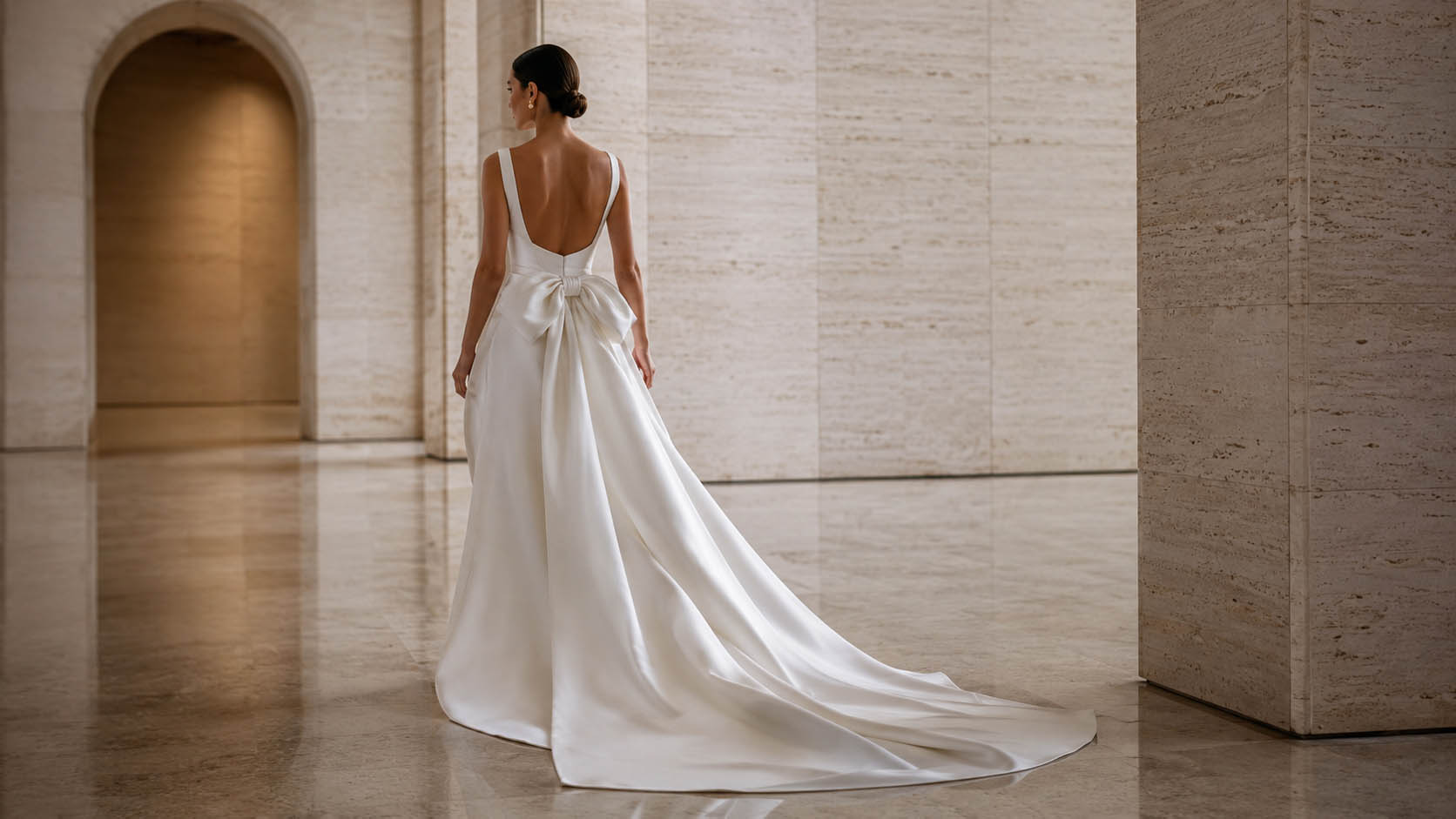
The front may introduce a gown, but the back completes its story. In Spring 2027 bridal fashion, the wedding dress back is becoming a carefully composed field of negative space, corsetry, lace, draping, bows, and movement.
A wedding dress is experienced in 360 degrees: during the turn toward the aisle, throughout the ceremony, in portraits, and in the moment the fabric settles into the train. The strongest directions below come from verified New York and Barcelona bridal-fashion reporting, not social-media predictions.
What Are the Biggest Wedding Dress Back Trends for 2027?
The strongest verified directions are open-back halter gowns, renewed corsetry, lace and transparency, directional draping, low-waist construction, transformable layers, and continued 1990s minimalism. Micro bows are also a documented runway detail.
Illusion backs, button trails, and larger sculptural bows remain commercially relevant, but they are better understood as enduring bridal design languages shaped by the season rather than universal 2027 trends.
Vogue’s Spring 2027 New York Bridal Fashion Week report identified lace, asymmetry, halter necklines, dramatic draping, and new-vintage references across multiple collections.
Barcelona Bridal Fashion Week separately reported renewed corsetry, low waists, transformable dresses, and reimagined veils. The Knot’s runway review adds long-line corsetry, micro bows, draped waists, and continuing 1990s minimalism.
Together, these sources show a season interested in both exposure and structure, often within the same gown.
Why the Back of the Wedding Dress Matters More Than Ever
The back is not a secondary view.
Guests see it while the bride faces the ceremony. Photographers frame it during first-look portraits and walking shots. Video captures how it behaves through turns, hugs, stairs, and dancing.
Still, a bride should not choose a back only for photographs. The most successful design feels coherent while standing still and remains comfortable in motion.
Designers usually solve a gown as a continuous sequence:
Neckline → bodice → waist → back → skirt → train
A sharply cut halter can direct the eye toward an open back. A curved Basque waist can extend corset lines into the skirt. A row of covered buttons can carry the center-back line into a chapel train.
The back works because it belongs to the whole garment.
The Open-Back Halter Creates Contrast
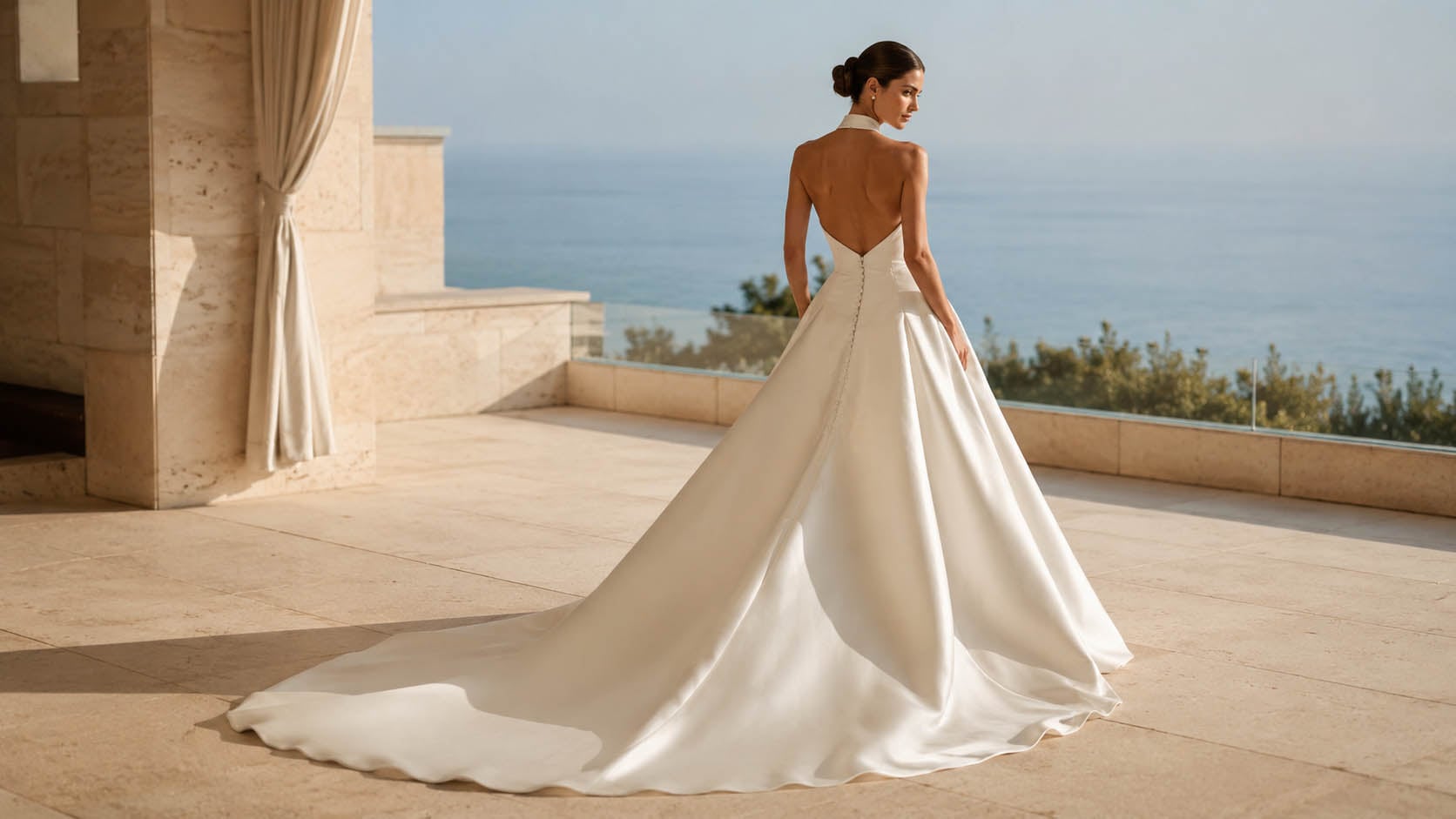
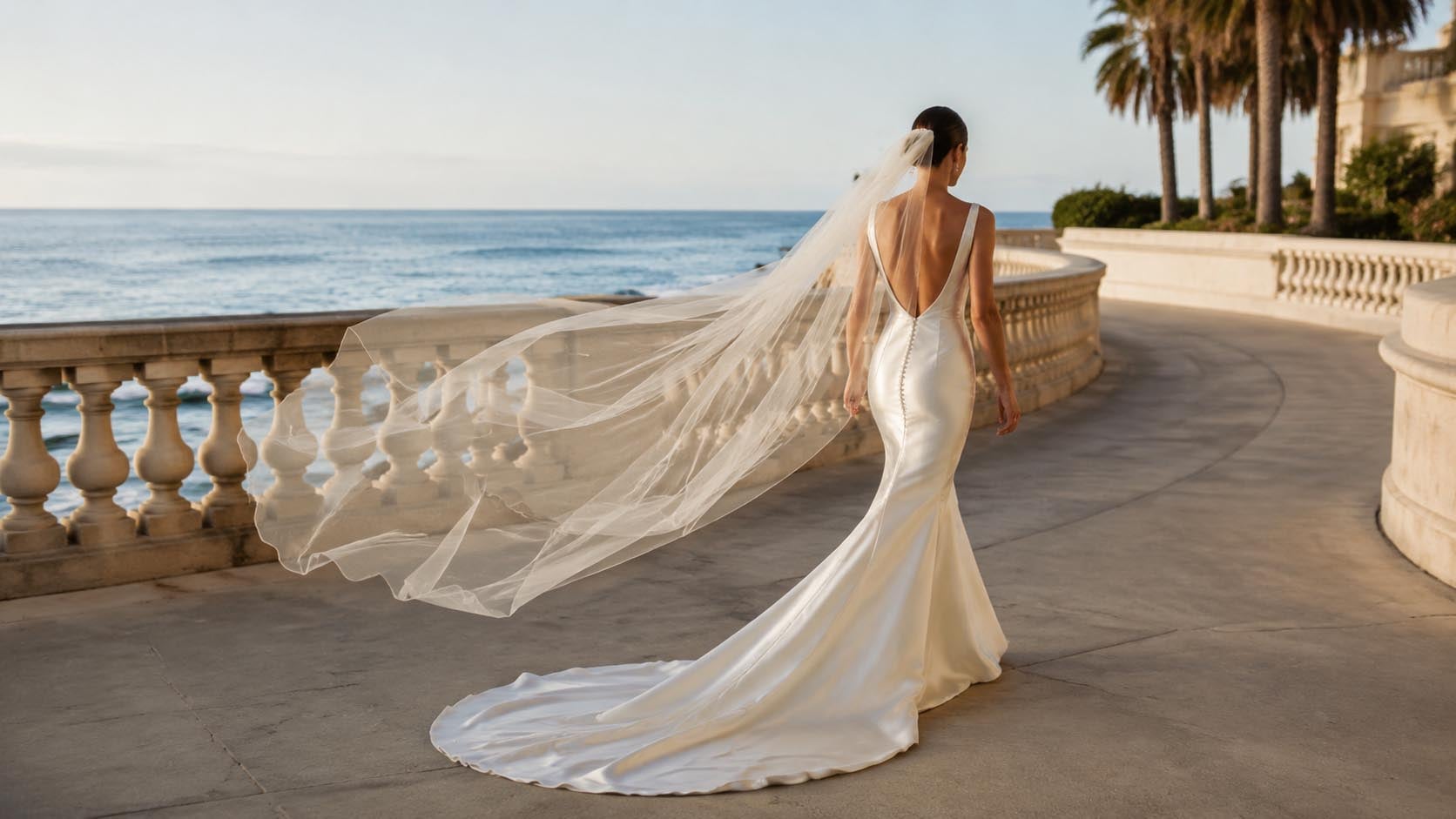
The open-back halter is one of the clearest Spring 2027 bridal signals. Vogue observed halters across collections from Dana Harel, Danielle Frankel, House of Gilles, and Lee Petra Grebenau, including dramatic ceremony gowns rather than only short reception looks.
Its appeal comes from contrast. The front may feel sculpted and relatively covered while the back opens almost completely.
This is different from the thin-strap backless slip dresses familiar from previous seasons. A halter concentrates tension around the neck or upper shoulder line, which makes neckline engineering, strap width, neck closure, bust cups, side seams, and waist anchoring especially important.
Some versions are genuinely open. Others use discreet mesh or side support. A substantial ball gown also requires a bodice that can manage the weight of the skirt without asking the halter strap to do all the work.
An open-back halter works particularly well with clean columns, fluid sheaths, and ball gowns whose volume begins below a stable waist. The train should continue the same visual idea. A simple open back may flow into a clean satin train, while a textured halter often benefits from controlled rather than competing embellishment.
Explore halter-neckline wedding dresses and low-back wedding dresses, then save the back details you want to compare in person.
Corset Backs Return With Lighter Construction
Corsetry is not merely a nostalgic closure for 2027.
Barcelona Bridal Fashion Week described structured bodices made with more flexible interiors, softer materials, and patterns intended to respect movement. The Knot also documented long-line and exposed corsetry across multiple Spring 2027 New York collections.
It helps to separate three related ideas.
Internal Corsetry
Internal corsetry is the hidden structure inside the bodice. It may include cups, boning, waist tape, reinforced lining, and internal fastenings.
Exposed Corsetry
Exposed corsetry makes boning channels, panel seams, or translucent structure visible as part of the gown’s design.
Visible Corset Back
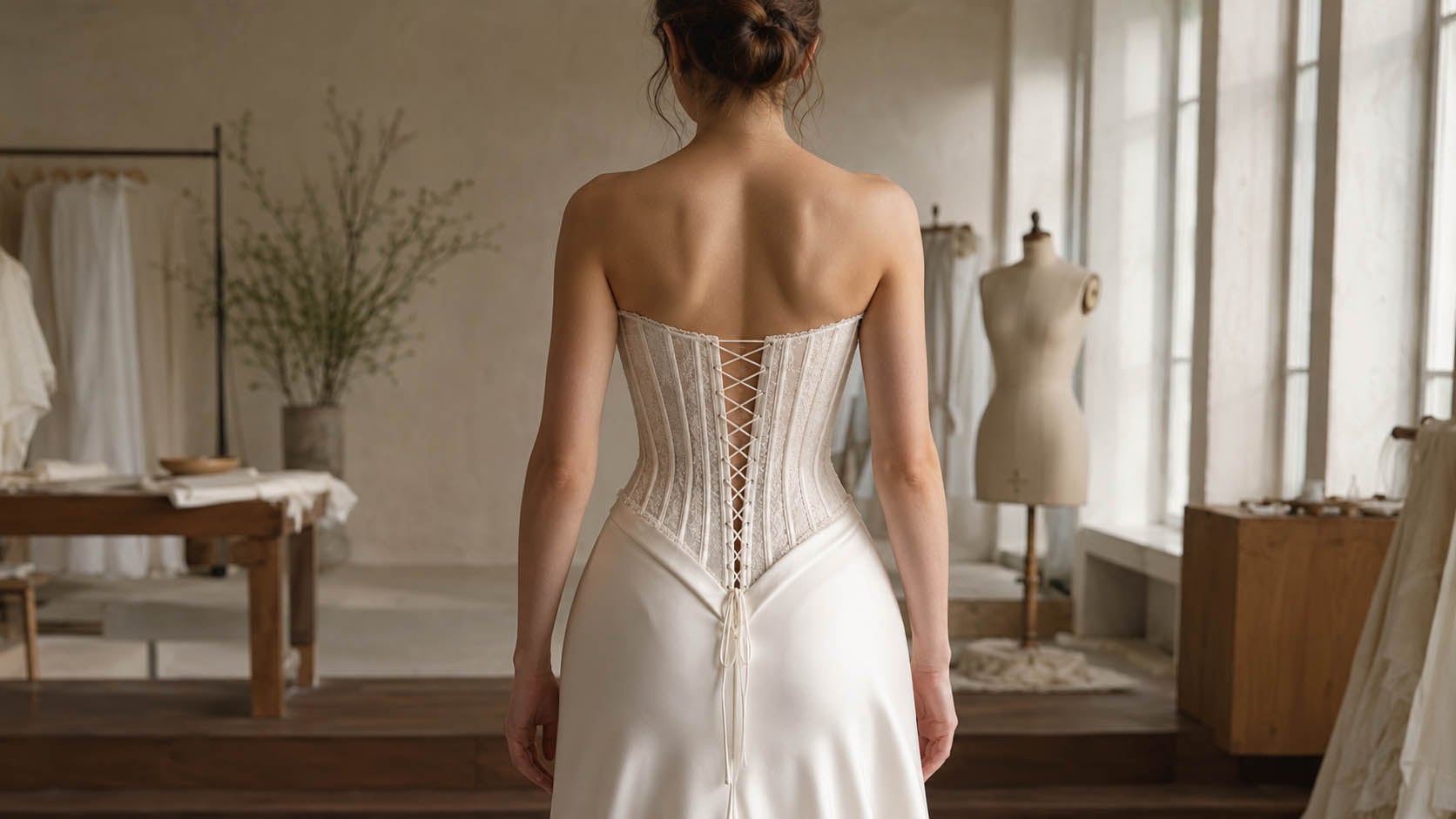
A visible corset back uses lacing as part of the exterior closure.
A wedding dress may contain one, two, or all three.
A lace-up back can provide fine adjustment, but it is not an unlimited sizing system. The pattern, modesty panel, bust placement, side seams, waist position, lacing gap, and strength of the loops still establish boundaries.
If the lacing gap becomes much wider or narrower than intended, the proportions of the bodice can change and the side seams may no longer sit correctly.
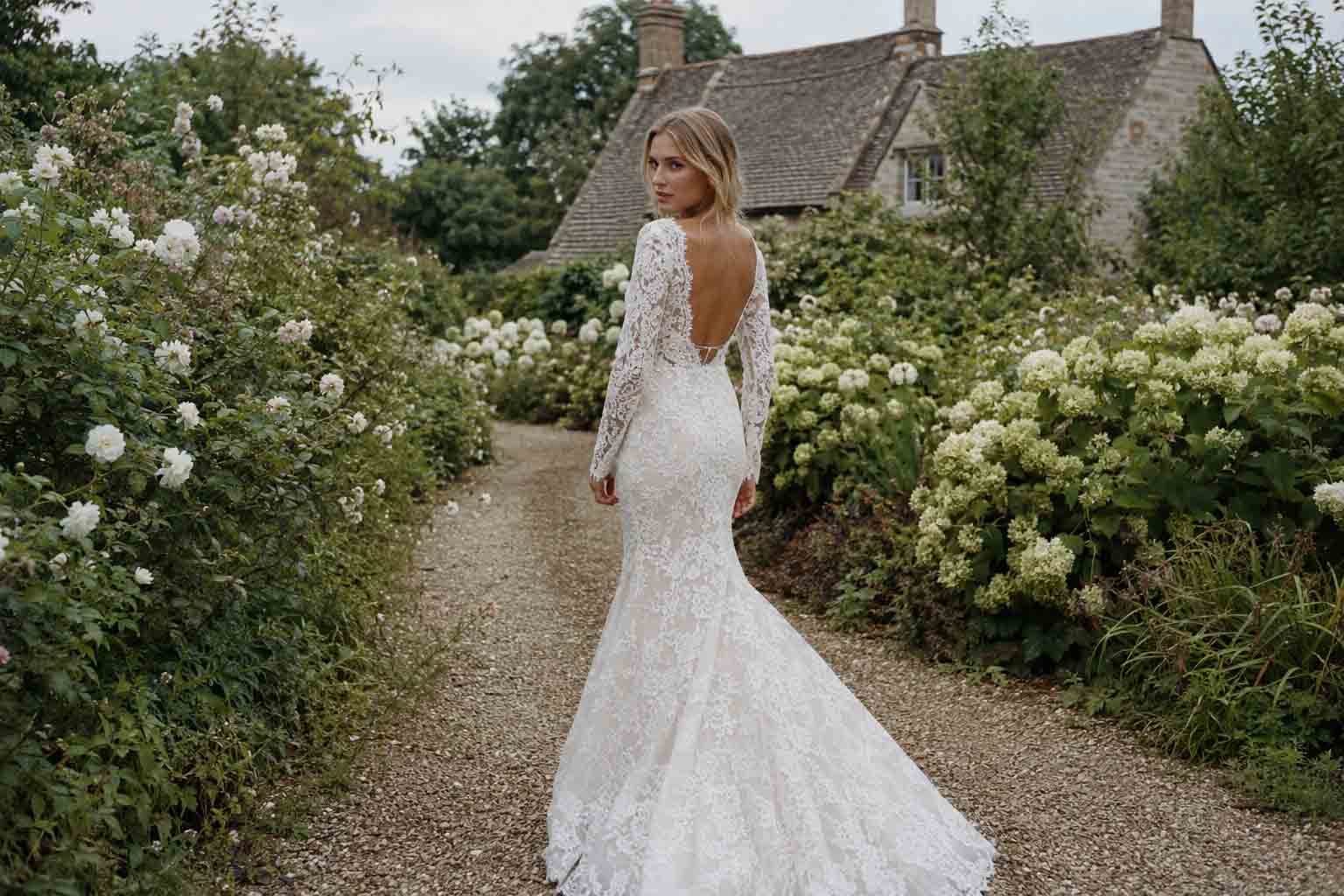
The most current interpretations feel architectural rather than costume-like. Boning can continue toward a Basque or dropped waist, lace may soften a translucent panel, and precise lacing can become a vertical detail that meets the skirt cleanly.
Sheer Lace and Illusion Backs Create Supported Transparency
Lace was among the most repeated materials in Vogue’s Spring 2027 New York coverage, ranging from French Chantilly layers to appliqué and sheer construction.
That broad runway signal gives illusion and lace backs real relevance, even when the exact back shape varies by designer.
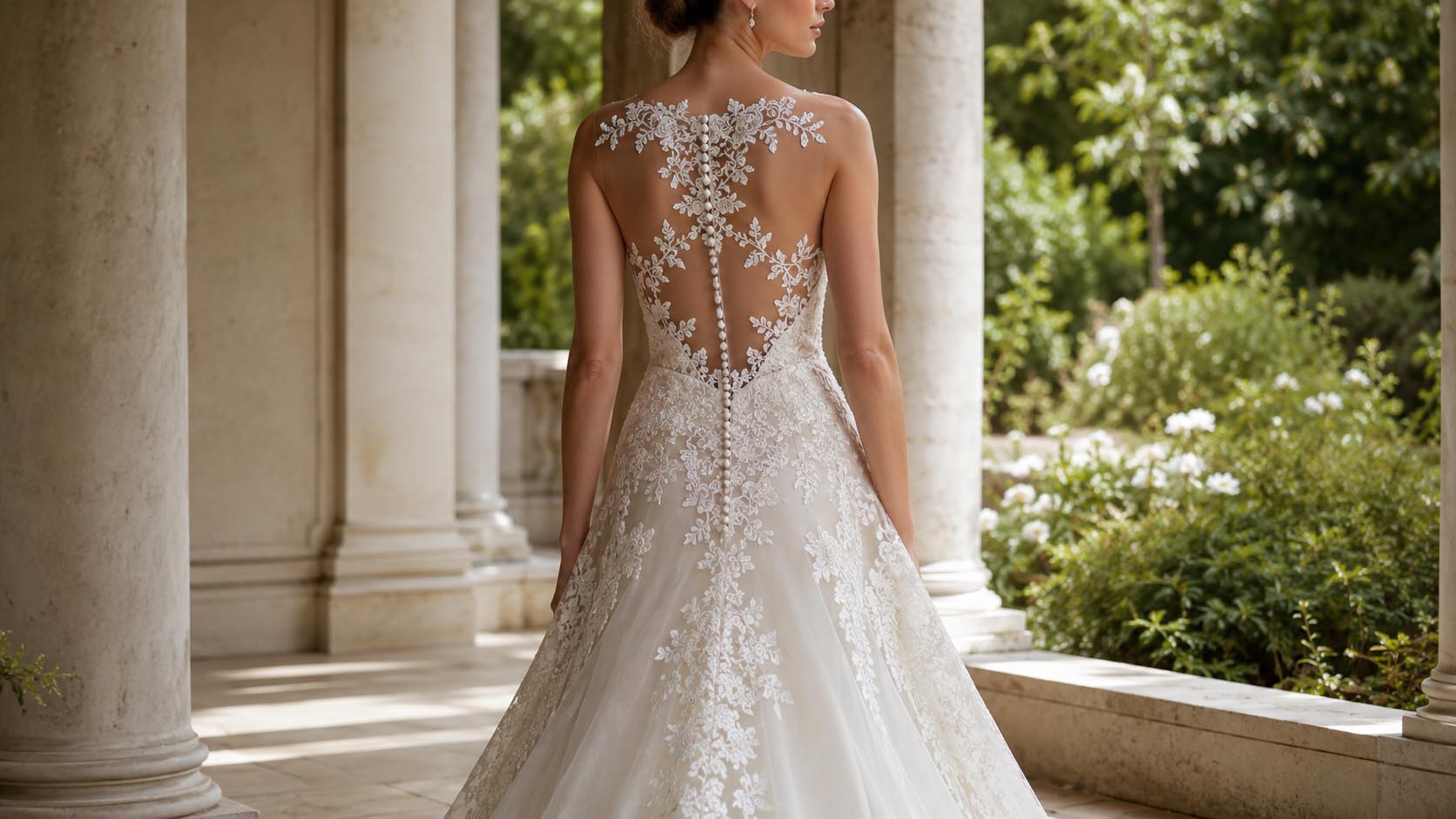
An open back removes fabric from a defined area. An illusion back uses transparent tulle or mesh to create the appearance of exposed skin while connecting structural or decorative elements.
Lace appliqués, embroidered motifs, and floating buttons can be secured to this transparent base. The illusion layer may stabilize an edge, support embellishment, or visually lower the back without removing every point of connection.
The quality of the illusion matters.
Mesh color should be assessed against the bride’s skin in both natural and artificial light. The seam should land intentionally rather than creating a distracting band. Embroidery must be balanced across the body, and buttons attached to mesh may require reinforcement.
Under camera flash, strongly contrasting mesh or heavy appliqué edges can become more visible than they appear in a softly lit fitting room.
See Bridal & Tuxedo Galleria’s illusion-back wedding dresses and lace wedding dresses to compare how transparency and texture can be handled.
Bows Shift From One Grand Gesture to More Precise Placement
Back bows remain important, but the strongest documented New York signal is smaller scale.
The Knot reported micro bows at Hayley Paige, HONOR, Mira Zwillinger, Savannah Miller, Sareh Nouri, and Galia Lahav. One runway example used a sequence of bows extending down the back and train, showing how repetition can replace a single oversized flourish.
Larger waist bows and architectural bows continue to appear across bridal collections. However, they should be described as an enduring statement option rather than the only bow direction of 2027.
Scale changes the effect.
A narrow satin tie can punctuate a minimalist waist. A wide structured bow can alter the entire rear silhouette. A detachable bow may create a more ceremonial view and then be removed for the reception.
Brides who love the idea but do not want a large detail can consider slim loops, flatter tails, a soft waist-centered bow, or a removable element that does not compete with the train.
Sculptural Draping and Asymmetrical Backs Direct the Eye
Draping and asymmetry are independently supported across New York and Barcelona runway coverage.
That does not mean every draped gown has a dramatic back. However, the season’s directional fabric work naturally extends around the body.
A fold may begin at one side seam, cross the waist, and release toward the back. A one-sided sash can become a scarf, soft train, or cowl-like fall.
Fabric behavior determines whether the effect feels liquid or architectural.
- Satin creates luminous folds and reveals every change in direction.
- Silk crepe produces softer, weightier movement.
- Chiffon creates light layers but requires controlled attachment.
- Organza can hold volume without appearing visually heavy.
- Mikado supports decisive sculptural shapes.
Asymmetry must remain balanced in motion. The weight of a sash, fold, or detachable panel should not pull the bodice off center.
During alterations, the drape should be pinned and tested while the bride walks, turns, raises her arms, and sits.
The Minimalist Low Back Continues the New-Vintage Mood
Minimalist low backs are a continuing direction rather than a sudden invention.
The Knot documented continued 1990s minimalism for Spring 2027, including slip dresses and restrained silhouettes, while Vogue identified a broader new-vintage movement. Barcelona also presented clean crepe and Mikado gowns with carefully controlled details.
For the back, this translates into low scoops, spare V shapes, narrow straps, smooth satin, crepe columns, and minimal embellishment.
The simplicity makes construction more visible, not less.
A wavering back edge, misplaced seam, strained zipper, or uneven strap tension is difficult to disguise on a clean gown.
A low scoop tends to feel softer and more continuous. A deep V creates stronger vertical direction. Both can be striking with sheath or column silhouettes.
Browse scoop-back wedding dresses and V-back wedding dresses to compare the geometry.
Buttons Become a Line of Architecture
Covered button trails are not a new 2027 invention, and current runway evidence does not justify calling them a universal seasonal trend.
Their relevance comes from how naturally they interact with 2027’s corsetry, low waists, lace, and clean construction.
A vertical button line can lengthen the visual path from the bodice into the train. On illusion mesh, buttons may appear to float. On Mikado or satin, closely spaced covered buttons add texture to an otherwise restrained surface.
Pearl buttons create a different, more reflective rhythm where the design supports them.
Some buttons are decorative and conceal a zipper. Others are functional and close with loops. A button-over-zipper back often provides the security of a zipper with the appearance of traditional hand finishing.
Brides should ask which closure system the gown uses because dressing time, alteration options, and reinforcement requirements can differ.
Transformable Backs Change Throughout the Celebration
Barcelona Bridal Fashion Week identified two-looks-in-one design as a major 2027 direction, including overskirts, detachable sleeves, removable bodices, overlay pieces, and detachable trains.
The back is often where that transformation is most visible.
A lace bolero can turn an open back into a covered ceremony look. A cape or cape veil can add vertical movement without changing the bodice. A detachable train may extend the back for the aisle, then release for dancing. A removable bow can change the scale of the design without requiring a second gown.
Overskirts and jackets can also transform the relationship between the waist and train.
Every detachable component requires a secure attachment system that remains discreet after removal. Snaps, hooks, loops, and waist fastenings should be tested under movement.
The bride should also practice removing the piece with the person who will help her on the wedding day.
2027 Wedding Dress Back Comparison
| Back Style | 2027 Fashion Direction | Visual Character | Typical Support Context | Alteration Complexity | Works Well With |
|---|---|---|---|---|---|
| Open-back halter | Verified runway signal | Graphic contrast and exposed back | Construction-dependent | Typically more complex | Columns, sheaths, modern ball gowns |
| Deep V back | Continuing direction | Strong vertical line | Moderate to lower depending on structure | More complex when lowering | Fit-and-flare, A-line, lace gowns |
| Scoop low back | New-vintage continuation | Soft, clean curve | Construction-dependent | Moderate to complex | Satin, crepe, sheath, column |
| Illusion lace back | Supported by lace and transparency trends | Detailed, skin-revealing effect | Often moderate, but not automatically supportive | Typically complex | Lace gowns, sleeves, floating buttons |
| Corset back | Renewed corsetry signal | Structured and architectural | Typically higher when properly engineered | Moderate; conversions can be complex | Ball gowns, A-line, Basque waists |
| Button back | Enduring design language | Vertical rhythm and tailored finish | Depends on the functional closure | Moderate | Mikado, satin, lace, long trains |
| Bow back | Micro bows verified; oversized bows continuing | Romantic to sculptural | Usually decorative | Moderate, especially if detachable | Clean gowns, waist emphasis, trains |
| Draped back | Verified draping and asymmetry signal | Fluid or sculptural | Construction-dependent | Typically more complex | Satin, crepe, chiffon, organza |
| Covered or high back | Supported by lace and layering | Graphic coverage or transparency | Often moderate to higher | Moderate to complex | Illusion sleeves, column, A-line |
Open Back vs. Low Back vs. Illusion Back
An open back describes exposed space, while a low back describes where the finished edge of the gown sits. A dress can be both.
An illusion back uses transparent mesh to simulate openness or support decoration. The distinction matters because each construction behaves differently during fittings and alterations.
Open Back
An open back removes fabric from part of the rear bodice. The opening may be rounded, angular, framed by lace, or connected by straps.
Low Back
A low back places the finished rear edge below the conventional bra line. It may be open, scooped, V-shaped, or partially supported with mesh.
Deep V Back
A deep V narrows toward the center spine or waist, creating a strong vertical line. Its depth and strap geometry influence stability.
Scoop Back
A scoop back forms a curved, softer line. It can range from modestly lowered to exceptionally deep.
Illusion Back
An illusion back uses transparent tulle or mesh as a structural and decorative base. Lace, appliqués, embroidery, or buttons may be attached to it.
Keyhole Back
A keyhole back is a contained opening surrounded by fabric or lace. It can reveal skin while maintaining a covered upper and lower back.
Explore BTG’s keyhole-back wedding dresses to see how varied this opening can be.
Which Wedding Dress Back Gives the Best Support?
The most supportive back is the one integrated into a well-engineered bodice and tailored correctly. Coverage alone does not determine support.
Cups, boning, waist anchoring, side seams, strap tension, fabric stability, bodice length, and internal corsetry work together.
A high covered back may still feel unstable if the cups are misplaced or the waist is loose. A visually open back can feel secure when the bodice is anchored at the waist, the side seams are balanced, and the internal structure supports the bust without depending on a conventional bra.
Two nearly identical open-back dresses can therefore feel completely different.
Some backless gowns accommodate adhesive cups, low-back foundations, or sewn-in cups. Others are designed to work without a separate bra.
The correct choice depends on the actual gown and the bride’s comfort. Bring the undergarment you are considering to the fitting, but do not invest in an expensive specialty solution until the gown’s final construction is understood.
What Can Actually Be Altered on the Back of a Wedding Dress?
Depending on the pattern and construction, a bridal tailor may be able to:
- Adjust straps
- Refine the back edge
- Replace illusion mesh
- Reposition lace appliqué
- Add covered buttons
- Modify hook-and-eye placement
- Improve corset lacing
- Add a modesty panel
- Change the placement of a detachable bow
- Raise certain low backs
- Modestly lower a back when the structure allows it
The limitations are equally important.
Boning can define the lowest safe edge. A center zipper cannot always be moved without rebuilding the bodice panels. Matching lace motifs may not be available for a seamless addition.
Beadwork, embroidery, side seams, waist position, and pattern geometry may make a proposed change technically risky or disproportionately expensive.
Converting the back is a construction decision, not simply a decorative edit.
Bridal & Tuxedo Galleria’s in-house bridal alterations service can evaluate the actual gown, fabric, seam allowance, and internal structure. A photograph may suggest an idea, but only an in-person examination can confirm feasibility.
If support or alteration potential is shaping your decision, compare construction with an experienced stylist before ruling a style in or out. The sample fit is not the final tailored fit, but it does reveal how the gown is engineered.
Corset Back vs. Zipper Back vs. Button Back
| Closure | Appearance | Fit Characteristics | Advantages | Considerations |
|---|---|---|---|---|
| Corset back | Visible lacing with loops and often a modesty panel | Offers controlled adjustment within the original pattern | Adjustable appearance and visible corset detail | Does not create unlimited size flexibility |
| Zipper back | Clean, continuous center-back closure | Fixed to the tailored measurements of the bodice | Fast dressing and a smooth finish | Requires precise fit and may show tension |
| Button-over-zipper | Decorative buttons positioned over a hidden zipper | Fit is controlled by the zipper | Combines security with a traditional button line | Buttons are decorative rather than functional |
| Functional button back | Buttons fasten through individual loops | Fixed fit with small closure points | Refined handcrafted appearance | Takes longer to fasten and may require reinforcement |
Choosing a Back Based on the Entire Dress
The back cannot be evaluated intelligently in isolation.
A plunging back changes the available support for a strapless or narrow-strap front. A Basque waist pulls corset seaming downward. A natural waist creates a clearer boundary between the bodice and skirt. A drop waist lengthens the bodice and changes where a bow, button line, or drape can begin.
Silhouette matters as well.
A mermaid wedding dress carries back construction through the waist and hips before reaching the flare.
An A-line wedding dress can transition more freely from a fitted bodice into the skirt.
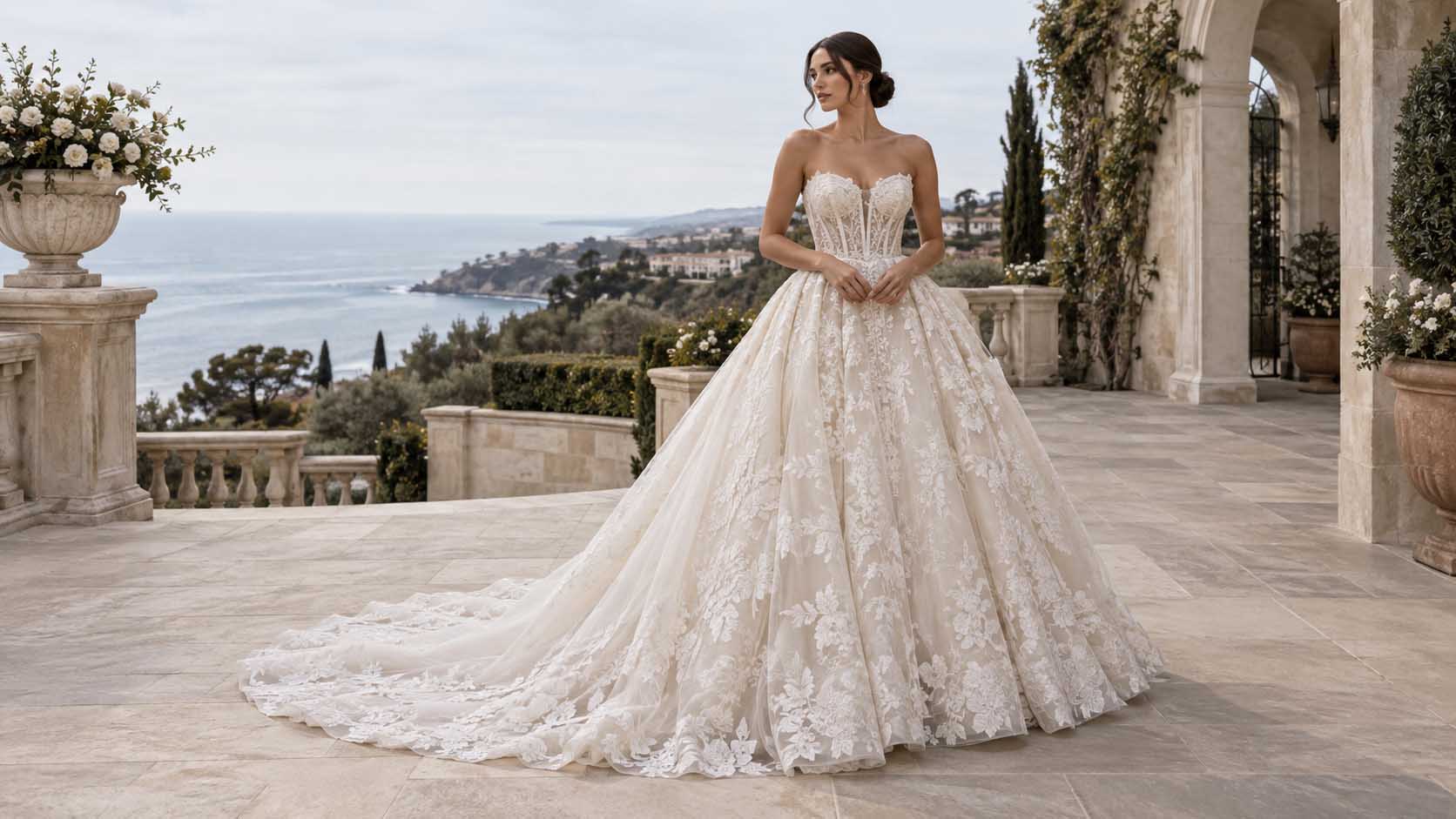
A ball gown must manage the relationship between a structured upper body and substantial skirt volume.
A sheath or column gown exposes the precision of every seam.
Wedding Dress Back Trends and the Return of the Basque Waist
Low waists, curved drops, and long-line corsetry are verified 2027 runway directions.
From the rear, these waists matter because they redraw the bottom edge of the bodice. Corset seams may converge toward a point or curve, visually extending the torso and controlling the transition into the skirt.
That architecture also affects construction.
A deeper waist may require longer boning, different zipper placement, and careful skirt attachment. On a fitted silhouette, the rear waist and hip shaping must work together.
On a ball gown, a sculpted low waist can create contrast before the skirt expands. The effect should be judged from the back and side rather than only straight on.
Which Fabrics Create the Most Beautiful Back Details?
There is no single best fabric. Each material produces a different kind of line.
Mikado
Mikado holds architectural folds, crisp bows, and defined waist structures. Its body allows it to support scale without collapsing.
Satin
Satin reflects light across a smooth surface and makes draping highly visible. It also reveals pulling, seam tension, and uneven construction quickly.
Crepe
Crepe creates a softly luminous or matte, body-skimming line. Clean construction is essential because irregularities are difficult to disguise.
Chantilly Lace
Chantilly lace offers fine pattern and soft transparency, particularly over illusion tulle or a contrasting lining.
Guipure Lace
Guipure lace is heavier and more graphic. It works well when the lace motif itself needs structural presence.
Tulle
Tulle is essential to many illusion backs. It can support appliqué, embroidery, and floating buttons when properly reinforced.
Organza
Organza holds airy volume and crisp shapes, making it effective for translucent layers and sculptural bows.
Chiffon
Chiffon falls fluidly and works well for soft drapes, scarves, and cape-like movement. However, it is not a substitute for internal support.
Explore BTG’s wedding dress fabric guide to compare how these textiles behave across different silhouettes.
The Back of the Dress and the Train Should Be Designed Together
The eye often follows a center-back seam, lacing line, row of buttons, or lace motif directly into the train.
When that visual path is interrupted without intention, the gown may look assembled in separate parts. When it is controlled, even a restrained back gains presence.
On a fitted skirt, rear seams establish contour before releasing into the train. A cathedral train can continue a large lace composition. A chapel train may favor a more restrained trail of buttons or appliqué.
Draping can gather at the waist and open into fabric movement below. A detachable train must look complete when attached and leave a finished gown when removed.
Train length also changes the practical wearing experience. Consider the turning radius, stairs, outdoor surfaces, and bustle.
The most impressive rear view is one the bride can comfortably move in.
How a Veil Changes a Statement Wedding Dress Back
A veil can reveal, filter, frame, or partially obscure the back. The decision is not simply long versus short.
Sheer Raw-Edge Cathedral Veil
A transparent raw-edge veil preserves the scale of the aisle view while allowing an open back and button trail to remain visible.
Lace-Edged Cathedral or Chapel Veil
A lace border creates a second pattern layer. It can complement simple satin but may compete with a detailed illusion back if the motifs are unrelated.
Fingertip Veil
A fingertip veil leaves most of the train visible and places its edge near the waist or hip. That edge may either frame or interrupt a bow.
Mantilla Veil
A mantilla brings lace close to the face and shoulders. Its continuous border can soften an open back or create a dense pattern over a lace bodice.
Cape Veil
A cape veil attaches around the shoulders and can frame a low back. Its attachment points and width must work with the gown’s straps, neckline, or sleeves.
Try the veil with the gown and photograph the combination from several distances. Close-up harmony and full-aisle harmony are not always the same.
Browse wedding dress veils after identifying which parts of the dress you want the veil to reveal.
Hairstyles for an Open or Detailed Wedding Dress Back
An updo usually reveals the greatest amount of back detail, but it is not the only thoughtful choice.
A high bun creates a long, uninterrupted neck and shoulder line. A low bun can echo the neck closure of a halter or sit close to the upper edge of an illusion panel.
A ponytail introduces movement but may repeatedly cover a central detail.
Side-swept hair leaves one shoulder open and can work beautifully with an asymmetrical design. Hollywood waves or loose waves become another texture over the dress, which may be desirable with a very clean back.
Half-up styles offer a compromise.
Test the planned hair length against the gown. A difference of several inches can determine whether a bow, button trail, or lace motif remains visible.
The 360-Degree Bridal Fitting Test
Use this test during your bridal appointment and again after major alterations. It evaluates the dress as a moving garment, not a still photograph.
- Stand naturally without pulling your shoulders back for the mirror.
- Turn sideways and check whether the back edge and side seams remain balanced.
- View the back straight on and from both three-quarter angles.
- Walk at your normal pace while someone watches the back edge, straps, and train.
- Sit fully in a chair, then stand without adjusting the bodice first.
- Raise both arms as if greeting guests or dancing.
- Hug someone and notice bust stability, strap tension, and mesh movement.
- Bend slightly as if signing a document or greeting a seated relative.
- Practice entering and leaving a chair with the skirt and train arranged.
- Turn, sway, and dance gently while someone observes the zipper, lacing, boning, and detachable elements.
Check for:
- Gaping
- Digging straps
- Shifting cups
- Zipper rippling
- Uneven corset tension
- Illusion mesh that pulls or wrinkles
- Sharp boning
- Skin irritation
- Moving back edges
- Any instinct to hold the gown in place
Confidence is also evidence.
If you stop moving naturally because you are monitoring the dress, the fit or construction deserves another look.
Wedding Dress Back Trends for San Diego Weddings
San Diego’s range of venues makes wearability more useful than any rigid style rule.
At a coastal ceremony, ocean breeze can move a cape, chiffon panel, raw-edge veil, or loose bow tail more than expected. Warm daytime light may also make illusion mesh and lining contrast easier to see.
A resort or estate may involve stairs, terraces, and longer portrait walks. A ballroom can support sculptural volume and a larger train, but the reception still requires a sitting test and functional bustle.
For a garden or vineyard setting, consider how appliqué, buttons, and delicate lace will interact with outdoor surfaces.
At a luxury hotel, the transition from ceremony to reception may make detachable bows, overskirts, capes, or trains particularly useful.
None of these settings requires a specific back style. They simply change which construction questions deserve attention.
Brides comparing designer wedding dresses in San Diego should bring venue images and describe the movement of the wedding day, not only its aesthetic.
Wedding Dress Back Details in the Navid Noor Design Perspective
A sophisticated gown is designed as a three-dimensional composition.
In the Navid Noor design perspective, the back should connect to the neckline, internal support, waist placement, skirt, and train rather than behaving as an isolated decoration.
Controlled exposure is most convincing when the construction beneath it remains quiet and secure.
This approach is particularly relevant to architectural bodices, illusion panels, corsetry, and customization. Lowering a back edge, extending lace, or adding a train changes proportion and structural load as well as appearance.
Navid Noor, owner and head designer of Bridal & Tuxedo Galleria, brings couture-informed construction and customization expertise to those decisions.
Learn more about the boutique and Navid Noor collections.
Trends Are Inspiration, Not Rules
A 2027 bride does not need a dress that announces its year.
Runway trends are useful because they broaden the available vocabulary. A halter can reveal the back differently. A corset can feel lighter. Lace can create supported transparency. A removable layer can change the celebration without requiring an entirely separate gown.
The right dress still depends on the bride’s taste, comfort, movement, venue, proportions, and photography preferences.
A buttoned lace back is not less current because it is not new. A clean scoop is not automatically better because minimalism appeared on the runway.
The value of a trend is the possibility it introduces.
What to Bring to Your Bridal Appointment If the Back Matters to You
Bring inspiration images that show full rear views and close-up construction, not only front portraits.
It is also helpful to bring:
- A hairstyle reference
- Veil inspiration
- Venue photographs
- Expected shoe height
- Preferred coverage level
- Any undergarment you are considering
- Images of train lengths you like
- Examples of detachable details
Remember that a sample demonstrates the gown’s design and construction, not the final tailored fit.
Ask to see the gown while standing naturally, from the side, while seated, and in motion. A clipped sample can suggest the final line, but it cannot reproduce every alteration.
Frequently Asked Questions
What wedding dress backs are trending in 2027?
Open-back halters, renewed corsetry, lace and illusion effects, asymmetrical draping, low-waist construction, transformable layers, micro bows, and continuing 1990s minimalism are the strongest evidence-supported directions. Button trails and larger sculptural bows remain relevant but represent broader bridal design languages rather than universal seasonal trends.
Are backless wedding dresses still in style in 2027?
Yes. The open-back halter is a clear Spring 2027 runway direction, while minimalist low backs continue the season’s 1990s and new-vintage influence. The important change is construction and contrast. Many current gowns pair a covered or sculpted front with a deliberately open back.
Are corset-back wedding dresses trending again?
Corsetry is strongly present for 2027, including long-line bodices, exposed boning, flexible internal structures, and visible lacing. However, not every corseted gown has a lace-up back. Internal corsetry, exposed corset construction, and exterior corset closures are related but distinct features.
What is the difference between a low-back and open-back wedding dress?
A low back describes the position of the gown’s finished rear edge, usually below the conventional bra line. An open back describes an exposed area created by removing fabric. A gown can be both low and open. An illusion back may look open while transparent mesh still spans the area.
Can a low-back wedding dress still be supportive?
Yes. Support can come from cups, boning, waist anchoring, side seams, stable fabric, straps, and precise alterations. The amount of fabric covering the back is not a reliable measure of support. Two visually similar low-back gowns may feel different because their internal structures are different.
Can the back of a wedding dress be altered?
Often, but the possibilities depend on the pattern and materials. Straps, illusion mesh, lace placement, buttons, corset lacing, modesty panels, and back edges may sometimes be adjusted. Boning, zippers, unavailable lace, beadwork, embroidery, and seam placement can limit the work.
Can a zipper wedding dress be changed to a corset back?
Sometimes. The conversion requires secure loop placement, compatible fabric or a modesty panel, balanced side seams, and a bodice that can tolerate the new tension. It may change the fit and appearance, so the gown should be evaluated before purchase if the conversion is essential.
What veil works best with an open-back wedding dress?
No veil is universally best. A sheer raw-edge veil keeps the back visible, while a lace-edged or mantilla veil adds pattern. Fingertip length can frame the waist but may intersect with a bow. A cape veil may emphasize the shoulders. Try the complete combination from both close range and aisle distance.
Which hairstyle shows off the back of a wedding dress?
High and low buns generally reveal the most detail. A side-swept style can expose one shoulder and support an asymmetrical design. Ponytails and half-up styles add movement while leaving part of the back visible. Test the exact hair length against the gown before deciding.
Where can I try 2027-style wedding dresses in San Diego?
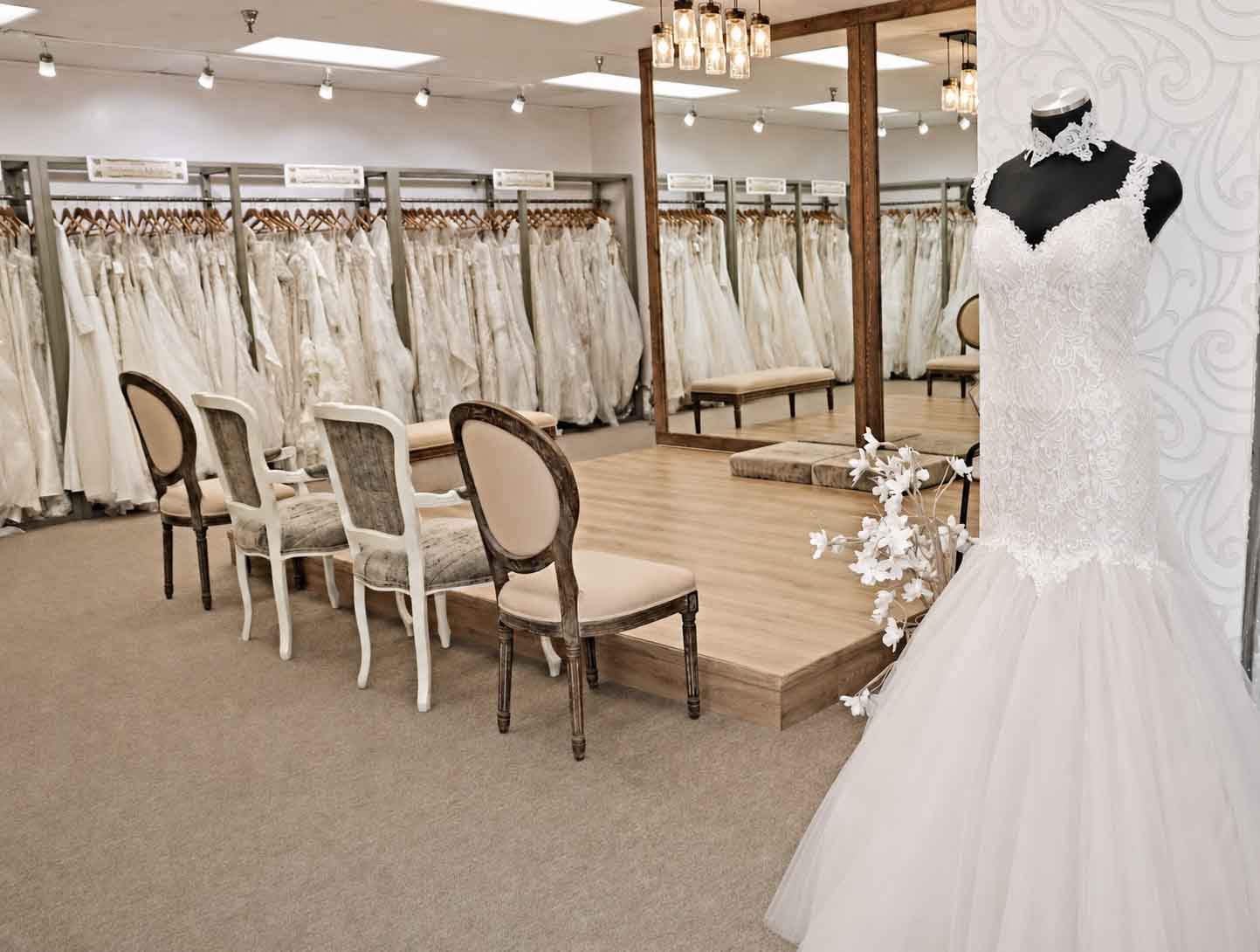
Bridal & Tuxedo Galleria offers designer wedding dresses, private one-on-one styling, couture-informed guidance, and in-house alterations in San Diego. Bring inspiration showing the backs you like, then compare support, fabric, closure, veil interaction, and movement in person.
The Best Wedding Dress Back Is the One You Want to Turn Around In
Spring 2027 gives brides a rich set of possibilities: halters that open unexpectedly at the rear, corsetry that reveals how a bodice is built, lace that appears to float, draping that travels around the body, smaller bows, lowered waists, transformable layers, and clean new-vintage lines.
The common idea is not exposure. It is intention.
At Bridal & Tuxedo Galleria, more than 30 years of San Diego bridal experience, in-house alterations, private styling, and Navid Noor’s design perspective allow a bride to evaluate more than an image.
The wedding dress back should look resolved from neckline to train, feel secure in motion, and still feel personal after the trend language falls away.
The decisive moment is often quiet: the stylist turns the bride toward the second mirror, the train opens behind her, and she sees the complete dress for the first time.
Book Your Private Bridal Experience
See the gown from every angle. Compare open backs, sculpted corsetry, illusion lace, button trails, and train construction with a private bridal stylist in San Diego.
For a more elevated and personal experience, reserve the Princess Appointment and explore which details feel most like you in motion, not only in photographs.
Book Your Princess Appointment

Author bio :
Kayla brings more than 10 years of hands-on experience in bridal fashion and boutique styling, specializing in personalized bridal consultations and luxury client experiences. As the manager of the San Diego location of Bridal and Tuxedo Galleria, she is known for her keen eye for detail, deep understanding of couture wedding dress design, and ability to guide brides toward a gown that reflects their unique vision and wedding aesthetic. Her approach blends fashion expertise with genuine care, ensuring every bride feels confident, understood, and unforgettable on her wedding day
Call Now

Your Personalized Wedding Dress Shopping Experience in San Diego With over 30 years of styling expertise, our dedicated team is passionate about helping you find the perfect wedding dress and tuxedo.


Leave a Reply