
Winter Wedding Dress Trends of 2027: A Complete Guide for San Diego Brides
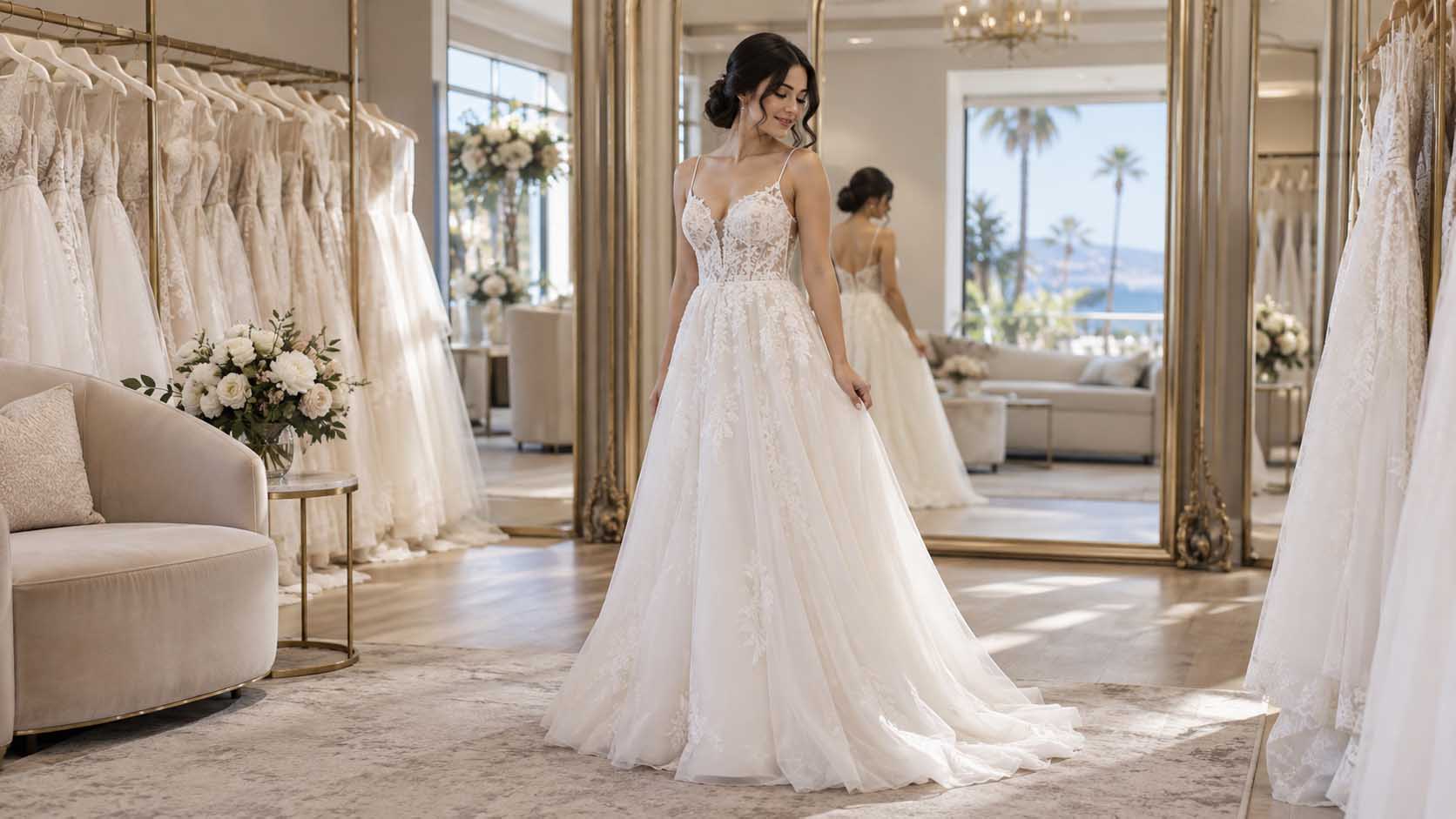
Choosing a winter wedding dress begins with the atmosphere you want to create. Perhaps you picture a lace gown beneath a cathedral veil, a sculpted satin silhouette in a candlelit ballroom, or a simple dress with a dramatic cape for an intimate coastal celebration.
The bridal direction for 2027 makes room for all of these possibilities. Romantic volume sits alongside clean minimalism. Defined corset bodices share attention with fluid draping. Traditional ivory remains relevant, while softer colors and expressive accessories offer different ways to feel bridal.
For brides shopping in San Diego and Southern California, the opportunity is to translate those ideas into a dress that suits your venue, comfort, budget, and personality.
This guide covers the major directions documented in available 2027 bridal reporting, followed by practical recommendations for winter weddings. Seasonal styling suggestions are our interpretation of those collections, rather than claims about a separate, definitive Winter 2027 runway season.
What Are the Main Wedding Dress Trends for Winter 2027?
The Knot’s 2027 bridal report identifies a broad mix of updated necklines, reworked waistlines, minimalism, decorative fabrics, and statement accessories. The overall direction gives brides considerable freedom to choose between simplicity and detail.
The following overview brings together the major trends covered in this guide. Winter applications are styling recommendations to discuss during your appointment.
| Bridal direction | Details to explore | Winter styling consideration |
|---|---|---|
| Romantic lace | Floral patterns, layered lace, sheer accents | Compare lining and coverage |
| Sculpted waistlines | Basque, dropped, curved, and reverse basque shapes | Check comfort while seated |
| Corsetry | Long bodices, visible boning, defined seams | Evaluate actual internal support |
| Expressive volume | Ball gowns, shaped skirts, peplums | Consider aisle width and movement |
| Modern minimalism | Clean satin, crepe, restrained silhouettes | Make fit and fabric the focus |
| Draping and asymmetry | Gathered waists, one-sided details | Test how folds settle in motion |
| Updated necklines | Strapless variations, halters, high-neck layers | Plan accessories around the neckline |
| Dimensional detail | Rosettes, raised florals, ruffles | Balance texture across the complete look |
| Sparkle | Pearls, crystals, sequins, beading | View the dress under evening lighting |
| Alternative color | Muted tones, colored embroidery | Compare swatches in different light |
| Versatile styling | Toppers, removable sleeves, wraps | Check attachments and outfit transitions |
| Alternative bridal looks | Midis, minis, tailored layers | Coordinate footwear and outerwear |
You do not need a gown from a particular collection year to wear these ideas beautifully. Start with the details you love, then compare available dresses that express them.
Explore our wedding dress collections before your appointment and save a few contrasting styles.
1. Lace Expands Beyond the Traditional Romantic Gown
Vogue’s Spring 2027 bridal coverage identifies lace across dresses, separates, coats, and veils.
For winter styling, consider how much of the lace you want to reveal. An opaque lining emphasizes the pattern differently from a sheer or skin-toned foundation. Neither approach is automatically more elegant; the decision depends on your preferred coverage and the character of the dress.
Compare a full lace gown with a cleaner silhouette featuring lace only at the bodice, sleeves, or train. This makes it easier to identify whether you love lace as the main feature or as a finishing detail.
Before deciding, view the gown from across the room. A pattern that looks intricate close up should also create an overall impression you enjoy.
2. Basque, Dropped, and Alternative Waistlines Reshape Proportion
Jenny Yoo’s bridal trend overview includes basque, reverse basque, dropped, and uninterrupted waist treatments.
These options create different relationships between the bodice and skirt. A basque waist typically dips at the center front, while a dropped waist sits below the natural waist. Other shaped seams or seamless constructions create their own visual effects.
When trying them on, pay attention to where the skirt begins to expand. Compare the front, side, and seated views rather than choosing from a reference photograph alone.
A lower waistline is not automatically the best choice for every bride. The depth of the bodice, placement of the seam, and fullness of the skirt should be assessed together.
3. Corsetry Becomes a Visible Design Feature
One Fine Day Bridal Market’s 2027 recap highlights corsetry as a prominent direction among its participating designers.
A corset-inspired bodice can look romantic beneath lace or architectural in a clean fabric. Visible seams and boning create definition, but their appearance alone does not tell you how supportive the dress will feel.
Ask your stylist about the lining, internal structure, bust support, and alterations available for the gown. Walk, sit, and move your arms before evaluating comfort.
V and illusion necklines remain options worth comparing alongside these bodices. A deeper opening or sheer panel should be selected according to your preferred coverage and the way the complete neckline sits on you.
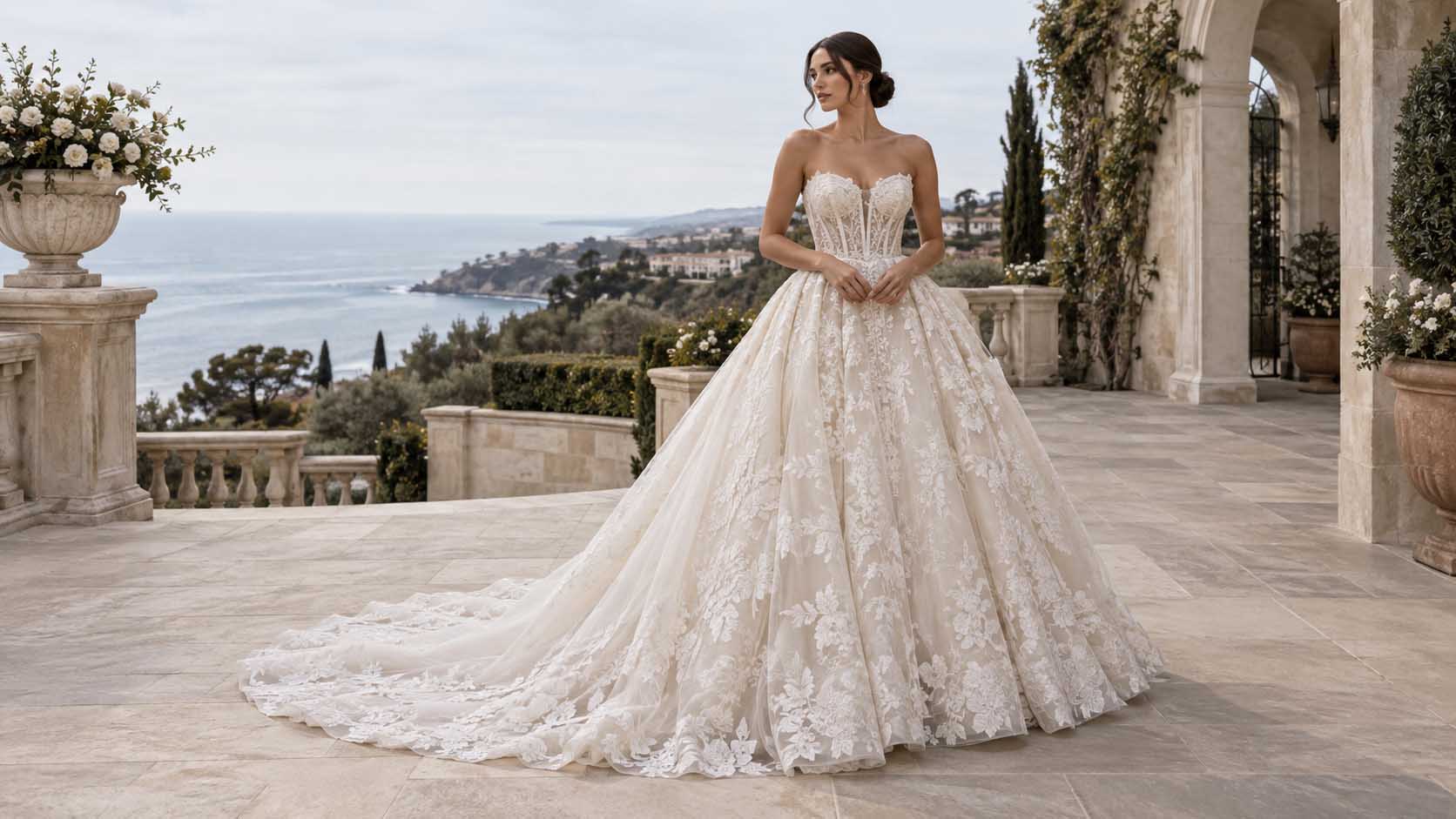
4. Ball Gowns and Sculptural Skirts Embrace Volume
Barcelona Bridal Fashion Week’s official 2027 trend report highlights romantic drama and voluminous skirts.
For a formal winter ceremony, a full skirt can create a striking entrance. The practical question is how that volume behaves through the rest of the day.
Compare a softer tulle skirt with a more structured gown. Notice the space each occupies, how easily you turn, and whether you can sit comfortably at a table.
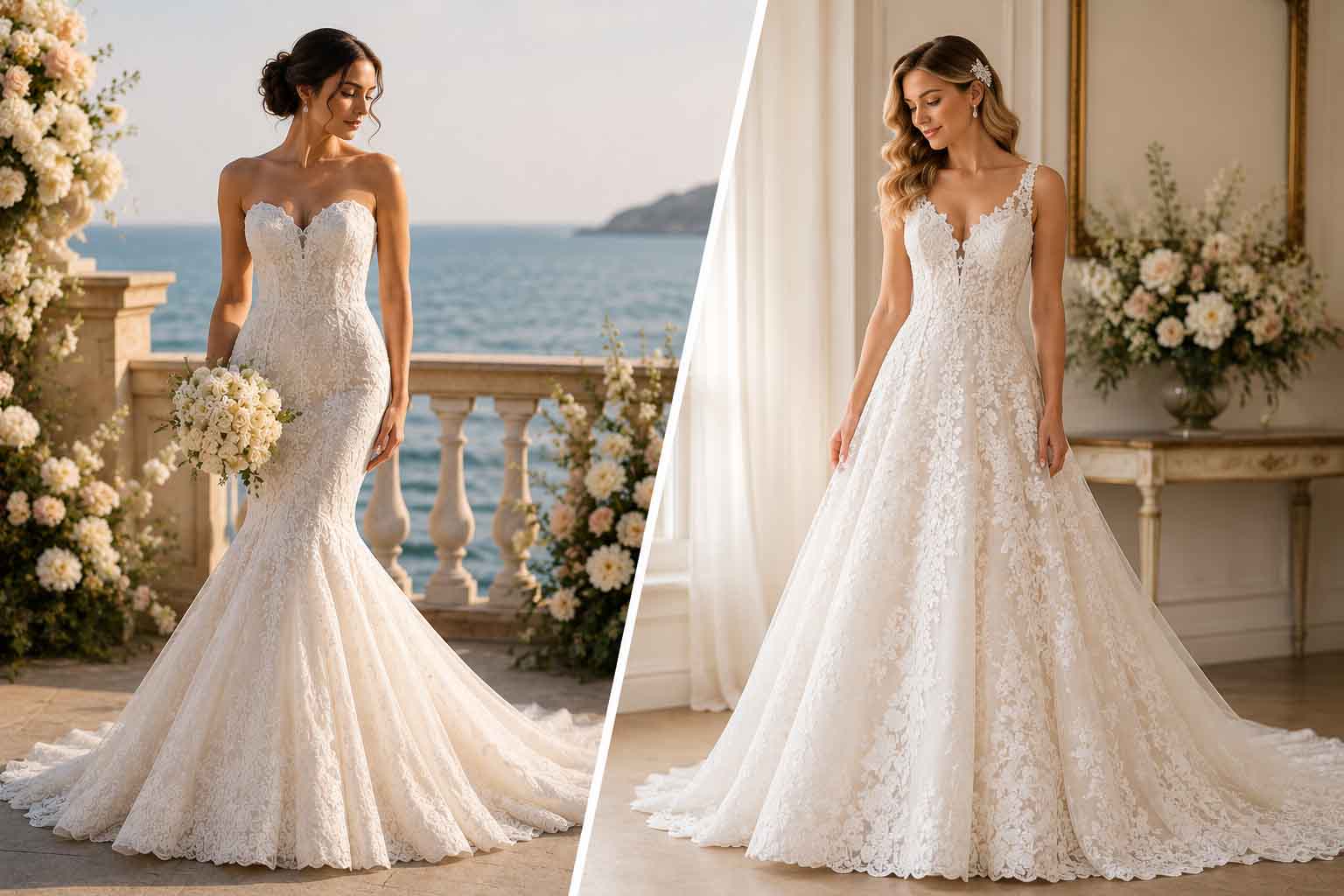
An A-line silhouette is also worth trying if you like an expansive skirt but want a different degree of fullness. Let the fitting determine your preference.
Browse our ball gown wedding dresses to begin comparing shapes.
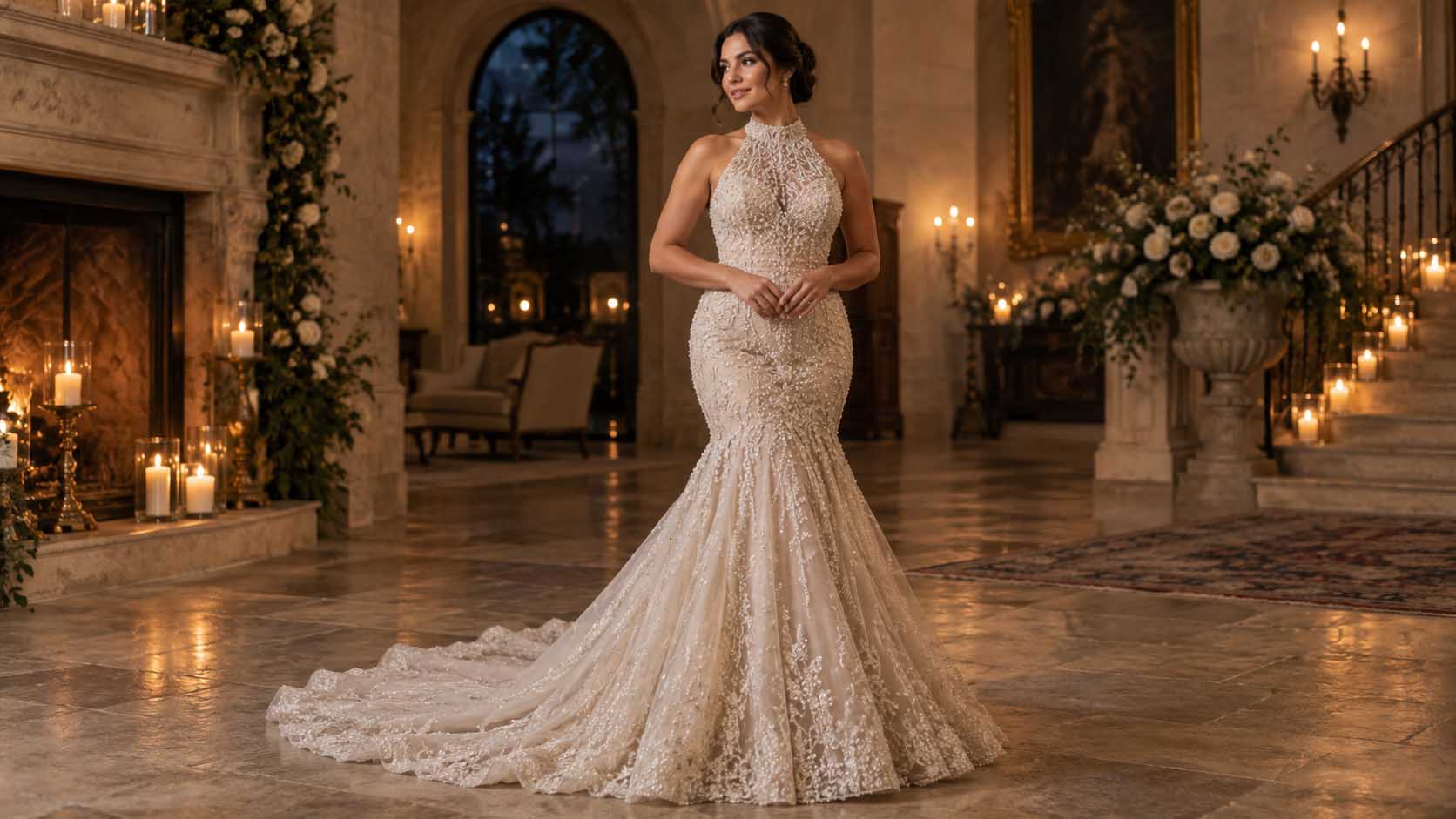
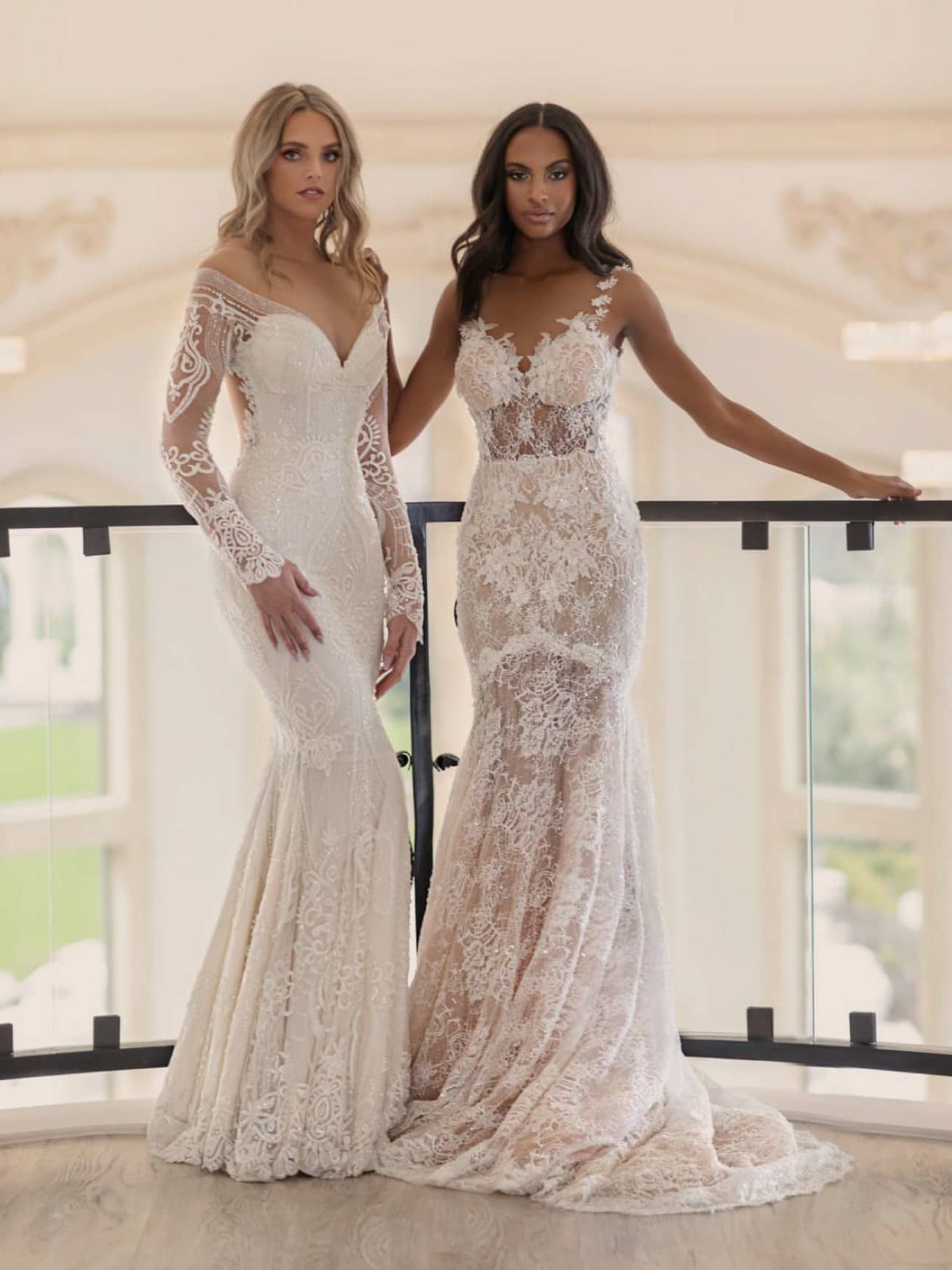
5. Mermaid and Fit-and-Flare Dresses Offer Defined Alternatives
Vogue’s Barcelona bridal report identifies updated mermaid silhouettes among the 2027 directions.
For brides who prefer a closer silhouette, the important detail is where the skirt begins to open. Compare several fitted shapes rather than relying entirely on category names, which can vary between designers.
During your appointment, take normal steps, turn, and sit. Consider the surfaces at your venue and whether the dress allows your preferred range of movement.
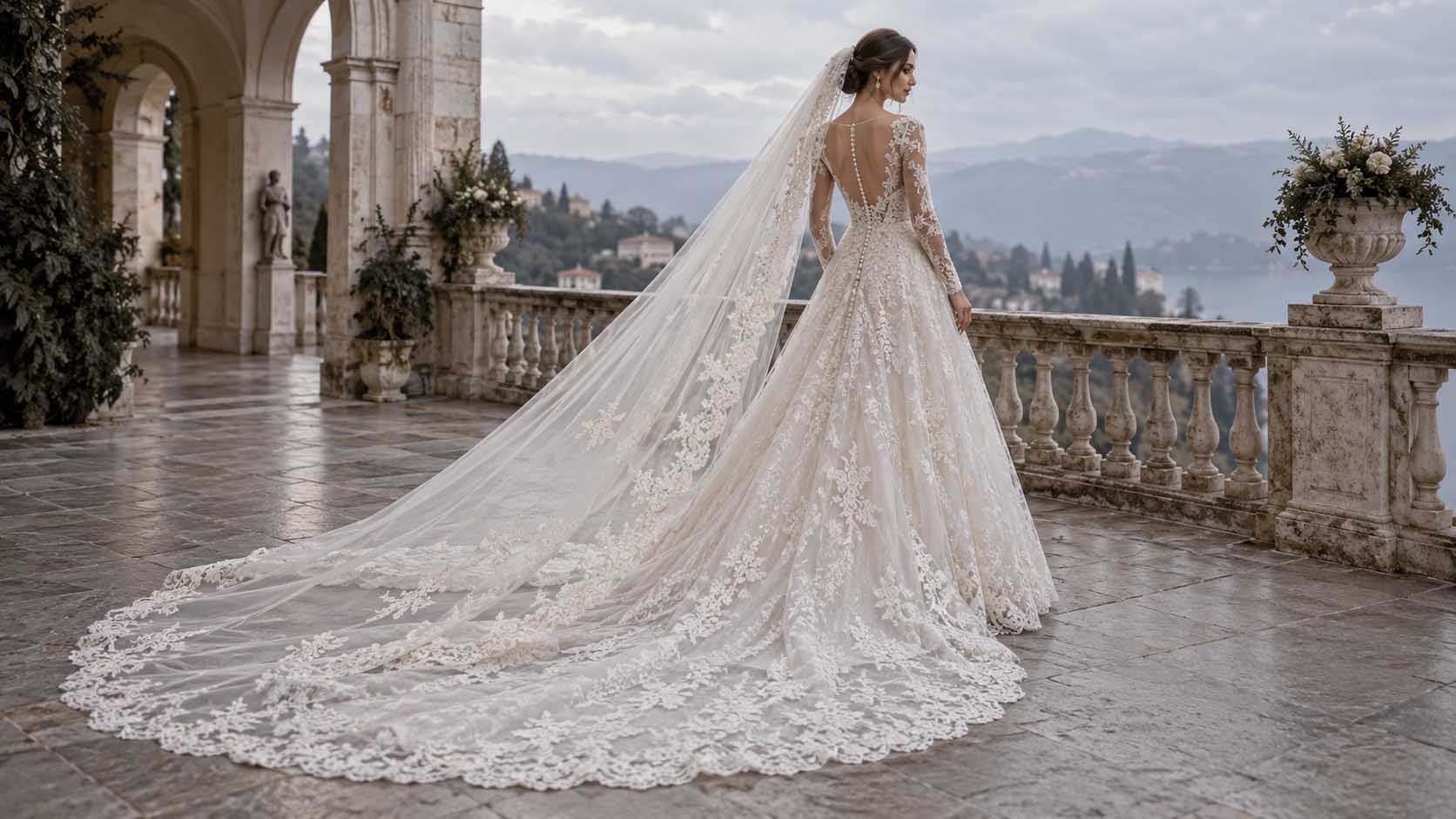
A fitted gown can be styled with a substantial veil for the ceremony, creating contrast between the dress’s outline and the volume around it.
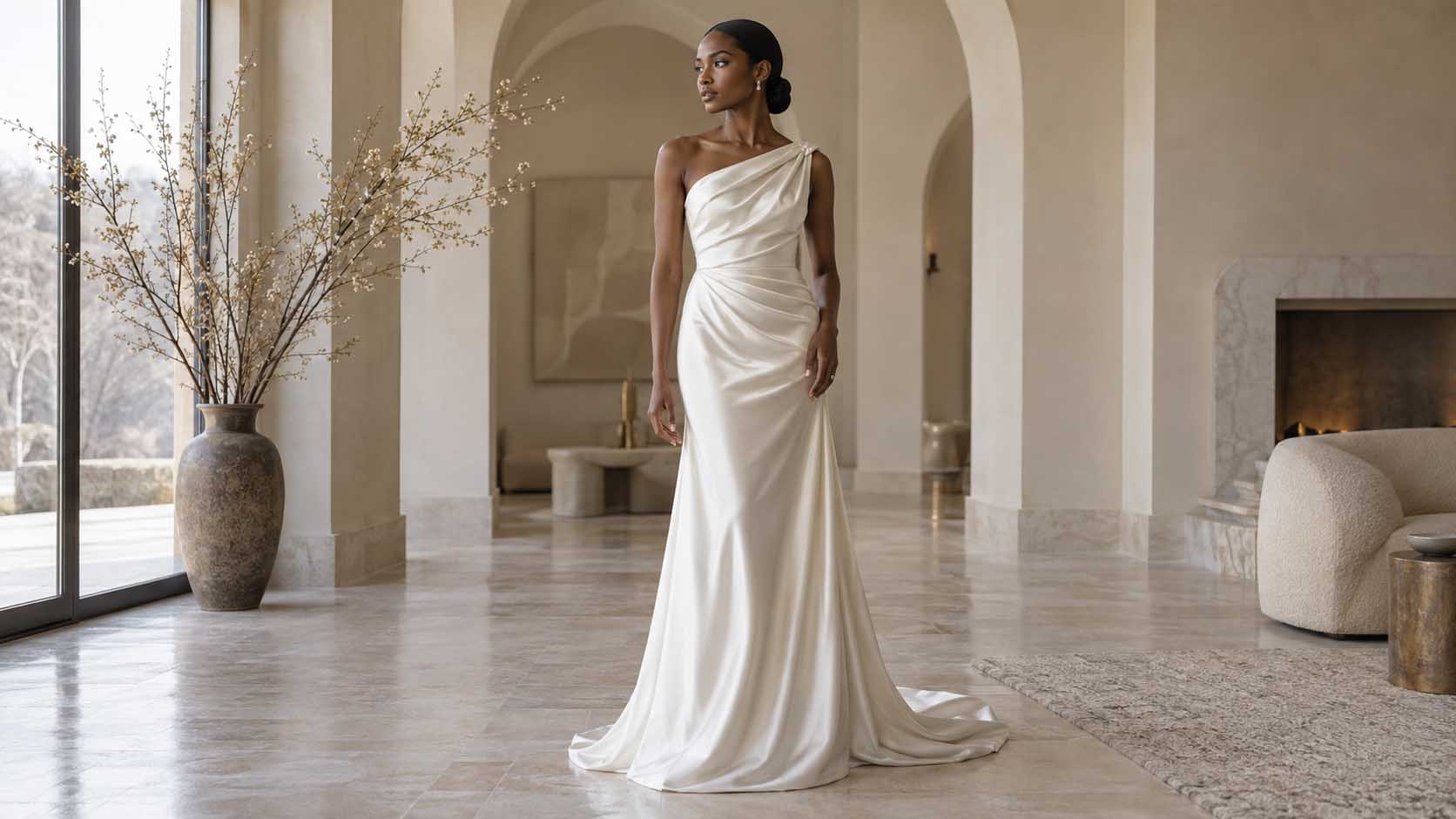
6. Minimalist Wedding Dresses Remain Part of the Conversation
One Fine Day Bridal Market also identifies clean silhouettes and restrained fabrics in its 2027 reporting.
Minimalism is a useful direction if your attention goes first to the shape of a dress rather than its embellishment.
For a winter wedding, try a simple gown with more than one accessory combination. A lace veil, sculptural earrings, or a tailored outer layer can each create a different impression.
Pay particular attention to the fit through the neckline, waist, and hips. Examine how the fabric falls when you stand naturally. A clean dress should be chosen for the way it looks and feels on you, including in motion.
7. Draping and Asymmetry Introduce Movement
Vogue’s New York report highlights draping and asymmetrical details.
These are useful options when you want visual interest without covering the gown in embellishment.
Try a dress with gathered fabric at the waist, an angled neckline, or a one-sided detail. Notice whether your eye is drawn to the feature you want to emphasize.
For winter styling, keep the outer layer in the fitting conversation. A wrap or jacket should sit comfortably over the gown without repeatedly displacing its folds.
Photograph the dress from both sides, with the boutique’s permission. An asymmetrical design may read differently depending on the angle.
8. Strapless Necklines Become More Distinctive
The Knot’s 2027 review highlights refreshed strapless shapes, including cat-eye, scalloped, and floral-edged interpretations.
If you already know you like strapless dresses, compare the upper edge carefully. A small change in the neckline can noticeably change how the gown frames your face and shoulders.
Try the dress with your intended veil placement and approximate hairstyle. The neckline belongs to the complete portrait, not just the bodice.
For winter celebrations, consider a separate layer for outdoor portions of the day. Your gown can remain strapless even when the full outfit includes additional coverage.
9. Halters and High-Neck Layers Broaden the Options
Vogue’s Spring 2027 report identifies halter necklines, while Jenny Yoo’s overview includes high-neck toppers.
These options are worth trying if you want attention directed toward the face and upper silhouette.
Evaluate the neckline while looking forward, turning your head, and sitting. Comfort around the neck is as important as the standing appearance.
If you choose a high-neck layer over another neckline, view both versions during the appointment. Each should feel intentional, especially if you plan to remove the topper before the reception.
10. Statement Sleeves and Removable Layers Add Versatility
One Fine Day’s market recap discusses lace sleeves, overlays, and wraps that can change the bridal look.
For winter weddings, this is an opportunity to plan the ceremony and reception outfits together.
Consider whether you want fitted sleeves, fuller shapes, or a separate topper. Check your ability to lift your arms and embrace someone while wearing the complete combination.
Removable does not always mean quick or effortless. Ask how the pieces attach, who will help remove them, and whether the attachment points remain visible afterward.
Sheer lace provides coverage but limited warmth. If you expect extended time outdoors, discuss an additional layer suitable for the conditions.
11. Peplums and Hip Detail Create New Silhouettes
Barcelona Bridal Fashion Week identifies increased attention to the hip through peplums and elongated proportions.
A peplum adds a flared section around the waist or hip. During fittings, compare how its placement changes the outline of the gown.
Try this direction if you are drawn to a defined shape but want something different from a conventional full skirt. Keep your accessories simple initially so you can assess the silhouette clearly.
For practical comfort, sit in the gown and check how the additional fabric settles against the chair and your arms.
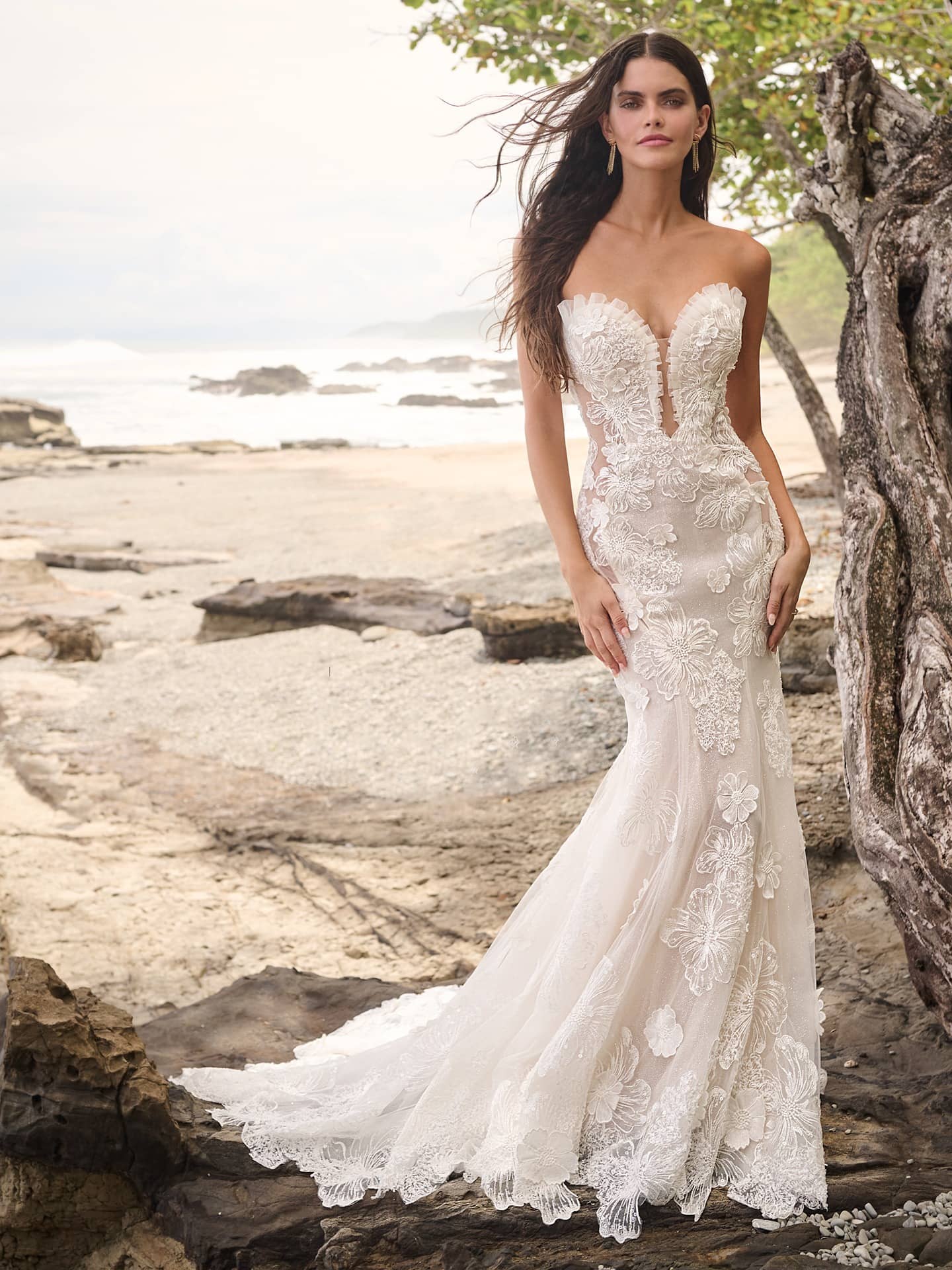
12. Rosettes, Raised Florals, and Ruffles Add Dimension
Jenny Yoo’s trend overview includes rosettes, three-dimensional florals, and vintage-inspired details, while One Fine Day highlights ruffles and bows.
For your own gown, decide where you want that dimension concentrated. A single feature at the shoulder creates a different impression from texture distributed across the entire skirt.
View raised details beneath the veil you intend to wear. Check that the veil falls as you want and does not repeatedly catch on the embellishment.
For a Southern California garden or estate celebration, this direction can be interpreted through botanical detail without requiring a fully floral gown.
13. Pearls, Crystals, and Beading Bring Evening Detail
Vogue’s Barcelona report documents pearls, crystals, sequins, and other sparkling embellishments.
Our winter styling recommendation is to evaluate sparkle in lighting that approximates your reception, where possible.
Compare a fully embellished gown with one that concentrates detail at the neckline or bodice. Consider the dress’s weight as well as its appearance.
Run your arms naturally alongside the gown and assess how the surface feels. If you plan to wear a wrap, check how the materials interact.
Choose the amount of shine you enjoy, then build the jewelry around it.
14. Soft Color and Colored Embroidery Expand the Palette
Barcelona Bridal Fashion Week’s official report includes muted colors, painted florals, and colored embroidery.
If you are considering an alternative to white or ivory, start by comparing actual swatches against your skin.
Look at the color in daylight and indoor lighting before deciding. A subtle tone can appear different depending on its surroundings and the layers beneath it.
You can also introduce color through embroidery, an accessory, or a reception outfit. There is no need to commit to a fully colored gown to explore the idea.
Confirm the exact shade available for the dress you order rather than assuming it will match a photograph.
15. Mixed Fabrics and Sheer Layers Create Depth
Jenny Yoo identifies mixed fabric combinations, while Barcelona Bridal Fashion Week describes layered, translucent constructions.
For a bride who likes more than one texture, this direction offers a way to combine them in a single gown.
Assess the transition between bodice and skirt. Does it feel deliberate? Do the colors work together? Is the amount of transparency comfortable for you?
Ask whether lining changes are available and how they would alter the appearance. Adding coverage may change the contrast of the lace or the visibility of internal details.
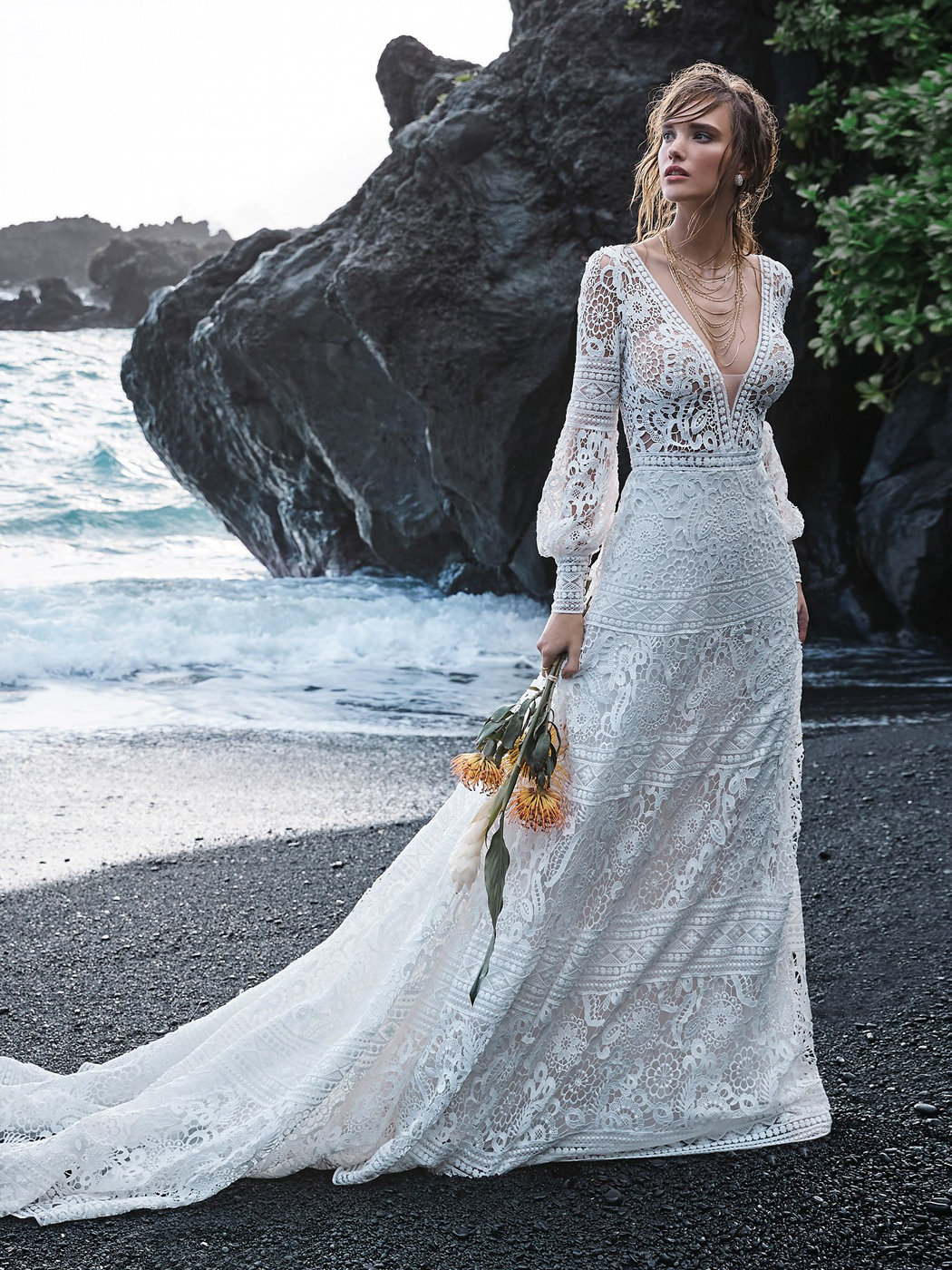
16. Refined Bohemian Styling Offers a Softer Direction
Barcelona Bridal Fashion Week describes an updated bohemian approach with fluid silhouettes and selective feather details.
For winter, our recommendation is to begin with the movement you want from the gown. Try softer dresses and notice how the skirt follows your stride.
If you are considering feather-like or delicate decorative elements, ask how to transport and care for them. Confirm the material rather than assuming a particular origin.
This direction can work as a starting point for an intimate coastal wedding, especially when the complete outfit includes practical footwear and a considered outer layer.
17. Lace Veils Share Attention With Bolder Accessories
The Knot’s 2027 report includes mantilla veils, scarves, gloves, and capelets among the accessory directions.
Try accessories while wearing the dress. A veil viewed on its own cannot show you how its border interacts with the train, neckline, or back.
For a long train, compare the veil’s length and lace placement from behind. For a detailed neckline, consider whether you prefer less around the neck and more emphasis through earrings or a headpiece.
A long train remains a styling option to evaluate according to your ceremony and venue. Discuss the bustle and handling arrangements before the final fitting.
18. Midis, Minis, and Tailored Layers Broaden the Bridal Wardrobe
The Knot highlights bridal midis, Jenny Yoo includes modern minis, and Barcelona Bridal Fashion Week reports blazers styled over gowns.
A shorter dress can be your main wedding outfit or part of a larger wardrobe. Consider it for a civil ceremony, welcome event, or reception if it reflects your taste.
For winter styling, try the outfit with its shoes and outer layer. The hemline makes footwear more prominent, so those decisions should happen together.
If you want two looks, compare the total cost of a second dress with a versatile first gown and removable accessories. Include alterations in both calculations.
Which Fabrics Should You Consider for a Winter Wedding Dress?
The best fabric depends on your desired silhouette, lining, venue, and comfort. A material’s name alone does not establish warmth or quality.
Use this as a fitting checklist:
| Fabric or finish | What to assess |
|---|---|
| Satin | Sheen, drape, lining, and how it looks in photographs |
| Mikado | Structure, weight, and comfort through the bodice |
| Crepe | Movement, fit, and the effect of undergarments |
| Lace | Pattern, backing, texture, and coverage |
| Tulle or organza | Layering, volume, and ease of handling |
| Heavily embellished fabric | Weight, surface comfort, and accessory compatibility |
Silk is a fiber; satin is a weave. Ask about the actual composition of the gown rather than assuming that a glossy finish means silk.
For warmth, consider the full outfit and how long you will be outdoors. A sheer long sleeve may provide less protection than a separate lined layer.
How to Choose a Winter Wedding Dress in San Diego and Southern California
Start with your schedule and surroundings. A ballroom ceremony, garden reception, and coastal portrait session can place different demands on the same gown.
For La Jolla, Del Mar, or Coronado celebrations, discuss how you will manage a veil and any outdoor transitions. For Carlsbad, Escondido, or estate settings elsewhere in Southern California, think about paths, steps, grass, and the distance between ceremony and reception spaces.
For an indoor San Diego wedding, assess sitting, dancing, and moving between tables. The dress should remain comfortable after the entrance.
Bring the following to your appointment:
- Your wedding date and venue.
- A few reference images showing different silhouettes.
- The details you consider essential.
- Your preferred level of coverage.
- A total budget that includes alterations and accessories.
- Any travel or scheduling constraints.
Brides visiting from Chula Vista, North County, or Orange County should confirm relevant samples before traveling to the San Diego boutique.
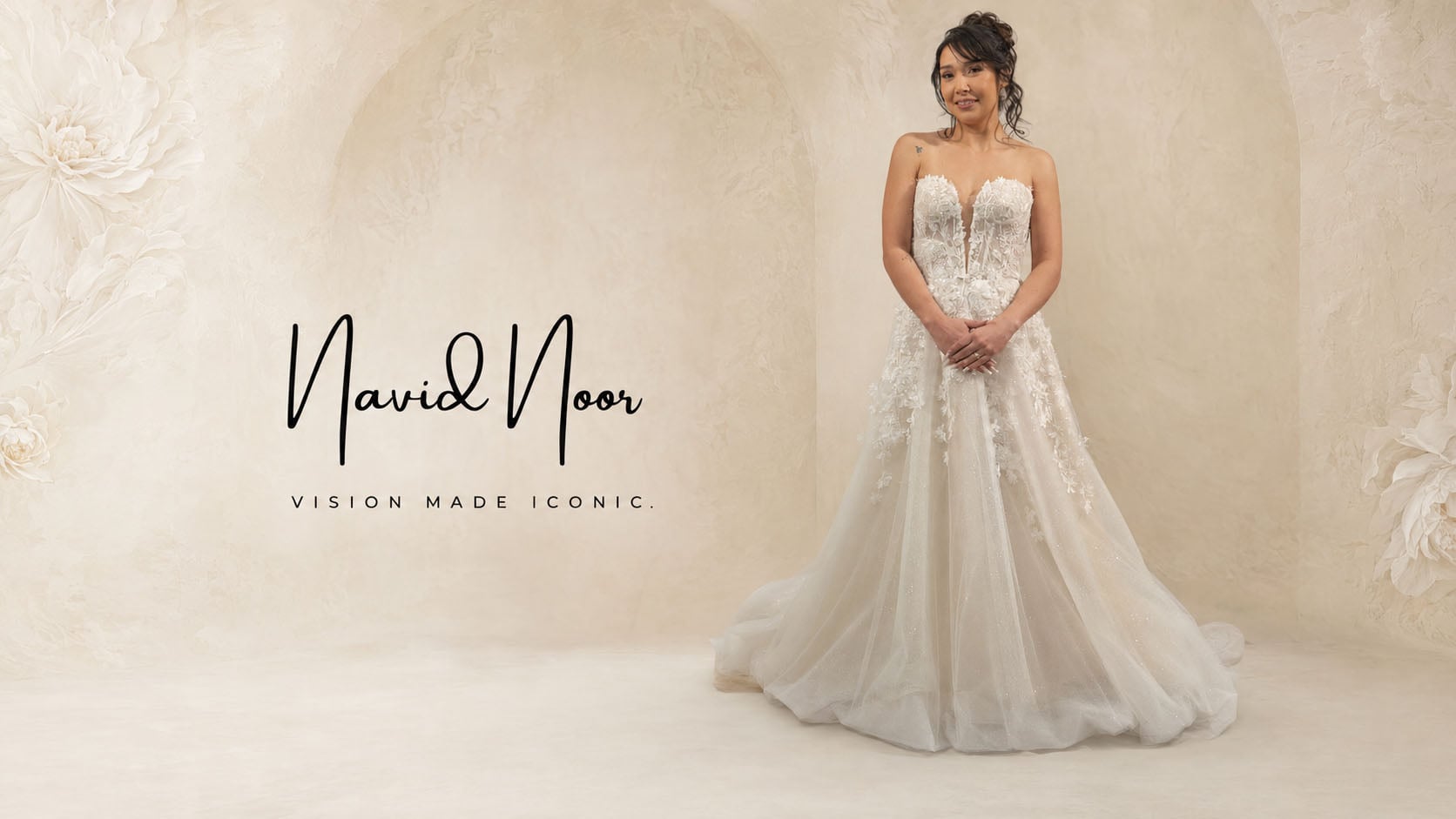
Explore Designer Wedding Dresses and Navid Noor Couture
Bridal & Tuxedo Galleria’s collections include a range of silhouettes and design approaches. Our website features designers including Maggie Sottero, Sottero & Midgley, Morilee, Rebecca Ingram, Casablanca, and others, alongside Navid Noor couture.
Your appointment can begin with comparison: a clean gown against a lace design, a fitted silhouette against a ball gown, or a natural waist against a longer bodice.
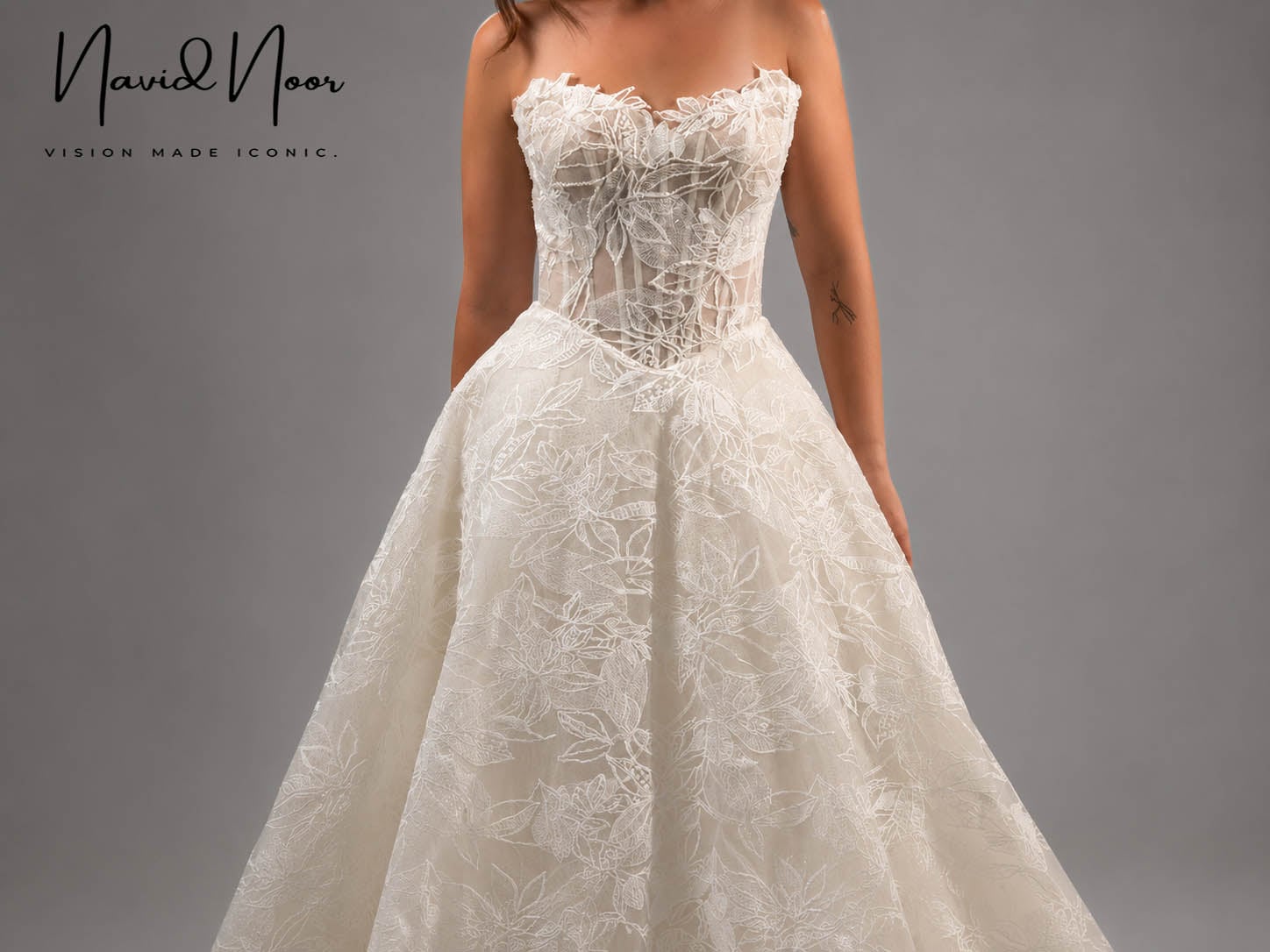
For brides interested in a more individual design discussion, Navid Noor couture offers another route to explore. French-inspired elegance, botanical lace, classical proportions, basque waists, special sleeves, and expressive trains can serve as starting points for that conversation.
Explore custom wedding dresses in San Diego to learn about this approach. Specific materials and customization possibilities depend on the design and timeline.
The runway designers mentioned as editorial sources are inspiration references, not a statement that every cited collection is stocked at BTG. Confirm your preferred gown or sample when booking.
When Should You Shop for a Winter 2027 Wedding Dress?
Begin by confirming your exact wedding date with the boutique. Collection labels do not establish when a particular gown will arrive or whether it can be ordered for your event.
Ask about production, delivery, fittings, accessories, and any proposed customization before committing.
If your wedding is closer, request date-specific options rather than assuming a standard order will fit your schedule. Our guide to ordering a designer wedding dress six months before your wedding explains possible routes to discuss.
Our bridal boutique and alteration services can help you assess the fit work appropriate for your gown.
Frequently Asked Questions
Do I need long sleeves for a winter wedding?
No. Choose your gown around your comfort and venue, then plan any additional coverage for outdoor portions of the day. Long sleeves are one option, not a requirement.
Are simple wedding dresses still appropriate for 2027?
Yes. Minimalism remains part of published 2027 bridal reporting. A clean gown can be styled simply or paired with more expressive accessories.
What is the difference between a basque waist and a dropped waist?
A basque waist typically has a shaped dip at the center front. A dropped waist sits below the natural waist and does not necessarily have that point.
Can I combine several trends in one wedding dress?
Yes. Start with the silhouette, then add details that support it. During fittings, compare the complete look so the neckline, fabric, sleeves, and accessories work together.
Can detachable sleeves be added to any gown?
Not necessarily. The bodice, attachment points, available materials, and alteration schedule determine what is feasible. Have the specific gown assessed.
Should I choose a ball gown or a fitted wedding dress?
Try both. Compare comfort, movement, skirt volume, and the overall impression you want. Neither silhouette is reserved for a particular body type or venue.
Do I need a second dress for the reception?
No. A bustle, removable layer, or accessory change may provide the transition you want. Compare those options with a second outfit before deciding.
Where can I shop for winter wedding dresses in San Diego?
Bridal & Tuxedo Galleria offers designer gown appointments and Navid Noor couture discussions at its San Diego boutique. Share your date and preferred styles when booking so availability can be checked.
Find the Winter Wedding Dress That Feels Like You
A trend can introduce you to a neckline, texture, or silhouette you had not considered. The final choice should come from how the dress feels on you and how it fits the celebration you are planning.
At Bridal & Tuxedo Galleria, we invite you to compare romantic lace, modern minimalism, sculpted silhouettes, and couture possibilities with your full wedding day in mind.
Book your San Diego bridal appointment and share your wedding date, venue, budget, and favorite details. We’ll help you explore the next step toward your winter bridal look.

Author bio :
Kayla brings more than 10 years of hands-on experience in bridal fashion and boutique styling, specializing in personalized bridal consultations and luxury client experiences. As the manager of the San Diego location of Bridal and Tuxedo Galleria, she is known for her keen eye for detail, deep understanding of couture wedding dress design, and ability to guide brides toward a gown that reflects their unique vision and wedding aesthetic. Her approach blends fashion expertise with genuine care, ensuring every bride feels confident, understood, and unforgettable on her wedding day
Call Now

Your Personalized Wedding Dress Shopping Experience in San Diego With over 30 years of styling expertise, our dedicated team is passionate about helping you find the perfect wedding dress and tuxedo.


Leave a Reply