
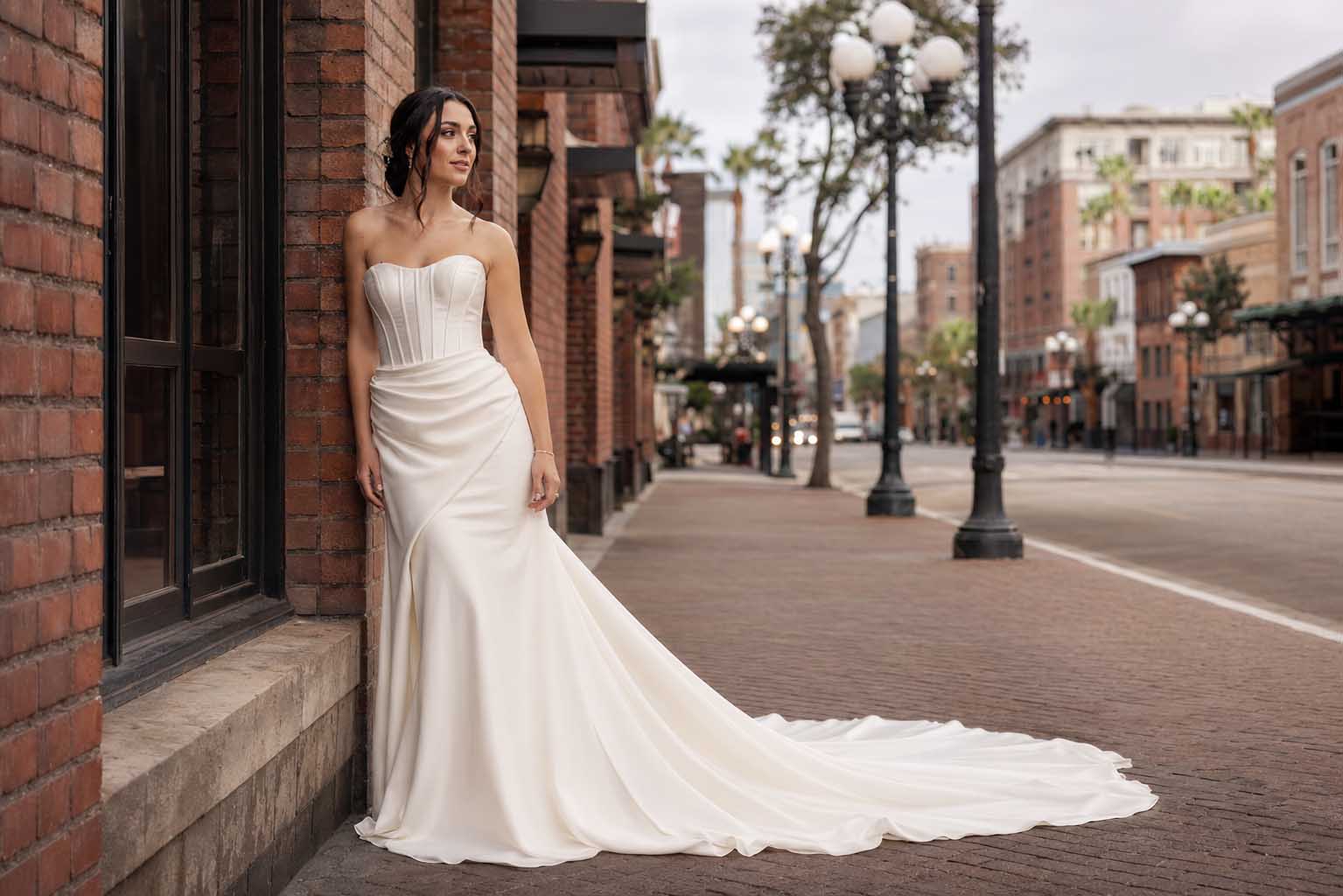
Minimal Wedding Dresses: The Complete 2026 Guide to Silhouettes, Fabrics and Fit
Minimal bridal fashion is not about settling for less. The most compelling minimal wedding dresses replace heavy decoration with clean lines, intentional proportions, refined fabrics and precise fit. When lace, appliqués and beading are reduced, every seam, fold and curve becomes more important.
This is why a minimalist gown is not necessarily plain, casual or inexpensive. A sculptural Mikado ball gown can feel commanding. A fluid crepe sheath can look modern and sophisticated. A bias-cut satin slip dress may appear effortless while requiring highly controlled construction.
For brides seeking a timeless yet individual look, minimal bridal design offers remarkable creative freedom. This guide explains how to compare silhouettes, choose the right fabric, evaluate construction and prepare for a successful bridal appointment in San Diego.
What defines a minimal wedding dress?
A minimal wedding dress uses clean lines, intentional silhouettes, refined fabrics, limited ornamentation, precise construction and exceptional fit as its primary design language. Its impact may come from proportion, drape, volume, neckline or seam placement instead of decorative density.
Minimal does not necessarily mean casual, affordable or simple to construct. Reducing embellishment often makes the quality of the fabric, structure and tailoring more visible.
Why are minimal wedding dresses so appealing in 2026?
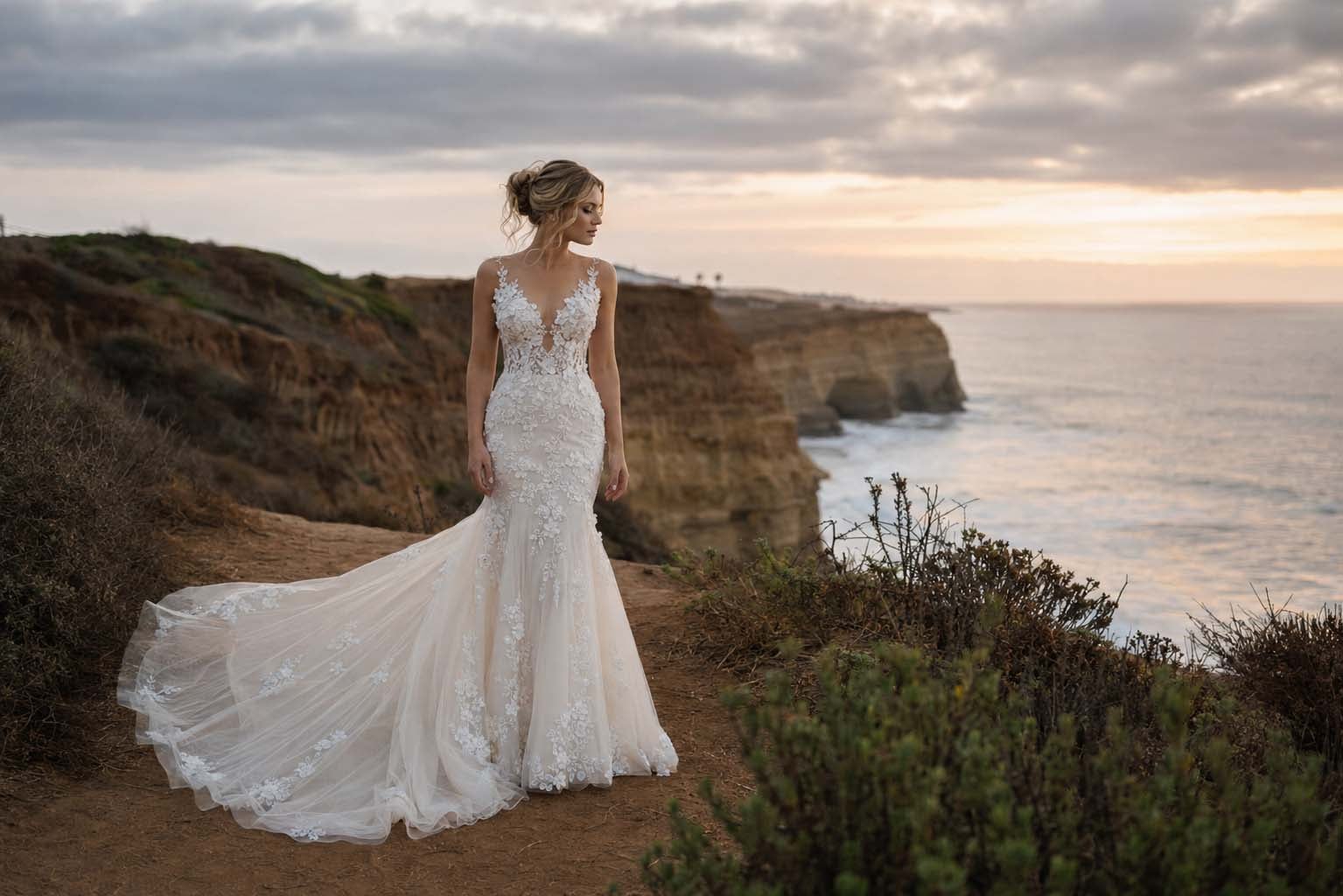
Minimal wedding dresses appeal to brides who want every element of their gown to feel deliberate. Their visual clarity allows the bride, the silhouette and the movement of the fabric to become the focus.
Modern architecture and contemporary fashion offer helpful ways to understand this aesthetic. A controlled curve, sharp fold or carefully balanced volume can create as much drama as elaborate embellishment. An asymmetric neckline, structured bodice or extended train may become the gown’s defining feature while the rest of the design remains beautifully restrained.
Minimalist gowns are also versatile. A refined column dress can feel relaxed at a coastal wedding, editorial in a modern city venue or formal when styled with a cathedral veil and sculptural jewelry.
Most importantly, minimalism is not one specific personality. A minimal gown can be soft or architectural, relaxed or structured, intimate or grand. The common element is intention: every visible detail serves a purpose.
Minimal wedding dresses VS. Simple wedding dresses
The terms “minimal” and “Simple” are often used interchangeably, but they can describe different ideas. Minimal design is an intentional aesthetic created through restraint, proportion and composition. A plain wedding dress may prioritize ease, fewer construction elements or an uncomplicated appearance.
Neither option is automatically more sophisticated, luxurious or flattering. The right choice depends on the bride’s preferences, wedding setting and desired experience.
| Design element | Minimal wedding dress | Simple wedding dress | What to consider |
|---|---|---|---|
| Design intention | Restraint is used as a deliberate design language | May prioritize ease or an uncomplicated appearance | Decide whether you want architectural intention, practical simplicity or both |
| Construction | May include corsetry, boning and complex internal support | May use fewer structural elements, although this varies | Ask what supports the gown beneath the surface |
| Fabric | Often relies on weight, drape, texture or sheen for impact | Can use any appropriate bridal fabric | View the material in motion and different lighting |
| Embellishment | Limited and carefully positioned | Often limited but not always design-led | Consider whether each detail strengthens the gown |
| Silhouette | Can range from a slip dress to a dramatic ball gown | Often associated with relaxed or uncomplicated shapes | Try several silhouettes before deciding |
| Tailoring | Precision is highly visible | Requirements depend on the construction | Include alterations in your timeline and budget |
| Visual effect | Polished, controlled and intentional | Understated, effortless or practical | Choose the emotional effect that feels personal |
| Styling | Can remain restrained or include one strong statement | Often paired with unfussy accessories | Choose accessories after selecting the gown |
Minimal Wedding Dress vs. Plain Wedding Dress
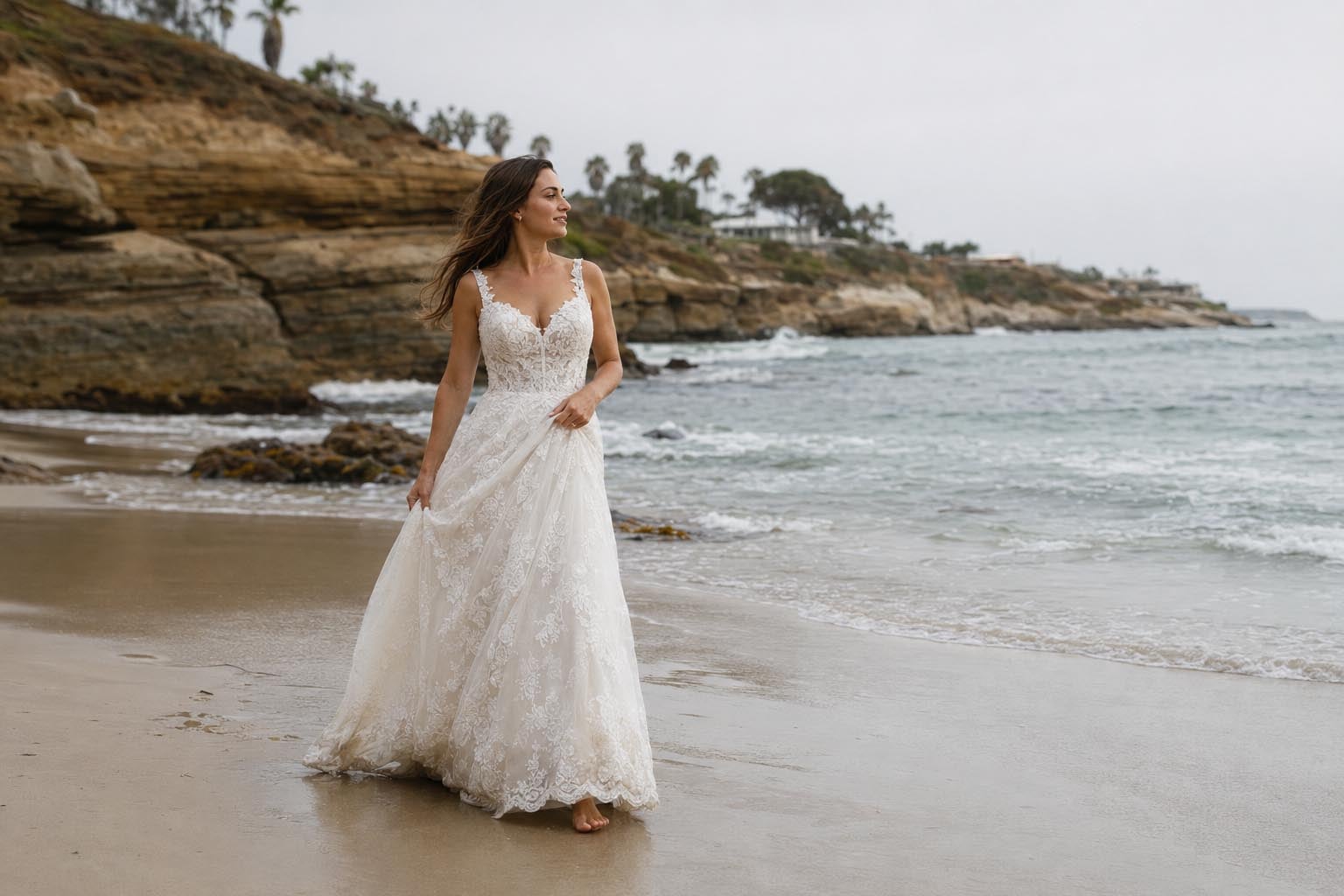
A minimal wedding dress is intentionally designed around clean lines, refined fabric, balanced proportions and precise construction, while a plain wedding dress generally has few decorative details without necessarily following a specific design philosophy. Minimal gowns may feature architectural seams, sculptural necklines, structured corsetry or carefully controlled draping, making them visually sophisticated despite their restrained appearance. A plain gown may offer a simpler, more understated look focused on ease and practicality. Neither style is inherently better; the right choice depends on the bride’s personal taste, desired level of structure, wedding setting and comfort.
The best silhouettes for minimal wedding dresses
The best silhouette depends on your proportions, comfort, movement preferences, venue and desired degree of structure. No silhouette is universally right for one body type.
Reviewing a wedding dress silhouette guide can provide a useful starting point, but trying the shapes in person is essential.
Minimal A-line wedding dresses
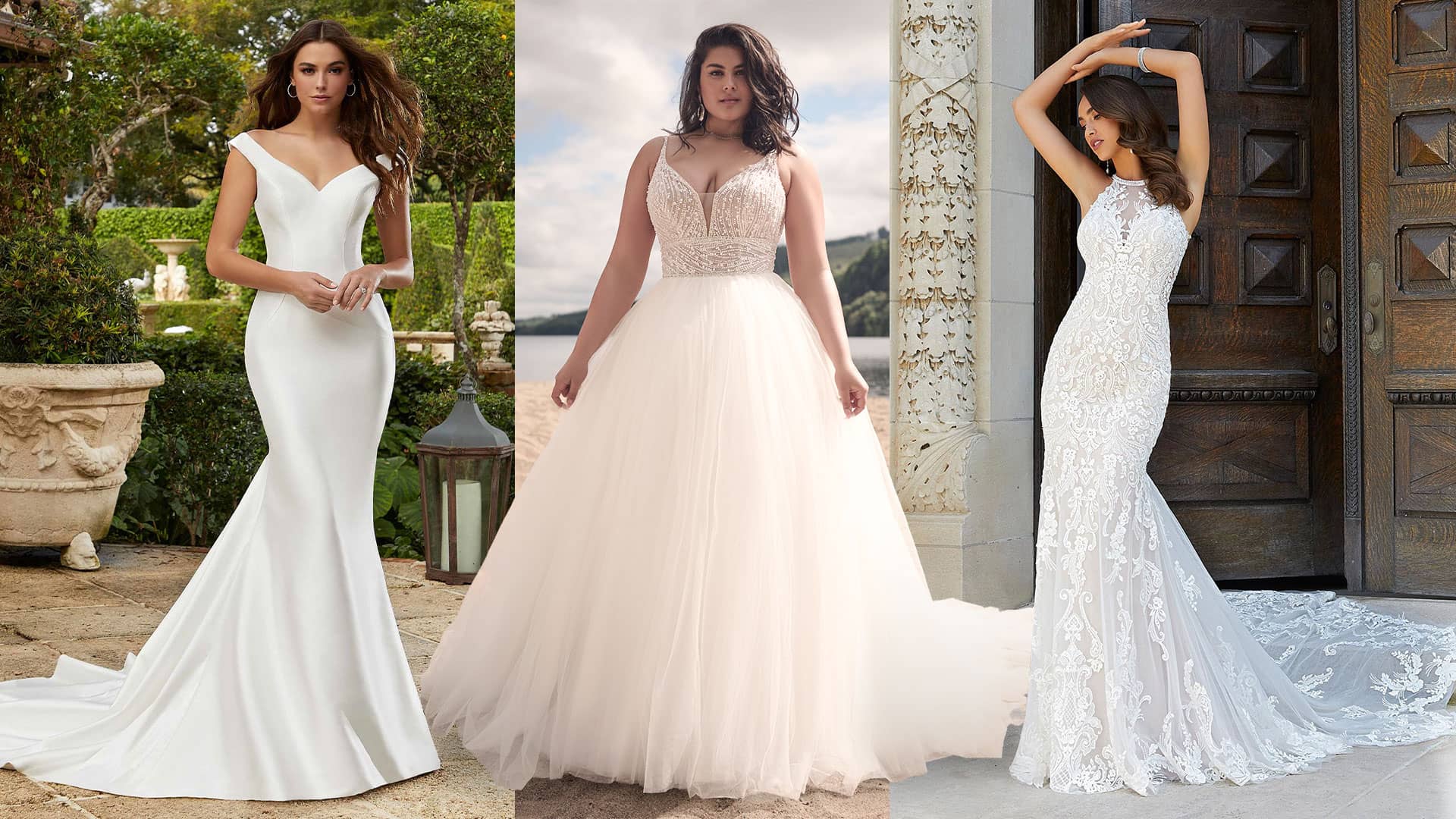
An A-line gown is fitted through the bodice and gradually widens toward the hem. In minimalist design, waist placement, skirt width and fabric determine whether the effect feels soft or architectural.
Crepe and chiffon encourage fluid movement, while Mikado and heavier satin create structured, sculptural lines. A-line gowns can work across many wedding settings, but fabric weight, train length and skirt layers should still be considered in relation to the venue.
Minimal sheath and column wedding dresses
Sheath and column gowns create long, close-to-the-body lines. Because these designs are visually clean, the neckline, waist reference, hip ease and hem need to work together precisely.
Fluid fabrics can skim the body, while structured crepe or satin creates a more controlled outline. Ask about the gown’s lining and internal support, and test sitting, walking and turning before making a decision.
Minimal fit-and-flare wedding dresses
A fit-and-flare gown follows the torso and hips before gradually widening into the skirt. On a clean gown, long seams can create definition without lace or beadwork.
The point where the skirt begins to flare affects both visual balance and movement. Precise fitting through the waist, hips and upper legs matters, but the dress should still allow comfortable breathing, sitting and walking.
Minimal mermaid wedding dresses
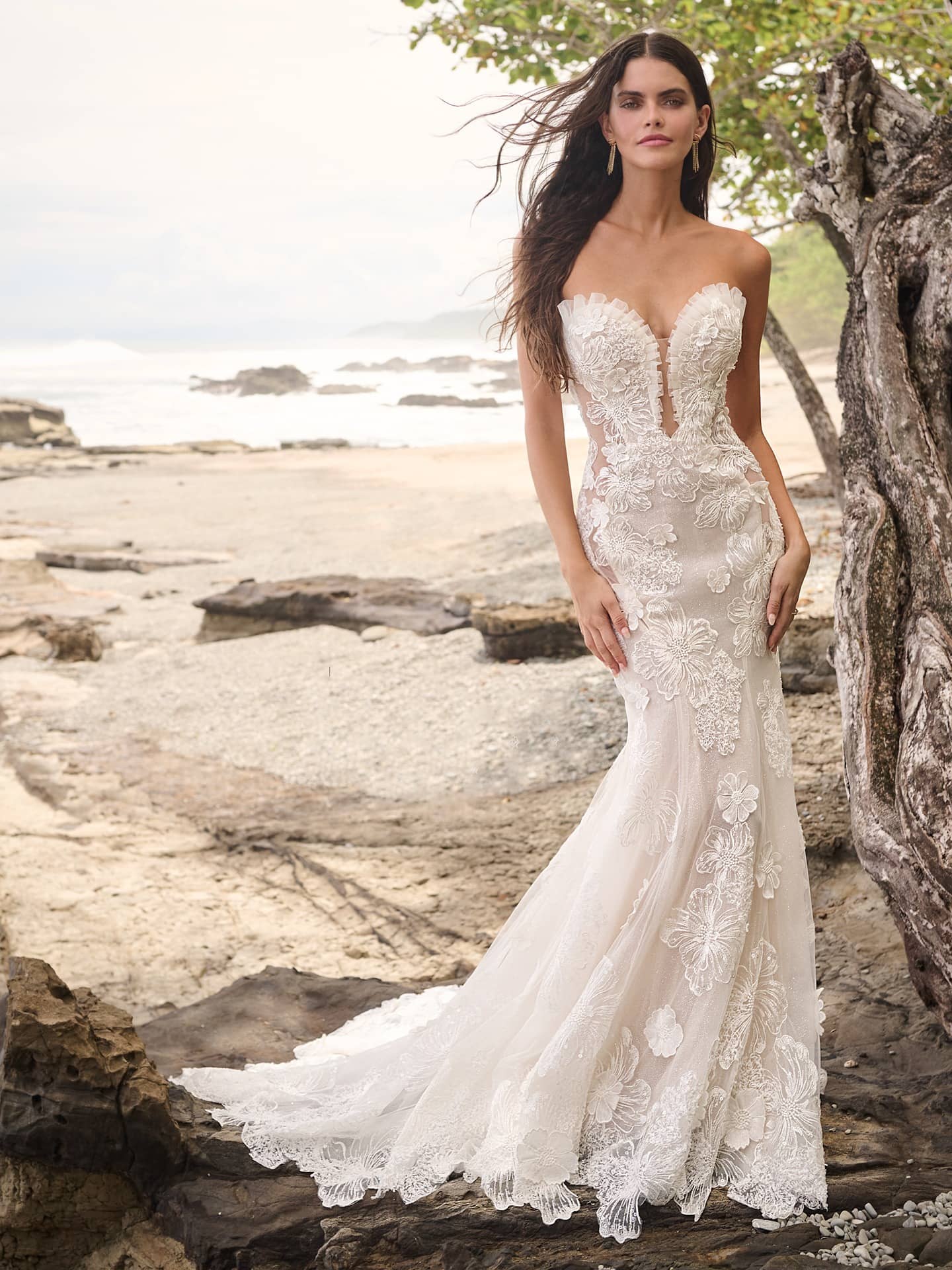
A mermaid gown remains fitted through the body and releases lower on the leg, creating a dramatic sculptural silhouette. Structured crepe, satin and Mikado can emphasize its architectural quality.
Small changes in seam placement or circumference can affect shape and mobility. Test normal steps, turns, sitting and dancing before selecting this silhouette.
Minimal ball gown wedding dresses
A ball gown can be minimal while still creating significant drama. Instead of relying on heavy embellishment, the design may use architectural seams, controlled pleats, a sculptural neckline or an extended train.
Mikado and structured satin are especially effective because they maintain shape. Consider transportation, aisle width, bustle options and how the skirt’s weight feels after extended wear.
Minimal slip wedding dresses
A slip-inspired gown typically uses fluid lines and may feature a bias cut, which allows the fabric to drape naturally around the body.
Although the result appears effortless, slip gowns can be technically demanding. Small fit concerns, lining choices and undergarment seams may be visible. Delicate satin surfaces also require careful handling. Evaluate the dress in natural light and movement, not only in photographs.
How to choose the right fabric for a minimal wedding dress
Fabric becomes a major design element when lace, beading and appliqués are reduced. Its weight controls the silhouette, its drape affects movement and its surface determines how the gown responds to light.
Explore Bridal & Tuxedo Galleria’s wedding dress fabric collection for inspiration, but always evaluate the complete gown in person.
Mikado
Mikado has a smooth surface, subtle luster and enough body to support crisp pleats, sculptural skirts and architectural bodices. Because seams remain visible across its clean surface, alignment and professional pressing are important.
Its weight may feel reassuring to one bride and too substantial to another, so try the complete gown rather than judging the fabric from a swatch.
Satin
Satin describes a weave and surface finish rather than one specific fiber or weight. It can range from lightweight and fluid to dense and highly structured.
Its reflective finish photographs beautifully but can reveal tension, pulling or pressing marks. Examine a satin gown from every angle under both natural and indoor lighting.
Crepe
Crepe typically has a matte or softly textured surface. It is often used for body-skimming sheaths, columns and fit-and-flare wedding dresses.
Different crepes vary in thickness and flexibility. Lining and internal support influence whether the fabric falls smoothly or reveals tension. Seam balance and sufficient movement ease are especially important.
Silk
Silk is a fiber—not one individual fabric. Silk satin, silk chiffon and silk organza can differ significantly in weight, texture, structure, sheen and price.
Ask about the complete fabric composition instead of relying on the word “silk” as a full description. Handling and care requirements depend on both the weave and the gown’s construction.
Chiffon
Chiffon is lightweight, sheer and fluid, so it is generally layered over a lining. It creates graceful movement and works well for softer minimal bridal styles.
Because it is delicate and transparent, review its opacity, layer placement and hem behavior carefully. Chiffon can move beautifully at an outdoor ceremony but may react strongly to wind.
Organza
Organza combines translucency with light structure. It can create volume without the visual weight of Mikado or heavy satin, making it appropriate for layered skirts, overskirts and modern architectural effects.
Consider whether the visible layers and transparency support your preferred aesthetic and how the fabric behaves when you walk and sit.
Call Now

Why fit matters more in minimalist bridal design
Clean surfaces make fit issues more visible. Pulling at a side seam, puckering near a zipper, an uneven hem or a neckline that lifts away from the body has little ornamentation to disguise it.
The internal and external gown must work together. Boning, corsetry, cups, closures, lining and seam placement create the foundation beneath the visible silhouette.
Bodice balance is about more than tightness. The bust and waist should sit where the gown was designed to place them. Straps and sleeves should support the neckline without pulling it upward, while the lining should remain smooth without twisting the outer fabric.
Bridal & Tuxedo Galleria offers in-house wedding dress alterations, providing continuity from gown selection through the final fitting. However, not every requested modification is possible. Alteration options depend on the gown’s original construction, seam allowance, fabric and the extent of the proposed change.
How should a minimal wedding dress fit?
A minimal wedding dress should feel secure and supported without restricting normal breathing or movement. Do more than stand in front of the mirror during your appointment.
Use this fitting checklist:
- Stand naturally without holding a posed posture.
- Sit fully and assess the bodice and neckline.
- Walk at your normal pace.
- Turn in both directions and notice whether the lining twists.
- Raise your arms to test comfort while dancing or embracing guests.
- Lean slightly forward to check the neckline’s security.
- Confirm that the waist remains in its intended position.
- Review the dress under indoor and natural lighting.
- Look at photographs from the front, side and back, if permitted.
- Wear shoes with a heel height similar to your wedding shoes.
- Discuss undergarments and sewn-in support with your stylist.
Minimal wedding dresses for different wedding settings
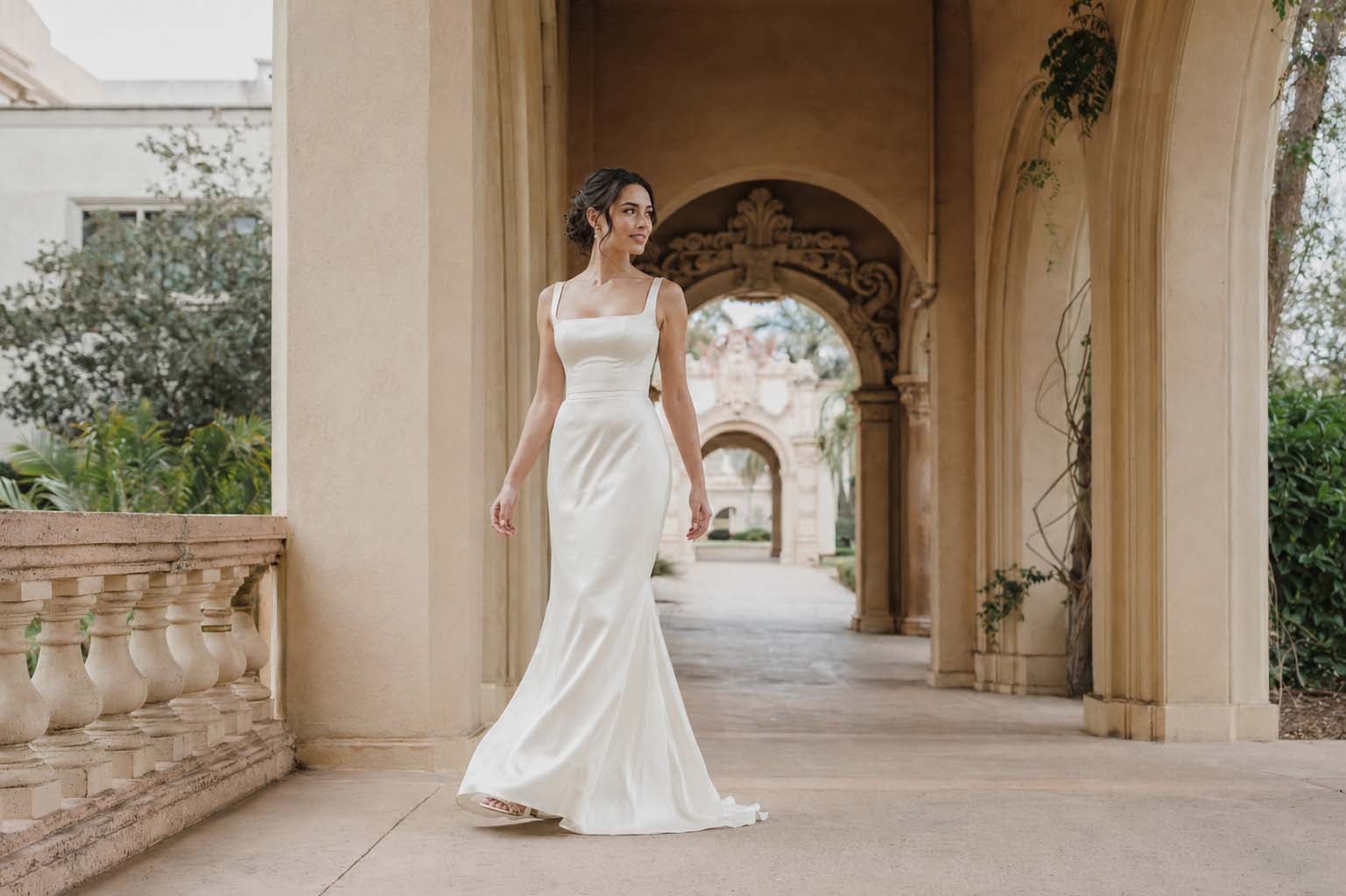
A venue should inform practical decisions without dictating your personal style. Minimalist gowns can work across almost any setting when their fabric, train and structure support the way you plan to move.
San Diego beach weddings
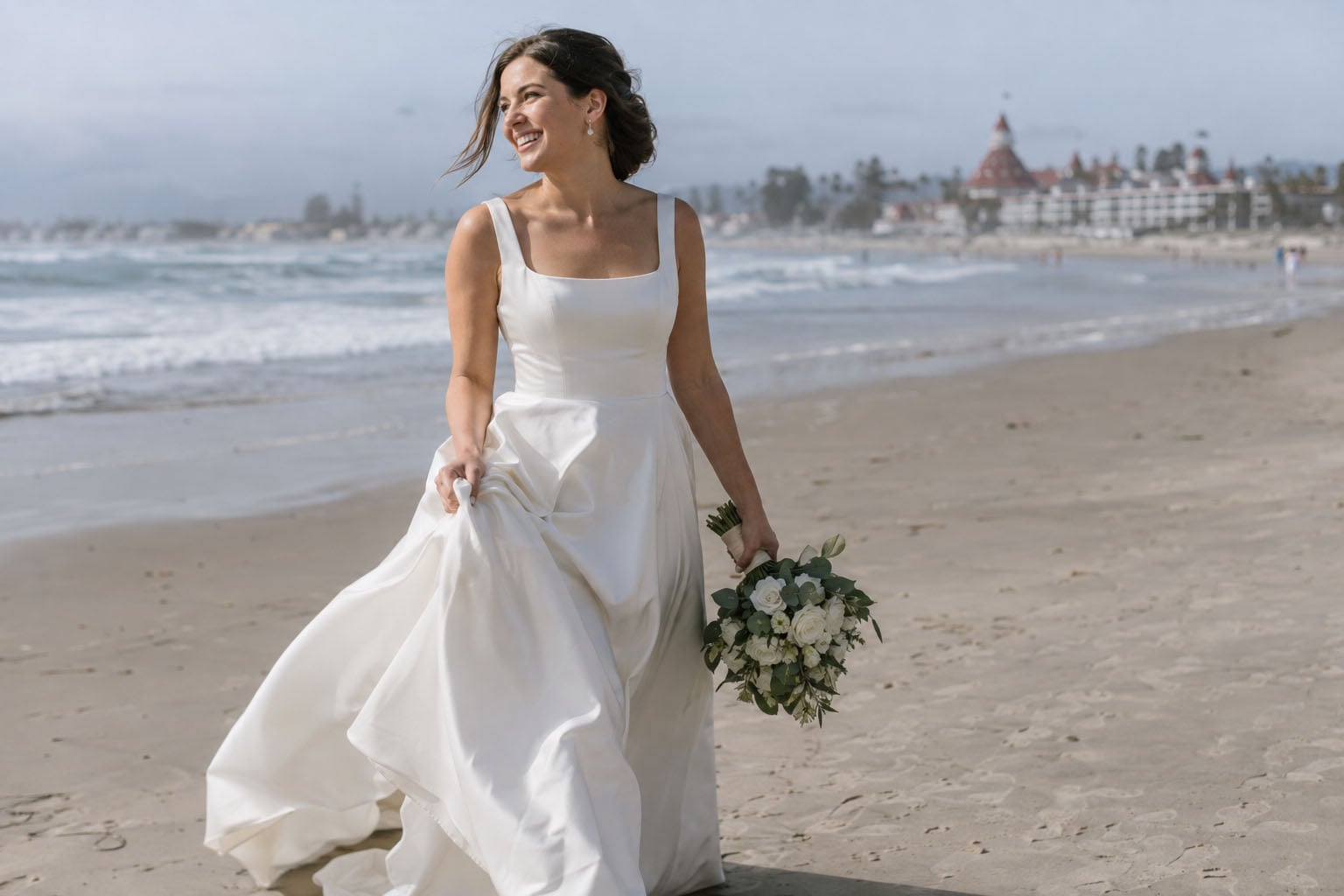
For a San Diego beach wedding, consider wind, sand, temperature and walking distance. Chiffon and lightweight layers create beautiful movement but react strongly to wind. A heavier crepe may offer greater control.
A shorter train or practical bustle can reduce dragging. Stable shoes—or an intentional barefoot plan—can also make movement more comfortable.
Garden and outdoor weddings
Grass, gravel, moisture and changing temperatures can affect the gown. Fluid skirts are generally easy to manage, while long trains and crisp hems may require additional planning.
Ask whether an overskirt or train can be removed or bustled for the reception.
Modern city weddings
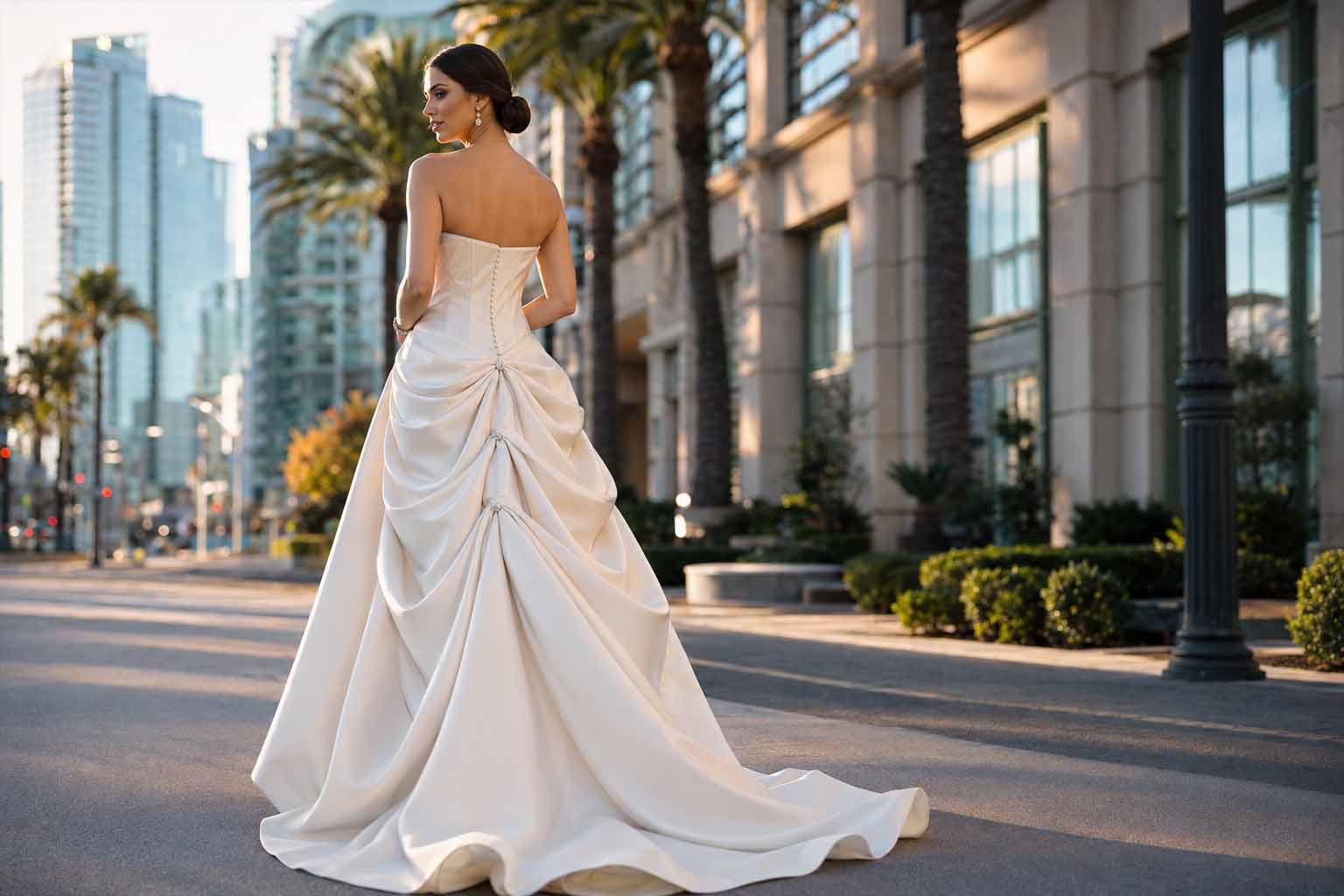
Sleek columns, tailored A-lines and clean fit-and-flare gowns complement architectural environments. Satin, matte crepe and sculptural necklines can photograph beautifully against modern city lines.
Consider stairs, transportation and walking between photography locations when choosing the hem and train.
Luxury ballroom weddings
Minimal gowns can create a strong presence in a formal ballroom through scale rather than decoration. A clean ball gown, sculptural bodice, controlled pleating or dramatic train can command attention from across the room.
View the complete silhouette from several feet away as well as close up.
Intimate and courthouse weddings
An intimate ceremony does not require a less luxurious dress. Refined sheaths, columns, midi gowns and slip-inspired designs can feel distinctive and ceremonial.
Choose the gown according to the experience you want rather than the size of the guest list.
How to style minimal wedding dresses
Accessories can continue a minimal aesthetic or introduce intentional contrast.
A cathedral veil adds scale to a clean gown, while a fingertip veil maintains a lighter silhouette. Sculptural earrings create a focal point, and pearls introduce softness. Depending on the neckline, leaving the neck unadorned may emphasize the gown’s architecture more effectively than adding a necklace.
Gloves, bows, capes and detachable overskirts can transform the ceremony look without permanently changing the dress. A sleek bun highlights the neckline and shoulders, while soft waves add movement.
Bouquets follow the same principle. A restrained arrangement maintains visual clarity, while a colorful or organic bouquet creates deliberate contrast.
Select the gown before finalizing accessories. Bridal & Tuxedo Galleria’s bridal accessories collection can help you evaluate each element in relation to the complete look.
Exploring minimal design through the Navid Noor Couture Collection
Navid Noor’s design philosophy draws inspiration from architecture, nature, art, culture and, most importantly, the women who wear his creations. A gown is approached as an experience, feeling and memory rather than simply an article of clothing.
This philosophy connects naturally with minimal bridal design. Architectural silhouettes, deliberate seam placement, refined fabrics, sculptural necklines and controlled volume allow every construction decision to become visible.
A restrained couture gown does not eliminate detail. Instead, it edits the design so each line and feature serves a clear purpose and complements the individual bride.
Brides interested in the Navid Noor Couture Collection can discuss current options during a personalized appointment. Styles and collection availability may change, so contact Bridal & Tuxedo Galleria before your appointment to confirm current availability.
This individualized approach reflects the Navid Noor motto: Vision Made Iconic.
What to look for during a minimal wedding dress appointment
A successful bridal appointment balances preparation with an open mind.
Before and during your visit:
- Save reference images but remain open to different silhouettes.
- Identify whether you prefer matte, softly lustrous or reflective fabrics.
- Consider your ceremony and reception settings.
- Bring appropriate seamless undergarments.
- Bring shoes with a similar heel height, if available.
- Establish realistic budgets for both the gown and alterations.
- Share your wedding date and discuss ordering timelines.
- Ask which details can and cannot be modified.
- Walk, sit, turn and raise your arms in every serious contender.
- Compare the dress in person and in photographs, if permitted.
- Consider your emotional response as well as the technical fit.
You can browse the current Bridal & Tuxedo Galleria wedding dress lookbook before your appointment to identify fabrics, silhouettes and design elements you would like to explore.
Questions to ask your bridal stylist
- What internal structure supports this gown?
- How will this fabric behave after several hours of wear?
- Which alterations are commonly required for this silhouette?
- Can the neckline, straps or train be modified?
- Would those changes affect the balance of the original design?
- What undergarments or sewn-in support work with this gown?
- How should the dress be stored before the wedding?
- What ordering and fitting timeline do you recommend?
- Which minimal Navid Noor Couture styles are currently available?
- When should the first alterations appointment be scheduled?
Common mistakes to avoid when choosing a minimal wedding dress
Assuming minimal means inexpensive
Fabric quality, patternmaking, corsetry, lining, finishing and professional tailoring all contribute to the price of a gown.
Choosing only from online photographs
Images cannot fully communicate the weight, texture, movement or internal support of a wedding dress.
Ignoring fabric behavior
A matte crepe gown, fluid satin dress and crisp Mikado silhouette can look and feel completely different, even when they share a similar shape.
Underestimating alterations
Smooth surfaces and clean seams make pulling, puckering and alignment concerns especially noticeable.
Selecting accessories before the gown
The neckline, fabric finish and scale of the chosen gown should guide the accessories.
Prioritizing trends over comfort
A contemporary design still needs to support your personal preferences and natural movement.
Assuming every structural change is possible
Modification options depend on the gown’s construction, fabric, seam allowance and available materials.
Frequently asked questions about minimal wedding dresses
What is considered a minimal wedding dress?
A minimal wedding dress uses restrained ornamentation and relies on silhouette, fabric, proportion, construction and fit for visual impact. It may be a fluid slip, tailored sheath, clean A-line or sculptural ball gown. Minimal does not mean the dress lacks detail; seams, folds, pleats and necklines can all function as intentional design elements.
Are minimal wedding dresses less expensive?
Not necessarily. Removing lace or beadwork does not eliminate the cost of refined fabric, patternmaking, corsetry, lining, finishing or tailoring. Prices vary according to the designer, construction, materials and customization. Confirm current pricing directly with the boutique.
Which fabric is best for a minimalist wedding gown?
There is no universally best fabric. Mikado creates architectural volume, satin offers varying levels of shine and structure, crepe produces a matte body-skimming effect, chiffon adds movement and organza provides translucent volume. The right fabric depends on the silhouette, venue, climate and desired effect.
Can a minimal wedding dress still feel luxurious?
Yes. Luxury can be expressed through sophisticated proportions, beautiful fabric, precise seams, internal construction and individualized fit. A sculptural neckline or controlled train can create significant impact without heavy embellishment.
Are minimal wedding dresses appropriate for formal weddings?
Yes. Formality is not determined by embellishment alone. A clean Mikado ball gown, structured satin A-line, dramatic train or sculpted bodice can have a commanding presence at a black-tie or ballroom wedding.
What accessories work with minimal wedding dresses?
Pearls, understated earrings and fingertip veils preserve a restrained look. Cathedral veils, sculptural jewelry, gloves, capes and colorful bouquets create intentional contrast. Choose accessories after selecting the gown so they complement its neckline and proportions.
Do minimalist gowns require more precise alterations?
Minimalist gowns often make fit concerns more noticeable because clean seams and smooth surfaces reveal pulling, puckering or uneven alignment. The required alterations still depend on the individual gown, its construction and the bride’s measurements.
How far in advance should I shop for a wedding dress?
Begin as early as reasonably possible because designer ordering, production, delivery and alterations timelines vary. Contact the boutique with your wedding date to confirm what schedule and gown options are currently realistic.
Can I customize a minimal wedding dress?
Possibly. Depending on the construction, straps, sleeves, necklines, bows, overskirts or trains may be modified. More extensive structural changes can affect the gown’s balance. Discuss feasibility, timing and cost before committing to a design.
Where can I try on minimal wedding dresses in San Diego?
Bridal & Tuxedo Galleria is a San Diego bridal boutique offering personalized appointments, designer gowns, couture options and in-house alterations. Brides interested in minimal wedding dresses or the Navid Noor Couture Collection should confirm current availability before visiting.
Find your minimal wedding dress at Bridal & Tuxedo Galleria
The right minimalist gown is created through the relationship between silhouette, fabric and fit. The silhouette establishes the visual architecture. The fabric determines how that architecture holds, drapes, reflects light and moves. Tailoring brings the complete design into balance with the individual bride.
Minimal design can be expressive, luxurious and deeply personal. Its impact might come from a sculptural fold, matte surface, luminous bias-cut line or the movement of an unembellished train. The goal is not to remove personality. It is to give every element enough space to be appreciated.
For more than 30 years, Bridal & Tuxedo Galleria has served Southern California brides from its San Diego boutique. Personalized styling, experienced consultants, the Navid Noor Couture Collection and in-house master tailoring support brides from initial gown selection through the final fitting.
Explore the current bridal gown collection or schedule a personalized bridal appointment in San Diego to experience minimal wedding dresses in person.
Bring your inspiration, practical questions and an open mind. With intentional design and individualized fit, your bridal Vision Made Iconic.

Author : Kayla Garett
Author bio :
Kayla brings more than 10 years of hands-on experience in bridal fashion and boutique styling, specializing in personalized bridal consultations and luxury client experiences. As the manager of the San Diego location of Bridal and Tuxedo Galleria, she is known for her keen eye for detail, deep understanding of couture wedding dress design, and ability to guide brides toward a gown that reflects their unique vision and wedding aesthetic. Her approach blends fashion expertise with genuine care, ensuring every bride feels confident, understood, and unforgettable on her wedding day
Call Now
Your Personalized Wedding Dress Shopping Experience in San Diego With over 30 years of styling expertise, our dedicated team is passionate about helping you find the perfect wedding dress and tuxedo.


Leave a Reply