
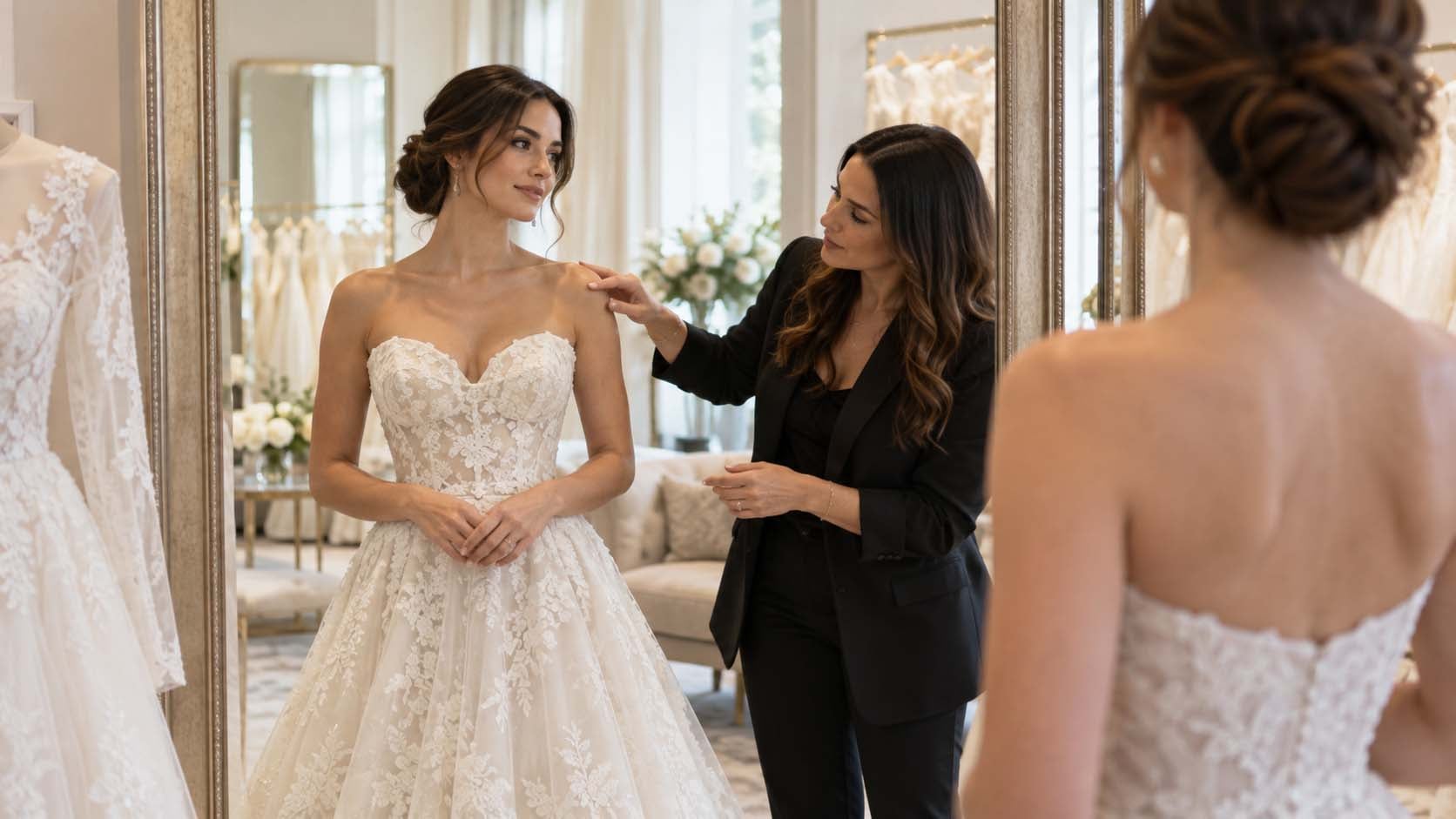
Can You Add Sleeves to a Wedding Dress? Options, Cost Factors & What to Check Before Buying
You find a wedding dress you love. The silhouette feels right, the fabric is exactly what you imagined, and the bodice fits beautifully. There is just one detail missing: sleeves.
Perhaps you always pictured yourself wearing delicate lace sleeves, an off-the-shoulder design, or fitted long sleeves for your ceremony. Now you are wondering whether you can purchase the sleeveless gown and make those changes later.
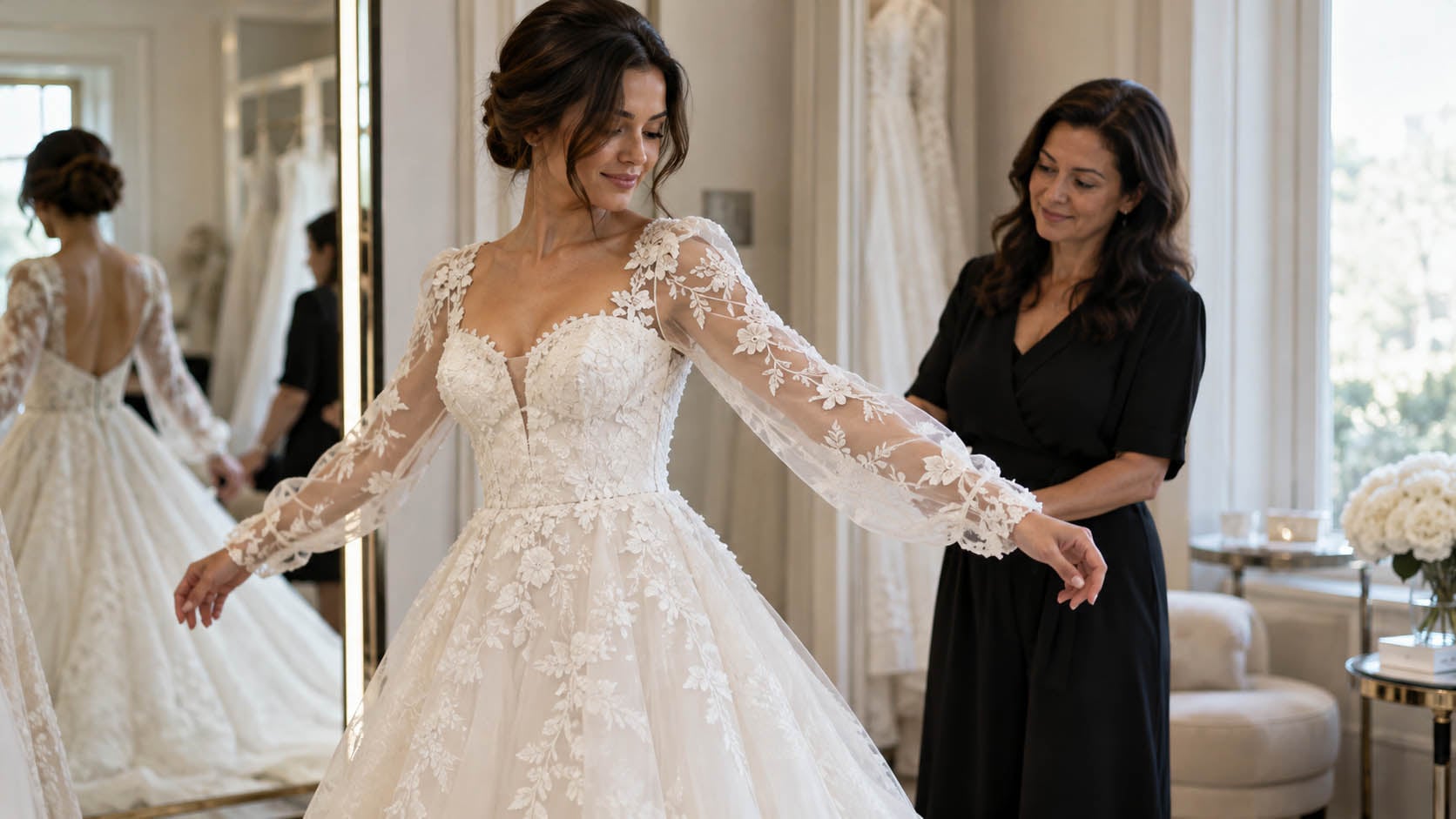
Yes, sleeves can often be added to a wedding dress. However, the possibilities depend on the gown’s neckline, bodice construction, armhole, internal support, fabric, and the type of sleeve you want. Detachable or off-the-shoulder sleeves may require less reconstruction than fully fitted sleeves. If sleeves are essential to your bridal look, have the gown evaluated by an alterations specialist before purchasing it.
The important distinction is between asking whether sleeves can be added and whether your preferred sleeve design can be successfully integrated into a particular gown.
Wedding dress sleeves are not simply accessories attached to the arms. They become part of the gown’s construction, influencing its proportions, support, appearance, and movement.
At Bridal & Tuxedo Galleria in San Diego, bridal styling and professional in-house alterations allow brides to explore potential customizations while considering the entire gown.
Can You Add Sleeves to a Wedding Dress?
Many wedding dresses can accommodate added sleeves, but not every sleeve style works with every bodice.
A simple cap sleeve, for example, may require relatively limited construction if the gown already has suitable shoulder and armhole structure. Adding fitted long sleeves to a strapless gown can be considerably more involved because the original design may not have the necessary attachment points.
Several sleeve options may be possible depending on the dress:
- Detachable sleeves: Removable designs that allow different ceremony and reception looks.
- Off-the-shoulder sleeves: Draped or fitted elements that sit below the shoulder.
- Illusion sleeves: Sheer tulle or mesh sleeves that can incorporate lace or embroidery.
- Lace sleeves: Decorative designs requiring careful fabric and pattern matching.
- Cap sleeves: Short sleeves covering part of the shoulder.
- Long fitted sleeves: Tailored sleeves requiring accurate shoulder, elbow, and wrist construction.
- Puff, bishop, bell, or flutter sleeves: Designs that introduce different types of volume and movement.
The gown’s existing construction determines which options are practical and whether significant changes to the neckline or bodice will be needed.
Before purchasing a sleeveless gown, confirm that the specific sleeve design you want can be created without compromising the dress’s fit or support.
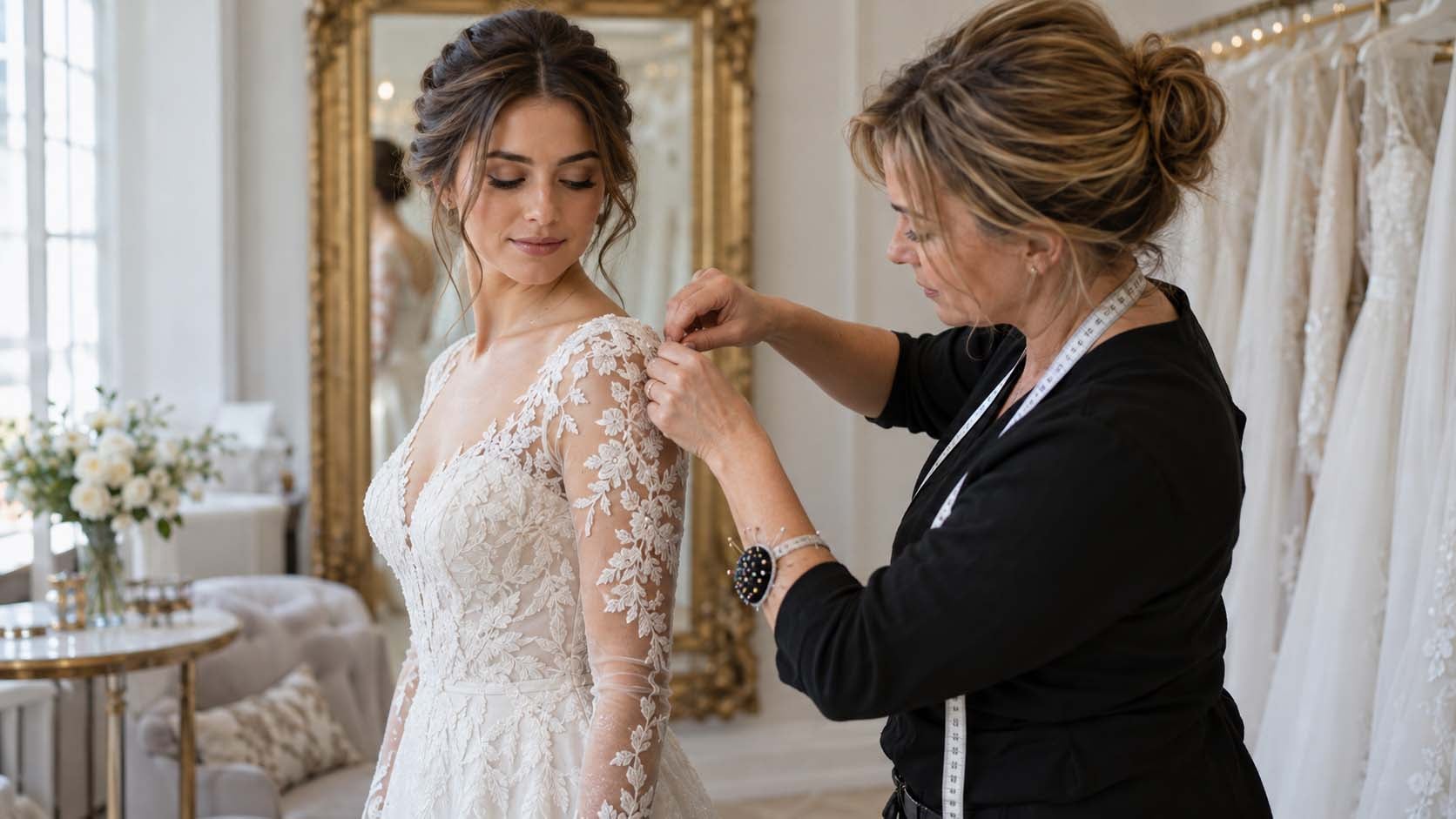
Which Wedding Dress Sleeves Can Be Added?
Detachable Wedding Dress Sleeves
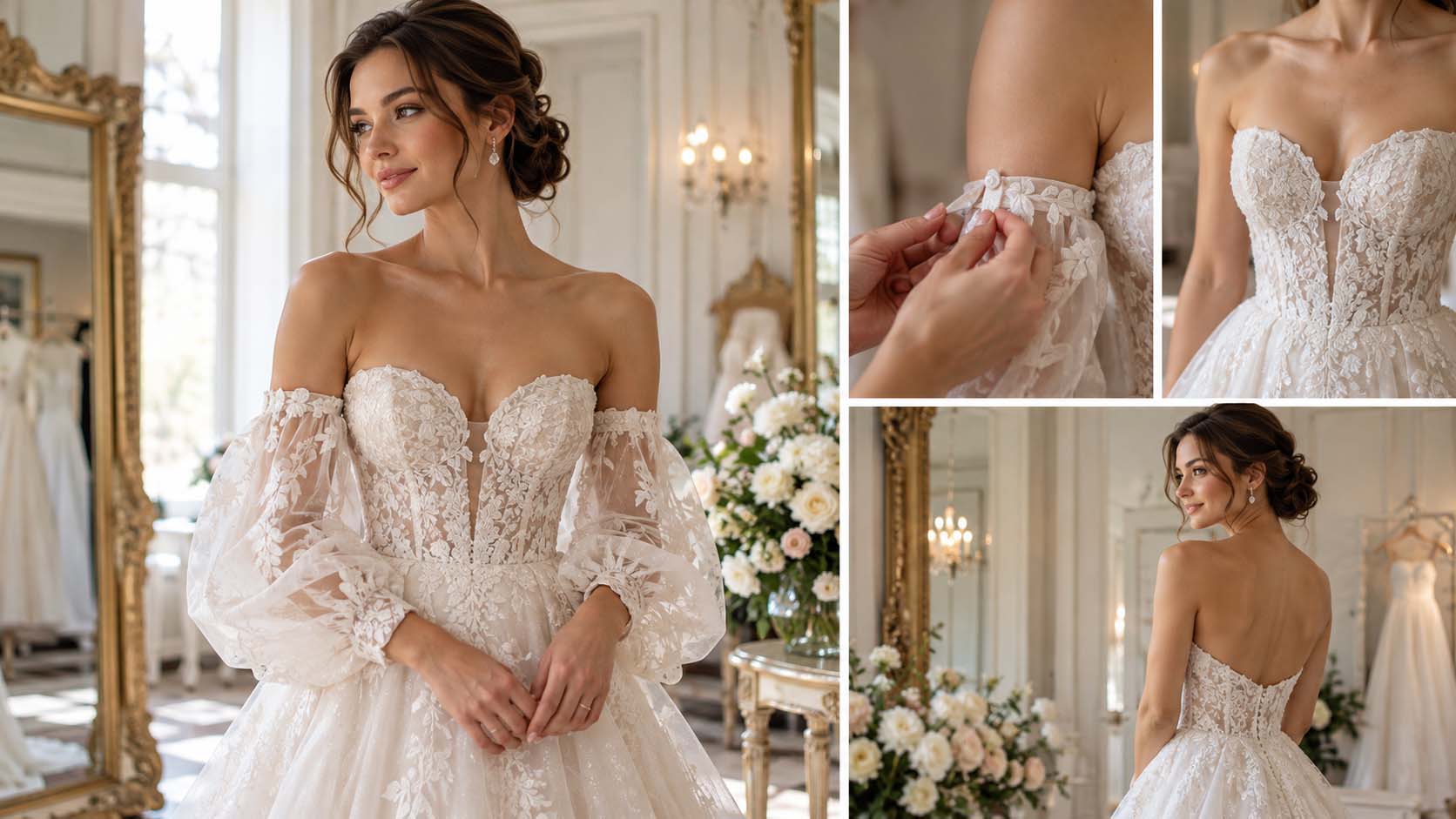
Detachable wedding dress sleeves are an option for brides who want flexibility between their ceremony and reception.
They can introduce additional coverage, texture, or visual drama without permanently committing to one look.
Depending on the design, removable sleeves may attach using discreet snaps, hooks, buttons, or other professionally fitted connections.
A bride might wear long illusion sleeves during a formal ceremony and remove them before dancing. Another might choose detachable off-the-shoulder sleeves to create a different neckline appearance during the reception.
However, detachable does not necessarily mean simple or inexpensive. The attachment must remain secure, the sleeve must fit correctly, and the connection points should integrate naturally with the gown.
Off-the-Shoulder Wedding Dress Sleeves
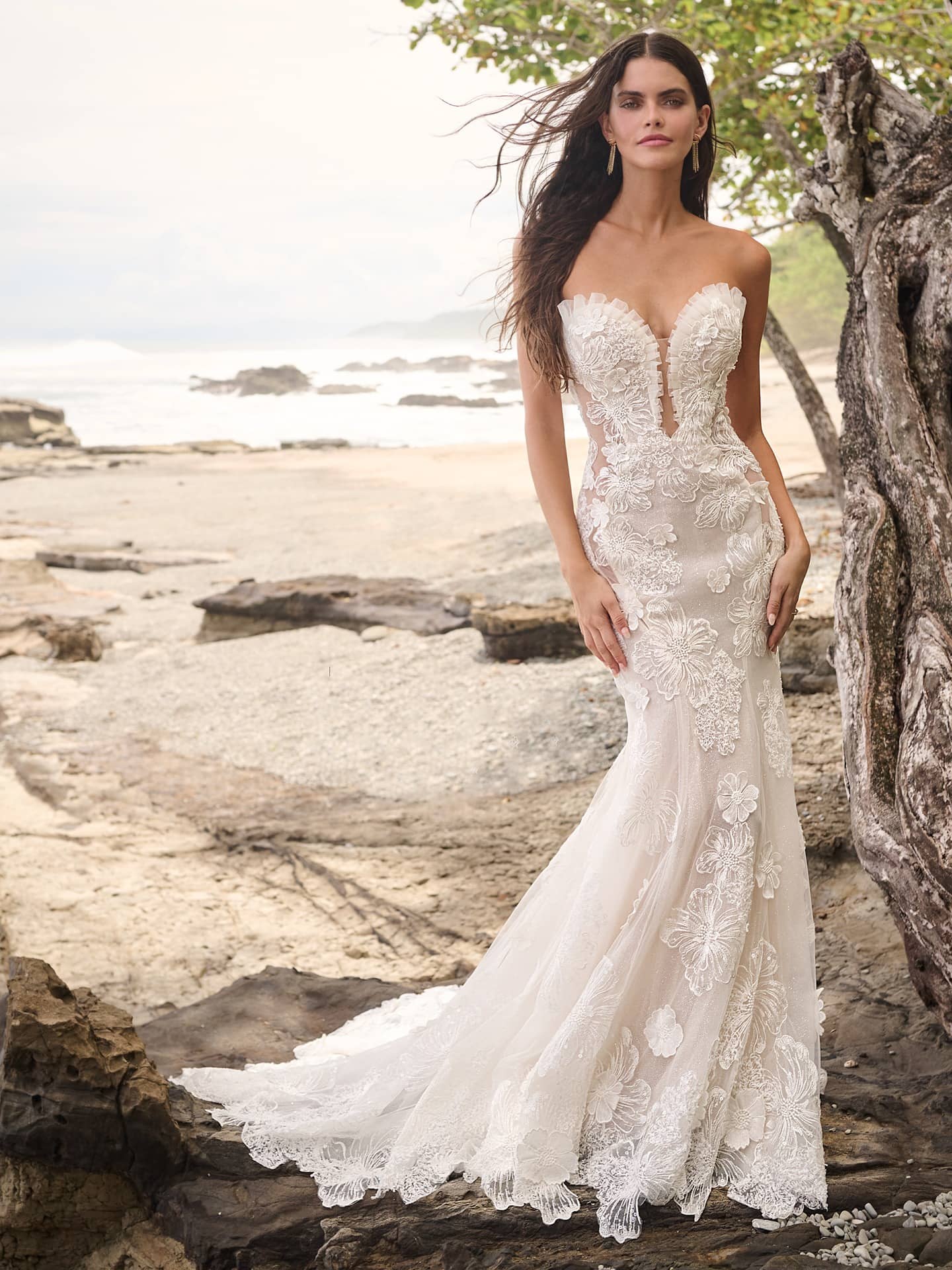
Off-the-shoulder sleeves can transform the appearance of a strapless or sleeveless wedding dress by introducing a horizontal or softly draped element across the upper arms.
Depending on their construction, they may be permanently attached or removable.
Soft tulle, satin, lace, and organza can create different effects, from romantic draping to more architectural silhouettes.
Because these designs do not always require a conventional shoulder seam, they may be easier to incorporate into certain strapless gowns than traditional fitted sleeves.
Their placement must still be carefully evaluated. Sleeves positioned too tightly across the upper arms may restrict reaching, hugging, or dancing.
Decorative off-the-shoulder pieces should also not be assumed to provide the structural support of traditional straps.
Illusion Wedding Dress Sleeves
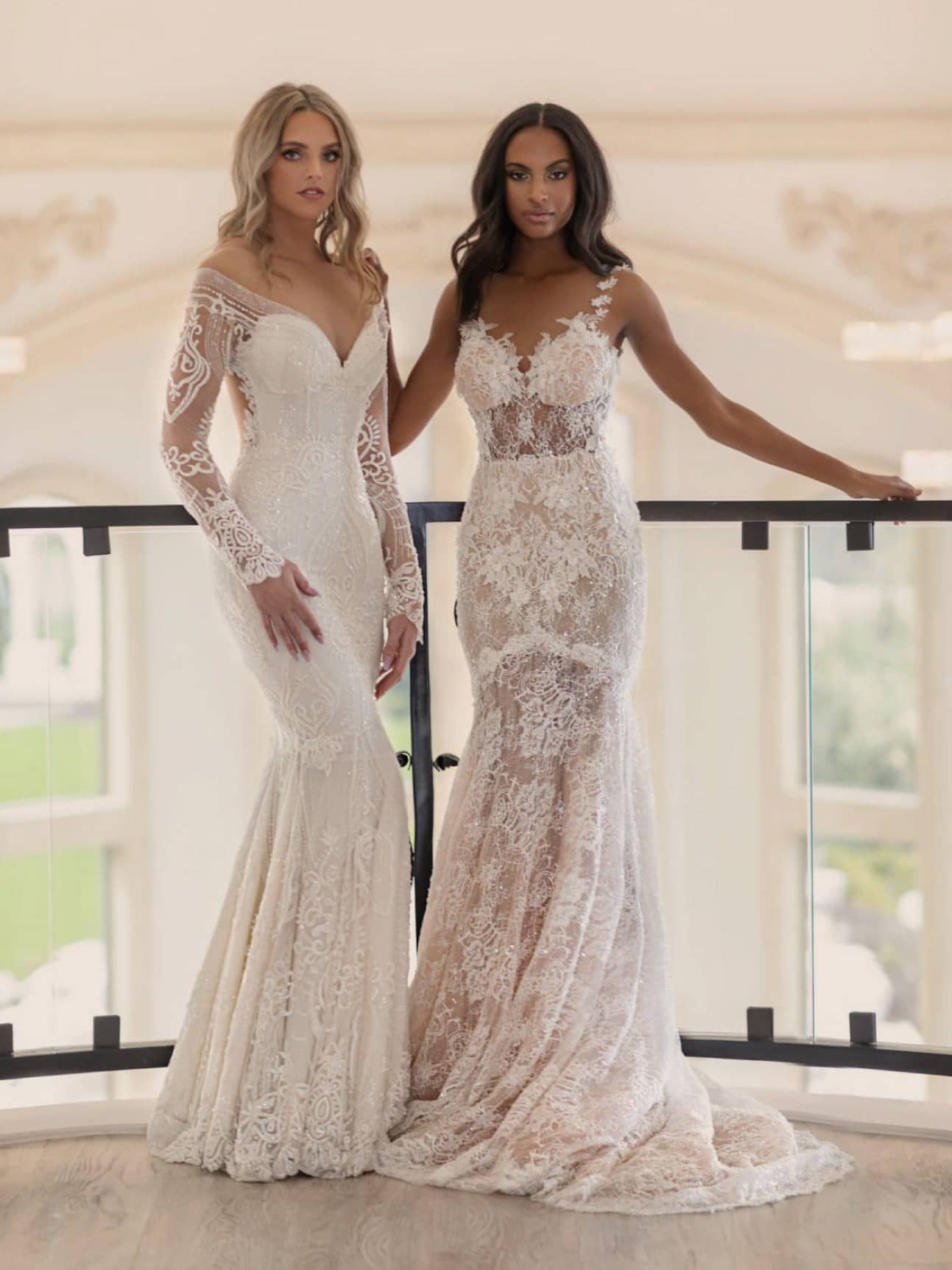
Illusion sleeves create coverage using sheer tulle or mesh while maintaining a lightweight appearance.
They are particularly useful for brides who want lace or embroidery to appear delicately positioned over the skin.
A bridal alterations specialist may use illusion fabric to create additional shoulder or neckline structure where the original gown does not have a conventional armhole.
The quality of the result depends on several details, including the transparency and tone of the material, seam placement, lace arrangement, and shoulder mobility.
Matching illusion fabric to the bride’s skin tone also matters. A noticeable difference between the bodice mesh and sleeve material can make the addition appear disconnected from the original design.
Lace Wedding Dress Sleeves
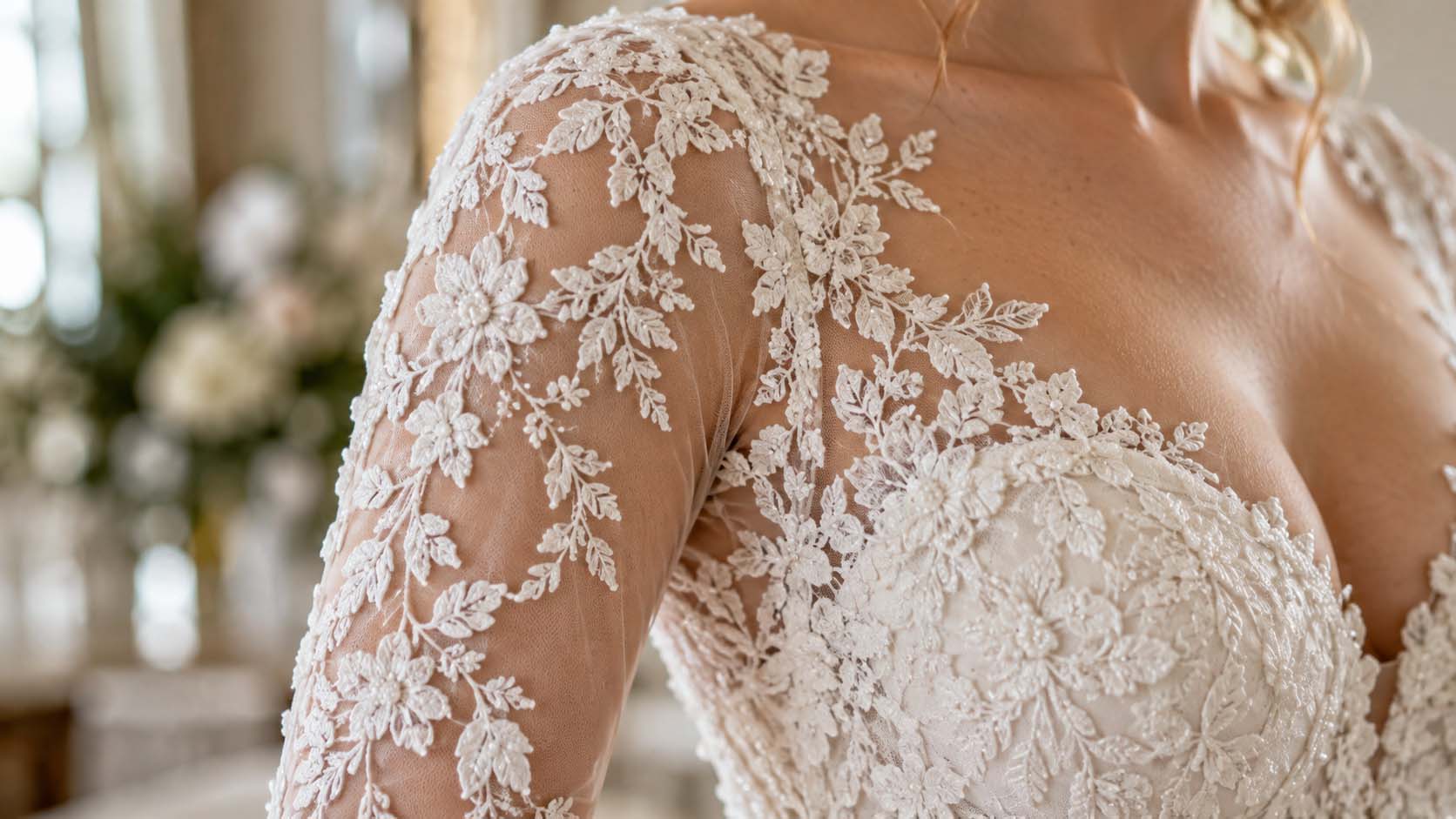
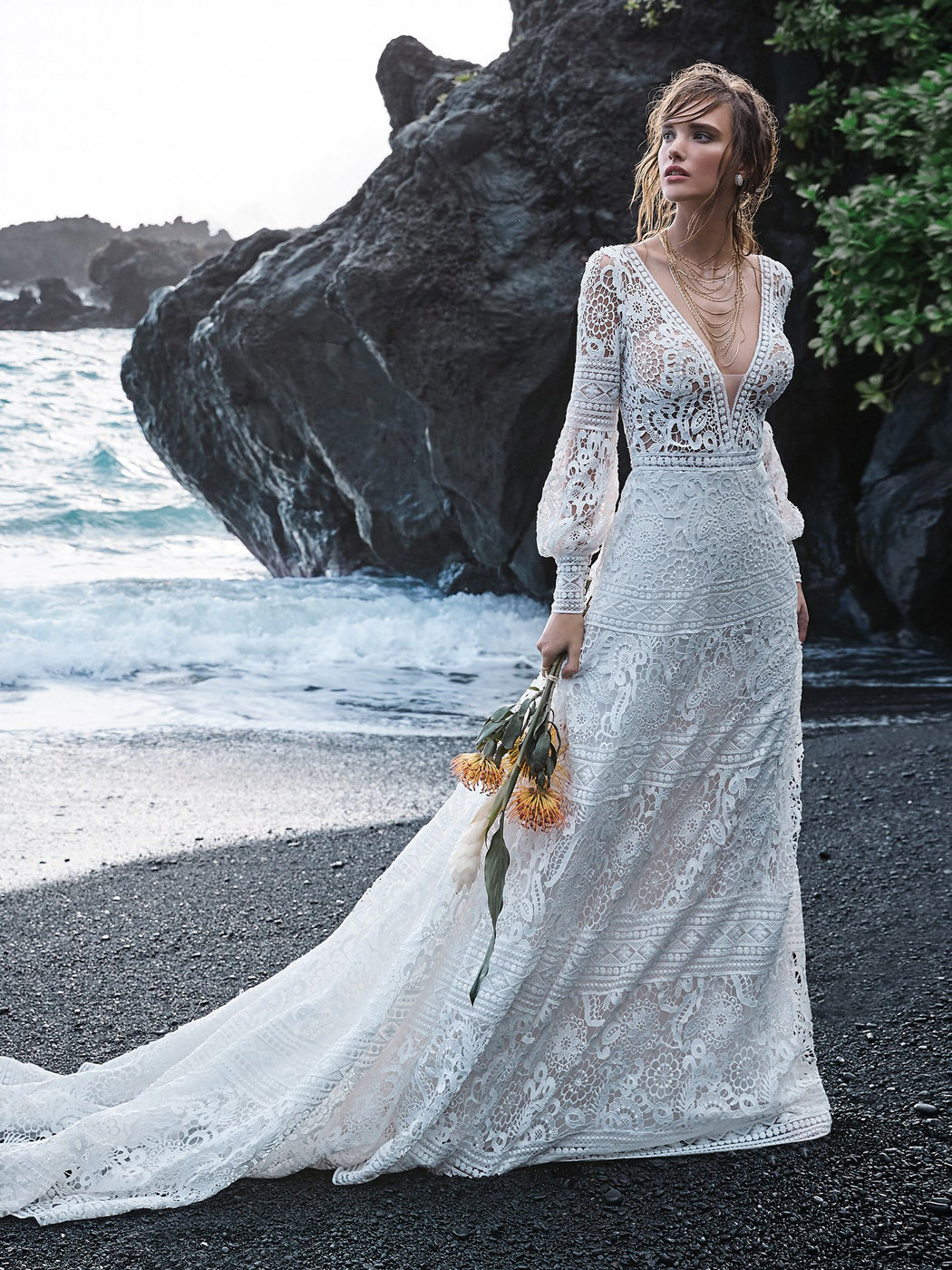
Lace wedding dress sleeves can complement gowns with floral embroidery, decorative appliqué, or intricate lace bodices.
However, matching lace involves more than selecting a similar color.
The alteration specialist must consider the lace pattern, motif size, embroidery direction, scalloped edges, and placement of decorative elements.
If the gown contains substantial beadwork, some embellishments may need to be removed before construction and reapplied afterward.
An exact fabric match is not always available. In certain cases, a carefully selected complementary lace can produce a more cohesive design than an approximate match that looks noticeably different.
Cap Sleeves
Cap sleeves provide light coverage over the shoulder without extending far down the arm.
They can be a suitable option when a bride wants a subtle modification rather than a dramatic transformation.
Because they generally require less fabric and shaping than fitted long sleeves, they may be less complicated to construct.
However, the existing neckline, strap placement, and armhole still determine whether they can be added successfully.
Long Fitted Wedding Dress Sleeves
Long fitted sleeves often require the greatest technical precision.
They must follow the shoulder and arm while allowing enough flexibility for movement.
A professional fitting considers the sleeve head, armhole, upper-arm circumference, elbow ease, wrist placement, and the behavior of the chosen fabric.
Rigid lace and structured satin behave differently from stretch lace or soft illusion tulle.
A sleeve that looks beautiful while standing may pull uncomfortably when the bride reaches forward or raises her arms.
For this reason, fitted long sleeves should be evaluated as part of the complete bodice rather than as an independent addition.
Puff, Bishop, Bell, and Flutter Sleeves
These sleeve styles offer different proportions and visual effects.
Puff sleeves introduce volume near the shoulder, while bishop sleeves create fullness through the arm before narrowing toward the wrist.
Bell sleeves widen toward the lower arm. Flutter sleeves use lightweight fabric to create soft movement.
Although these designs may require less close-fitting construction around parts of the arm, they still need appropriate attachment, balanced proportions, and comfortable mobility.
The best option depends on the gown’s architecture and the bride’s preferred aesthetic.
Can Sleeves Be Added to a Strapless Wedding Dress?
Yes, sleeves can often be added to a strapless wedding dress, but certain designs may require substantial structural changes.
A strapless gown typically relies on internal boning, structured cups, corsetry, and precise bodice fitting to remain supported.
Unlike a sleeved garment, it may not have a conventional armhole or shoulder seam.
To add traditional fitted sleeves, the alterations specialist may need to introduce additional structure through straps, illusion panels, or changes to the upper bodice.
Detachable or off-the-shoulder sleeves may sometimes involve less reconstruction because they can use alternative attachment methods.
The most important consideration is maintaining the gown’s original support.
For example, adding heavily embellished sleeves could introduce weight that changes how the bodice behaves. Similarly, a tightly fitted sleeve could pull the neckline upward when the bride raises her arms.
Before choosing a strapless gown with the intention of adding sleeves, ask whether the desired design is compatible with the existing corsetry, neckline, and back construction.
Can Sleeves Be Added to a Spaghetti-Strap Wedding Dress?
Yes, spaghetti-strap wedding dresses may offer several sleeve-customization possibilities.
Because these gowns already have straps connecting the front and back of the bodice, some designs provide attachment opportunities that a completely strapless gown does not.
Depending on the construction, customization may include widening the original straps, replacing them, adding cap sleeves, or introducing illusion or detachable sleeves.
However, the position of the existing straps matters.
Changing them can influence neckline width, bust placement, and the way the upper bodice distributes support.
A professional fitting helps determine which modifications preserve the gown’s intended shape.
Can Sleeves Be Added to Sweetheart, V-Neck, Square, or Halter Wedding Dresses?
The existing neckline influences sleeve options, but the underlying construction determines whether a particular alteration is practical.
| Existing Neckline | Possible Sleeve Options | Main Consideration |
|---|---|---|
| Sweetheart | Off-the-shoulder, detachable, illusion, cap, or fitted sleeves | Neckline shape and bust support |
| Straight strapless | Detachable, draped, or illusion sleeves | Lack of existing armhole |
| V-neck | Lace, illusion, cap, or fitted sleeves | Shoulder placement and neckline tension |
| Square neckline | Cap, fitted, or structured sleeves | Armhole geometry and visual balance |
| Scoop neckline | Several sleeve styles, depending on construction | Existing shoulder structure |
| Spaghetti straps | Cap, flutter, illusion, or detachable sleeves | Strap position and attachment |
| Halter | Select detachable or illusion treatments | Neckline and shoulder architecture |
| Off-the-shoulder | Extended, draped, or removable sleeves | Upper-arm movement |
| Illusion neckline | Lace, embroidered, or fitted illusion sleeves | Matching mesh and embellishment |
A sweetheart neckline, for example, may support beautifully draped off-the-shoulder sleeves without requiring the same structural changes as fitted long sleeves.
A halter gown presents different considerations because its neckline and support are arranged around the neck rather than through conventional shoulder straps.
No neckline automatically guarantees that every sleeve design is possible.
Wedding Dress Sleeve Feasibility at a Glance
| Existing Gown Design | Often Simpler Options | Potentially More Complex Options | What Needs Evaluation |
|---|---|---|---|
| Strapless | Detachable or draped off-the-shoulder sleeves | Fitted long sleeves | Bodice support and armhole creation |
| Spaghetti strap | Cap or illusion sleeves | Heavy fitted sleeves | Strap placement |
| Sleeveless with armhole | Various fitted or loose sleeves | Major neckline reconstruction | Armhole shape |
| Sweetheart | Off-the-shoulder or detachable styles | Traditional sleeves on a strapless bodice | Corsetry and neckline |
| Square neck | Cap or structured sleeves | Oversized or heavy sleeves | Shoulder balance |
| V-neck | Lace or illusion sleeves | Designs changing neckline tension | Bodice stability |
| Halter | Independent detachable treatments | Traditional set-in sleeves | Neckline construction |
| Off-the-shoulder | Extended or removable draped designs | Full shoulder reconstruction | Arm mobility |
| Illusion bodice | Illusion or lace sleeves | Heavy opaque sleeves | Mesh support and pattern matching |
These are general construction considerations, not guarantees. A bridal alterations specialist must inspect the individual gown before confirming feasibility.
Permanent vs. Detachable Wedding Dress Sleeves
Both permanent and detachable sleeves can create a cohesive bridal look, but they serve different purposes.
| Feature | Permanent Sleeves | Detachable Sleeves |
|---|---|---|
| Appearance | Integrated into the gown | Can be designed to appear integrated |
| Flexibility | One primary look | Allows different looks |
| Construction | May require bodice reconstruction | Requires secure attachment points |
| Fitting | Precise sleeve and shoulder fit | Precise fit and attachment security |
| Movement | Must be tested with the full gown | Must remain secure while moving |
| Best suited for | Brides committed to a sleeved design | Brides wanting ceremony-to-reception flexibility |
Permanent sleeves may provide a continuous design, especially when fabric and embellishments are carefully coordinated.
Detachable sleeves allow more styling flexibility, but poorly positioned attachment points can shift or become visible.
Neither option is automatically less expensive. Construction complexity, fabric, embellishment, and fitting requirements determine the work involved.
What Determines Whether Sleeves Can Be Added to a Wedding Dress?
The feasibility of adding sleeves depends on how several structural elements work together.
Neckline Construction
The neckline defines the upper edge of the gown and influences where a sleeve can connect.
A strapless neckline presents different requirements from a neckline already supported by shoulder straps.
Existing Armholes and Shoulder Seams
An armhole, also called an armscye, creates the opening where a traditional sleeve connects to the bodice.
A gown with an existing armhole may require less reconstruction than one without shoulder structure.
Internal Bodice Support
Structured cups, lining, boning, and internal corsetry help maintain the gown’s fit.
Sleeve additions must work with these elements rather than placing unexpected tension on them.
Back Construction
A high-back bodice, low-back design, illusion back, or corset closure each affects possible attachment methods.
A very low back may offer fewer conventional support points for certain sleeve designs.
Fabric and Embellishment
Fabric weight, stretch, thickness, and drape influence how a sleeve fits and moves.
Beadwork and embroidery may introduce additional construction challenges.
Available Matching Material
Matching fabric may be available from the original designer, through the boutique, or occasionally from material removed during alterations.
However, leftover hem fabric should never be assumed sufficient for sleeves without inspection.
Sleeve Weight and Mobility
A lightweight illusion sleeve and a heavily embellished long sleeve place different demands on the bodice.
The alteration must preserve comfortable movement while maintaining the gown’s intended neckline and support.
For a broader explanation of how these elements interact, explore wedding dress alterations and their effect on fit and movement.
What Fabrics Work Best for Added Wedding Dress Sleeves?
The most suitable fabric depends on the original gown and the desired sleeve design.
| Fabric | Visual Effect | Structure | Movement | Matching Considerations |
|---|---|---|---|---|
| Illusion tulle | Lightweight and sheer | Minimal | Flexible when properly fitted | Tone and transparency |
| Chantilly lace | Delicate and detailed | Varies | Depends on lace construction | Motif matching |
| Stretch lace | Textured and flexible | Soft | Often forgiving | Pattern and stretch |
| Organza | Crisp and translucent | Moderate | Lightweight but structured | Sheen and color |
| Chiffon | Soft and flowing | Minimal | Fluid | Color and drape |
| Satin | Smooth and polished | Moderate | Depends on cut | Finish and weight |
| Mikado | Architectural | Structured | Less fluid | Exact fabric matching |
| Crepe | Clean and refined | Varies | Often comfortable | Texture and weight |
| Embroidered tulle | Decorative and sheer | Varies | Depends on embroidery | Motif placement |
| Beaded tulle | Dimensional and detailed | Can be heavier | Requires careful fitting | Beadwork continuity |
Matching the original gown is not always about finding identical fabric.
A deliberately contrasting sheer sleeve can sometimes look more intentional than a nearly matching opaque sleeve with a noticeably different texture.
The alteration specialist should evaluate fabric availability, pattern direction, seam visibility, and movement before recommending a material.
How Much Does It Cost to Add Sleeves to a Wedding Dress?
There is no universal price for adding wedding dress sleeves. The cost depends on the sleeve style, gown construction, fabric, embellishment, and amount of custom tailoring required.
A simple detachable sleeve may involve less work than constructing a fitted long sleeve on a strapless bodice. However, an embellished detachable sleeve can still require substantial handwork.
| Cost Factor | Why It Affects Pricing |
|---|---|
| Sleeve style | Fitted and complex sleeves require more pattern work |
| Permanent or detachable construction | Different attachment and finishing requirements |
| Neckline reconstruction | May involve changes to the existing bodice |
| Armhole creation | Requires additional structural planning |
| Fabric sourcing | Matching specialty fabrics may cost more |
| Lace and embroidery | Patterns may require detailed alignment |
| Beading | May require removal and hand reapplication |
| Sleeve layers | Additional layers increase labor |
| Custom pattern work | Requires precise individual drafting |
| Number of fittings | Complex modifications can require additional adjustments |
| Designer-supplied materials | Cost and availability vary |
| Alteration timeline | Accelerated work may involve additional labor |
According to The Knot’s wedding dress alteration cost guide, standard alterations and more substantial customizations can have significantly different pricing requirements.
General industry alteration estimates should not be interpreted as the price of adding sleeves, nor as a quote from Bridal & Tuxedo Galleria.
For an accurate estimate, the alterations specialist needs to evaluate the actual gown and intended sleeve design.
Brides who have already purchased their gowns can explore wedding dress alterations in San Diego and discuss the construction, materials, and fitting requirements of their preferred sleeve style.
Is It Cheaper to Buy a Wedding Dress With Sleeves Already?
Sometimes. A wedding dress originally designed with sleeves may require fewer structural changes because the sleeve, armhole, fabric, and bodice were developed together.
This can reduce uncertainty about fabric matching, attachment, and the overall design.
However, purchasing a sleeveless gown and adding sleeves may provide greater freedom to personalize the dress.
The comparison should consider the complete cost of each option, including the gown itself, additional materials, construction work, and fittings.
If sleeves are essential, try gowns that already have the desired sleeve style before assuming customization is the better solution.
At the same time, there is no reason to reject a beautiful sleeveless gown if a qualified specialist confirms that your preferred sleeve design can be added successfully.
The right choice is the one that brings together appearance, comfort, feasibility, budget, and personal style.
The 5-Question Sleeve Test Before You Say Yes to the Dress
Before purchasing a gown that requires sleeve customization, use these five questions to evaluate the decision.
1. Can My Preferred Sleeve Physically Attach to This Bodice?
A photograph of a sleeve does not reveal the underlying construction.
Ask whether the exact design can work with the gown’s existing neckline, armhole, and shoulder structure.
2. Will Adding Sleeves Change the Neckline or Support System?
Certain alterations may require changes to straps, internal support, corsetry, or the upper bodice.
Confirm whether these modifications will influence the original fit.
3. Can the Fabric, Lace, or Embellishment Be Matched?
Determine whether the designer offers matching material or whether another fabric can create a convincing result.
4. Will I Be Able to Move Comfortably?
Ask how the sleeve will behave when you raise your arms, reach forward, hug someone, or dance.
Movement should be considered before finalizing the design.
5. Have I Confirmed the Alteration Scope, Cost, and Timeline?
A professional assessment should identify the work required and whether the customization is practical within your wedding preparations.
If you have not purchased your gown, bringing sleeve inspiration photographs to a private couture bridal appointment can help you compare potential designs before making your decision.
What Should You Ask Before Buying a Wedding Dress If You Want Sleeves?
Use the following checklist during your bridal appointment:
- Can the exact sleeve design I want be added to this gown?
- Will the neckline need to be modified?
- Does the dress already have suitable armhole or shoulder construction?
- Could the sleeves change bust support or bodice stability?
- Does the original designer offer matching sleeves?
- Is matching fabric or lace available?
- Could any fabric removed during hemming be reused?
- Will beading or lace appliqué need to be reconstructed?
- Could the sleeves be detachable?
- How would the sleeves attach?
- Can I raise my arms comfortably?
- Will moving my arms pull the neckline or bodice?
- How many fittings might be required?
- When should the alteration process begin?
- Can the gown be inspected before I purchase it?
- What is the estimated alteration cost and scope?
- Will the final sleeves look intentionally integrated with the gown?
The answers help establish whether the dress can realistically become the design you envision.
The Biggest Mistake: Buying the Dress Before Confirming Sleeve Customization
One of the most important things to avoid is purchasing a sleeveless gown based solely on the assumption that a seamstress can add any type of sleeve afterward.
An inspiration image may show sleeves constructed into a completely different bodice.
The reference gown might have shoulder seams, additional illusion panels, a higher back, or internal support not present in the dress you are considering.
Matching lace may also be unavailable, or the customization may require more extensive work than anticipated.
Even when adding sleeves is technically possible, the result should still look intentional and feel comfortable.
A professional alterations consultation before purchase reduces uncertainty and helps you understand whether the intended design is realistic.
Designer-Supplied Sleeves vs. Custom-Made Wedding Dress Sleeves
Some wedding dress designers offer matching sleeves or coordinating accessories for particular gowns.
When available, designer-supplied components may provide a closer match in fabric, embellishment, and overall design.
However, availability varies by designer, collection, and gown.
Custom-made sleeves offer a different advantage: the opportunity to create a design around the bride’s preferred coverage, length, material, and styling.
A bridal alterations specialist may develop sleeves specifically for the existing gown, taking into account its neckline, structure, and embellishment.
Detachable bridal accessories, including sleeves, boleros, or jackets, provide another possibility for brides who want additional coverage without permanently changing the original design.
For brides considering more extensive changes, custom wedding dress design may offer a more cohesive route than modifying a gown whose structure is not well suited to the desired sleeves.
How Adding Sleeves Can Change the Entire Wedding Dress
Sleeves influence much more than arm coverage.
They can change the visual emphasis of the shoulders, the openness of the neckline, the perceived length of the bodice, and the balance between the upper gown and skirt.
For example, fitted illusion sleeves can maintain a light, delicate appearance, while structured satin sleeves may introduce a stronger architectural quality.
Draped off-the-shoulder sleeves can create a more horizontal neckline composition, while long fitted sleeves can establish an uninterrupted line from shoulder to wrist.
Sleeves can also influence the formality and character of the gown.
A simple strapless dress may become more traditional with long lace sleeves or more fashion-forward with detachable sculptural sleeves.
The objective is not to follow a universal styling rule. It is to select a design that feels cohesive with the gown and expresses the bride’s preferences.
Wedding Dress Sleeves and Movement: What to Test During Your Fitting
An added sleeve must look beautiful and function comfortably.
During the fitting, the specialist should evaluate how the sleeve interacts with the bodice as the bride moves.
Only perform movement tests when the alterations specialist confirms that the pinned or unfinished gown is safe to move in.
Raise Both Arms
Check whether the sleeves pull the neckline upward or shift the bodice.
Reach Forward
Notice whether the shoulders, upper back, or armholes become restrictive.
Bend Your Elbows
Fitted sleeves should provide enough ease for natural elbow movement.
Hug Someone
The sleeve should accommodate forward shoulder movement without excessive pulling.
Sit Comfortably
Check whether sitting changes sleeve tension or neckline placement.
Turn Your Upper Body
The gown should allow natural torso rotation without twisting the sleeves or bodice.
Practice Gentle Dance Movements
When safe, test the kinds of movements you expect during your reception.
Walk Naturally
The sleeves should not force you to change your posture or hold your arms unnaturally.
These checks form a practical Sleeve–Bodice–Movement Framework:
- Sleeve: Does the added sleeve fit correctly?
- Bodice: Does the dress remain supported and properly positioned?
- Movement: Can the bride move naturally and comfortably?
Successful customization must satisfy all three.
Which Wedding Dress Sleeve Style Works With Your Bridal Look?
The most suitable sleeve depends on the atmosphere you want to create and how the design relates to the gown.
For a minimalist bridal look, clean fitted sleeves or subtle illusion treatments can preserve the simplicity of the silhouette.
Romantic gowns may work beautifully with lace, soft tulle, or delicate flutter sleeves.
A regal or traditional design may incorporate fitted long sleeves, structured shoulder details, or elegant draping.
Bohemian styling often favors lightweight fabrics and movement, while architectural couture gowns may benefit from more sculptural sleeve construction.
Brides seeking modesty or additional ceremony coverage may prefer long sleeves, detachable boleros, or illusion designs.
Personal preference should guide the decision. Sleeves do not need to conceal or correct a body feature; they can simply be part of the aesthetic a bride loves.
Wedding Dress Sleeves for San Diego and Southern California Weddings
Southern California weddings take place in a wide range of settings, from coastal ceremonies and garden venues to elegant estates, resorts, and formal ballrooms.
These environments can influence sleeve preferences.
For a daytime coastal wedding, a bride may prefer lightweight illusion sleeves or breathable lace. For an evening estate celebration, fitted long sleeves or structured designs may feel appropriate.
Detachable sleeves offer flexibility when a ceremony and reception have different atmospheres or temperatures.
A bride might choose additional coverage for an outdoor ceremony and remove the sleeves for a reception indoors.
However, no single sleeve style is universally best for San Diego weather.
The appropriate design depends on the season, venue, fabric, event timing, and personal comfort.
How Navid Noor Approaches Wedding Dress Customization
As Owner and Head Designer of Bridal & Tuxedo Galleria, Navid Noor brings a couture-informed design perspective to bridal fashion, where silhouette, construction, fabric, and proportion are considered together.
Successful customization should preserve the relationship between the gown’s visual design and its structural support.
Adding sleeves requires attention to neckline shape, corsetry, shoulder placement, fabric behavior, and the way the gown moves with the bride.
A new design element should appear intentional within the entire silhouette rather than looking like an accessory attached after the dress was completed.
This principle is particularly important when working with architectural bodices, intricate lace, or structured couture designs.
Wedding Dress Sleeves and the Navid Noor Couture Collection
For brides considering a more personalized bridal look, the Navid Noor Couture Collection offers an opportunity to explore designer wedding dresses and discuss customization as part of the gown-selection process.
A bride may prefer the neckline and silhouette of one gown while envisioning different coverage or sleeve styling.
The appropriate solution depends on the actual gown’s construction and the available design options.
Not every Navid Noor gown should be assumed to support every sleeve alteration. Specific customization possibilities must be evaluated during consultation.
Exploring couture wedding dresses can help brides understand how neckline placement, fabric, bodice construction, and sleeve design influence the final appearance.
What to Expect When Discussing Sleeve Customization at Bridal & Tuxedo Galleria
Choosing a wedding dress involves more than selecting a silhouette from a photograph.
At Bridal & Tuxedo Galleria in San Diego, brides can explore designer wedding dresses, personalized styling, and professional in-house bridal alterations.
The boutique’s alteration services include potential sleeve additions, strap adjustments, neckline changes, and other bridal tailoring modifications.
When significant customization is being considered, an important part of the process is determining whether the desired change is compatible with the gown.
A fitting may involve reviewing the neckline, internal support, fabric, embellishment, and intended sleeve placement.
The bridal team can also help brides compare gowns already designed with sleeves against sleeveless options that may be suitable for modification.
This approach allows customization to become part of the purchasing decision rather than an unexpected challenge after the dress has been ordered.
For brides who already own a gown, an in-person alteration assessment provides the opportunity to discuss the intended sleeve design and understand what may realistically be possible.
Frequently Asked Questions About Wedding Dress Sleeves
Can you add sleeves to a wedding dress?
Yes, sleeves can often be added to a wedding dress. The possibilities depend on the neckline, bodice, existing armhole, fabric, and desired sleeve style. Some designs require relatively limited changes, while fitted sleeves may involve substantial construction. A bridal alterations specialist should inspect the gown before confirming feasibility.
Can you add sleeves to a strapless wedding dress?
Often, yes. However, strapless gowns may not have the shoulder structure or armhole required for traditional fitted sleeves. Off-the-shoulder, detachable, or illusion options may be more practical for certain designs. The existing corsetry and bodice support must be evaluated before making significant modifications.
How much does it cost to add sleeves to a wedding dress?
The cost varies according to sleeve style, fabric, pattern work, embellishment, and construction complexity. Adding fitted sleeves to a strapless gown may require more work than attaching a simpler detachable design. A professional inspection is necessary to determine the alteration scope and provide a personalized estimate.
Can long sleeves be added to a sleeveless wedding dress?
Long sleeves can sometimes be added if the gown has suitable shoulder and armhole construction or can be modified to accommodate them. The specialist must consider shoulder fit, elbow movement, wrist placement, fabric behavior, and bodice stability before confirming the alteration.
Can lace sleeves be added to any wedding dress?
Lace sleeves can complement many gowns, but not every design can accommodate them without structural changes. Matching lace patterns, fabric color, appliqué placement, and existing embellishments is also important. A specialist should evaluate the gown and available materials before recommending a design.
Can wedding dress sleeves be detachable?
Yes. Detachable wedding dress sleeves may use discreet fastenings such as hooks, snaps, or buttons. They allow brides to change their appearance between the ceremony and reception. Proper fitting is essential so the sleeves remain secure and comfortable while moving.
Can a wedding dress designer make matching sleeves?
Some bridal designers offer matching sleeves or coordinating accessories for particular gowns. Availability varies by designer and collection. Ask the bridal boutique to confirm whether compatible components are offered for the exact gown you are considering.
Can sleeves be added after I buy my wedding dress?
Yes, sleeves may be added after purchase if the gown’s construction supports the intended design. However, brides who consider sleeves essential should evaluate customization before buying whenever possible. If the dress has already been purchased, bring it to a bridal alterations specialist for assessment.
Is it easier to add straps or sleeves to a wedding dress?
Adding straps is often less complex than constructing fitted sleeves because straps generally require less patterning and do not need to accommodate full arm movement. However, both modifications depend on the neckline, bodice, and existing support system.
Can sleeves change the fit of a wedding dress?
Yes. Added sleeves can affect shoulder tension, neckline placement, and bodice stability. If sleeves are too restrictive or improperly attached, moving the arms may pull the gown out of position. Professional fitting should evaluate both appearance and movement.
Can adding sleeves affect bust support?
Potentially. Some sleeve alterations involve changing straps, neckline structure, or the upper bodice. These changes can influence how the gown’s cups, boning, and internal corsetry provide support. The alteration specialist should ensure that the original support system remains functional.
Can a tailor use leftover wedding dress fabric for sleeves?
Sometimes. Fabric removed during hemming may be suitable for sleeve construction, particularly when an exact match is needed. However, the available quantity, fabric shape, grain, and embellishment must be evaluated. There may not be enough usable material for the desired design.
Can sleeves be added without changing the neckline?
In some cases, yes. Detachable or off-the-shoulder sleeves may be incorporated without significantly changing the original neckline. More structured sleeves may require additional shoulder or armhole construction. The decision depends on the specific gown.
Are detachable wedding dress sleeves comfortable for dancing?
They can be comfortable when properly fitted. The attachment points must remain secure, and the sleeves should allow natural movement. During fitting, brides should test gentle reaching and arm movements when the alterations specialist confirms it is safe.
How early should I ask about adding sleeves?
Ideally, discuss sleeve customization before purchasing the gown if sleeves are an essential part of your bridal look. This allows the alterations specialist to evaluate feasibility, materials, and construction requirements before you commit to the dress.
What wedding dress fabrics work best for sleeves?
Illusion tulle, lace, chiffon, organza, satin, crepe, and other bridal fabrics can be used depending on the desired appearance and construction. The most suitable choice depends on matching the gown, supporting movement, and creating a cohesive design.
Should I buy a strapless wedding dress if I know I want sleeves?
You can consider a strapless gown, but confirm whether your preferred sleeve design is feasible before purchasing. Certain sleeve styles require additional structural work that may affect cost, fit, and the neckline. Comparing gowns with existing sleeves can also help you make a more informed decision.
Where can I get sleeves added to a wedding dress in San Diego?
Bridal & Tuxedo Galleria offers professional in-house wedding dress alterations in San Diego, including potential sleeve additions, off-the-shoulder pieces, strap modifications, and neckline customization. The feasibility of a specific sleeve design depends on the gown and should be confirmed during an in-person evaluation.
Love the Dress but Want Sleeves? Check the Construction Before You Commit
Adding wedding dress sleeves can be an excellent way to personalize a gown, introduce coverage, or create a different ceremony and reception look.
However, the sleeve style must work with the gown’s neckline, bodice, fabric, support system, and natural movement.
A detachable sleeve may offer flexibility, while a permanently fitted sleeve can create a continuous design. Lace and illusion fabrics may introduce delicate details, while structured sleeves can transform the overall silhouette.
What matters most is making the decision with a clear understanding of what the gown can realistically accommodate.
If sleeves are essential to your bridal look, confirm customization possibilities before purchasing rather than assuming changes can always be made afterward.
At Bridal & Tuxedo Galleria, brides throughout San Diego and Southern California can explore designer wedding dresses, Navid Noor couture, personalized styling, and professional bridal alterations.
Book a Private Bridal Appointment
Discover wedding dresses that reflect your personal style while exploring the possibilities of thoughtful customization.
Bring your sleeve inspiration photographs, wedding date, venue details, and preferred coverage or styling ideas to your appointment at Bridal & Tuxedo Galleria in San Diego.
The bridal team can help you compare existing sleeve designs, explore potential customization options, and consider how every detail works together before you choose your gown.
Explore Wedding Dresses in San Diego

Author bio :
Kayla brings more than 10 years of hands-on experience in bridal fashion and boutique styling, specializing in personalized bridal consultations and luxury client experiences. As the manager of the San Diego location of Bridal and Tuxedo Galleria, she is known for her keen eye for detail, deep understanding of couture wedding dress design, and ability to guide brides toward a gown that reflects their unique vision and wedding aesthetic. Her approach blends fashion expertise with genuine care, ensuring every bride feels confident, understood, and unforgettable on her wedding day
Call Now

Your Personalized Wedding Dress Shopping Experience in San Diego With over 30 years of styling expertise, our dedicated team is passionate about helping you find the perfect wedding dress and tuxedo.


Leave a Reply