
Mermaid vs. Ball Gown Wedding Dress: Which Silhouette Is Right for You?
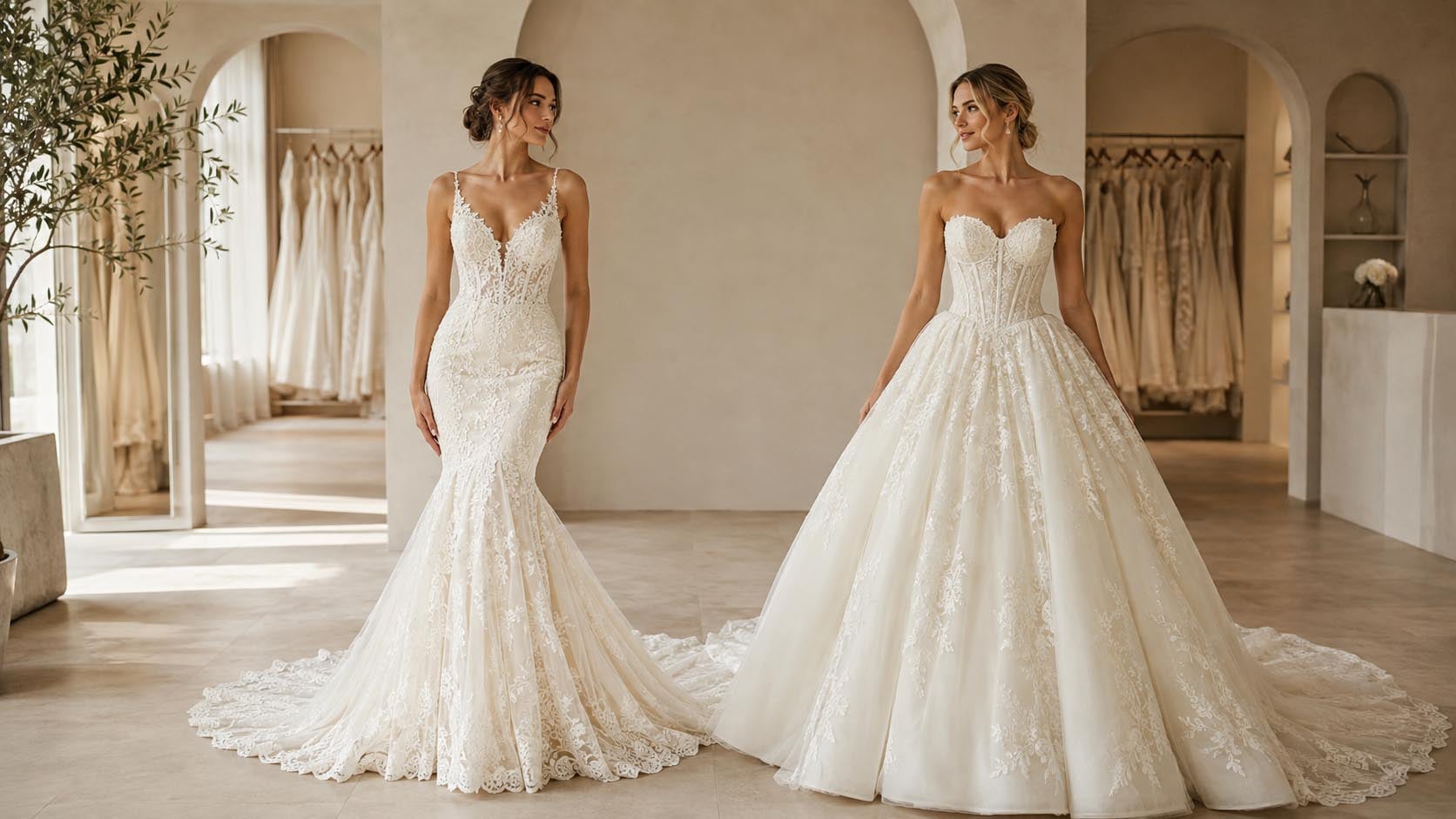
Sculpted drama and full-skirted presence create different experiences. In a mermaid vs ball gown wedding dress comparison, the mermaid follows the bodice, waist, hips, and upper legs before flaring. A ball gown pairs a fitted bodice with volume beginning at a designed waistline.
Neither silhouette is automatically more flattering, formal, comfortable, expensive, or photogenic. Fabric, flare point, corsetry, skirt layers, train, alterations, venue, and personal style determine how the gown looks and feels.
Mermaid vs. Ball Gown Wedding Dress: What Is the Main Difference?
A mermaid wedding dress follows the torso and hips before opening into a defined lower flare. A ball gown contrasts a fitted bodice with a full skirt beginning near the waist. Mermaid emphasizes contour; ball gown emphasizes waist definition, volume, and large-scale movement.
An overview of established wedding dress silhouettes helps identify the categories, but the final decision should be made in the actual gown. Dresses with the same silhouette label can behave differently because of fabric and construction.
Compare both silhouettes side by side with personalized guidance on fit, movement, fabric, and proportion.
Book Your Private Bridal Appointment
Mermaid vs. Ball Gown at a Glance
| Decision factor | Mermaid wedding dress | Ball gown wedding dress | Why it matters |
|---|---|---|---|
| Overall shape | Close, then flared | Fitted top, full skirt | Establishes visual identity |
| Fit through hips | Close | Usually free below waist | Changes contour and mobility |
| Flare or volume | Near thigh or knee | At a defined waist | Controls proportion |
| Visual presence | Sculptural | Expansive | Shapes entrance and photos |
| Walking | Flare controls stride | Width requires awareness | Test longer strides |
| Sitting | Thigh ease matters | Skirt needs arranging | Test full seating |
| Dancing | May limit long steps | Needs more floor space | Match your dance plans |
| Fabric weight | Sleek or layered | Fabric plus petticoats | Affects endurance |
| Warm weather | Layers determine warmth | Full skirts may retain heat | Check breathability |
| Wind and surfaces | Train needs management | Layers can catch wind | Plan for venue surfaces |
| Photography | Defined profile | Broad movement | Changes composition |
| Train and bustle | Preserve the flare | Control layered volume | Affects reception movement |
| Alterations | Balance hips, seams, and flare | Align bodice, waist, and layers | Protects proportion |
| Venue compatibility | Adapt through train and fabric | Adapt through skirt scale | Either can work |
| Customization | Godets, trains, and overskirts | Waist, layers, and volume | Structure sets limits |
Still deciding? Compare mermaid and ball gown wedding dresses side by side when you book a private bridal appointment in San Diego.
What Defines a Mermaid Wedding Dress?
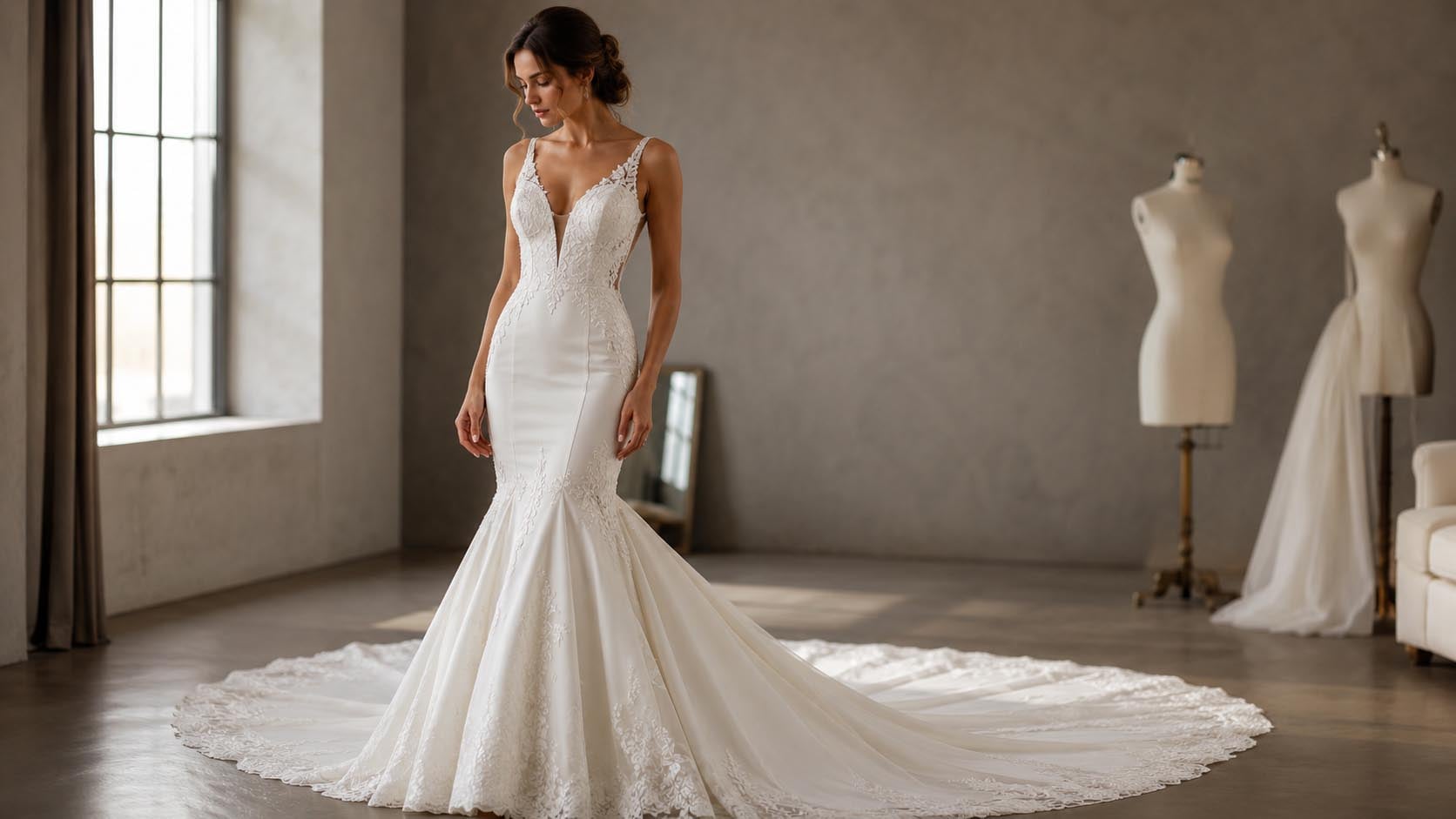
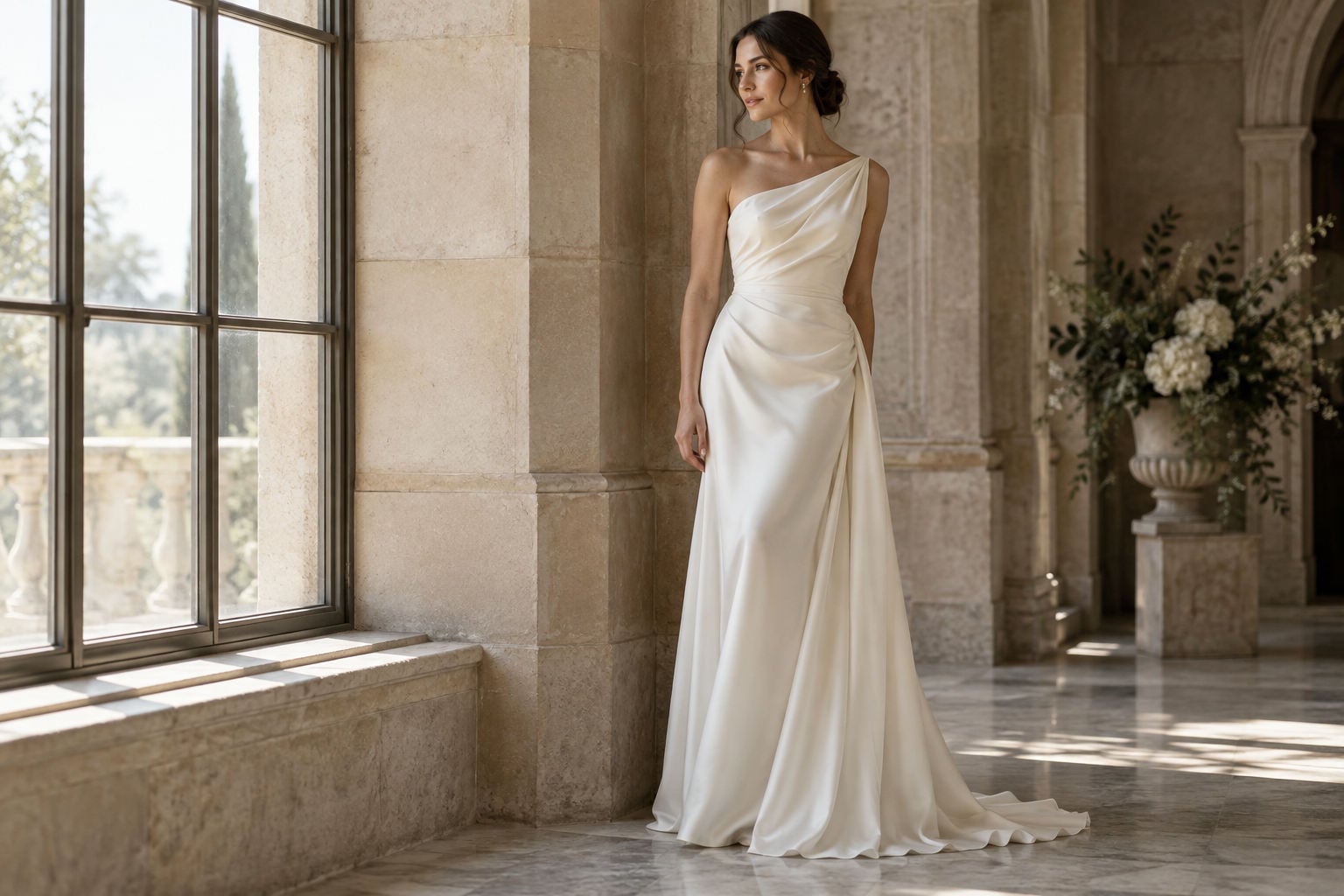
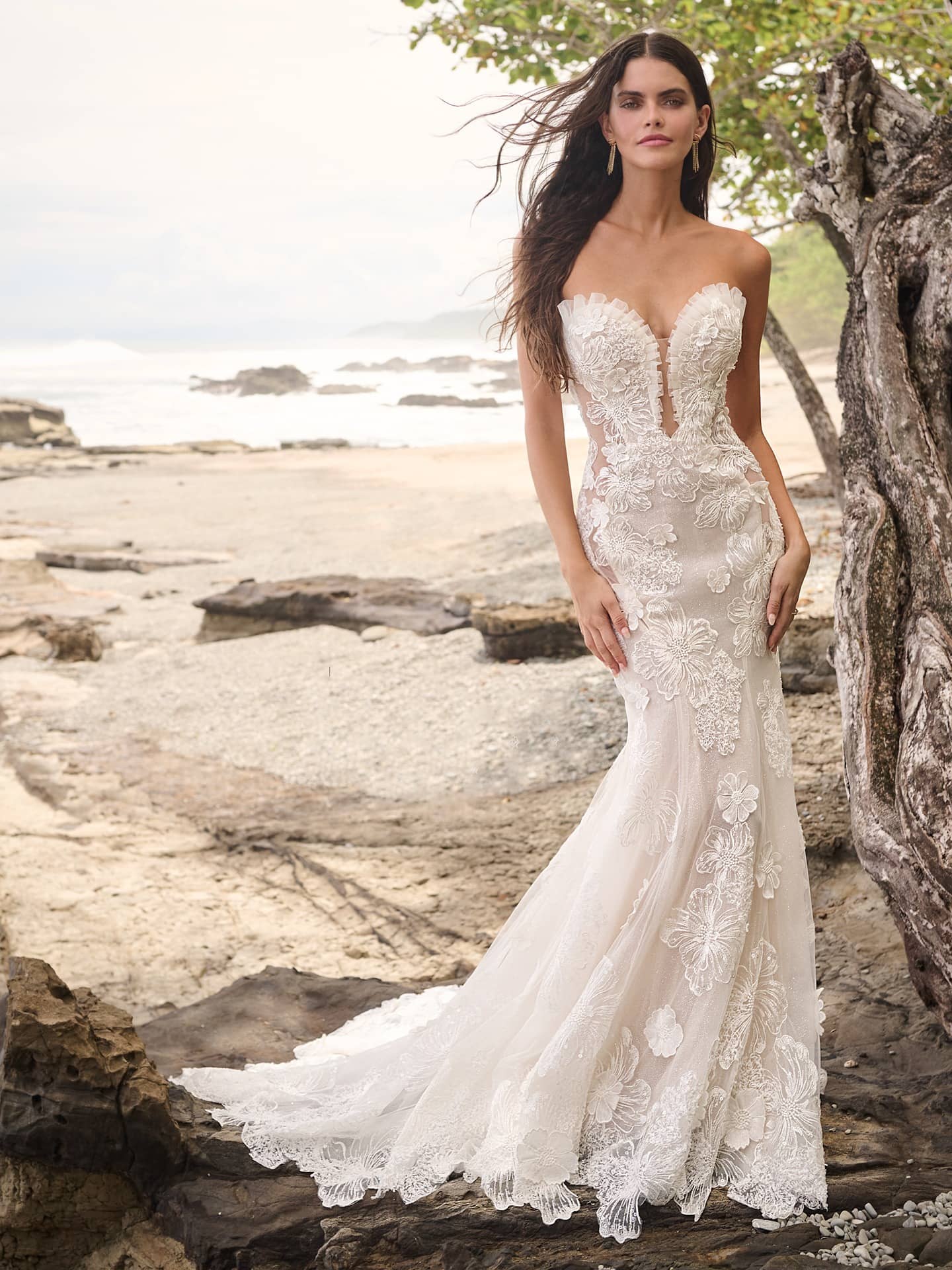
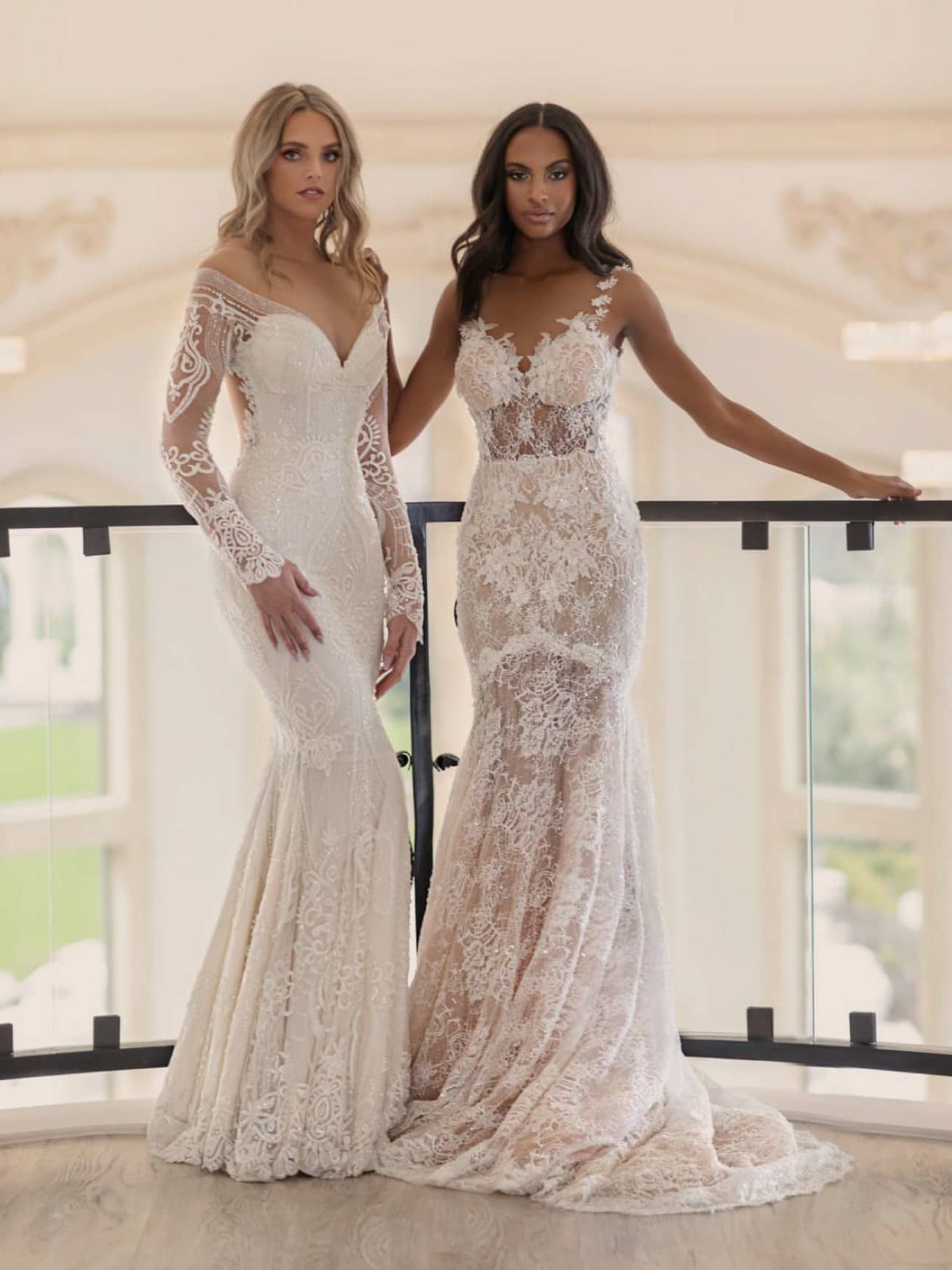
A mermaid gown is fitted through the bodice, waist, and hips, then remains close through part of the thigh before opening into a pronounced flare. A higher flare can allow more stride, while a low, sharply engineered flare produces a stronger fishtail effect and requires careful movement testing.
Mermaid is not identical to trumpet or fit-and-flare. A trumpet silhouette generally begins widening around the mid-thigh, while a classic mermaid stays close longer and releases nearer the knee.
Fit-and-flare is a broader term for a gown fitted through the bodice and hips before opening into a more gradual, often higher release. If those boundaries feel confusing, the BTG trumpet wedding dress guide explains the distinctions in more detail.
In 2026, Vogue documented a renewed mermaid-dress trend built around cleaner materials and more architectural interpretations.
Seams, panels, and godets create the shape. Princess seams direct the eye vertically, while inserted godets add controlled width. Train length extends the back line and can strengthen the flare in profile.
Fabric also changes the personality of the silhouette. Crepe creates a clean line; satin adds sheen and sweep; lace can soften or emphasize seams; and tulle makes the lower flare airy or theatrical. The Brides wedding dress fabric guide illustrates why body, drape, and structure matter as much as the fabric name.
A properly fitted mermaid gown should feel secure, not immobilizing. You should be able to walk naturally, sit fully, turn, and breathe comfortably. Browse mermaid wedding dresses for visual reference, then evaluate the flare and construction on your proportions during a fitting.
Explore sculpted wedding dresses with different flare points, fabrics, necklines, trains, and levels of structure.
What Defines a Ball Gown Wedding Dress?
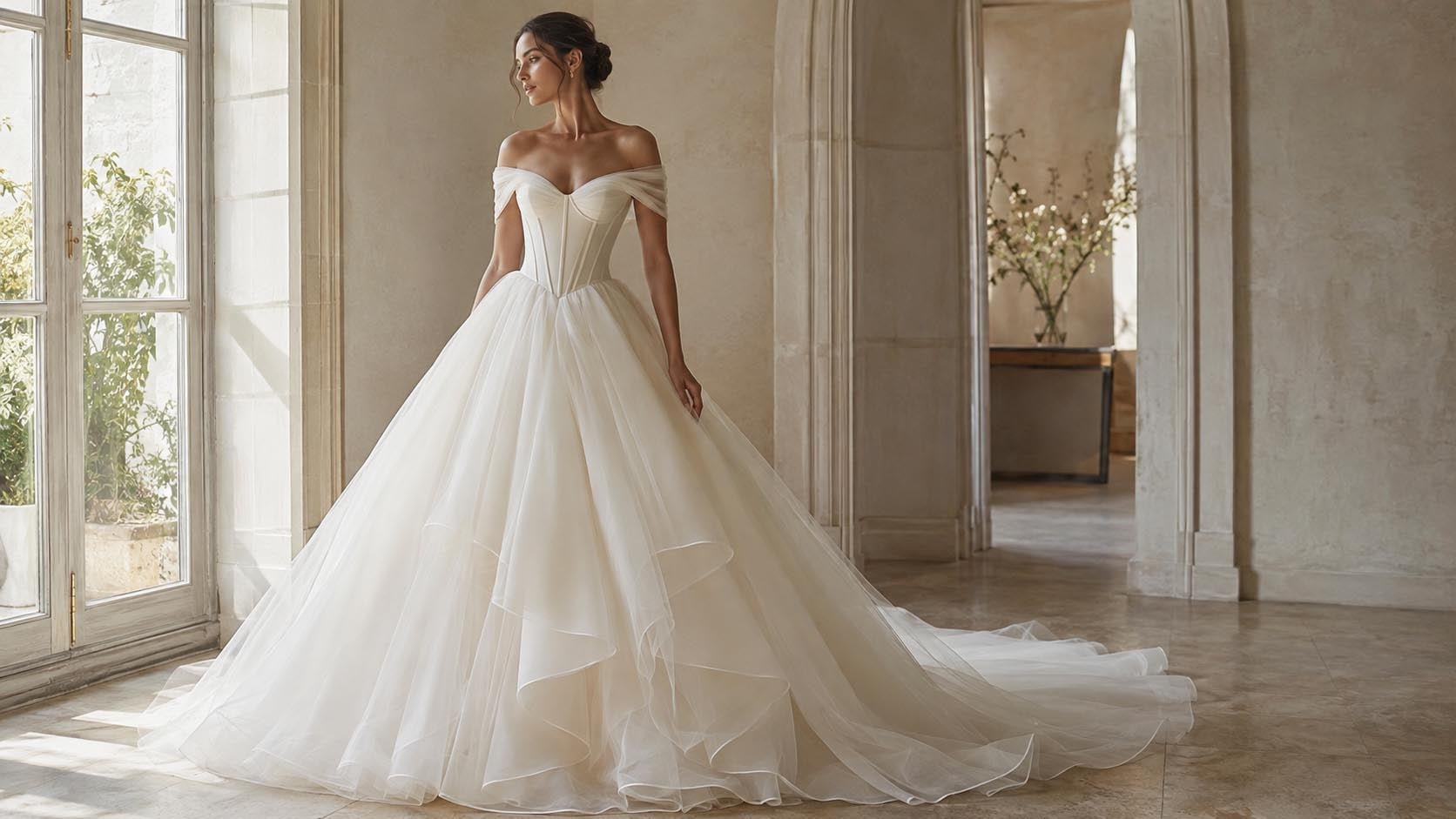
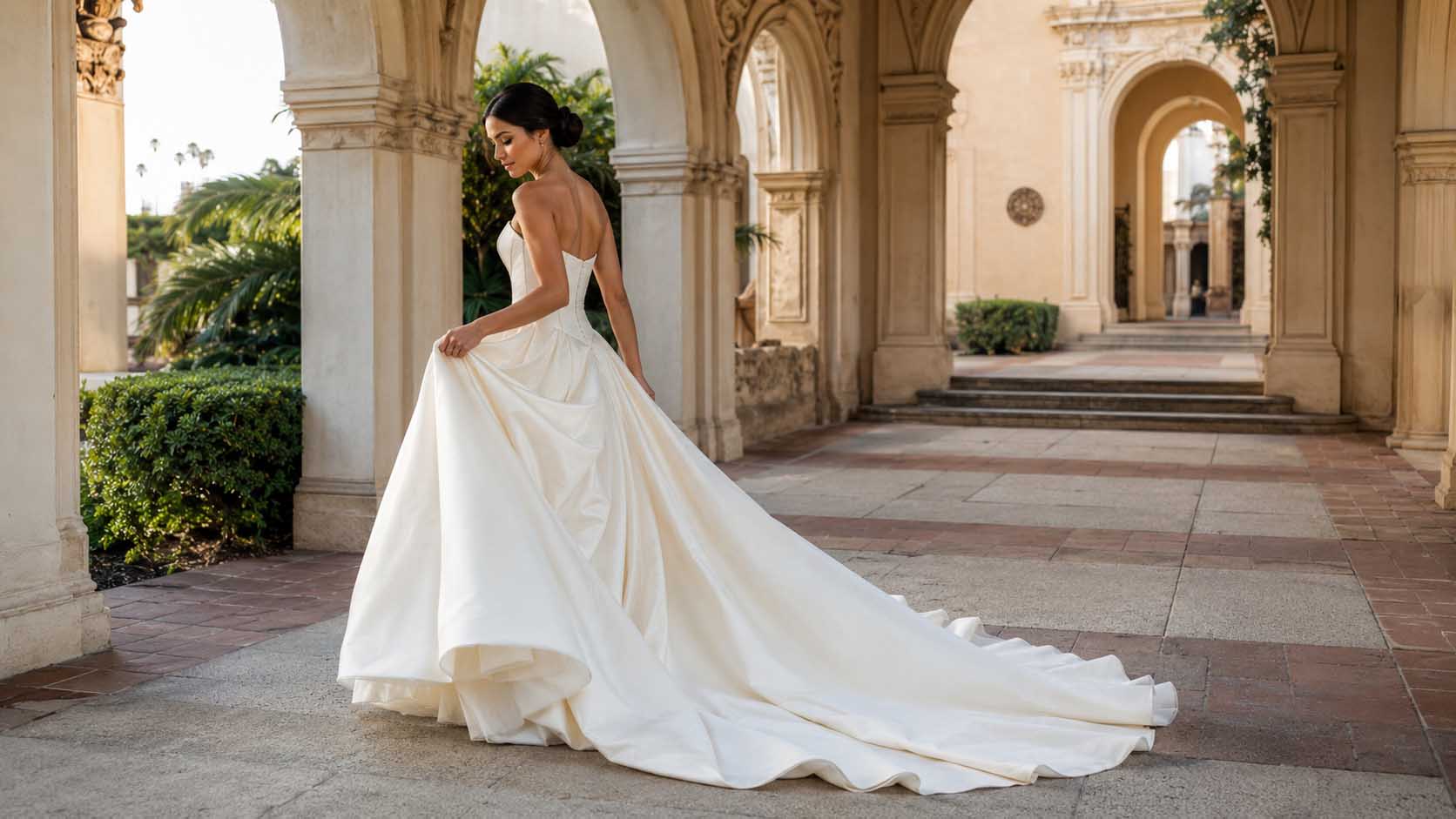
A ball gown balances a fitted bodice with substantial skirt volume from a defined waist. That transition may sit at the natural waist, curve into a basque waist, or extend into a drop waist, changing the apparent bodice length and skirt scale.
A ball gown is not the same as an A-line wedding dress. An A-line skirt widens progressively from the waist or hip, creating a cleaner triangular line. A ball gown usually develops more immediate width and depth through gathered fabric, pleats, petticoats, crinoline, layered tulle, or structured construction.
Tulle produces soft volume. Organza holds an airy but crisper shape. Satin and Mikado create broader, more architectural planes. Horsehair braid helps define the hem, while petticoats and crinoline control how far the skirt stands away from the body.
Coverage of 2027 bridal trends has also highlighted pronounced skirt structures, layered tulle, and detachable elements.
Volume affects logistics. Test stairs, aisle width, vehicle entry, and the space around reception tables. A bustle can lift the train, but it does not remove the overall width or weight of the skirt.
Explore ball gown wedding dresses to compare soft and architectural interpretations rather than judging the category by one extreme example.
Compare romantic tulle, structured satin, corseted bodices, and modern couture volume designed to make an unforgettable entrance.
Explore Ball Gown Wedding Dresses
Detailed Mermaid vs. Ball Gown Comparison
Shape and Visual Impact
A mermaid gown creates a continuous line with a focal flare. A ball gown creates immediate bodice-to-skirt contrast and a broader visual scale. Either silhouette can be minimal, romantic, modern, or highly embellished.
Support and Internal Construction
Support comes from bodice architecture rather than the silhouette name. Boning, corsetry, cups, lining, waist stays, and correctly positioned seams can stabilize either style.
The neckline should remain secure when you raise your arms, turn, and sit. A mermaid bodice must coordinate with the waist and hip fit, while a ball-gown bodice may also help support the skirt’s weight.
Walking, Sitting, and Dancing
Mermaid movement depends on thigh ease, flare height, stretch, lining, and hem placement. A ball gown offers more leg room inside the skirt but requires greater awareness of the skirt’s width.
A close mermaid gown can restrict longer steps. A wide ball gown requires more floor space. Neither silhouette guarantees easier dancing.
Weight, Heat, and Wedding-Day Comfort
A crepe mermaid may feel cooler than a layered lace-and-tulle mermaid. A softly constructed ball gown may feel lighter than a heavily embellished fitted gown.
For a warm outdoor San Diego ceremony, assess the lining, bodice breathability, layer count, ceremony duration, and walking distance rather than judging comfort by silhouette alone.
Learn how professional bridal alterations can refine support, balance, movement, train length, and the intended shape of your gown.
Explore Wedding Dress Alterations
Fabric and Embellishment
Smooth fabrics reveal seams and the precision of the fit. Lace and appliqué can soften or redirect those lines, while beading adds visual richness and physical weight.
Mikado feels architectural, organza airy, satin polished, and layered lace textural. BTG’s lace vs. satin wedding dress guide expands on how fabric affects structure, movement, and appearance.
Photography From the Front, Side, and Back
Mermaid gowns create a defined profile and strong back flare. Ball gowns produce broader compositions and visible movement.
Review the gown from the front, profile, three-quarter, and back views. If permitted, take a short walking video. A still photograph cannot show whether the fabric collapses, swings, or holds its intended shape in motion.
Ceremony Entrance and Aisle Presence
A ball gown occupies a broad aisle composition. A mermaid creates a more focused silhouette followed by its flare and train.
Veil width, train length, aisle width, floral scale, and ceremony architecture determine how either entrance appears. The strongest look is proportioned to the setting.
Explore custom proportions, personalized details, detachable overskirts, and couture construction with Navid Noor in San Diego.
Discover Custom Wedding Dress Design
Trains, Bustles, and Reception Movement
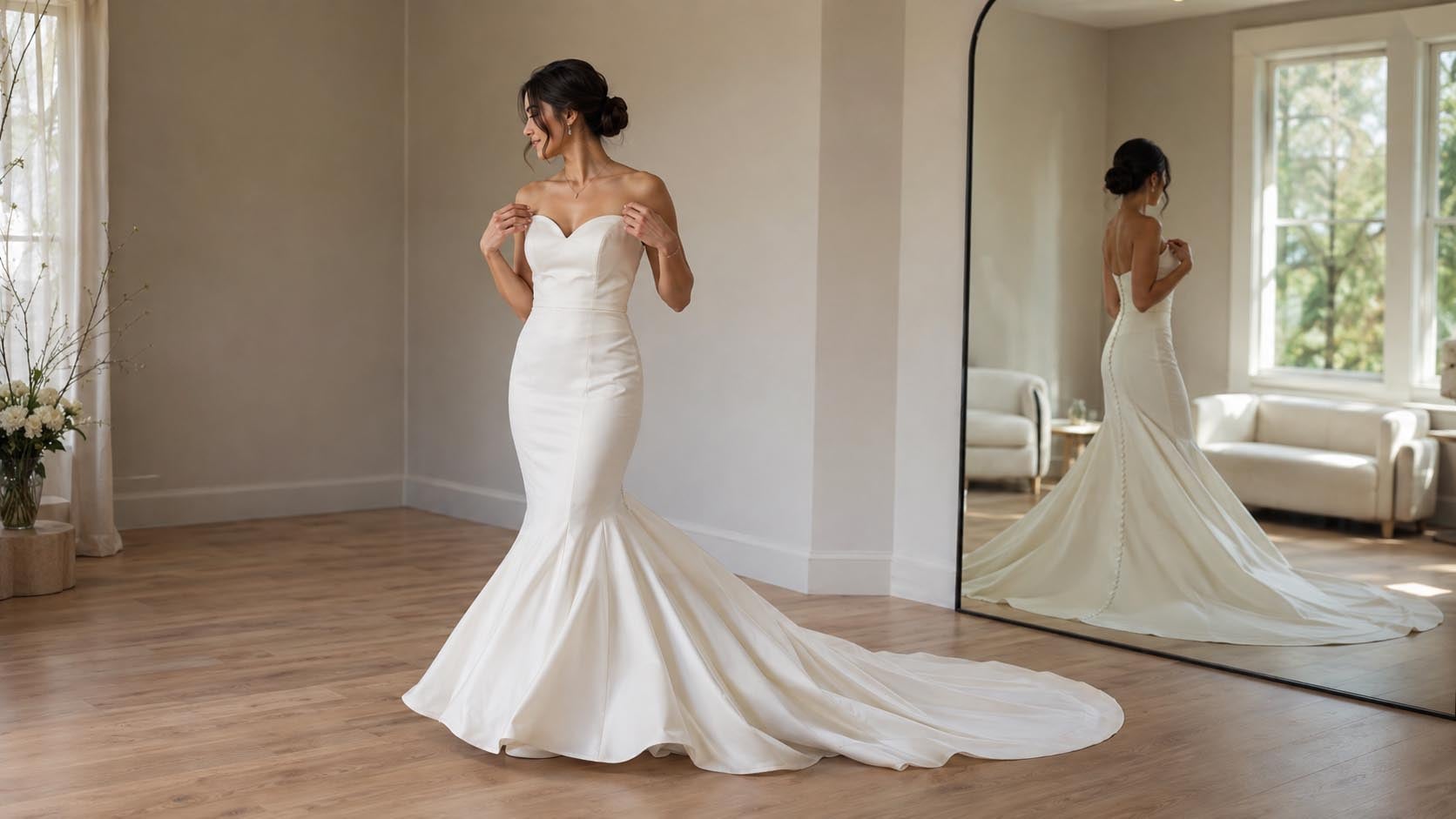
A bustle should preserve a mermaid gown’s flare or distribute a ball gown’s layers securely.
Review common wedding dress bustle types, then let the gown’s construction determine the most suitable method.
Alteration and Customization Considerations
Mermaid alterations must protect hip ease, seam direction, and flare position. Ball-gown alterations must align the bodice, waist, skirt layers, hem, and train.
Even a small alteration can shift the gown’s overall balance. Read how wedding dress alterations affect fit and movement before planning significant structural changes.
Venue and Level of Formality
Both silhouettes can adapt to coastal, garden, estate, museum, ballroom, rooftop, or hotel weddings.
Fabric, skirt scale, train, structure, and styling establish the gown’s formality more reliably than the silhouette name alone.
Budget Considerations
Silhouette does not determine price by itself. Designer, fabric, internal structure, handwork, embellishment, train, customization, and alteration requirements have a greater influence.
A minimally detailed ball gown may cost less than an intricately beaded mermaid gown, while an architectural ball gown may require more fabric and internal construction.
Which Silhouette Matches Your Bridal Vision?
Choose a mermaid direction if you want:
- A sculpted, body-conscious outline
- Strong emphasis on seam work and proportion
- A defined profile in photographs
- A sleek or dramatic fashion identity
- A fitted ceremony and reception look
Consider a ball gown direction if you want:
- A dramatic entrance
- Strong waist-to-skirt contrast
- A romantic, regal, or architectural look
- Visible skirt movement and volume in photographs
- A traditional bridal presence with couture scale
These are starting points, not rules. A minimalist ball gown may feel more restrained than an embellished mermaid gown, while a soft tulle ball gown may move more easily than a heavily structured fitted dress.
Try both silhouettes before deciding which description sounds most like you.
Respectful Answers About Height, Curves, and Midsection Preferences
Can a Petite Bride Wear a Ball Gown?
Yes. Scale the bodice, waist, skirt width, train, and accessories intentionally. Excessive length or layers are proportion issues, not reasons to reject a ball gown.
Can a Plus-Size Bride Wear a Mermaid Dress?
Yes. Neckline, support, seam direction, hip ease, flare point, and fabric should serve the bride’s preferences. The goal is a stable, comfortable gown—not qualification for a particular shape.
Which Silhouette Creates More Waist Definition?
A ball gown uses bodice-to-skirt contrast, while a mermaid uses continuous contour and seam placement. The stronger waist definition depends on the actual waist placement and construction.
What if I Prefer Less Definition Through My Midsection?
Consider fabric body, drape, waist placement, and the skirt transition. A ball gown creates separation at the waist, while fitted gowns can use draping or structure to create a smoother visual line.
Can a Mermaid Gown Provide Strong Bust Support?
Yes. Boning, cups, corsetry, a waist stay, lining, and a stable neckline can support a mermaid gown. Test the bodice while sitting, turning, and raising your arms.
Can a Ball Gown Overwhelm a Smaller Frame?
It can when the bodice, skirt, train, or accessories are out of scale. Adjusting waist placement, skirt diameter, layer count, and train length can preserve the ball-gown effect without dominating a smaller frame.
San Diego Venue and Climate Guide
San Diego combines grand interiors, coastal wind, gardens, stone courtyards, rooftops, and long outdoor paths. Either silhouette can work when planned around the setting.
Coronado Ballrooms
A ball gown can complement a formal ballroom’s scale, while a mermaid offers drama with less width. Confirm aisle dimensions, elevators, vehicle access, and reception layout.
La Jolla Coastal Ceremonies
Coastal wind can lift tulle, veils, and overskirts. Either silhouette can work when the layer weight, hem, train, and bustle are controlled.
Del Mar Oceanfront Weddings
Consider warmth, ceremony surfaces, sea air, and walking distance. Ask how the fabric and train will travel rather than which shape appears more “beach appropriate.”
Rancho Santa Fe Estates
Gardens, gravel, lawns, and broad ceremony settings reward thoughtful train handling and a skirt scale proportioned to the property.
Balboa Park Weddings
Stone walkways, stairs, gardens, museums, courtyards, and photography routes affect skirt and train choices. BTG’s guide to wedding dress styles for Balboa Park provides more location-specific guidance.
Downtown San Diego Hotels and Rooftops
Elevators, narrow walkways, revolving doors, wind, and tighter reception floors should influence skirt volume, train length, and bustle design.
Consider the ceremony surface, photography route, transportation, reception space, and who will help manage the train. The venue should refine a silhouette, not dictate one.
Navid Noor’s Couture Perspective
From Navid Noor’s couture perspective, silhouette selection is a construction and movement decision.
A mermaid gown changes with flare placement, seam direction, and fabric. A ball gown changes with waist position, petticoat structure, skirt-layer weight, and hem support.
The bodice and skirt must work together. Corsetry, boning, cups, lining, and waist support create stability. Seams direct the eye, while the train should extend the silhouette without making the back feel disconnected from the front.
Most importantly, the design must be evaluated in motion.
The Navid Noor Couture Collection can explore a personalized waist, flare, train, or removable volume. A detachable overskirt must coordinate its attachment, weight, waist structure, and visual transition with the fitted base.
Learn more about BTG’s approach to custom design wedding dresses.
The Bridal Appointment Movement Test
Use this checklist when comparing mermaid and ball gown wedding dresses:
- Walk naturally.
- Sit fully.
- Turn in both directions.
- Take a longer stride.
- Raise both arms and check the neckline.
- Step onto a low platform when safely permitted.
- Review front, profile, three-quarter, and back views.
- Walk with the train released.
- Ask how the bustle works and who should learn it.
- Notice pressure at the waist, hips, thighs, neckline, and underarms.
- Consider your venue surfaces, transportation, photography route, and dancing plans.
- Take a short movement video if the boutique permits.
Do not make large movements while a gown contains exposed pins or temporary fitting work.
Use BTG’s guide to prepare for your first bridal appointment for a more focused and productive comparison.
Can You Combine a Mermaid and Ball-Gown Look?
Yes, when the components are structurally compatible.
A detachable layered-tulle or structured-satin overskirt can create ball-gown volume for the ceremony and reveal a fitted mermaid gown for the reception. A removable train, custom skirt, ceremony cape, or wider veil can also add scale.
Not every mermaid gown can accept an overskirt. Secure attachment points must carry the added weight, clear existing embellishment, align with the designed waist, and complement the underlying flare.
An incompatible overskirt can pull, twist, or create an awkward transition between the fitted gown and the added volume.
For an integrated transformation, plan the base silhouette, overskirt, attachment system, train, and reception reveal as one design through Navid Noor Couture or BTG’s custom-design service.
A Five-Question Decision Test
Ask yourself:
- How do I want to feel when I enter the ceremony?
- How much fitted definition or skirt volume feels true to my style?
- What movements will I need throughout the wedding?
- How will my venue, climate, and photography plans affect the gown?
- Which silhouette feels most like me when it is properly fitted?
A mermaid gown usually provides a more sculpted and fitted visual identity, while a ball gown creates stronger waist-to-skirt contrast and a larger-scale bridal presence.
The right choice can only be confirmed by evaluating the actual gown’s construction, fabric, fit, and movement on you.
Frequently Asked Questions
What Is the Main Difference Between a Mermaid and Ball Gown Wedding Dress?
A mermaid wedding dress remains fitted through the hips and upper legs before opening into a defined flare. A ball gown combines a fitted bodice with a substantially fuller skirt beginning near a designed waistline. Mermaid emphasizes contour and the flare point; ball gown emphasizes waist-to-skirt contrast and volume.
Is a Mermaid or Ball Gown More Flattering?
Neither silhouette is universally more flattering. The stronger choice depends on neckline, waist placement, support, seam direction, fabric, flare or skirt scale, and the bride’s preferred visual identity. A properly proportioned gown in either silhouette can look balanced. Fitting quality matters more than a generalized body-type rule.
Which Wedding-Dress Silhouette Is More Comfortable?
Comfort depends on construction, weight, fit, fabric, and movement requirements. A fitted mermaid may limit stride if the thigh is too close, while a layered ball gown may feel warm or occupy more space. Try sitting, walking, turning, and raising your arms in each actual gown before comparing comfort.
Is It Hard to Walk or Sit in a Mermaid Wedding Dress?
It should not be impossible to walk or sit in a properly fitted mermaid gown. Mobility depends on hip and thigh ease, flare height, stretch, lining, and hem. A more restrictive design may require controlled steps, but safe walking and full seated comfort should be evaluated before purchase and during alterations.
Can a Petite Bride Wear a Ball Gown?
Yes. A petite bride can wear a ball gown when bodice length, waist placement, skirt width, layer count, train, and accessories are proportioned thoughtfully. A smaller-scale ball gown can retain the full-skirted effect without dominating the bride. The solution is refinement, not excluding the silhouette.
Can a Plus-Size Bride Wear a Mermaid Wedding Dress?
Yes. A plus-size bride can wear a mermaid gown when it provides the support, ease, and design expression she wants throughout the day. Corsetry, neckline stability, seam placement, fabric behavior, hip ease, and flare position should be assessed on her—not selected from a rigid body-shape chart.
Which Is Better for a Beach Wedding: Mermaid or Ball Gown?
Neither is automatically better for a beach or coastal wedding. A lightweight mermaid may be easier to manage on a narrow path, while a softly layered ball gown can work beautifully on a lawn or terrace. Consider wind, heat, sand or grass, train length, layer weight, and walking distance.
Which Is Better for a Ballroom Wedding?
Both can suit a ballroom. A ball gown can echo the room’s scale and create a broad entrance, while a mermaid can provide formal drama through sculpted lines, luxurious fabric, and a statement train. Let aisle width, dance-floor space, formality, and your desired presence guide the decision.
Is a Mermaid Wedding Dress the Same as Fit-and-Flare?
Not exactly. Fit-and-flare is a broader category for gowns fitted through the bodice and hips before widening. A classic mermaid usually stays close farther down the legs and has a more pronounced lower flare. Designers may label shapes differently, so evaluate the actual release point rather than relying only on the tag.
What Is the Difference Between Mermaid and Trumpet Wedding Dresses?
A trumpet gown generally begins flaring around the mid-thigh and opens more gradually. A mermaid usually remains fitted closer to the knee before releasing into a stronger fishtail shape. The precise distinction varies by designer, making flare placement, fabric, and freedom of movement more useful than terminology alone.
Is a Ball Gown the Same as an A-Line Wedding Dress?
No. An A-line skirt widens progressively into a clean triangular shape, while a ball gown creates more immediate width and volume from the waist. A-line dresses usually require less structural fullness. Ball gowns often use pleats, gathers, petticoats, crinoline, or multiple layers to establish their scale.
Which Silhouette Photographs Better?
Neither photographs better in every setting. Mermaid gowns often create a defined profile, hip line, and dramatic back flare. Ball gowns create broad shapes, movement, and strong wide-frame compositions. Your photographer’s style, venue, train, veil, lighting, and the way the fabric moves will influence the final images.
Are Ball Gowns More Expensive Than Mermaid Wedding Dresses?
Not necessarily. Price depends more on designer, fabric, layer count, internal structure, handwork, embellishment, train, customization, and alterations than on silhouette. A minimally detailed ball gown may cost less than an intricately beaded mermaid, while an architectural ball gown may require substantial fabric and construction.
Can I Add a Detachable Overskirt to a Mermaid Gown?
Sometimes. The gown’s waist structure, attachment points, embellishment, fabric, flare, and ability to carry added weight must be evaluated. A well-designed overskirt can create a ball-gown ceremony look and reveal a mermaid reception look, but not every finished gown can accept one safely or elegantly.
Which Silhouette Is Easier to Dance In?
The easier silhouette is the one that supports your planned movement. A mermaid with a higher flare, appropriate ease, and flexible fabric may dance well. A ball gown offers leg room but takes up more floor space and may feel heavier. Test controlled dance steps and ask how the train will bustle.
Can Alterations Make a Mermaid Gown More Comfortable?
Yes, within the gown’s seam allowance and construction limits. A bridal alterations specialist may refine hip or thigh ease, lining, hem, straps, cups, or bustle placement while protecting the intended silhouette. Major changes are not always feasible, so discuss comfort concerns before ordering and during scheduled fittings.
What Fabrics Work Best for Mermaid and Ball Gown Wedding Dresses?
The best fabric depends on the intended result. Crepe, satin, and lace can produce sleek or textural mermaid gowns. Tulle, organza, satin, and Mikado can create soft or architectural ball gowns. Weight, drape, stretch, sheen, embellishment, layer count, and venue conditions matter more than a universal fabric rule.
Should I Try Both Silhouettes at My First Bridal Appointment?
Yes. Trying both provides a meaningful comparison of contour, waist placement, volume, movement, and emotional response. Even if you arrive with a favorite, one carefully chosen gown from the contrasting category can confirm your preference or reveal a new direction. Compare the actual fit rather than online photographs alone.
Try Mermaid and Ball Gown Wedding Dresses in San Diego
The meaningful difference in a mermaid vs ball gown wedding dress decision is not simply fitted versus full. It is how flare, waist placement, fabric, support, train, movement, and venue come together on you.
You do not need to settle the choice from photographs.
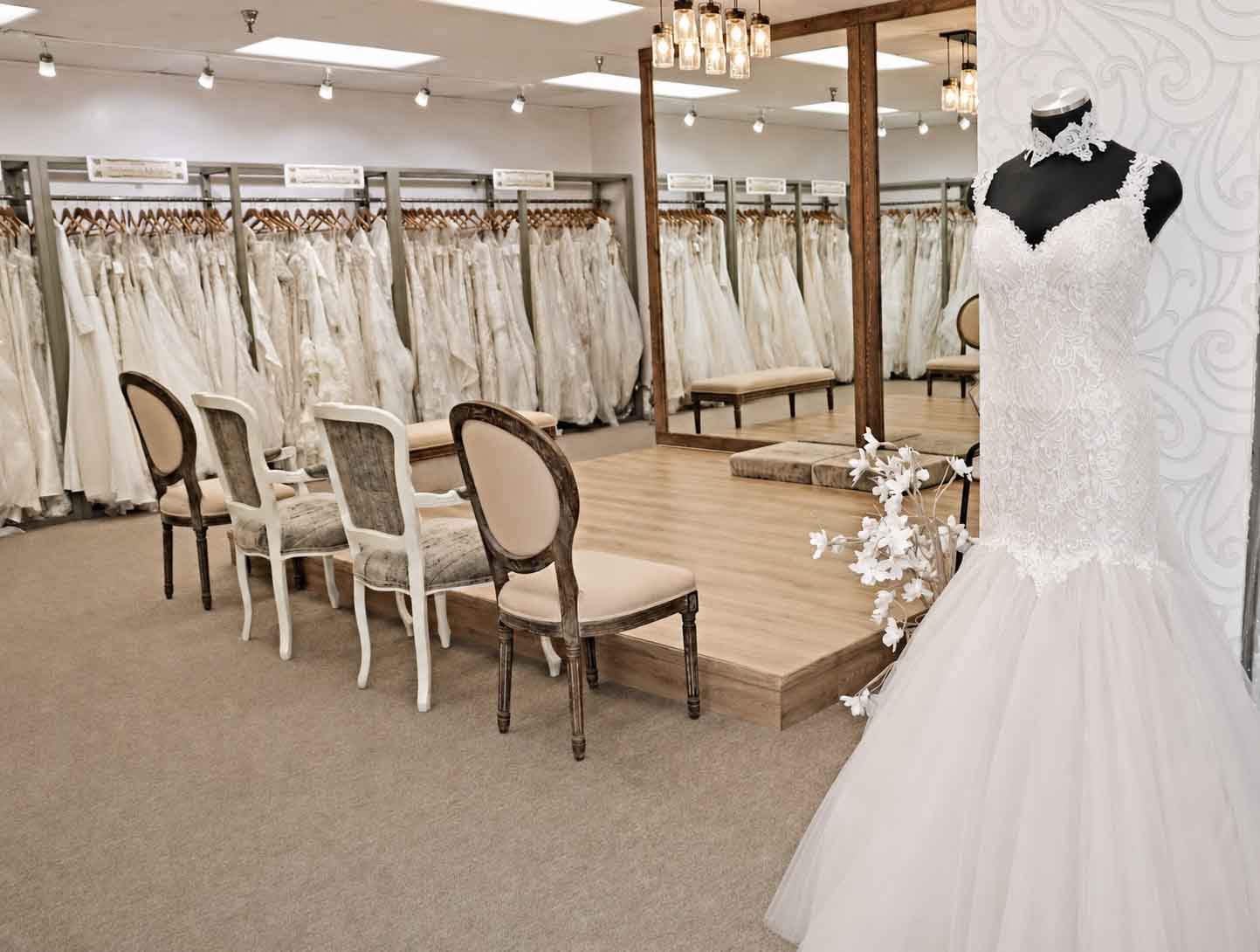
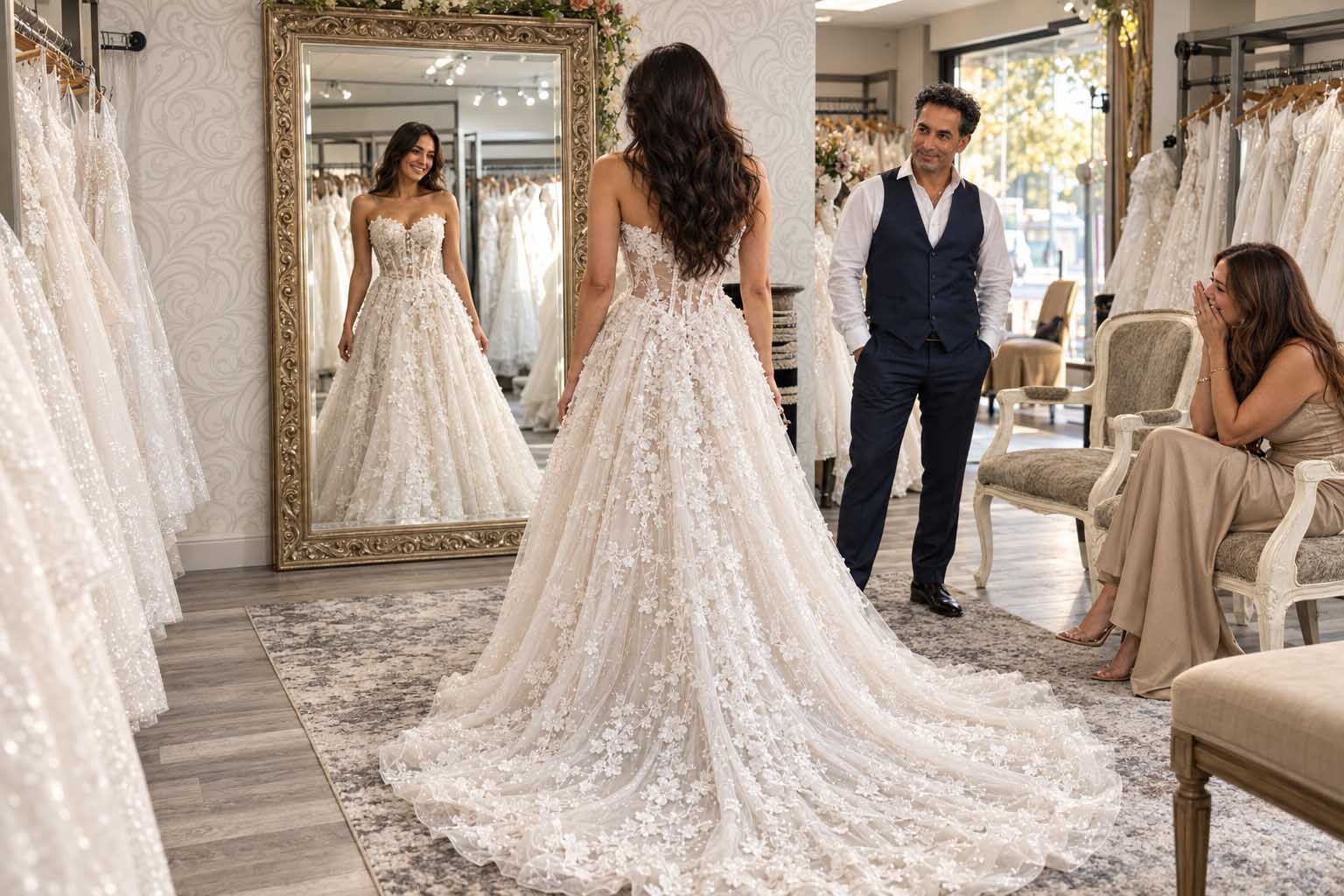
During a private, one-on-one appointment at Bridal & Tuxedo Galleria, you can compare both silhouettes, explore the Navid Noor Couture Collection, and discuss custom-design possibilities and in-house alteration considerations with a team backed by more than 30 years of bridal experience in San Diego.
Book Your Couture Bridal Appointment
Compare mermaid, ball gown, and customizable couture silhouettes with personalized guidance at Bridal & Tuxedo Galleria in San Diego.

Author bio :
Kayla brings more than 10 years of hands-on experience in bridal fashion and boutique styling, specializing in personalized bridal consultations and luxury client experiences. As the manager of the San Diego location of Bridal and Tuxedo Galleria, she is known for her keen eye for detail, deep understanding of couture wedding dress design, and ability to guide brides toward a gown that reflects their unique vision and wedding aesthetic. Her approach blends fashion expertise with genuine care, ensuring every bride feels confident, understood, and unforgettable on her wedding day
Call Now

Your Personalized Wedding Dress Shopping Experience in San Diego With over 30 years of styling expertise, our dedicated team is passionate about helping you find the perfect wedding dress and tuxedo.


Leave a Reply