
Low Back Wedding Gown: An Expert Guide to Fit, Support and Style
The back of a bridal gown remains in view down the aisle, during the ceremony, in portraits and through the first dance. A low back wedding gown makes those moments part of the design through a V, scoop, illusion panel or sculpted opening. The goal is a dramatic line without sacrificing support, comfort or confidence.
What is a low-back wedding gown?
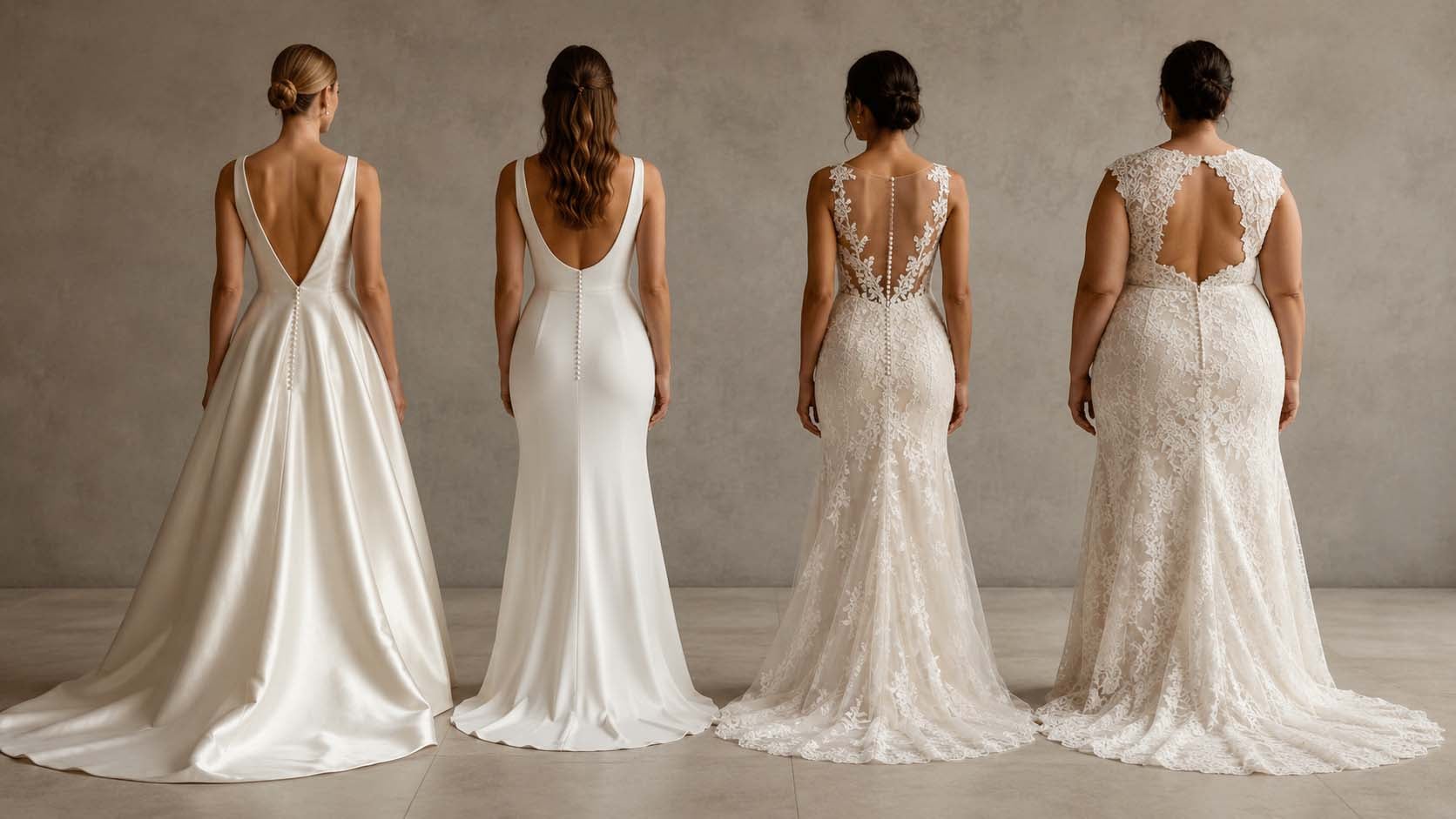
A low-back wedding gown has a bodice that falls below the conventional upper- or mid-back line, revealing more of the back through a V, scoop, keyhole, illusion panel or open shape. It is not necessarily fully backless. Straps, boning, cups, side seams and transparent support panels can remain part of its construction.
What Is Considered a Low-Back Wedding Gown?
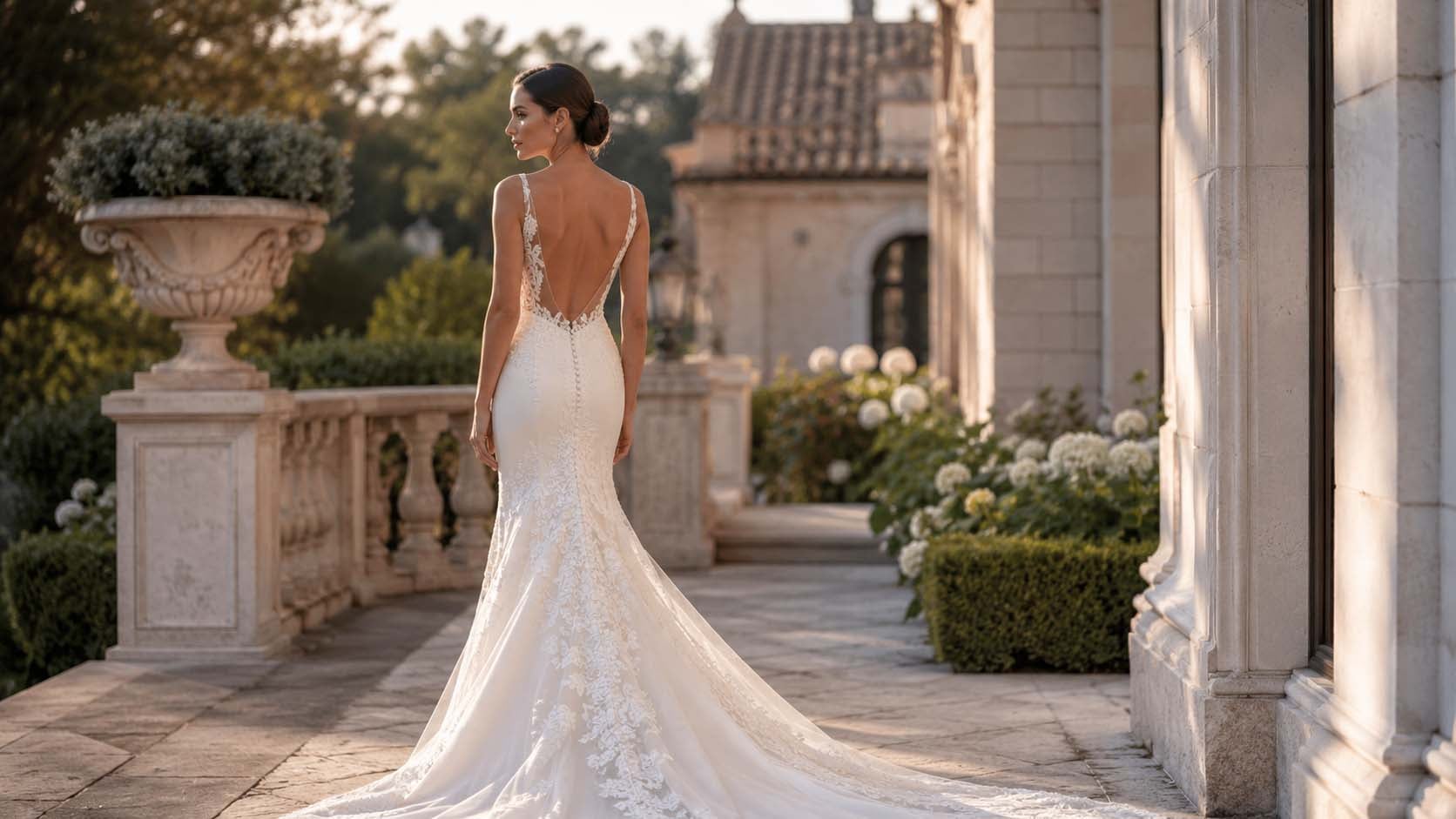
A conventional gown usually closes across the upper or middle back. A low-back design drops that edge lower, often toward the natural waist, while an open-back gown uses a framed cutout and a fully backless gown removes most visible coverage across the back.
Depth alone does not determine the effect. A narrow V can reveal less than a wide scoop at the same level. Straps, boning and stabilized side seams can secure the bodice, while fine straps and soft fabric may offer less control. Illusion tulle can connect lace or support an edge, while closures must be integrated without interrupting the line.
Expert fit note: Editorially summarizing Navid Noor’s couture perspective, a successful low back depends on the entire bodice architecture. The neckline, cups, straps, waist and side seams must work as one structure.
The Most Beautiful Types of Low-Back Wedding Dresses
The right back shape should support the gown’s overall design and the bride’s preferred level of coverage.
Deep V-Back
A deep V-back creates a long line that draws the eye toward the waist and train. Common on A-line, mermaid and fit-and-flare gowns, it needs secure straps, side seams and bodice structure.
Soft Scoop Back
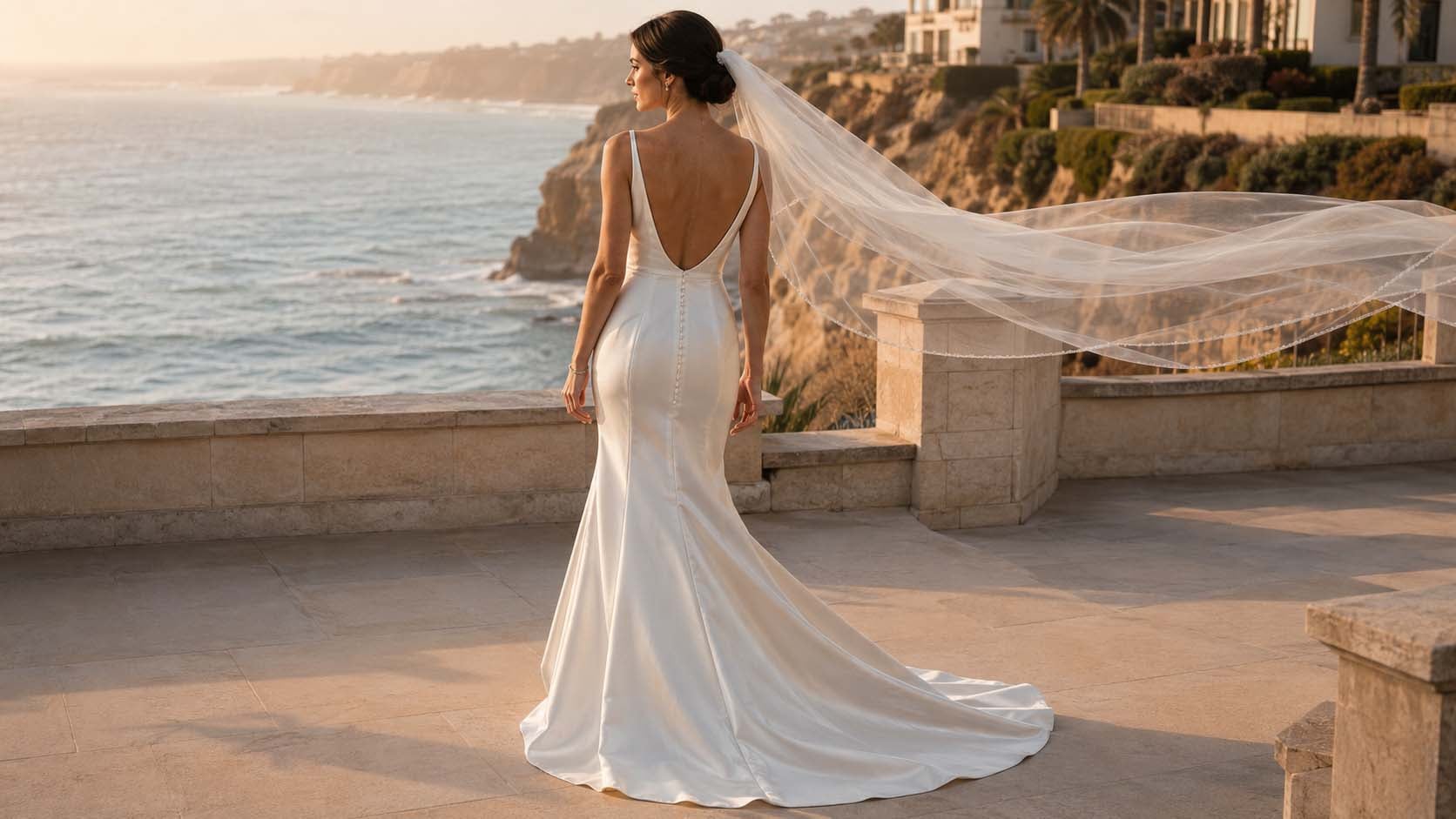
A scoop-back wedding dress feels rounded and graceful in satin, crepe, A-line or sheath designs. Its wide upper edge should be fitted to prevent gaping while sitting or embracing.
Illusion Back
An illusion-back wedding gown uses sheer mesh to support lace, buttons or appliqués while appearing open. It offers visual coverage and detailed close-up photography, provided the mesh color and edges are matched thoughtfully.
Lace or Appliqué Back
A low-back lace wedding gown can frame the opening or create lace that appears to float on the skin. It suits romantic settings when coverage is appropriate, but pattern continuity must be protected during alterations.
Cowl Back
A cowl-back bridal gown drapes softly in satin or fluid crepe and moves beautifully in rear photographs. Because it relies on drape rather than compression, support must come from elsewhere in the bodice.
Keyhole Back
A keyhole-back wedding dress creates an oval, teardrop or geometric opening framed by fabric. It gives photographs a defined focal point, while an upper closure may help stabilize the shoulders.
Open Back With Straps
Crossed, straight or embellished straps add graphic detail and may distribute tension across an open bodice. Test them during arm movement to ensure they stay secure without digging or pulling.
Low Back With Sleeves
A low-back wedding gown with sleeves balances arm coverage with openness behind. Lace or illusion sleeves can feel formal or romantic, but sleeves alone do not add bust support. The shoulder and bodice still need appropriate structure.
| Back style | Visual effect | Relative support potential | Best design consideration |
|---|---|---|---|
| Deep V | Long, sculpted and dramatic | Moderate to strong with secure straps and corsetry | Balance the V depth with the neckline and waist |
| Scoop | Soft, classic and open | Variable, depending on width and edge stability | Prevent gaping during movement |
| Illusion | Bare-looking with detailed coverage | Often adaptable because mesh connects the design | Match the mesh tone and preserve clean edges |
| Lace or appliqué | Romantic, dimensional and ornate | Variable and potentially reinforced | Maintain lace-pattern continuity |
| Cowl | Fluid and fashion-forward | Usually relies on front and side structure | Select fabric with the appropriate drape |
| Keyhole | Framed and architectural | Often moderate with an upper closure | Test closure tension and shoulder fit |
| Strappy open back | Graphic and modern | Variable according to strap width and placement | Test arm movement and pressure points |
| Low back with sleeves | Covered at the arms and open behind | Variable because sleeves alone do not create support | Engineer the sleeves, shoulders and bodice together |
Support potential is relative. Gown construction, sizing and alterations can change how secure any back style feels.
Not sure how low you can go without losing support? A bridal stylist can help you compare back shapes in person and evaluate the complete bodice rather than a photograph alone.
Can a Low-Back Wedding Gown Still Be Supportive?
Yes, a low-back wedding gown can be supportive when its bodice is designed and fitted correctly. Boning, structured cups, corsetry, a waist stay, wider straps, stabilized side seams and strategic seaming can replace some of the support lost at the back. Illusion mesh may help control an edge, but it does not replace properly fitted structure.
For greater bust support, cup position, torso length and neckline matter as much as back depth. A secure waist, correctly placed cups and well-anchored straps can add stability. A very low front and back leave fewer structural options, so a slightly higher back may create a smoother and more secure line.
Try the gown rather than judging support from an online image. Sit, breathe deeply, raise your arms, walk and make a dancing motion. A supportive gown should remain aligned without requiring constant adjustment.
What Do You Wear Under a Low-Back Wedding Dress?
Many structured gowns have built-in cups or sewn-in support and do not require a separate bra. Other possibilities include a low-back bodysuit, convertible bra, adhesive cups, nipple covers, fashion tape or low-rise shapewear.
The right option depends on the gown’s neckline, side openings, fabric opacity and internal construction.
Bring possible undergarments to a fitting. Bodysuit edges may show under crepe, bra bands may rise above the back, and shapewear seams can interrupt a close fit. Patch-test adhesive products before the wedding and follow the manufacturer’s directions. No single product is appropriate for every body or gown.
Choosing the Right Low Back for Your Silhouette
The back should continue the visual language established by the front, waist and skirt.
On an A-line wedding dress, a V or scoop can lead naturally into the defined waist. Ball gowns can carry either an architectural back or a romantic illusion panel when the bodice is visually balanced against the skirt’s volume.
A mermaid or fit-and-flare wedding dress may use a V, straps or lace to extend the fitted line toward the flare.
Sheath and column gowns often favor a scoop, cowl or open back because the uninterrupted skirt keeps attention on fabric drape. On a drop-waist gown, the back should connect deliberately to the elongated bodice.
No silhouette determines one correct back. The front neckline, strap direction, waist placement, torso length and skirt volume should be assessed together.
Low-Back Wedding Gown Fabrics and Details
Fabric determines whether a low back looks crisp, fluid or barely there.
Satin and Mikado create polished, architectural edges. Their weight can support structured seams, but these fabrics must be carefully fitted around the curves of the back and waist.
Crepe offers a sleek, modern line, although its stretch and smooth surface may reveal undergarment or seam impressions.
Tulle and illusion tulle create transparent support and appliqué bridges. Chantilly lace produces delicate texture, while beaded lace adds weight that must be stabilized. Embroidered appliqués can soften structural transitions or create a gradual fade across sheer mesh.
Pearls and crystals catch the light in close photographs, but their placement can affect comfort against chairs, long hair and veil combs.
The Victoria and Albert Museum’s wedding-dress collection illustrates the extraordinary variety of bridal fabrics, lace and embellishment. In modern couture, a back that appears weightless may still require precise hidden engineering.
Will a Low-Back Wedding Dress Work for a San Diego Wedding?
Yes. A low-back gown can be especially expressive in San Diego’s coastal light, but the venue, temperature, wind and ceremony layout should guide the design.
For an oceanfront event, choose breathable lining, secure straps and a veil that will not repeatedly sweep across delicate appliqués. San Diego’s official beach-wedding guidance highlights the region’s coastline and moderate climate, but brides should still prepare for direct sunlight, ocean breezes and uneven walking surfaces.
Balboa Park’s architecture and gardens create strong opportunities for rear-view portraits. A deep V, row of buttons or lace frame can read clearly against the park’s detailed architectural backgrounds.
For garden ceremonies, consider the position of the sun, warmer periods of the day and cooling breezes. These practical considerations are also addressed in San Diego’s official park and garden wedding guidance.
Hotel and ballroom weddings can accommodate heavier satin, Mikado, beading and longer trains. Winery and estate settings often complement dimensional lace and softer movement.
In every setting, consider the ceremony angle, time spent outdoors, perspiration, walking distance and whether a lightweight train or veil will require additional wind control. Explore more guidance for selecting wedding dresses in San Diego for local venues and wedding conditions.
Can the Back of a Wedding Gown Be Altered?
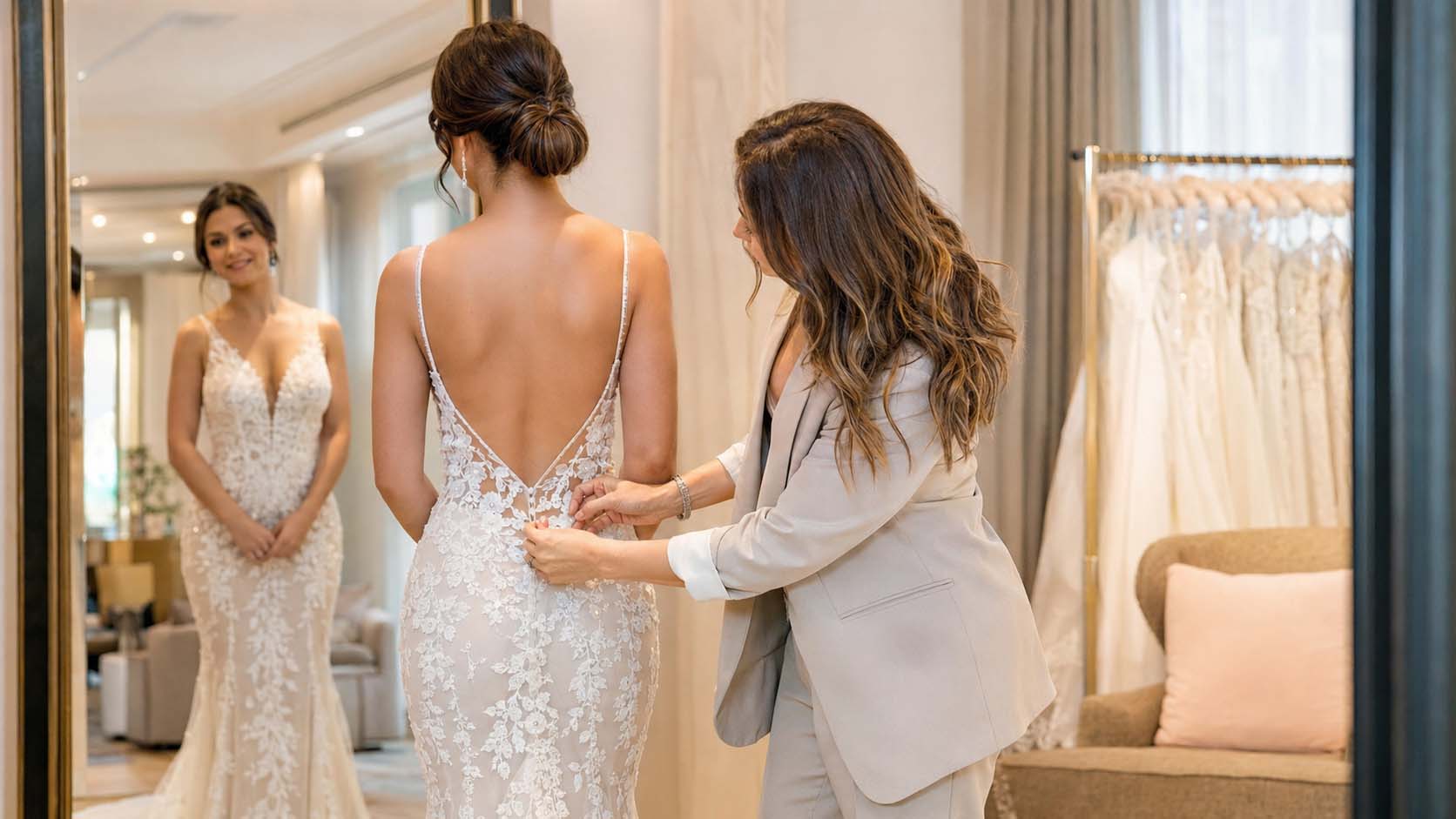
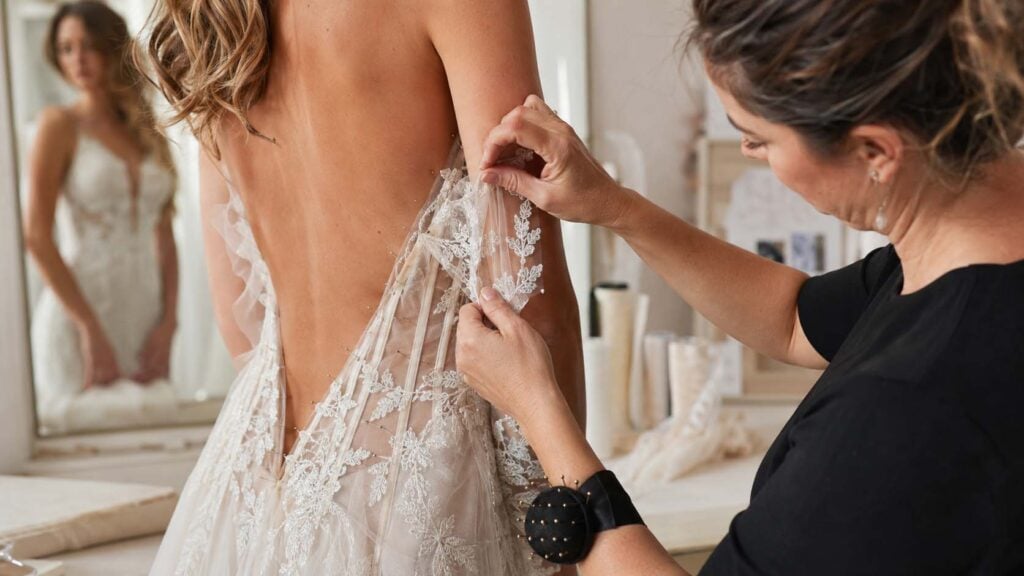
Often, yes. A skilled bridal alterations team may be able to raise the back, lower it modestly, reshape a V or scoop, add illusion tulle or lace appliqués, adjust straps, improve support or reposition closures.
The possibilities depend on the existing pattern, seam allowance, fabric, embellishment and internal bodice construction.
Major lowering can remove panels that stabilize the gown. Raising the back may require matching lace, new closures or a carefully designed insert. Beaded motifs may need to be removed and reapplied by hand.
These changes should be professionally evaluated before purchasing the gown. Brides should not assume that a significant structural change will automatically be possible after ordering.
Bridal & Tuxedo Galleria offers in-house wedding dress alterations in San Diego. The boutique’s detailed guide also explains how alterations affect fit, movement and proportion.
Bring the undergarments you plan to wear and your wedding shoes, or shoes with the intended heel height, to the fittings where those items are requested.
The Navid Noor Approach to Low-Back Couture
Couture treats the back of a wedding gown as part of a complete composition.
The bride’s proportions, neckline, waist, straps and desired coverage establish the framework. Internal support, lace and appliqués can then guide the eye toward the waist, train or veil. A gown edge that appears beautiful while standing must also remain controlled while the bride walks, embraces guests and dances.
From a couture-design perspective, the depth of the back should be planned together with the neckline, waist, straps and internal bodice construction. This approach also helps balance the scale of the train, veil transparency and the way the gown appears in front, side and rear photography.
Brides seeking a more individual direction can explore Lumière by Navid Noor wedding gowns through Bridal & Tuxedo Galleria.
Customization is considered within the complete design rather than treated as an isolated modification. Explore couture possibilities with Lumière by Navid Noor during a private, design-focused appointment.
How to Shop for a Low-Back Wedding Gown
Arrive prepared to assess the gown from every angle and in motion:
- Save front, side and back inspiration images.
- Decide how much coverage feels comfortable for the ceremony and reception.
- Share your venue, season and photography plans with the stylist.
- Bring appropriate undergarments and shoes with a comparable heel height.
- Sit, walk, raise your arms, embrace someone and make a dancing motion.
- View the gown in natural and indoor light when possible.
- Take photographs from behind if the boutique’s policy permits.
- Ask about customization before ordering the gown.
- Discuss the gown’s production and alteration timeline.
- Evaluate physical comfort and emotional confidence, not only a still mirror image.
Mothers and shopping companions can help by describing what they observe, such as posture, edge gaping or movement, while allowing the bride’s comfort and design preference to lead the decision.
For more planning guidance, review the boutique’s advice on how to prepare for your first bridal appointment.
Find Your Low-Back Wedding Gown in San Diego
At the Bridal & Tuxedo Galleria boutique, brides can compare designer and couture wedding gowns with one-on-one styling guidance.
An in-person appointment allows a bride to see how different back shapes behave on her body, compare support structures, discuss Lumière by Navid Noor customization and identify potential alterations before making a final decision.
Book Your Private Bridal Appointment
Receive personalized styling guidance, compare low-back wedding gown silhouettes and support structures, explore customization possibilities, and discuss in-house alterations with the San Diego bridal team.
For booking assistance, call (619) 281-4696.
Frequently Asked Questions About Low-Back Wedding Gowns
What is the difference between a low-back and backless wedding dress?
A low-back wedding dress lowers the bodice edge below a conventional back line but may retain straps, closures, illusion mesh or fabric at the sides. A backless wedding gown generally reveals most of the back. Bridal terminology varies, so evaluate the actual shape and construction rather than relying only on a product label.
Can a bride with a larger bust wear a low-back wedding gown?
Yes. Brides who want substantial bust support can wear a low-back gown when the design provides appropriate cups, boning, waist stability, straps and tailoring. The neckline, back depth, torso length and fabric must work together. Trying gowns in person is the most reliable way to compare secure options.
What bra works with a low-back wedding dress?
The right bra depends on the gown. Some structured wedding dresses do not require a separate bra because cups and support are built into the bodice. A low-back bodysuit, convertible bra or adhesive cups may work with other designs. Test the option with the actual gown so no band, edge or texture shows.
Can alterations make a low-back gown more supportive?
Yes. Alterations may improve support by adjusting straps, refining cup placement, stabilizing side seams, adding a waist stay or inserting appropriate structure. The available changes depend on the gown’s pattern and materials. A bridal alterations professional should assess the dress before promising a specific result.
Can the back of a wedding dress be raised for more coverage?
Often, the back can be raised with illusion tulle, lace, appliqués or a redesigned panel. The addition should integrate with the original neckline, closures and pattern. Fabric availability, matching lace and internal structure can limit the change, so request a professional assessment before purchasing the gown.
Are low-back wedding gowns appropriate for church ceremonies?
They may be, but ceremony expectations vary by church and officiant. Ask the venue about dress guidelines before ordering. A lace or illusion insert, detachable cape, bolero or veil may provide additional coverage when appropriate, but the complete solution should be tested with the gown and ceremony movements.
Do low-back wedding dresses work with long veils?
Yes. A sheer long veil can reveal the back beneath it and create layered movement in aisle photographs. Consider the veil’s comb placement, lace border, appliqués and exposure to wind. A dense veil may obscure intricate back details, while rough embellishments can catch delicate tulle.
Which hairstyle looks best with a low-back wedding gown?
An updo or side-swept style keeps the back visible, while long hair worn down creates a softer reveal. The right choice depends on the neckline, veil and desired mood. During the hair trial, photograph the complete look from behind and check whether the hair catches on embellishments.
When should I shop for a low-back wedding gown in San Diego?
Bridal & Tuxedo Galleria currently recommends ordering a wedding gown approximately six to nine months before the wedding to allow time for production, shipping and alterations. Custom work may require more time. Brides with shorter timelines should book promptly to discuss available gowns and possible rush options.
Where can I try on low-back wedding gowns in San Diego?
Brides can try designer, low-back and couture wedding gowns at Bridal & Tuxedo Galleria in San Diego. A dedicated appointment gives the stylist time to compare back depths, support, fabrics and silhouettes while discussing Lumière by Navid Noor customization and in-house bridal alterations.

Author bio :
Kayla brings more than 10 years of hands-on experience in bridal fashion and boutique styling, specializing in personalized bridal consultations and luxury client experiences. As the manager of the San Diego location of Bridal and Tuxedo Galleria, she is known for her keen eye for detail, deep understanding of couture wedding dress design, and ability to guide brides toward a gown that reflects their unique vision and wedding aesthetic. Her approach blends fashion expertise with genuine care, ensuring every bride feels confident, understood, and unforgettable on her wedding day
Call Now

Your Personalized Wedding Dress Shopping Experience in San Diego With over 30 years of styling expertise, our dedicated team is passionate about helping you find the perfect wedding dress and tuxedo.


Leave a Reply