
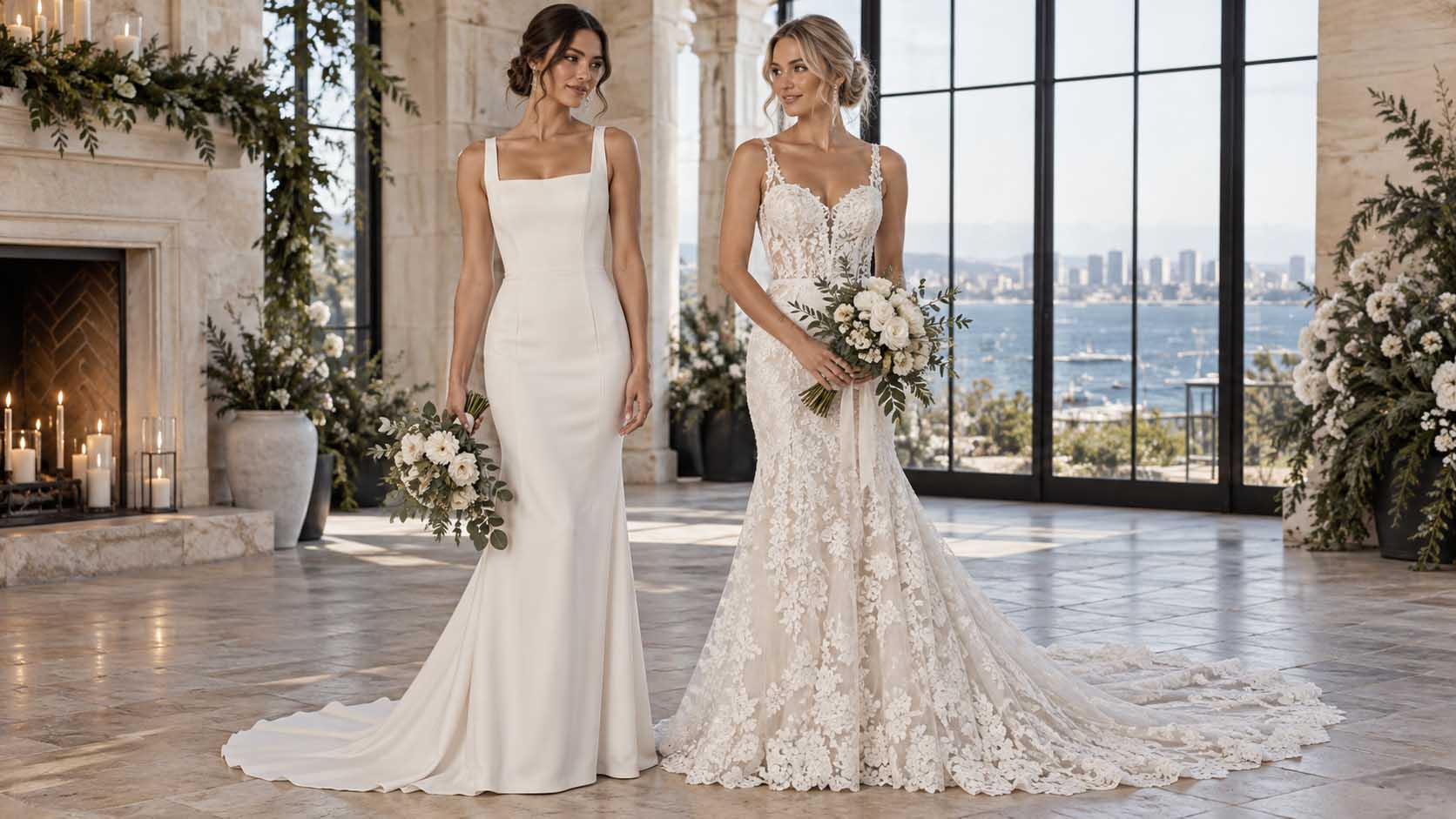
Sheath vs. Fit-and-Flare Wedding Dress: Which Is the Better Choice for a Winter Wedding?
If you are comparing a sheath vs fit and flare wedding dress for a winter wedding, the best choice depends on how you want your gown to look, move, and feel.
A fit-and-flare wedding dress is generally the stronger choice for brides who want a defined waist, a sculpted silhouette, and more ceremony drama. A sheath wedding dress is often better for brides who prefer clean lines, understated elegance, and a lighter silhouette for an intimate celebration, modern venue, or coastal San Diego wedding.
However, the season alone should not determine your silhouette. A wedding dress’s warmth and winter suitability depend more on its fabric, lining, sleeves, neckline, construction, train, and detachable layers. Both silhouettes can become beautiful winter wedding dresses when these elements are chosen intentionally.
Sheath vs. Fit-and-Flare Wedding Dress at a Glance
| Decision Factor | Sheath Wedding Dress | Fit-and-Flare Wedding Dress |
|---|---|---|
| Overall shape | Straight, narrow, and body-skimming | Fitted through the bodice and hips, then gradually flares |
| Bridal style | Minimalist, modern, and effortless | Romantic, glamorous, and sculpted |
| Visual drama | Subtle and refined | More pronounced, especially with a train |
| Movement | Often light and easy, depending on construction | Depends on where the skirt begins to flare |
| Winter styling | Works beautifully with sleeves, capes, and textured fabrics | Supports structured fabrics, statement lace, and formal trains |
| Best venue match | Courthouse, restaurant, rooftop, modern hotel, or coastal venue | Ballroom, estate, chapel, luxury hotel, or formal indoor venue |
| Best for | Brides who want clean lines and less volume | Brides who want waist definition and a fuller bridal effect |
| Main fitting concern | Smooth fabric can reveal small fit issues | Hip and thigh fit may affect sitting and walking |
What Is a Sheath Wedding Dress?
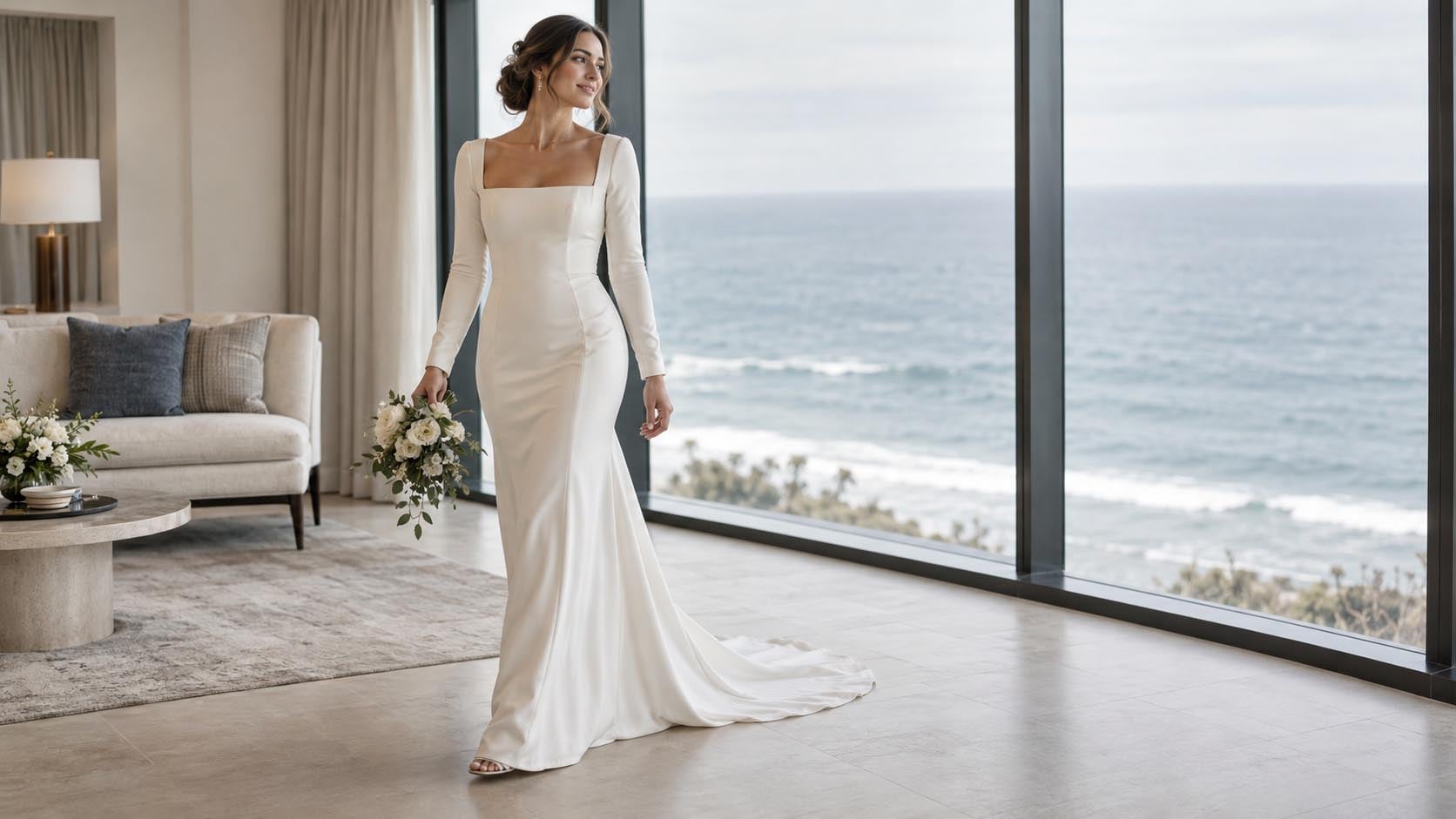
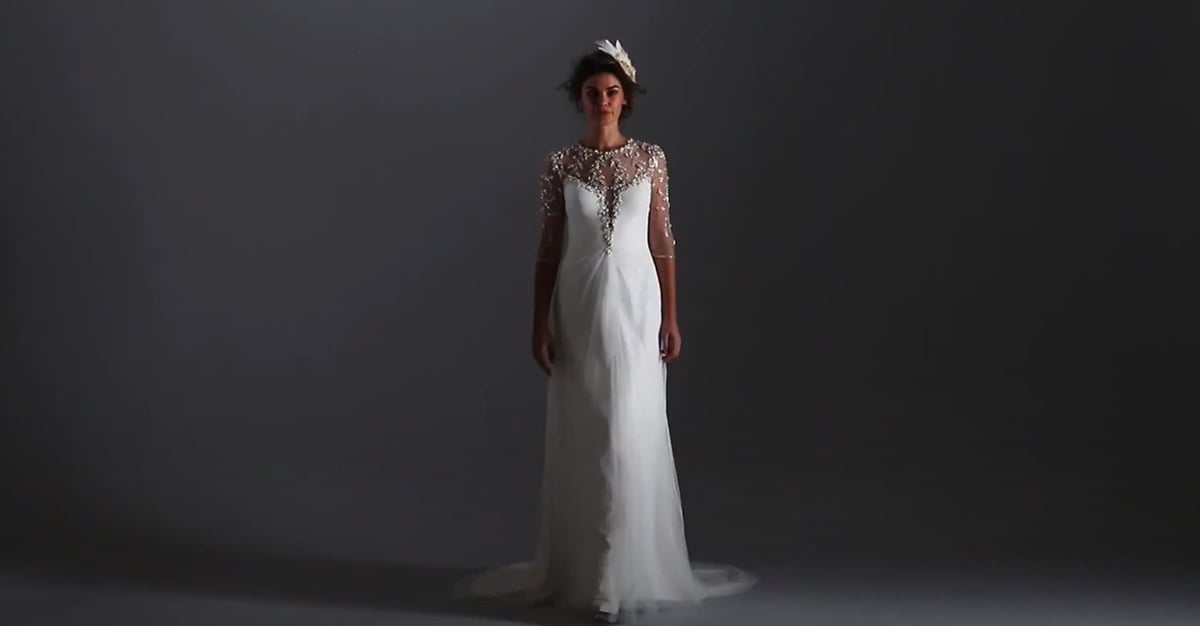
A sheath wedding dress, sometimes described as a column wedding dress, follows a relatively straight line from the neckline or waist toward the hem. It skims the body without creating a pronounced flare through the lower skirt.
As British Vogue’s wedding dress silhouette guide explains, a sheath or column gown has a fitted, straight shape that grazes the body down to the hem.
Because the silhouette is clean and narrow, the fabric and construction become especially important. Smooth crepe can create a modern, architectural look. Satin introduces soft luminosity for an evening ceremony, while lace adds romance and texture without creating a large skirt.
A sheath gown may also feature:
- A low or illusion back
- Long or detachable sleeves
- A square, bateau, or high neckline
- A chapel-length train
- A bridal cape or bolero
- A detachable overskirt
- Sculptural draping
- Minimalist corsetry
Why a Sheath Wedding Dress Works for Winter
A sheath gown is a strong winter option for brides who want sophistication without heavy skirt volume. It can be styled with:
- Long lace or lined crepe sleeves
- A fully lined bodice and skirt
- A bridal cape, bolero, or wrap
- A high, bateau, square, or illusion neckline
- A detachable overskirt for the ceremony
- A cathedral veil for greater visual impact
- Pearl, crystal, or floral embellishments
This silhouette is especially practical for an indoor San Diego winter wedding where the bride wants a polished seasonal look without needing a heavily layered gown.
A sheath dress may also transition more easily from the ceremony to the reception because there is usually less skirt to manage.
Explore Bridal & Tuxedo Galleria’s sheath wedding dress collection to compare crepe, satin, lace, illusion-back, and long-train designs.
What Is a Fit-and-Flare Wedding Dress?
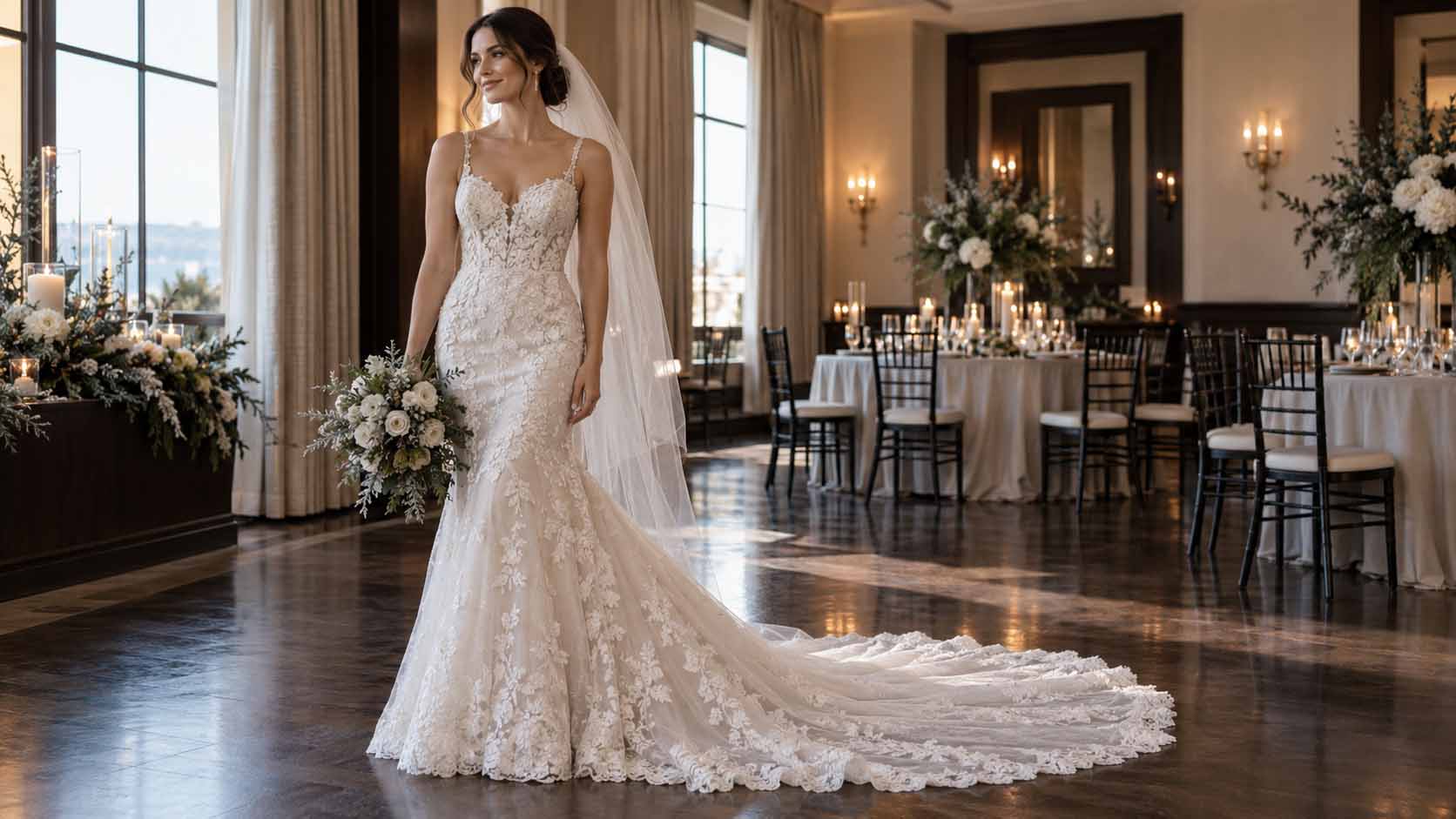
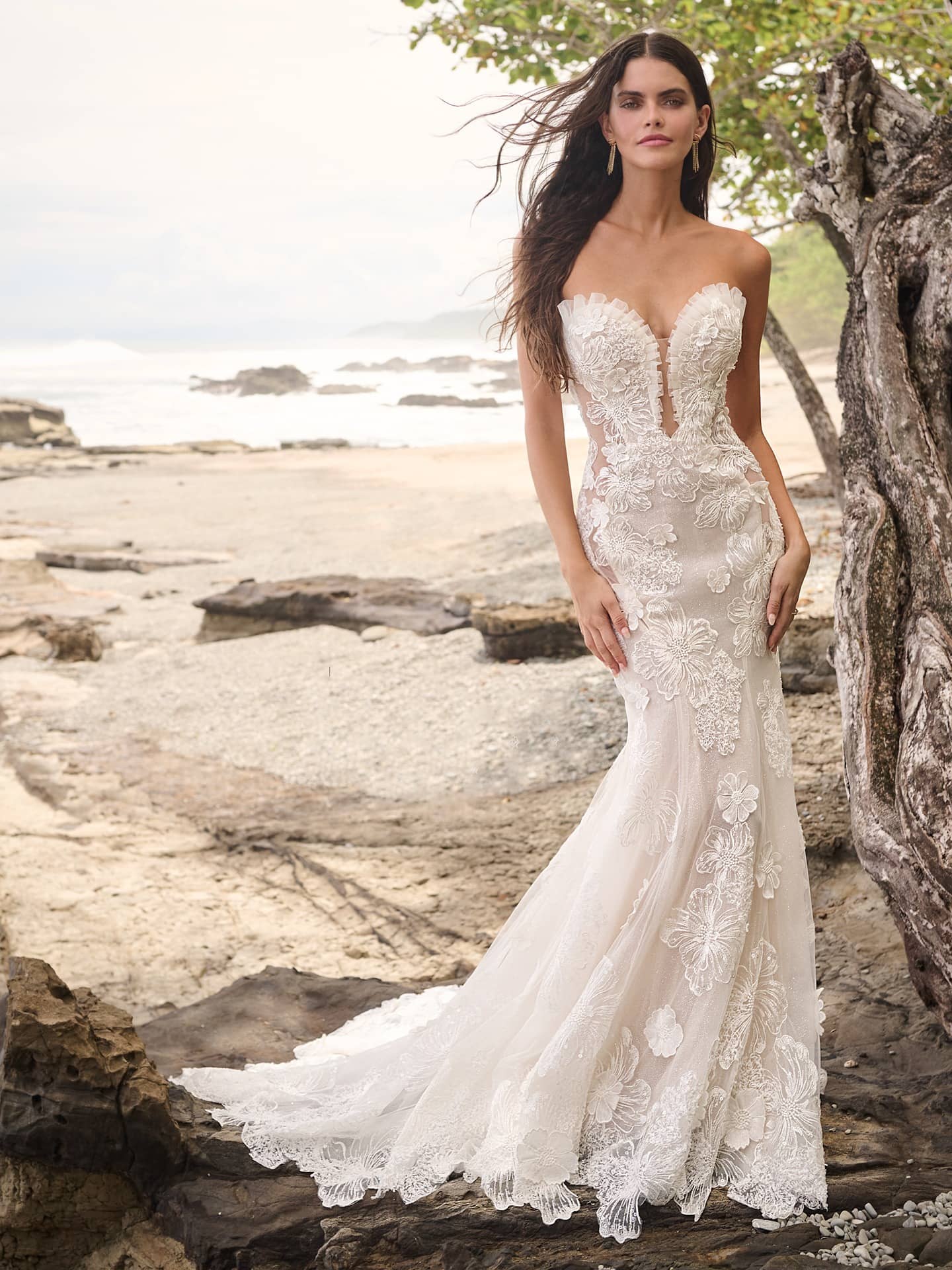
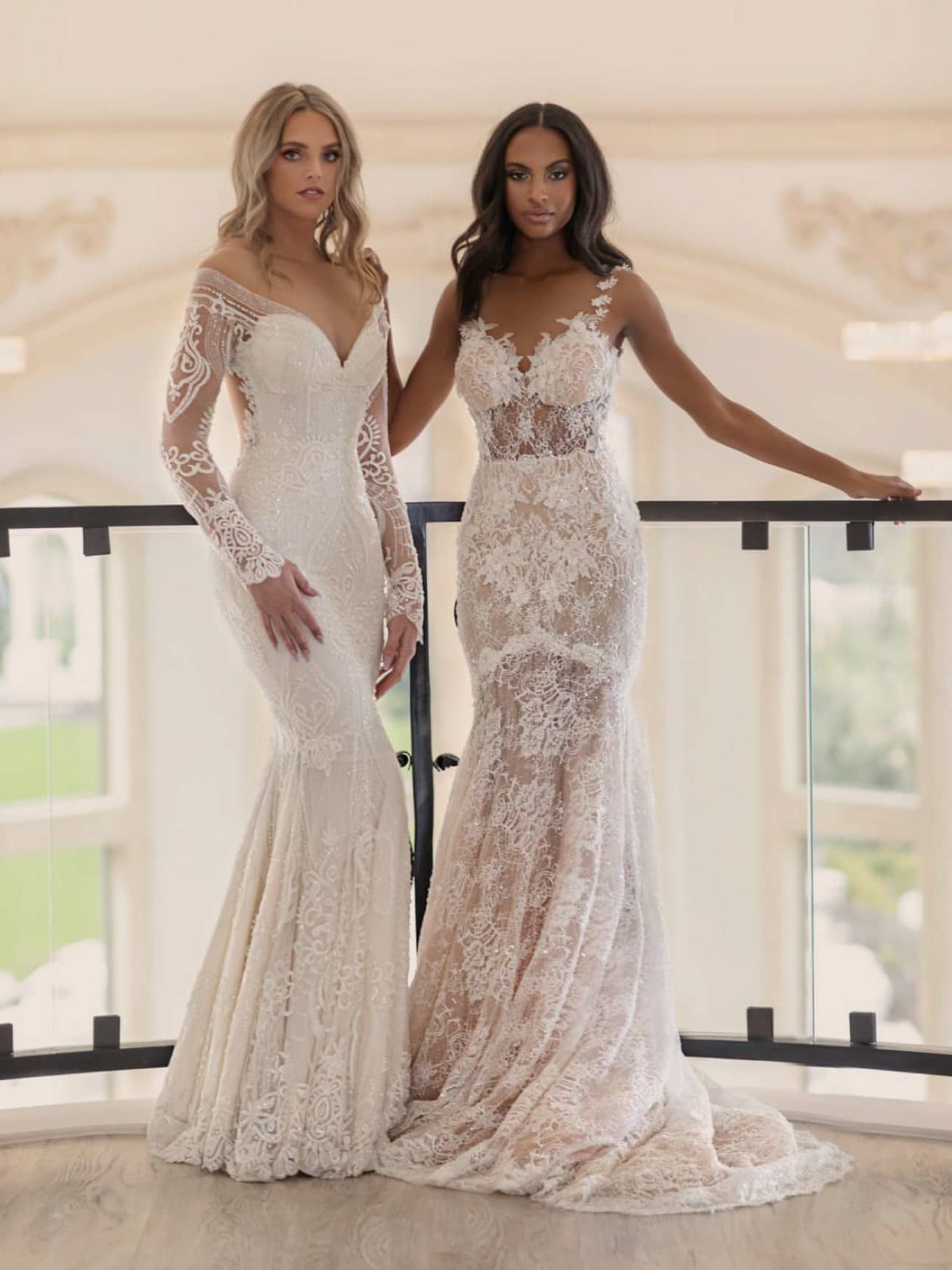
A fit and flare wedding dress follows the body through the bodice, waist, and hips before gradually opening into a fuller skirt. It is more sculpted than a sheath gown but usually less sharply flared than a mermaid silhouette.
British Vogue distinguishes a fit-and-flare gown from mermaid and trumpet wedding dresses by its softer, more gradual flare toward the hem.
The silhouette combines shape with movement. Depending on its fabric and construction, a fit-and-flare wedding dress can feel:
- Sleek and contemporary
- Romantic and feminine
- Glamorous and dramatic
- Minimalist and architectural
- Soft and bohemian
- Formal and couture-inspired
Fit-and-flare gowns can be created from stretch crepe, satin, Mikado, layered lace, organza, tulle, or a combination of fabrics.
Why a Fit-and-Flare Wedding Dress Works for Winter
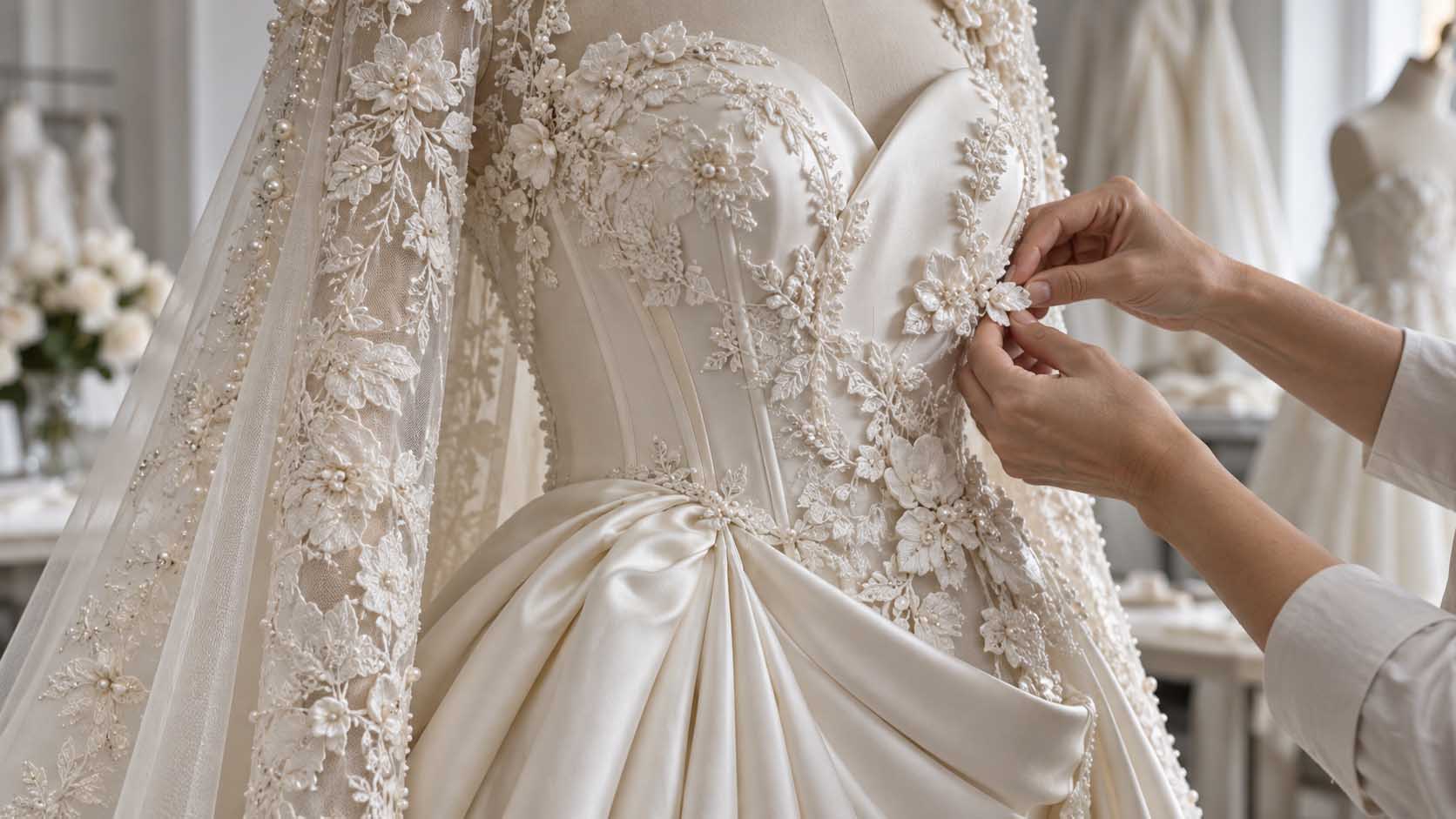
Fit-and-flare gowns naturally support the visual richness associated with winter weddings. Structured satin or Mikado can produce a crisp, formal silhouette, while floral lace, dimensional appliqués, beadwork, and long sleeves create depth under candlelight or evening venue lighting.
A chapel or cathedral train also gives the gown greater presence in a ballroom, historic property, luxury hotel, estate, or traditional ceremony space.
Current winter bridal styling embraces high necklines, long sleeves, luxurious fabrics, capes, and detachable layers. Kleinfeld Bridal’s winter wedding dress edit includes fitted gowns with long sleeves, high necklines, lace, statement bows, and bridal capes.
These details demonstrate that winter impact comes from the complete gown design rather than skirt volume alone.
Browse Bridal & Tuxedo Galleria’s fit-and-flare wedding dress collection.
What Is the Main Difference Between Sheath and Fit-and-Flare Wedding Dresses?
The main difference is how the skirt falls below the hips.
A sheath wedding dress maintains a narrow, relatively straight line toward the hem. It may skim the body, but it does not create a pronounced transition into a wider skirt.
A fit-and-flare wedding dress follows the bodice, waist, and hips before gradually widening through the lower skirt. This creates more contrast between the fitted upper portion and the hem.
The difference may appear subtle on a hanger but becomes much clearer when the gowns are worn and viewed in motion.
Which Wedding Dress Silhouette Is More Flattering?
The most flattering wedding dress is the one that creates the proportion, support, and movement you want. Brides do not need to follow rigid body-shape rules.
Two gowns with the same silhouette label can fit very differently because of:
- Seam placement
- Corset construction
- Waistline position
- Fabric stretch
- Neckline shape
- Bodice support
- Skirt release point
- Train length
- Professional alterations
A Sheath Wedding Dress May Be Better If You Want:
- A long, uninterrupted vertical line
- A silhouette that skims rather than dramatically contours
- Minimal skirt volume
- A modern or understated bridal look
- A lightweight gown
- Easy layering with a cape, veil, or detachable train
A Fit-and-Flare Wedding Dress May Be Better If You Want:
- Stronger waist definition
- A closer fit through the hips
- More contrast between the bodice and skirt
- A curve-enhancing bridal silhouette
- A romantic or glamorous appearance
- Greater ceremony drama without choosing a ball gown
The most reliable way to compare these silhouettes is to try on both. A professional bridal stylist can show how each gown should fit, while an alterations specialist can explain which areas can be refined without changing the dress’s intended proportions.
Which Is Better for a Winter Wedding?
For many formal winter weddings, a fit-and-flare wedding dress has a slight advantage because its structure, fuller hem, and train can create the rich, dramatic effect associated with the season.
For a modern, intimate, or minimalist winter celebration, a sheath wedding dress may be the more elegant and practical choice.
Choose a Fit-and-Flare Wedding Dress When Your Priorities Are:
- A formal or romantic bridal look
- Defined curves and waist shaping
- A dramatic aisle entrance
- Structured satin or Mikado
- Layered lace or dimensional appliqués
- A chapel or cathedral train
- A ballroom, estate, chapel, or luxury-hotel setting
Choose a Sheath Wedding Dress When Your Priorities Are:
- Modern simplicity
- A lighter and narrower skirt
- Comfortable movement through a smaller venue
- Sleek crepe or satin
- Delicate lace without excessive volume
- A courthouse, restaurant, rooftop, gallery, or coastal setting
- An effortless ceremony-to-reception transition
For additional seasonal inspiration, explore Bridal & Tuxedo Galleria’s guide to winter wedding dress trends for 2027.
Fabric Matters More Than Silhouette for Winter Comfort
One common mistake is assuming that a fit-and-flare dress will automatically feel warmer because it has more fabric.
Warmth depends more on the gown’s fabric density, lining, bodice coverage, sleeve construction, and detachable layers than on the width of its skirt.
Crepe Wedding Dresses
Crepe is a popular choice for sheath and fitted wedding dresses because it creates a smooth, elegant line.
Heavier or fully lined crepe can work beautifully for winter. A lighter crepe gown may need a cape, bolero, or wrap for outdoor photos and evening celebrations.
Because smooth crepe reveals the gown’s construction clearly, precise tailoring is especially important.
Satin and Mikado Wedding Dresses
Satin creates a luminous finish that works beautifully with winter light and formal indoor venues. It can be used for both sheath and fit-and-flare wedding dresses.
Mikado has greater body and structure. It is particularly effective for sculpted fit-and-flare silhouettes, architectural draping, defined waistlines, and clean statement trains.
The Knot’s 2027 bridal runway review identifies Italian Mikado, maximal fabrics, appliqués, corsetry, and draping as important directions in upcoming bridal collections.
Lace Wedding Dresses
Lace can make either silhouette feel romantic and seasonally rich.
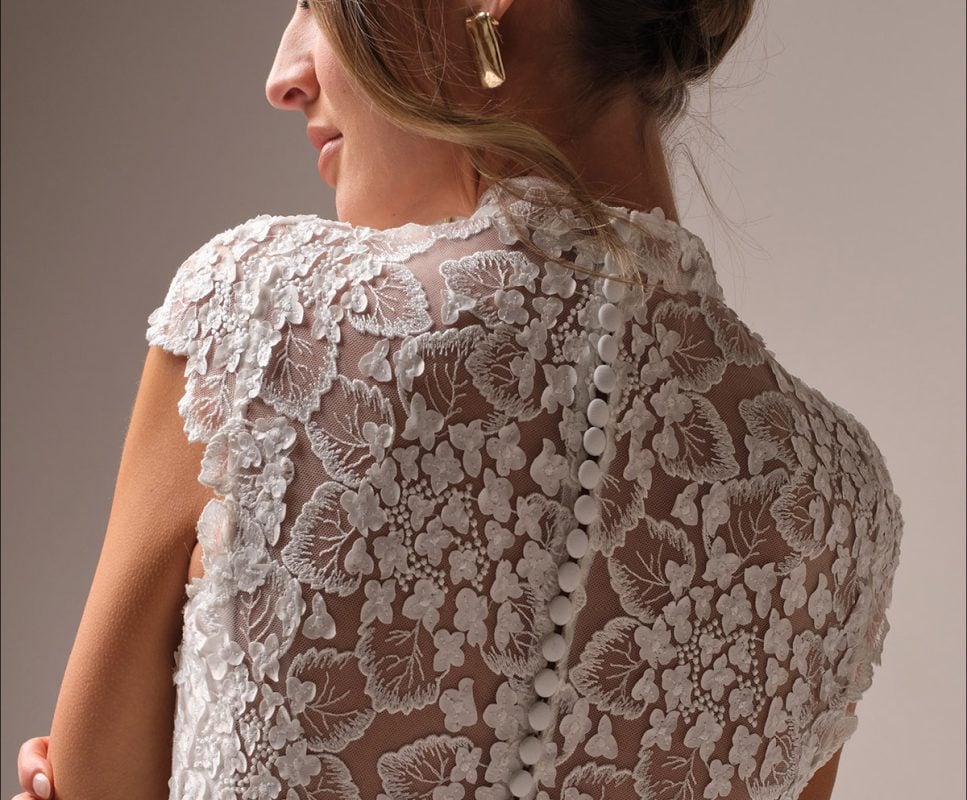
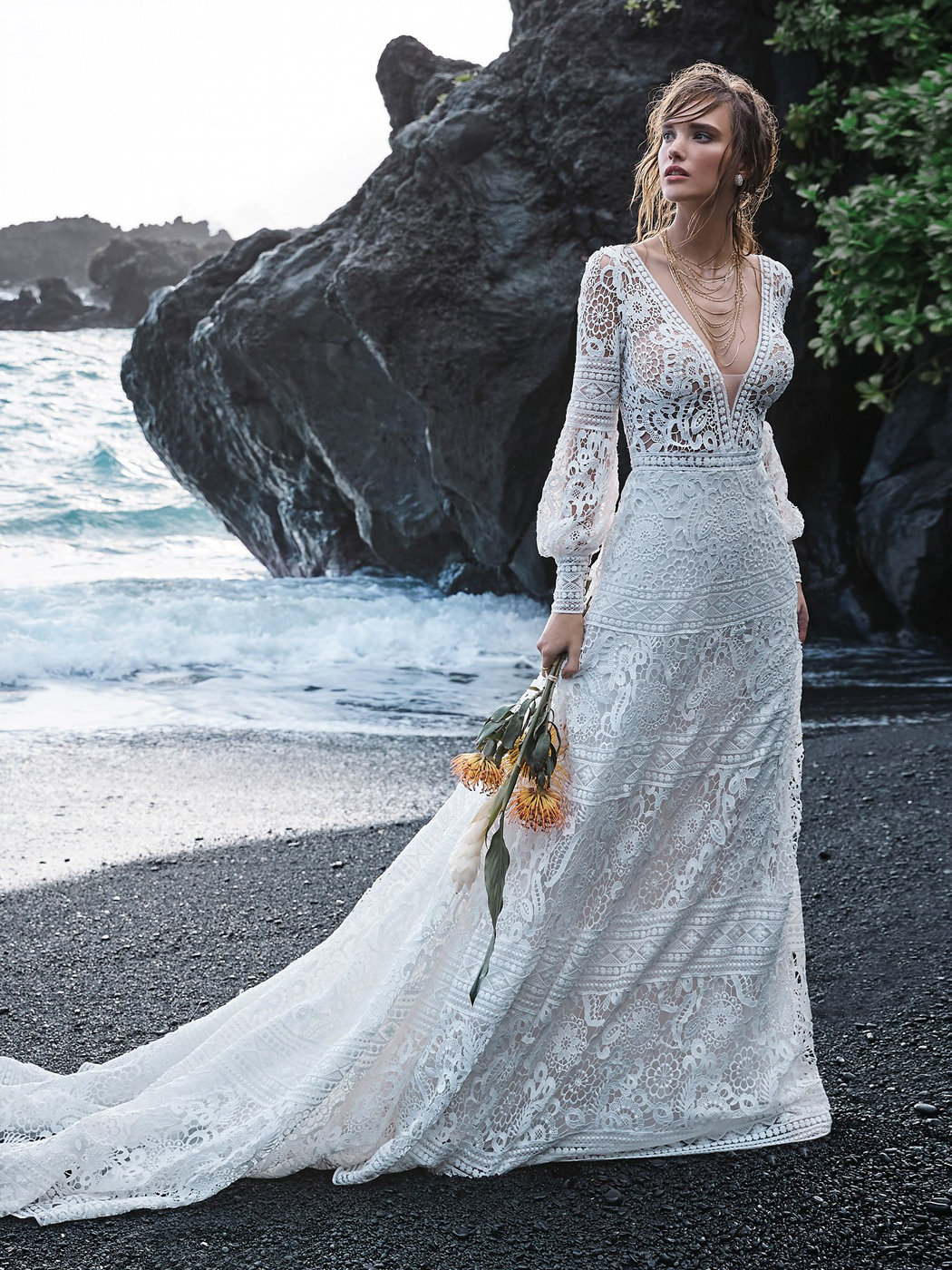
A lace sheath wedding dress creates a refined and textural look without adding excessive volume. A lace fit-and-flare gown emphasizes the figure and can support more elaborate appliqué placement through the bodice, hips, and train.
For winter comfort, check whether the bodice, sleeves, and skirt are fully lined or constructed with sheer illusion sections.
Tulle and Organza Wedding Dresses
Tulle and organza can create volume and movement without necessarily adding warmth.
These fabrics may give a fit-and-flare skirt a softer, more romantic shape, but an outdoor winter ceremony may still require a lined bodice, long sleeves, cape, or detachable layer.
The Best Winter Details for Both Silhouettes
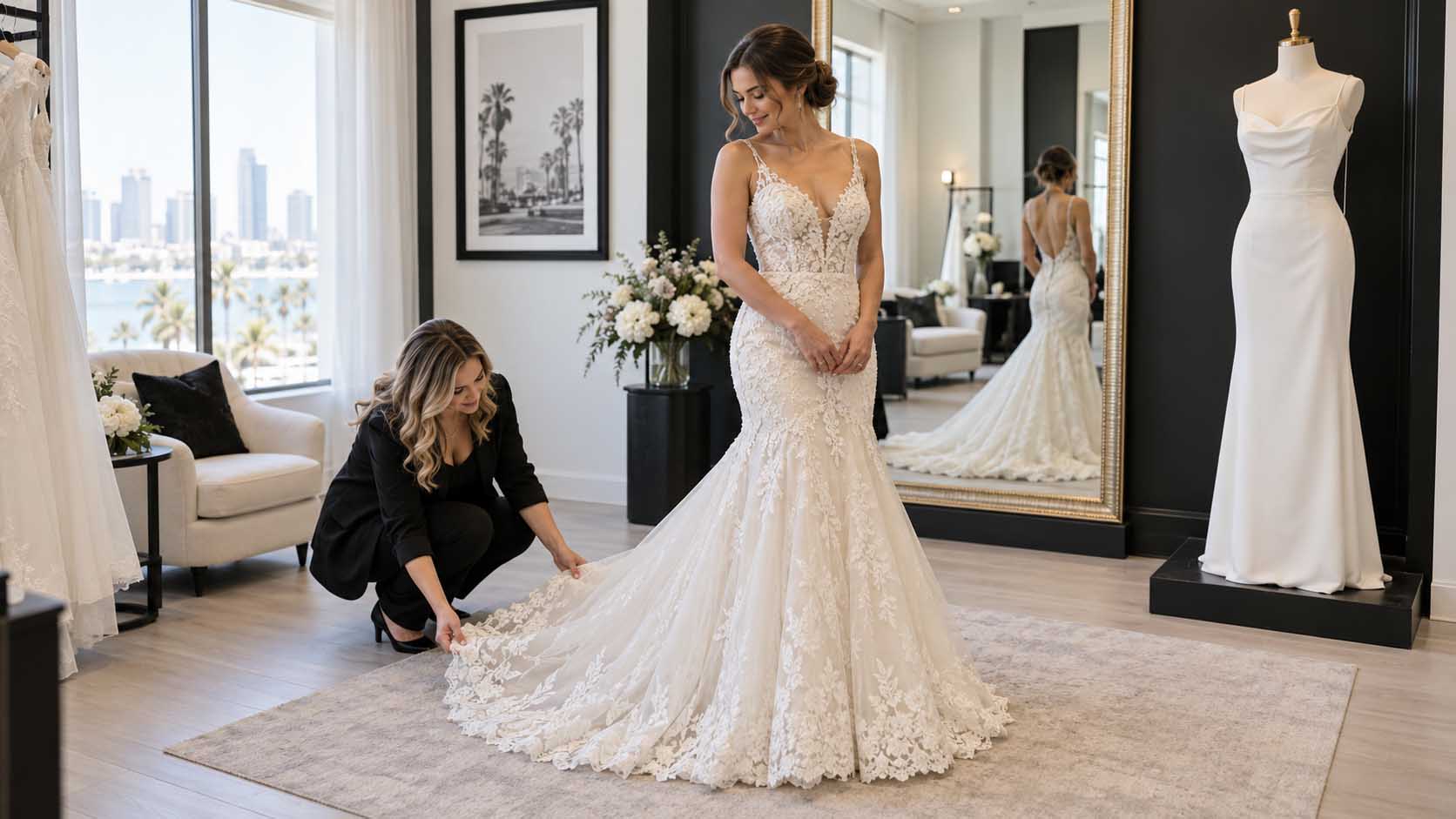
The right seasonal details can make either silhouette feel beautifully suited to a winter wedding. A sheath wedding dress gains warmth and elegance from long lace or crepe sleeves, a fully lined bodice, sculptural draping, or a cathedral-length veil. A fit-and-flare wedding dress can embrace the season through dimensional floral lace, pearl or crystal embellishments, structured satin, long-line corsetry, a statement bow, or a dramatic chapel train.
Detachable elements are especially valuable for a San Diego winter wedding. Removable sleeves, an overskirt, a bridal cape, or a structured bolero can provide coverage during an outdoor ceremony or evening portraits, then be removed for a lighter and more comfortable reception look. These additions also allow one gown to create two distinct bridal moments without requiring a complete outfit change.
Consider Your San Diego Winter Wedding Venue
Southern California winters offer more flexibility than colder destinations, but the setting still matters. Coastal wind, outdoor cocktail hours, evening photographs, and unheated ceremony spaces can influence which silhouette, fabric, and accessories feel most comfortable. The best winter wedding dress should complement the venue while allowing you to move naturally throughout the day.
Coastal or Outdoor San Diego Wedding
A sheath wedding dress is often easier to manage near the coast because its narrower skirt creates less volume in the wind. However, a long train or cathedral veil will still require thoughtful planning. A soft fit-and-flare gown can work equally well when the skirt is fluid rather than heavily layered or rigid.
Whichever silhouette you choose, look for a secure bustle, a manageable train, and a fabric that moves gracefully without feeling difficult to control. A detachable cape or wrap can provide welcome coverage during cooler outdoor moments, while venue-appropriate shoes and a simple wind plan will make portraits and walking more comfortable.
Hotel Ballroom or Formal Indoor Venue
A fit-and-flare wedding dress naturally suits a hotel ballroom because its sculpted bodice and flared skirt maintain their visual presence in a larger space. Satin, Mikado, dimensional lace, beading, and a longer train can enhance the richness of a formal winter celebration. Brides who prefer a sheath silhouette can create the same sense of occasion with a dramatic veil, detachable overskirt, statement cape, or couture embellishment.
Restaurant, Courthouse, or Intimate Ceremony
A sheath wedding dress is often the natural choice for a smaller setting.
Its narrow line feels elegant without overwhelming the room. It can also move easily between the ceremony, dinner, and reception.
A fit-and-flare gown may still work if it has a soft skirt, moderate train, and enough room through the hips and thighs.
Estate, Chapel, or Architectural Venue
Both silhouettes can complement an estate or chapel.
Choose a fit-and-flare wedding dress if you want a ceremonial train and stronger visual impact. Choose a sheath wedding dress if you want the venue’s architecture to frame a sleek and restrained bridal look.
Which Dress Is Easier to Walk, Sit, and Dance In?
A sheath gown is not automatically more comfortable, and a fit-and-flare gown is not automatically restrictive.
Comfort depends on:
- How closely the dress fits across the hips and thighs
- Where the skirt begins to release
- Whether the fabric has stretch
- The structure of the bodice
- The weight and length of the train
- How the train is bustled
- The quality of the alterations
When trying on each wedding dress, do more than stand in front of the mirror.
- Sit in a chair for several minutes.
- Walk at your normal pace.
- Test a longer stride.
- Step up as if entering a vehicle or climbing venue stairs.
- Raise your arms for dancing and hugging.
- Turn and bend slightly.
- Check whether the bodice remains secure.
- Ask how the train will bustle for the reception.
Fit-and-flare gowns that remain very close through the knees may limit movement more than gowns that begin flaring higher on the thigh.
A sheath wedding dress made from non-stretch fabric can also feel restrictive when tailored too tightly.
Professional wedding dress alterations in San Diego can improve support, balance, hem length, train management, and movement while preserving the intended silhouette.
Sheath vs. Fit-and-Flare vs. Mermaid: What Is the Difference?
These silhouette terms are sometimes used loosely, so focus on where and how the skirt changes shape.
- Sheath: Maintains a narrow, relatively straight line with little or no pronounced flare.
- Fit-and-flare: Fits through the bodice and hips before gradually opening into the skirt.
- Trumpet: Creates a more noticeable flare around the mid-thigh.
- Mermaid: Remains closely fitted lower on the body and releases dramatically near the knee.
- Column: Often used interchangeably with sheath, although some column gowns have a more structured, vertical shape.
If movement is a major priority, pay attention to the exact release point rather than relying only on the product category.
The Brides wedding dress silhouette guide also encourages brides to consider personal style and confidence instead of treating body-shape rules as fixed requirements.
How Navid Noor and the BTG Team Approach the Decision
At Bridal & Tuxedo Galleria, Head Designer and Owner Navid Noor and the bridal styling team consider more than whether a bride likes a gown on a hanger.
The goal is to understand:
- How the gown supports the body
- How the silhouette balances the bride’s proportions
- How the dress moves through the venue
- Whether the fabric suits the season
- How the train will function during the reception
- Whether the dress supports the wedding aesthetic
- What can be refined through customization or alterations
This construction-led approach is especially valuable when two silhouettes both look beautiful.
A bride may love the clean skirt of a sheath but want greater ceremony impact. A detachable overskirt, statement veil, cape, or extended train may provide the desired transformation.
Another bride may love a fit-and-flare silhouette but want easier movement. The release point, lining, internal structure, fabric, or skirt fullness may need to be reconsidered.
The boutique’s exclusive Navid Noor collections and custom-design services allow brides to explore personalized:
- Necklines
- Sleeves
- Waistlines
- Trains
- Overskirts
- Corsetry
- Lace placement
- Embellishments
- Bodice coverage
- Ceremony-to-reception details
Learn more about the Bridal & Tuxedo Galleria boutique and Navid Noor design experience or browse the couture wedding dress collection.
A Five-Question Guide for Choosing Your Silhouette
If you are still deciding between a sheath and fit-and-flare wedding dress, answer these questions before your bridal appointment.
1. How Do I Want to Look?
Choose several words that describe your ideal bridal style:
- Sleek
- Romantic
- Sculpted
- Effortless
- Dramatic
- Minimalist
- Classic
- Couture
- Modern
- Soft
Your preferred feeling may point toward a silhouette more clearly than body-shape rules.
2. How Do I Want to Move?
Consider:
- Walking distance
- Venue stairs
- Transportation
- Sitting during dinner
- Dancing
- Outdoor portraits
- The weight of the train
Movement should be evaluated in the actual gown rather than assumed from its silhouette.
3. Where Will Most of the Wedding Take Place?
Think about:
- Venue size
- Indoor and outdoor time
- Flooring
- Coastal conditions
- Ceremony formality
- Reception layout
- Photography locations
The venue can influence how much skirt, train, and structure feels appropriate.
4. Which Winter Details Matter to Me?
Sleeves, lining, lace, satin, Mikado, a cape, bolero, overskirt, veil, and train may influence the final result more than the silhouette itself.
5. Do I Want One Look or a Transformation?
Detachable sleeves, a cape, an overskirt, or a removable train can transform one wedding dress between the ceremony and reception.
Bring your answers and inspiration images to your fitting, but remain open to trying both silhouettes. Preview designer and couture options in the Bridal & Tuxedo Galleria wedding dress lookbook before your visit.
Final Verdict: Sheath or Fit-and-Flare for a Winter Wedding?
Choose a fit-and-flare wedding dress if you want defined curves, a more formal bridal silhouette, and greater aisle drama.
Choose a sheath wedding dress if you want clean lines, modern elegance, less volume, and a gown suited to an intimate or contemporary setting.
For a winter wedding, do not make the decision based on silhouette alone. The best gown combines the right shape with the right:
- Fabric
- Lining
- Sleeves
- Bodice support
- Train
- Detachable accessories
- Venue plan
- Professional alterations
In San Diego, where winter celebrations may move between comfortable indoor spaces and cooler outdoor or coastal moments, versatility is often more valuable than heaviness.
The most helpful comparison happens in person. During a private appointment at Bridal & Tuxedo Galleria, an experienced stylist can help you try sheath and fit-and-flare wedding dresses side by side, compare their movement and construction, and identify the gown that supports your wedding vision.
Book your couture bridal appointment in San Diego to find a wedding dress that looks beautiful, feels secure, and works for every part of your winter wedding day.
Frequently Asked Questions
Is a Sheath Wedding Dress Good for a Winter Wedding?
Yes. A sheath wedding dress can be an excellent winter choice when it includes seasonally appropriate fabric, lining, coverage, or layering. Long sleeves, heavier crepe, satin, lace, a bridal cape, bolero, or detachable overskirt can make a sleek sheath gown feel winter-ready.
Is a Fit-and-Flare Wedding Dress Warmer Than a Sheath Dress?
Not necessarily. Additional skirt volume does not guarantee warmth. Fabric density, lining, sleeve coverage, neckline, and outdoor exposure have a greater effect on comfort. Compare the construction of the individual gowns instead of assuming one silhouette will be warmer.
What Is the Main Difference Between a Sheath and Fit-and-Flare Wedding Dress?
A sheath gown falls in a narrow, relatively straight line with little pronounced flare. A fit-and-flare gown follows the bodice, waist, and hips before gradually widening through the lower skirt.
Is Fit-and-Flare the Same as Mermaid?
No. A fit-and-flare skirt usually begins opening more gradually and higher on the body. A mermaid wedding dress remains fitted closer to the knee and then creates a more dramatic flare.
Can Petite Brides Wear Fit-and-Flare Wedding Dresses?
Yes. Petite brides can wear fit-and-flare gowns beautifully. Proportion is more important than the silhouette label. The waist placement, flare point, train length, neckline, and tailoring should create a balanced shape without overwhelming the bride.
Can Plus-Size Brides Wear Sheath Wedding Dresses?
Absolutely. A well-constructed sheath wedding dress can create an elegant, elongated line in any size. Fabric quality, internal support, seam placement, lining, and professional alterations are more useful considerations than restrictive body-type rules.
Which Silhouette Is Better for Dancing?
Either silhouette can work for dancing. A sheath gown may have less skirt volume, but it still needs sufficient room through the hips and legs. A fit-and-flare dress can move comfortably when the skirt releases at the right point and the train has a secure bustle.
Test sitting, walking, turning, and dancing during your fitting.
What Are the Best Fabrics for a Winter Wedding Dress?
Popular winter wedding dress fabrics include lined crepe, satin, Mikado, brocade, and layered lace. The best fabric depends on the venue, gown construction, desired movement, and the amount of time the bride will spend outdoors.
Should I Choose Long Sleeves for a San Diego Winter Wedding?
Long sleeves are optional. They can add elegance and coverage, but sheer illusion lace offers less warmth than a fully lined sleeve.
Detachable sleeves, a bridal cape, bolero, or wrap may offer greater flexibility between indoor and outdoor settings.
Is a Sheath or Fit-and-Flare Wedding Dress Better for a Coastal Wedding?
A sheath dress may be easier to manage because it typically has less skirt volume. However, a lightweight fit-and-flare gown can also suit a coastal wedding when its train, layers, and fabric are selected carefully.
The bride should consider wind, terrain, outdoor photography, and bustle construction.
Which Silhouette Looks More Formal?
A fit-and-flare wedding dress generally creates a more formal and dramatic appearance because of its sculpted bodice and fuller lower skirt. A sheath gown can still look formal when designed with luxury satin, intricate lace, couture beadwork, a statement cape, or a cathedral-length train.
When Should I Shop for My Winter Wedding Dress?
Begin early enough to allow time for designer production, delivery, customization, and alterations. Bridal & Tuxedo Galleria generally recommends ordering a wedding dress approximately six to nine months before the wedding when possible.
Brides working with shorter timelines should ask about in-stock gowns, sample dresses, rush-order availability, and custom-design options.

Author bio :
Kayla brings more than 10 years of hands-on experience in bridal fashion and boutique styling, specializing in personalized bridal consultations and luxury client experiences. As the manager of the San Diego location of Bridal and Tuxedo Galleria, she is known for her keen eye for detail, deep understanding of couture wedding dress design, and ability to guide brides toward a gown that reflects their unique vision and wedding aesthetic. Her approach blends fashion expertise with genuine care, ensuring every bride feels confident, understood, and unforgettable on her wedding day
Call Now

Your Personalized Wedding Dress Shopping Experience in San Diego With over 30 years of styling expertise, our dedicated team is passionate about helping you find the perfect wedding dress and tuxedo.


Leave a Reply