
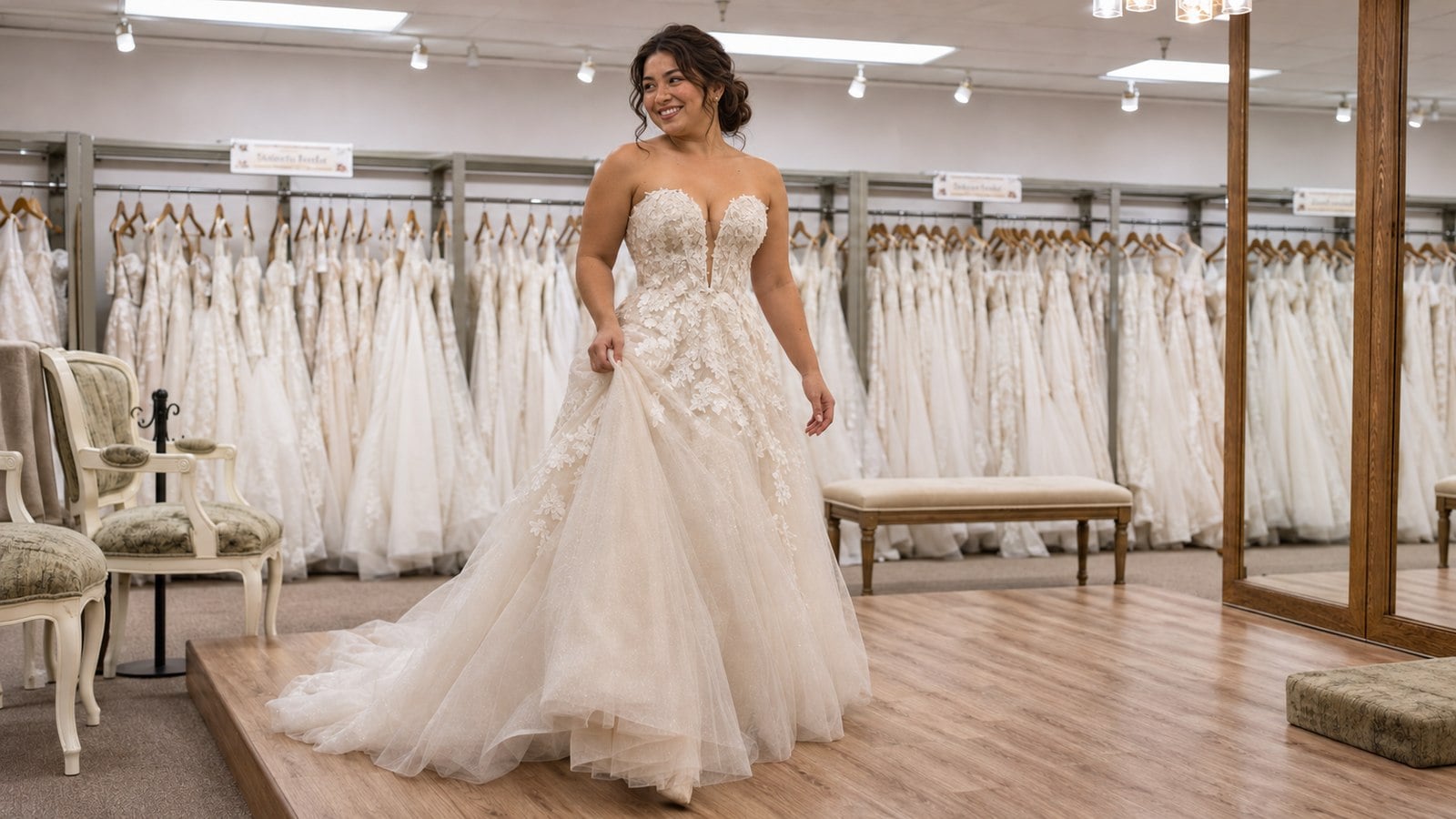
First bridal appointments and how to choose a wedding dress
Learning how to choose a wedding dress starts with your wedding date, budget, venue, and personal style. Your first bridal appointment helps you turn those starting points into real preferences by comparing silhouettes, fabrics, support, and movement. You do not need to arrive knowing exactly what you want, and you do not need to purchase a gown during your first visit.
A dress you love in a photograph may feel different when you wear it. Another gown you barely noticed on the hanger might have the neckline, balance, and comfortable fit you were hoping to find.
That is what makes trying on dresses valuable. You begin to understand which details matter to you and which ones you are willing to reconsider.
At Bridal & Tuxedo Galleria in San Diego, personalized bridal styling gives you room to explore those differences, ask questions, and make a thoughtful decision.
How to Choose a Wedding Dress: Start With What Matters Most
Before thinking about designers or dress names, consider three questions: How do you want to look? How do you want to feel? What will you need to do while wearing your gown?
You might want a clean, architectural look with enough freedom to dance comfortably. You might prefer romantic lace and a long train, while knowing you will walk across a garden for your ceremony.
These preferences give your stylist useful direction without limiting the appointment to one specific dress.
Your wedding date determines which ordering options are realistic. Your budget establishes a comfortable spending range. Your venue introduces practical considerations, while your personal style guides the visual choices.
The goal is to find a gown that works across all of those priorities. A beautiful neckline matters, but so does feeling secure when you move. An elaborate train may appeal to you, but you should also understand how you will manage it during the reception.
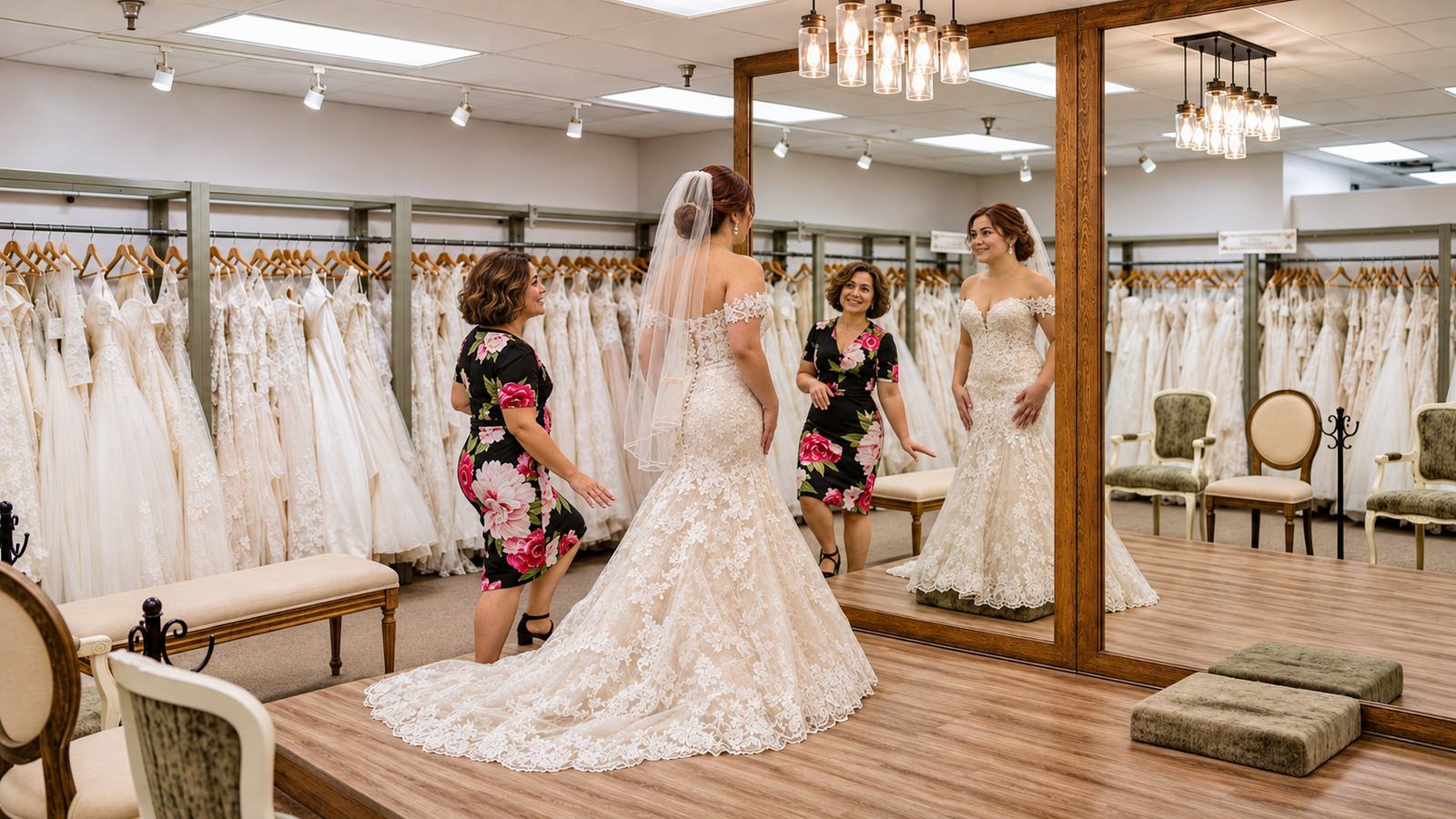
What Should You Do Before Your First Bridal Appointment?
Know Your Wedding Date and Shopping Timeline
Share your wedding date when booking your appointment. If you will travel before the wedding, provide your departure date as well.
A special-order gown may need time for production and shipping before alterations begin. Custom design can involve additional decisions, materials, and fittings.
Beginning around nine to twelve months before the wedding is a useful planning window for many brides, but it is not a fixed requirement or a guaranteed production schedule. Ask about the timing for each gown you seriously consider.
If your wedding is approaching quickly, contact the boutique before visiting. Available samples, off-the-rack gowns, or eligible rush orders may offer options, depending on inventory and alteration needs.
Set a Budget for the Complete Bridal Look
Your gown price is only one part of the total. Depending on your choices, you may also need to budget for alterations, applicable taxes, a veil, shoes, undergarments, accessories, and custom details.
Tell your stylist both your gown budget and your overall spending limit. This makes it easier to select dresses that leave room for the finishing work.
For example, explaining that your total must include tailoring and a veil is more helpful than providing a gown budget that uses every available dollar.
Ask before trying dresses outside your range. You should feel comfortable keeping the appointment within the boundaries you have chosen.
Save Inspiration Without Restricting Your Options
Bring a small collection of photographs and identify what you like in each one.
Perhaps one image has the neckline you prefer, another shows a beautiful fabric, and a third captures the amount of skirt volume you want.
Pay attention to the dress itself. Lighting, scenery, styling, and the model’s pose can influence your reaction to an image.
Your inspiration should begin a conversation. It does not need to become a checklist that every gown must satisfy.
Consider Your Venue and Wedding Setting
Think about the physical experience of your wedding day.
Will you walk across grass? Climb stairs? Travel between the ceremony and reception? Spend time outdoors before entering an air-conditioned ballroom?
These details affect decisions about skirt volume, train length, footwear, fabric layers, and detachable elements.
You can begin shopping before choosing a venue, especially if you know the general setting and formality. Keep practical details flexible until your plans become clearer.
Choose Supportive Shopping Companions
Bring people who understand your taste and respect your budget.
A helpful guest listens to your reaction before sharing an opinion. They might notice that you keep adjusting a neckline or seem more relaxed in one gown, rather than simply choosing their personal favorite.
A smaller group can make it easier to hear your own thoughts. Shopping alone is also a valid choice.
Confirm the boutique’s guest policy when booking, and mention any accessibility, seating, sensory, or privacy needs in advance.
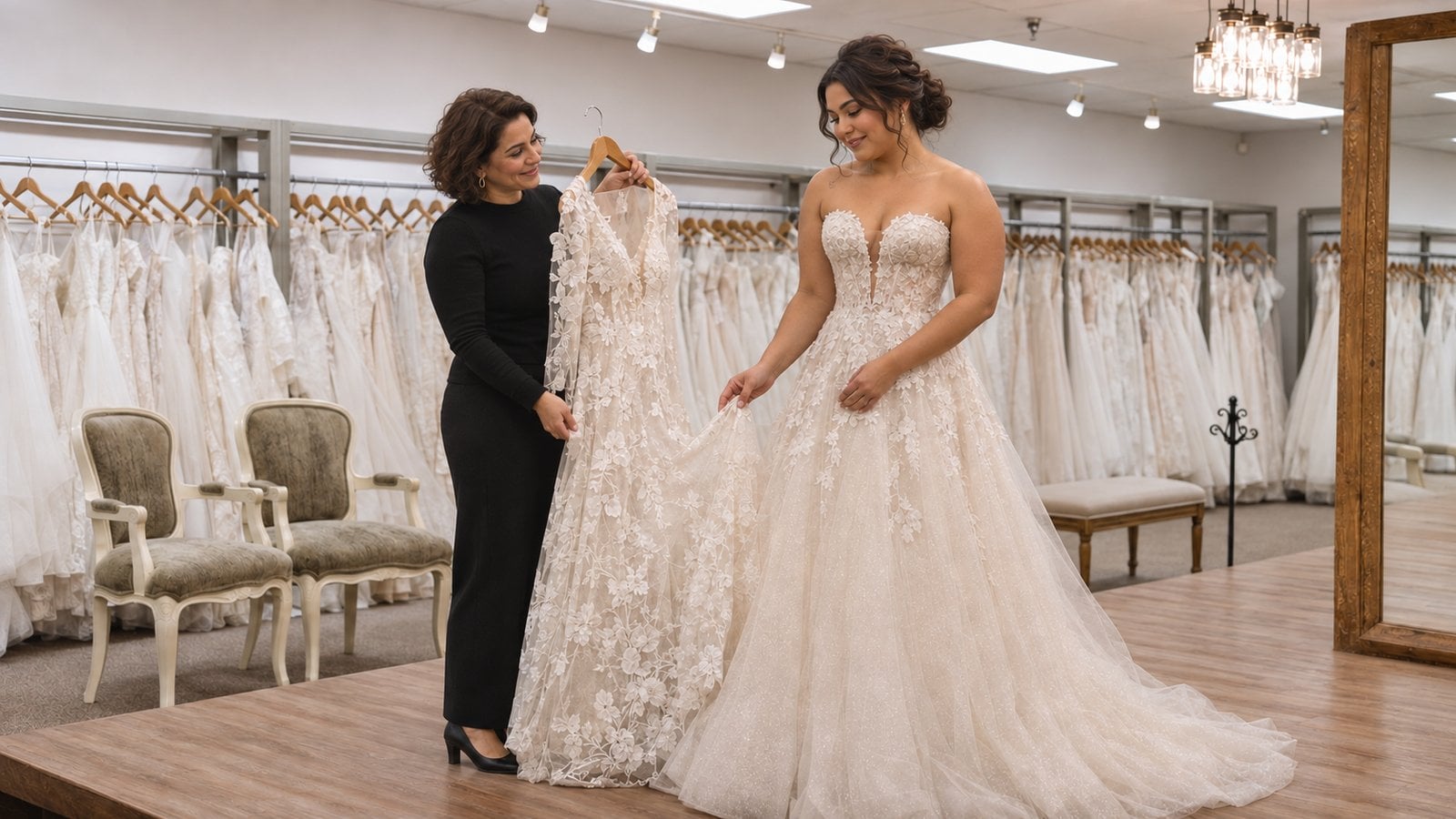
What Happens During Your First Bridal Appointment?
Your appointment usually begins with a conversation about your wedding plans, preferred styles, budget, and concerns. Your stylist then selects an initial group of gowns and adjusts the direction as you respond to them.
You may start with the silhouette you requested, try a related option, and explore something you would not have chosen yourself. Each dress should help clarify your preferences.
Wear comfortable underwear and clothing that is easy to change. Bring a hair tie so you can see necklines and back details clearly. Shoes near your expected heel height can help you picture the overall proportions.
A strapless bra or shapewear is optional. Some gowns have internal support, while others require a separate solution. Discuss what you feel comfortable wearing.
Sample dresses may need temporary clips or other adjustments. These help demonstrate the shape, but they do not reproduce every detail of the final fit. Ask what you are seeing in the sample and what would change in the correctly ordered and tailored gown.
Before leaving, record your favorite styles, estimated costs, possible alterations, and unanswered questions. BTG’s first wedding dress appointment guide offers additional preparation advice.
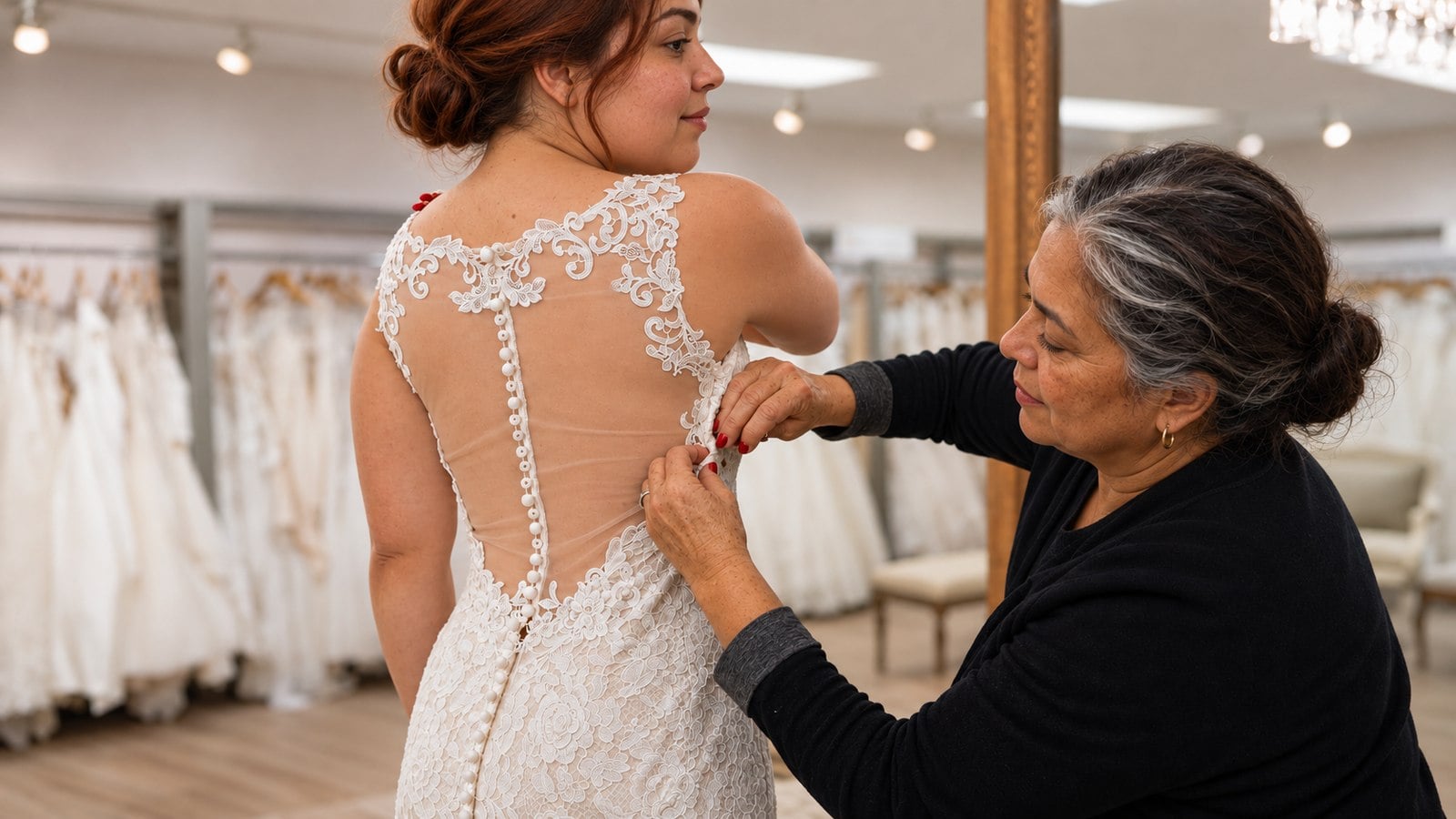
How to Choose the Right Wedding Dress Silhouette
A silhouette describes the overall shape of a gown. It gives you a useful starting point, but it does not determine which dress you should wear based on your body type.
Look for proportions you enjoy, support that feels secure, and movement that suits your plans.
A-Line Wedding Dresses
An A-line gown has a fitted upper section and a skirt that widens gradually.
The effect can vary considerably. A softly draped skirt may feel relaxed, while a structured fabric creates a more defined outline.
When browsing A-line wedding dresses, notice how much volume begins at the waist and how the fabric falls. Try different interpretations before deciding whether this is your preferred shape.
Ball Gown Wedding Dresses
A ball gown combines a defined bodice with a fuller skirt.
The contrast can create a dramatic bridal look, but the wearing experience depends on the gown’s layers, structure, and weight.
Explore ball gown wedding dresses, then test how you turn, sit, and move through a doorway. A full skirt can be manageable when the gown is appropriately fitted and you understand how to handle it.
Mermaid Wedding Dresses
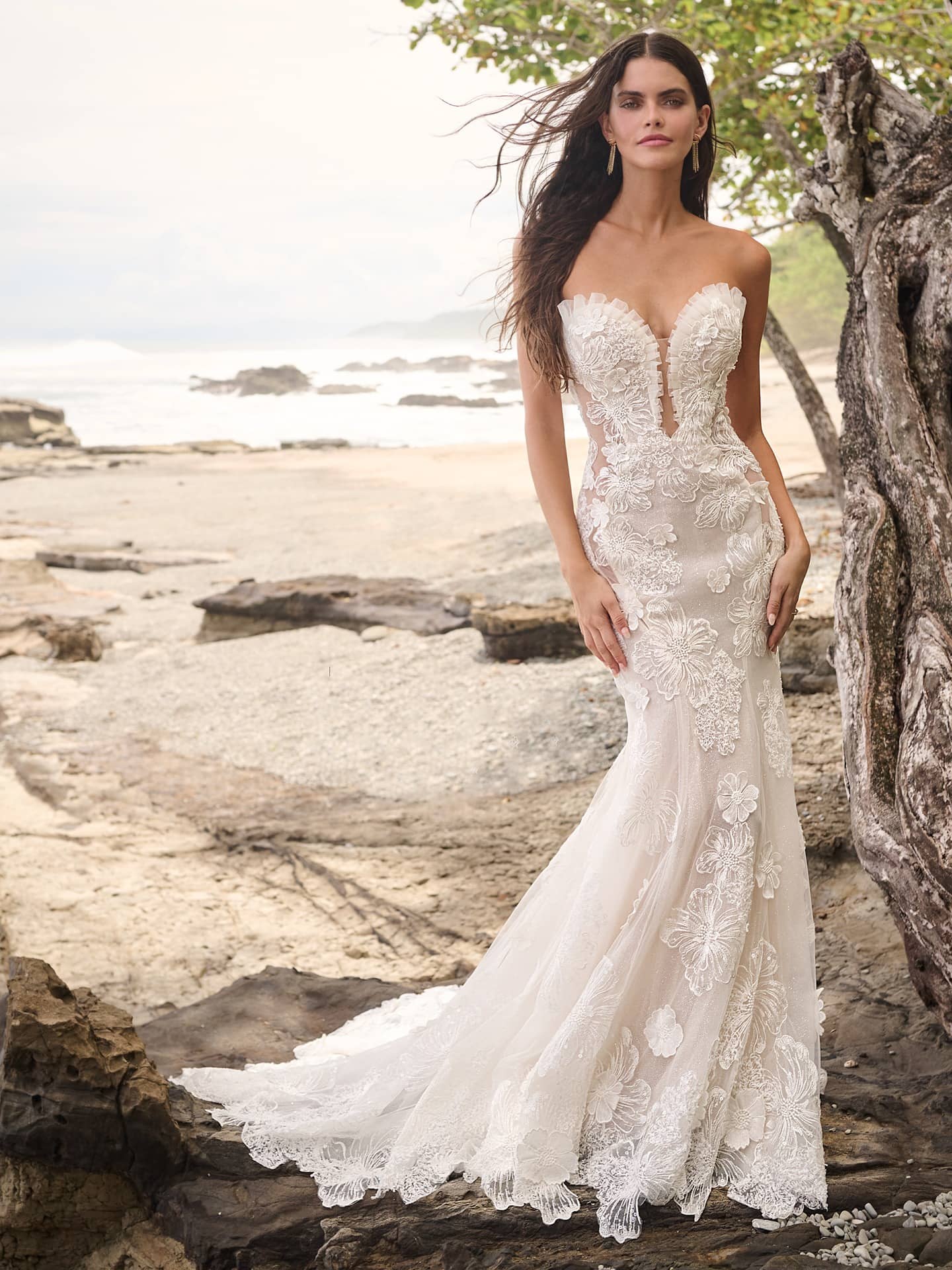
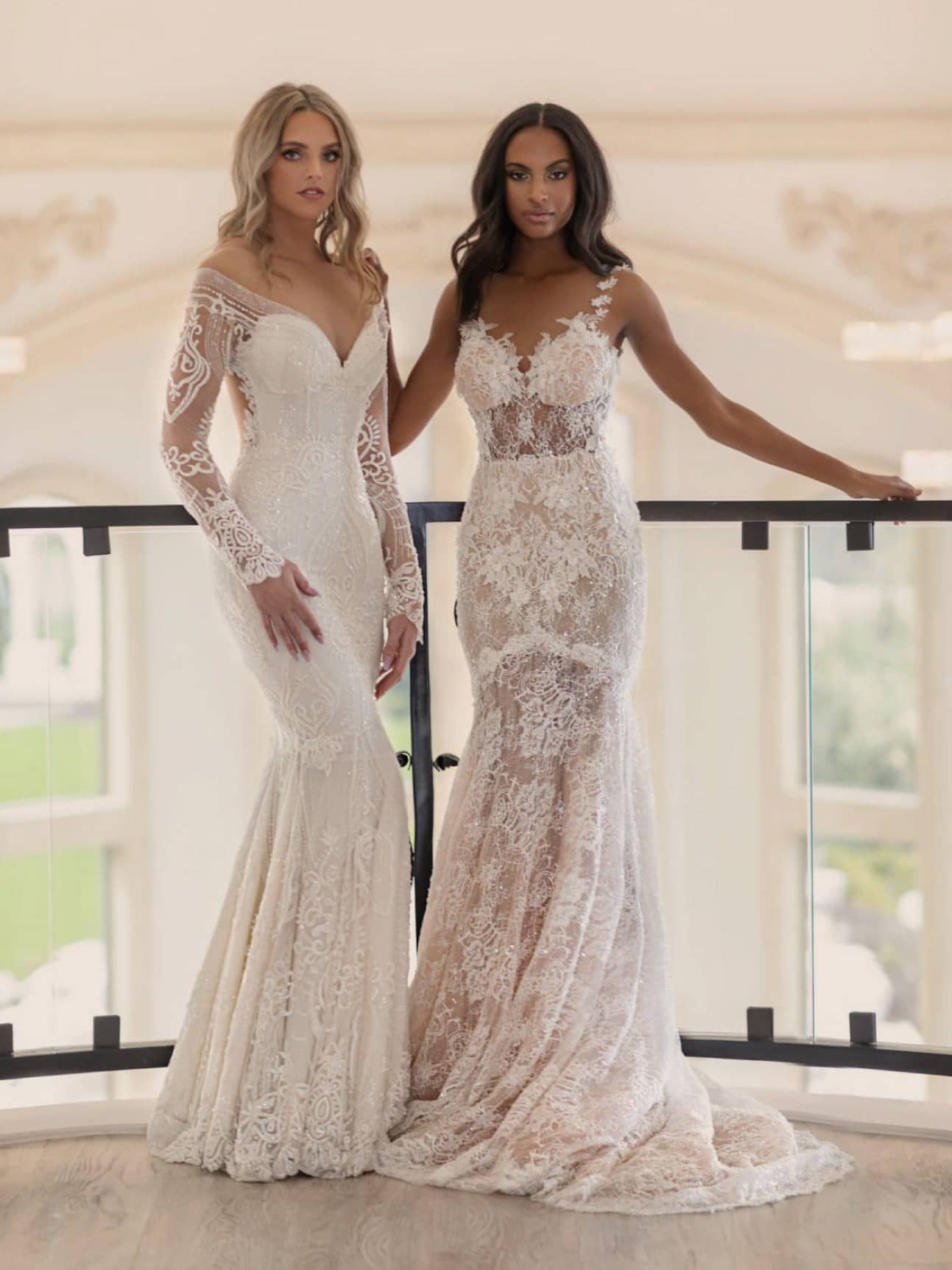
A mermaid gown generally fits closely through the hips and thighs before opening into a pronounced flare near the knees.
The placement of that flare affects both the appearance and your walking stride.
Sit down and take natural steps during the appointment. If movement feels restricted, ask whether the issue comes from the sample size or the gown’s underlying design.
Fit-and-Flare Wedding Dresses
Fit-and-flare gowns follow the body before opening into the skirt, often with a higher or more gradual release than a pronounced mermaid design.
Terminology varies between designers, so examine the actual gown.
When comparing fit-and-flare wedding dresses, notice where the skirt releases and whether that placement gives you the shape and mobility you prefer.
Sheath and Column Wedding Dresses
Sheath and column gowns offer a relatively streamlined outline.
A sheath often follows the body with softer drape, while a column can hold a straighter, more structured shape. These designs make fabric behavior and precise fit especially noticeable.
Look at how the lining sits, whether the fabric becomes transparent in certain lighting, and how it settles after you sit down.
Basque-Waist and Drop-Waist Wedding Dresses
Basque and drop waists describe the relationship between the bodice and skirt.
A basque waist commonly dips into a point or curve. A drop waist sits below the natural waist. Either treatment can be paired with different skirt shapes.
These details change the visual proportions of the gown and where the bodice rests on your torso. Check seated comfort as well as the standing silhouette.
For additional visual examples, The Knot’s wedding dress silhouette guide explains the major shapes.
| Silhouette | Defining feature | What to check during your appointment |
|---|---|---|
| A-line | Gradually widening skirt | Fabric drape, layers, and ease of movement |
| Ball gown | Defined bodice and substantial skirt volume | Weight, seating, and train handling |
| Mermaid | Close fit with a low flare | Stride length and seated comfort |
| Fit-and-flare | Fitted shape that opens into the lower skirt | Flare placement and mobility |
| Sheath or column | Streamlined outline | Lining, opacity, drape, and walking room |
| Basque or drop waist | Shaped or lowered waist treatment | Bodice placement and comfort when seated |
If you are unsure between two shapes, compare wedding dresses with a bridal stylist before ruling either one out.
How Necklines, Sleeves, and Waistlines Change the Dress
A neckline influences the visual balance of the gown, but it also affects coverage and the way the bodice feels.
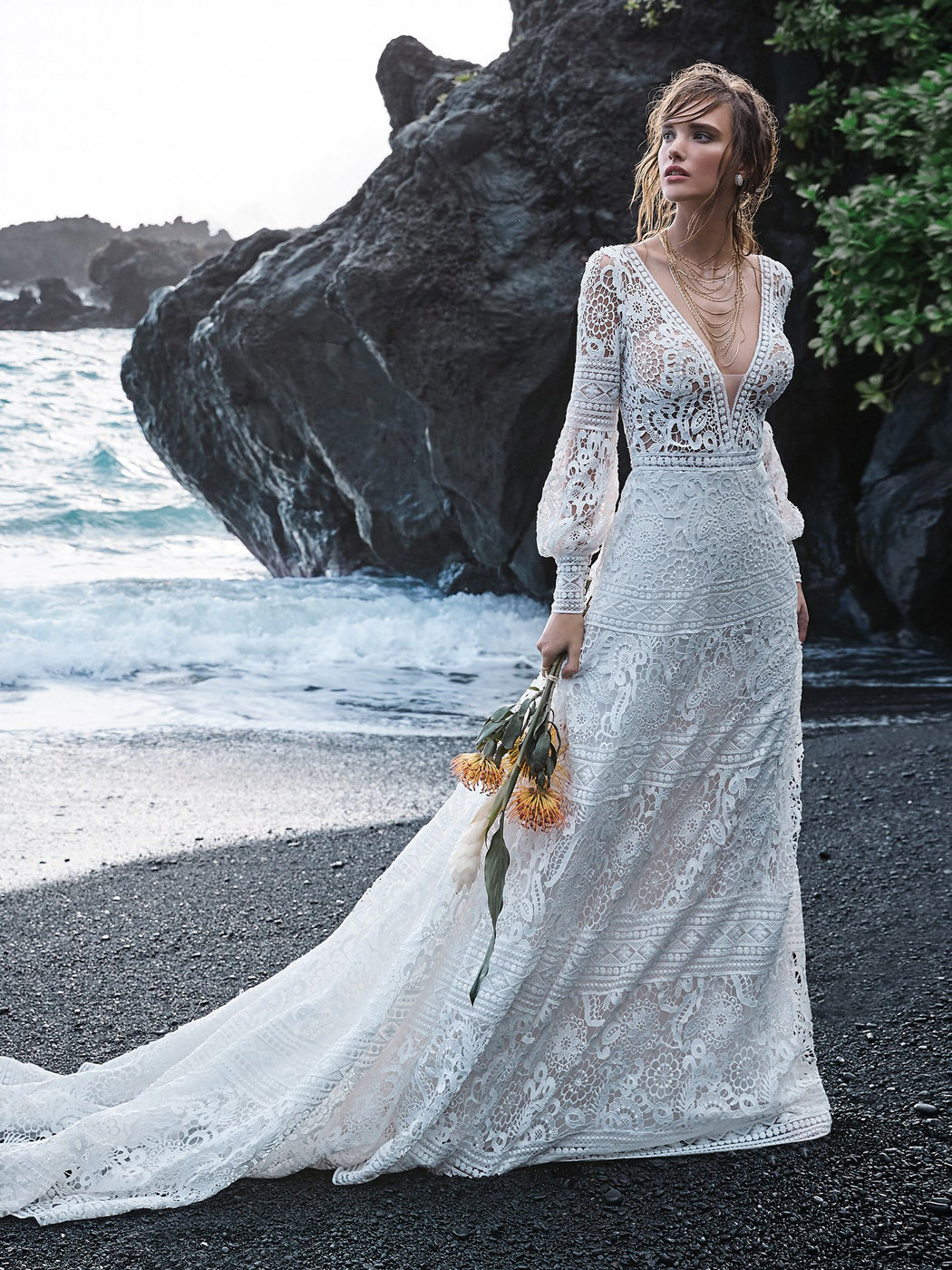
Sweetheart necklines introduce curved lines around the bust. Square necklines create a more angular frame. V-necks draw attention through the center of the bodice, with depth and lining affecting the amount of coverage.
A strapless dress needs suitable construction and fit to remain secure. Adding decorative straps does not automatically solve a support concern.
Off-the-shoulder designs can affect how freely you raise your arms. With long sleeves or illusion sleeves, bend your elbows and reach forward to check tension. High necklines change the balance around your face and the space available for jewelry.
Ask whether detachable straps or sleeves are decorative, functional, or both.
Consider these features together. A square neckline may feel entirely different when paired with a natural waist instead of a lowered bodice. Judge the complete gown before dismissing an individual detail.
Wedding Dress Fabrics: What Looks Beautiful Versus What Feels Right
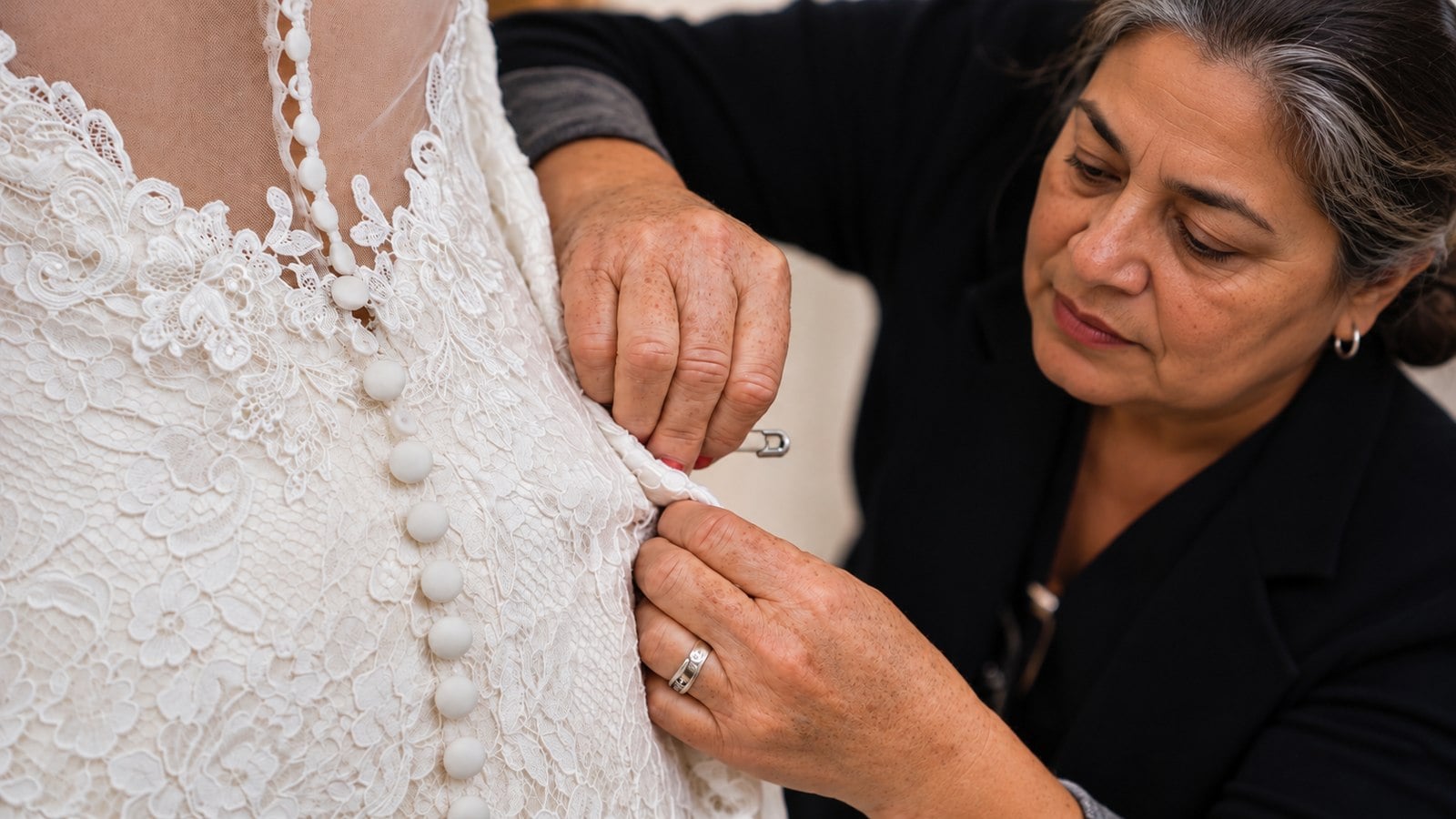
The visible fabric is only part of the dress. Lining, supporting layers, embellishment, and construction also affect comfort.
Mikado generally holds a defined shape, making it useful for sculptural folds and structured skirts. Satin has a smooth, reflective surface, but its weight and drape vary. Crepe offers a textured surface and can follow the body closely.
Organza creates volume with a crisp, airy appearance. Tulle is netting that builds fullness through layers. Chiffon falls more softly and is often used for flowing overlays. Lace adds pattern and texture, with its backing and embellishments influencing the finished weight.
Brides’ wedding dress fabric guide and The Knot’s bridal fabric glossary provide helpful references.
During your appointment, notice what touches your skin. Check for scratchy edges, heavy embellishment, and areas that become warm.
Ask how the gown should be transported and professionally pressed. A fabric’s appearance alone will not tell you how easily it creases, how delicate it is, or how the complete dress will feel during your celebration.
How Do You Know a Wedding Dress Is Right for You?
The right gown should offer more than a beautiful reflection. It should feel like a choice you understand.
You enjoy its appearance. You feel comfortable with its coverage and support. You can imagine wearing it through your ceremony and reception. Any necessary alterations have a realistic plan.
You do not need to cry or have an immediate emotional reaction. Sometimes confidence arrives through careful comparison.
Try the Five-Movement Bridal Test
With your stylist’s permission and assistance managing the hem:
- Walk naturally and notice whether you shorten your stride.
- Sit down and check pressure around the waist, ribs, and hips.
- Turn and move your arms to identify pulling or shifting.
- Hug someone or simulate reaching to test neckline and sleeve comfort.
- Try a few dance movements and observe how the skirt responds.
Sample sizing and temporary clips may limit the test. Do not force movements against tight fabric.
Describe concerns specifically. Saying that the neckline shifts when you reach gives your stylist a clearer problem to assess than saying the dress feels wrong.
Ask whether the issue can be addressed through sizing, alterations, or a different design.
What Can Be Changed Through Wedding Dress Alterations?
Common alterations may include adjusting the hem, refining straps, shaping the bodice, modifying cups, or creating a bustle to lift the train for reception wear.
Changes to sleeves, necklines, waist placement, and decorative details need a more individual assessment.
Lowering a back can affect support. Adding sleeves requires appropriate attachment points and room to move. Altering a lace hem may involve repositioning motifs.
The possibilities depend on construction, fabric, seam allowances, designer restrictions where relevant, and the alteration specialist’s evaluation.
Before purchasing a gown that depends on a particular change, confirm feasibility, price, and timing. The Knot’s bridal alterations guide also emphasizes including tailoring in your budget and schedule.
BTG’s wedding dress alterations guide explains how tailoring influences fit, movement, and proportion.
When Should You Buy Your Wedding Dress?
Buy when you have found a suitable gown and confirmed that the complete ordering and fitting schedule works.
A delivery estimate should leave room for alterations and any travel before the wedding. Ask who will communicate updates and when fittings should be scheduled.
| Stage | What to confirm |
|---|---|
| Before the first appointment | Wedding date, budget, setting, and relevant sample availability |
| Before placing an order | Designer, style, color, size, approved changes, total cost, and terms |
| During production and delivery | Expected arrival window and communication process |
| Before alterations | Fitting schedule, wedding shoes, and planned undergarments |
| At the final fitting | Comfort, hem clearance, bustle instructions, and pickup arrangements |
For a shorter engagement, focus on gowns the boutique can realistically prepare within your schedule.
An available sample still needs an assessment of condition and fit. A rush order needs confirmation for the specific gown. Neither should be treated as a promise of immediate wedding-day readiness.
The Wedding Dress Budget Mistakes Brides Can Avoid
Compare the estimated finished cost of each gown.
A lower-priced dress requiring extensive changes may be less suitable for your budget than a gown that needs straightforward tailoring.
Request a breakdown of the dress price, alterations, customization, accessories, taxes, and any rush charges. Clarify which figures are estimates and when they can be finalized.
Avoid assuming that a more expensive gown will suit you better. Price can reflect materials, construction, embellishment, and design, but personal suitability still depends on your preferences and practical needs.
If the total exceeds your limit, consider a different gown or fewer optional additions. A clear budget is part of a successful appointment.
Navid Noor’s Design Perspective: Looking Beyond the Trend
Navid Noor, owner and head designer of Bridal & Tuxedo Galleria, brings a design perspective to the boutique’s bridal collections and custom options.
When evaluating a gown, consider how its elements work together. A lowered waist changes where the skirt begins. A more open neckline may require a different support solution. A fuller skirt changes the amount of fabric you manage when walking and sitting.
These relationships are useful topics for a design consultation because a requested change can influence more than the gown’s appearance.
If your preferred look requires rebuilding several defining features of an existing dress, ask whether custom wedding dress design would be a more appropriate starting point.
Discuss the design scope, materials, fittings, budget, and schedule before committing.
You can explore the Navid Noor Collection to identify details you would like to discuss. If direct designer involvement is important to you, confirm the appropriate consultation when booking.
How Southern California Weddings Influence Dress Choices
Southern California offers many wedding settings, and the practical conditions matter more than the city name.
For a La Jolla coastal ceremony or a Del Mar outdoor celebration, think about breeze, walking surfaces, and train management. A Coronado hotel wedding may involve outdoor portraits followed by an indoor reception.
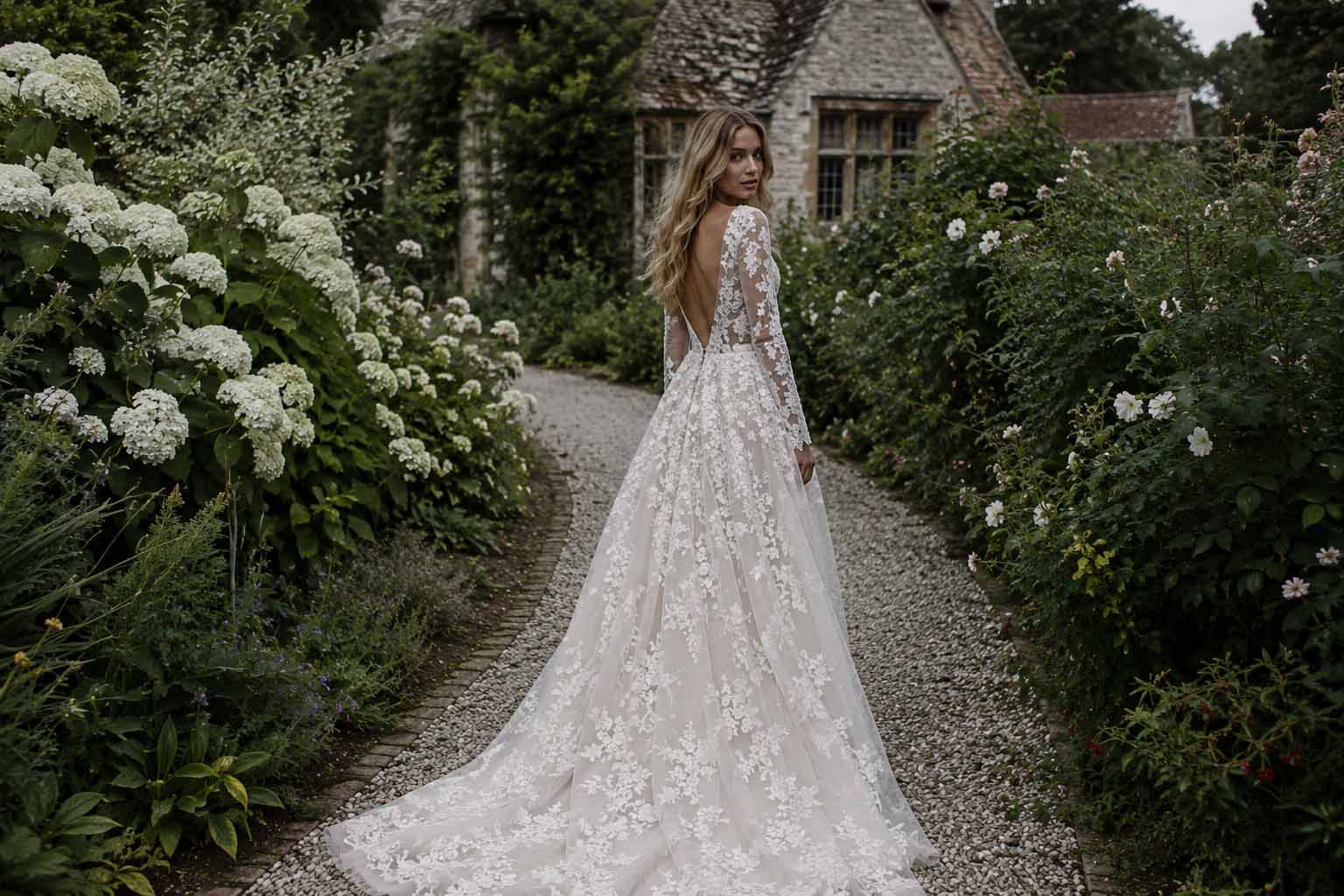
A Rancho Santa Fe estate or Orange County garden venue might include lawns, gravel, and steps between spaces. Consider how you will carry the skirt and whether detachable elements would help.
Downtown San Diego ballrooms may accommodate dramatic volume, but transportation, doorways, and dinner seating still deserve attention.
Your venue should inform the preparation for your dress. It does not need to determine your personal style.
Common Wedding Dress Shopping Mistakes to Avoid
One common mistake is judging a gown entirely through photographs. Use images to decide what to try, then allow the appointment to change your preferences.
Another is overlooking discomfort because a dress looks impressive. Bring support, mobility, and fabric concerns into the conversation early.
Too many opinions can also make decisions harder. Give yourself time to react before asking your guests what they think.
Avoid confusing sample fit with final fit, overlooking alteration costs, or trying on many similar dresses without a clear comparison goal.
Before the next gown, ask yourself what you still need to learn. You might need to compare a different fabric, test a higher flare, or see whether another neckline feels more secure.
A Simple Way to Compare Wedding Dresses After Your Appointment
Narrow your choices to two or three finalists and compare them using five factors.
| Factor | Question to ask |
|---|---|
| Style | Does this gown reflect what I enjoy wearing and how I want to look? |
| Comfort | Can I sit, walk, reach, and dance comfortably? |
| Construction | Is there a clear plan for the support and fit I need? |
| Wedding fit | Can I manage the gown across the ceremony, reception, and transportation? |
| Budget and timing | Does the complete cost and preparation schedule work? |
Suppose an A-line gown feels easy to wear, while a fitted couture gown has the neckline you prefer. The deciding question may be whether the fitted gown can provide the mobility you need or whether the A-line can accommodate an approved neckline adjustment.
Identify the unanswered question instead of collecting more general opinions.
Mark concerns as confirmed, needs assessment, or unacceptable to me. A beautiful design should not erase an unresolved delivery issue or a firm budget limit.
Frequently Asked Questions About Choosing a Wedding Dress
How do I choose a wedding dress for the first time?
Start with your wedding date, setting, overall budget, and a few style preferences. Try different silhouettes and compare how they feel as well as how they look. Ask about support, alterations, and timing. Your first appointment can be successful simply because it helps you understand what matters most.
What should I expect at my first bridal appointment?
Expect a discussion of your wedding plans, guided dress selections, and time to compare your reactions. Samples may need temporary adjustments. Ask how the ordered gown would differ and which alterations might be necessary. Before leaving, clarify your next step, whether that means another visit or reviewing an order.
How many wedding dresses should I try on before deciding?
There is no required number. Try enough gowns to understand your preferences, then pause when additional dresses stop teaching you something useful. If your choices begin to blur together, record your strongest options and identify what remains unresolved. A focused comparison is more helpful than reaching a particular dress count.
Should I choose my wedding venue before my wedding dress?
Knowing the venue helps, but you can begin shopping with a likely setting and level of formality. Keep practical details flexible until you know about surfaces, stairs, outdoor exposure, and transportation. Once the venue is confirmed, review train management and footwear before finalizing the gown’s alterations.
How do I know which wedding dress silhouette suits me?
Compare shapes on your body without treating body-type labels as rules. Notice the proportions you enjoy and how each gown moves. If a sample fits poorly, ask what can reasonably be assessed in the correct size. Your preferred combination of shape, coverage, support, and comfort should guide the decision.
What should I wear to my first wedding dress appointment?
Wear comfortable underwear and clothing that is easy to change. Bring a hair tie and shoes near your planned heel height if helpful. Shapewear and strapless bras are optional. Ask about preparation instructions, then discuss your preferences and the gown’s construction before purchasing special wedding-day undergarments.
How early should I start wedding dress shopping?
Beginning around nine to twelve months before the wedding is useful for many special-order or custom options. The actual schedule depends on production, shipping, approved changes, and alterations. Share any earlier travel deadline and confirm the timeline for your specific gown rather than relying entirely on a general calendar.
Is it okay not to buy a dress during my first appointment?
Yes. Your first appointment can help you understand silhouettes, fabrics, fit, and pricing without making a purchase. Record favorites and remaining questions, then discuss a follow-up visit if needed. If you do feel ready to order, review the gown details, full cost, timeline, and terms before committing.
Can a wedding dress be altered to fit my style?
Some changes may be possible, but the gown needs an individual assessment. Adjusting a hem or strap differs from rebuilding a neckline or changing the main silhouette. Confirm the feasibility, cost, and timing of essential changes before purchasing a dress that depends on them to meet your expectations.
How do I choose between two wedding dresses?
Compare both gowns under similar conditions, including shoes, viewing angles, and movement tests. Consider personal style, comfort, support, venue practicality, and complete cost and timing. Identify the specific difference that could change your decision. A clear answer about one concern can be more useful than another round of opinions.
Can I find a wedding dress if my wedding is coming up soon?
You may have options through available samples, off-the-rack inventory, or confirmed rush ordering. Contact the boutique with your exact date before visiting. Ask about condition, fit, alteration capacity, costs, and pickup timing. A gown’s availability and its readiness for the wedding are separate questions that both need answers.
Where can I book a first bridal appointment in San Diego?
Book through Bridal & Tuxedo Galleria’s appointment page and select the service that matches your needs. Share your wedding date, budget, and relevant preferences when reserving. Check your confirmation for the appointment type, location, date, and time. Standard bridal appointments and premium experiences have different terms.
Your First Bridal Appointment at Bridal & Tuxedo Galleria in San Diego
With more than 30 years of bridal experience, Bridal & Tuxedo Galleria offers designer wedding dresses, Navid Noor designs, personalized styling, custom-design options, and professional in-house alterations.
The standard complimentary bridal appointment provides dedicated styling time to explore gowns and discuss your options. The Princess Appointment is a separate paid experience. Brides seeking direct guidance from Navid Noor should confirm the appropriate designer consultation when booking.
Visit the San Diego boutique at 4242 Camino Del Rio N, Suite 14, San Diego, CA 92108. For appointment questions, call (619) 281-4696.
Choosing your wedding dress becomes clearer when you can see, feel, and move in different designs. Bring your ideas, your questions, and an open mind. Our bridal stylists can help you compare gowns and understand the next steps so you can make a decision with confidence.
Book Your Free Bridal Appointment

Author bio :
Kayla brings more than 10 years of hands-on experience in bridal fashion and boutique styling, specializing in personalized bridal consultations and luxury client experiences. As the manager of the San Diego location of Bridal and Tuxedo Galleria, she is known for her keen eye for detail, deep understanding of couture wedding dress design, and ability to guide brides toward a gown that reflects their unique vision and wedding aesthetic. Her approach blends fashion expertise with genuine care, ensuring every bride feels confident, understood, and unforgettable on her wedding day
Call Now

Your Personalized Wedding Dress Shopping Experience in San Diego With over 30 years of styling expertise, our dedicated team is passionate about helping you find the perfect wedding dress and tuxedo.


Leave a Reply