
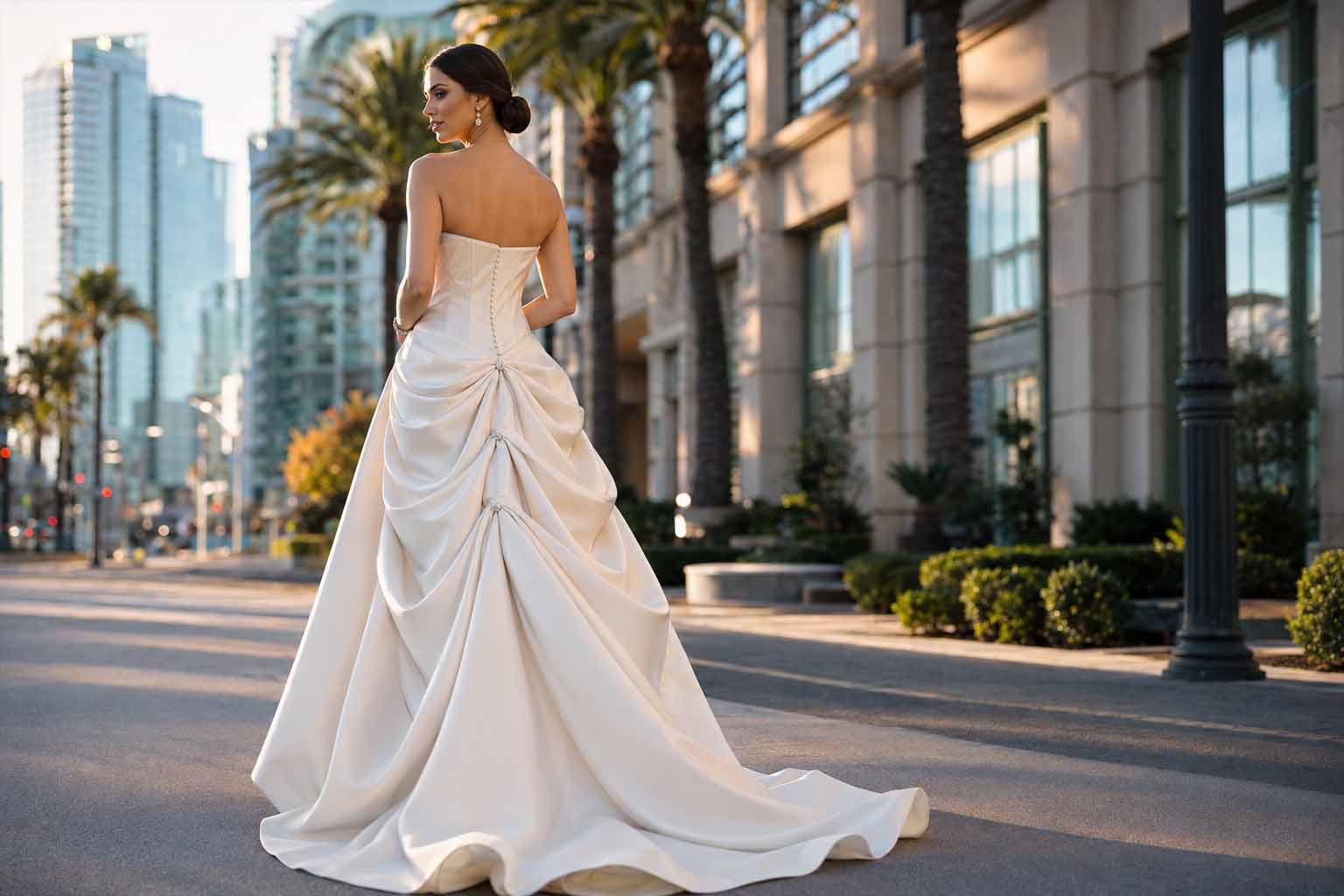
Wedding Dress Bustle Types: A Complete Guide for Brides
A wedding dress bustle is a custom alteration that lifts and secures the train after the ceremony, allowing the bride to walk, dance, and move more comfortably during the reception. The different wedding dress bustle types create distinct silhouettes, and the right option depends on the gown’s train length, fabric, construction, skirt layers, embellishments, and weight.
Quick Answer: A wedding dress bustle is a custom alteration that lifts and secures the train after the ceremony, making it easier for the bride to walk, dance, and move during the reception. Common options include American, French, ballroom, Austrian, train-flip, and custom bustles. The best choice depends on the gown’s train, fabric, construction, embellishment, and desired appearance.
What Is a Wedding Dress Bustle?
A modern bridal bustle is an alteration system that raises a wedding dress train from the floor. Depending on the gown, an alterations specialist may use discreet buttons, loops, hooks, ribbons, ties, or other supports selected for the dress’s construction.
These supports are positioned at carefully chosen bustle points. Each point must carry an appropriate share of the train’s weight without pulling the skirt out of shape, disrupting a lace pattern, or placing too much tension on delicate fabric.
Most brides fasten the bustle after the ceremony and formal portraits, before extended walking and dancing begin.
Not every gown comes with a finished bustle. Even when a dress has an existing loop or button, a specialist must determine whether it creates a secure, balanced, and attractive reception silhouette. A wrist loop can help a bride carry her train temporarily, but it occupies one hand and may not be practical throughout the reception.
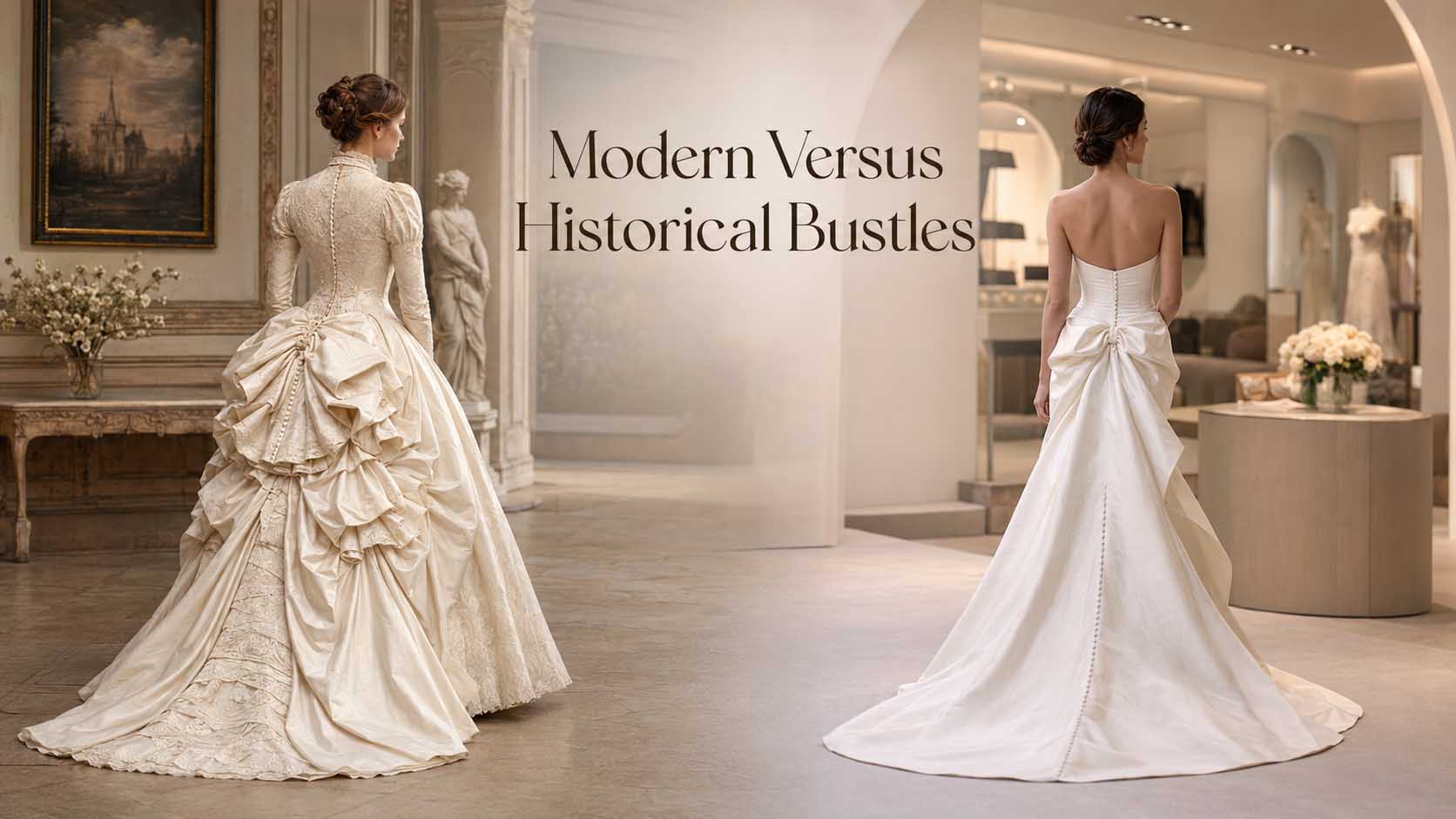
Modern Versus Historical Bustles
The wedding-gown bustle described here is different from the structural undergarment historically worn to shape the back of nineteenth-century skirts. The Victoria and Albert Museum and the Fashion Institute of Technology’s Fashion History Timeline provide additional background on the historical bustle.
A modern bridal bustle has a practical purpose: lifting and managing the train after the ceremony.
Why Does a Wedding Dress Need a Bustle?
A wedding dress train creates a dramatic ceremony entrance, but it can become difficult to manage during dinner, dancing, and the rest of the reception. A properly designed bustle gathers and supports the train while creating an intentional second look for the gown.
A bustle can:
- Keep most of the train off the floor
- Make walking, turning, and dancing easier
- Reduce the likelihood of someone stepping on the train
- Help limit contact between delicate fabric and the floor
- Protect lace, appliqués, and beadwork from unnecessary dragging
- Prevent the bride from carrying the train throughout the reception
- Create a distinct reception silhouette
- Distribute the weight of long or layered trains more evenly
A bustle cannot eliminate every possibility of tripping, staining, or damaging a dress. Brides should still move carefully on stairs, outdoor surfaces, and crowded dance floors. For more wedding-day protection tips, read how to care for your wedding dress on your wedding day.
Wedding Dress Bustle Types at a Glance
The following comparison summarizes the main wedding dress bustle types. These are general approaches rather than universal recommendations. Bustle terminology may also vary among bridal salons and alterations professionals.
| Bustle type | How it works | Visual effect | Often considered for | Important limitation |
| American bustle | The train is lifted and attached over the outside of the skirt. | Visible folds or draping across the back | Many A-line, ball gown, and structured styles | Poorly placed points can interrupt lace, buttons, or a minimalist surface. |
| French bustle | The train is secured underneath the skirt, often with ribbons or ties. | Soft cascading folds and added volume | Certain fitted, structured, and layered gowns | Multiple ties may be confusing without labels and practice. |
| Ballroom bustle | The train is folded or secured to create a nearly floor-length hem. | A cleaner reception silhouette with the train visually minimized | Gowns with layers and seams that can support concealed points | It may require several points and take longer to fasten. |
| Austrian bustle | A ribbon or drawstring-style system gathers the train vertically. | Controlled ruching or vertical gathering | Compatible fabrics that gather evenly | It is unsuitable for many gown constructions. |
| Train-flip bustle | The train is folded beneath the skirt. | A clean, approximately floor-length appearance | Gowns with compatible hems, linings, and train lengths | The folded train may add bulk beneath the skirt. |
| Custom bustle | Multiple techniques manage separate layers or parts of the train. | A gown-specific shape designed around its details | Layered, asymmetrical, cathedral, or heavily embellished trains | More complex fastening requires careful instruction and testing. |
The Main Types of Wedding Dress Bustles
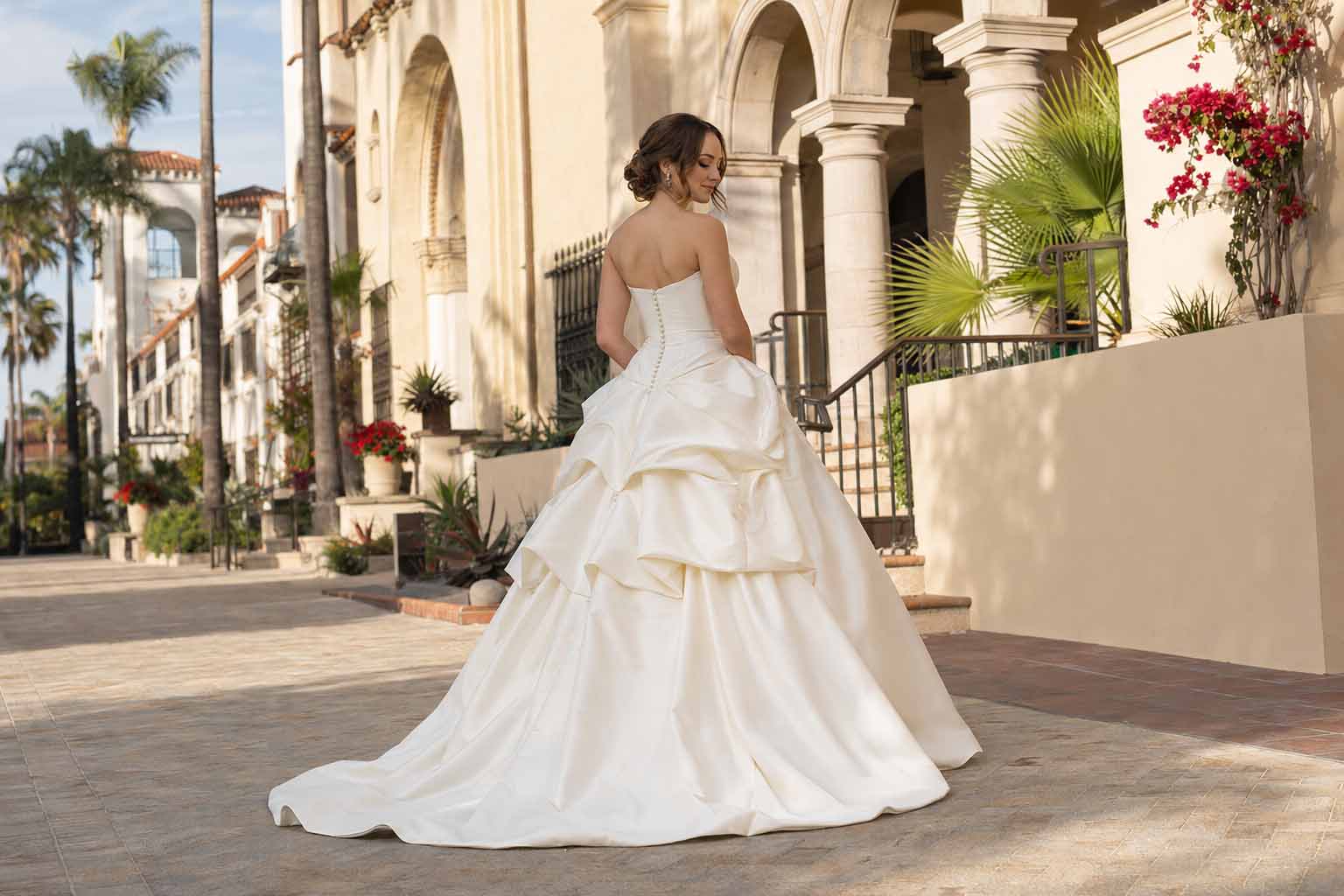
American Bustle or Over-Bustle
An American bustle lifts the train over the outside of the skirt and secures it at one or more exterior attachment points. The raised train creates visible folds across the back of the gown.
This style can complement many A-line, ball gown, and structured skirts. It allows the fabric and decorative details of the train to remain visible during the reception instead of concealing them underneath the dress.
Because the draping remains visible, point placement is critical. Buttons and loops should work with the gown’s seams, lace motifs, covered buttons, and appliqués. The alterations specialist must also ensure that both sides fall evenly and that the train remains balanced while the bride moves.
French Bustle or Under-Bustle
A French bustle secures the train beneath the skirt, typically using paired ribbons or ties. The attachment points pull sections of the train inward and upward, producing cascading folds and controlled volume.
The under-bustle can preserve a cleaner exterior surface because much of the fastening system remains beneath the gown. It may work well with certain structured, fitted, or layered dresses, but its success depends on the seams, support layers, and weight of the train.
Each ribbon pair should be clearly identified. Discreet labels or color coding can make the system easier to fasten, but the designated wedding-day helper should still practice the exact sequence during the final fitting.
Ballroom Bustle
A ballroom bustle secures the train so that the skirt appears closer to floor length around the entire hem. Instead of emphasizing visible draping, it minimizes the appearance of the train for a cleaner reception look.
This effect may require several carefully positioned attachment points across the skirt and lining. The specialist must keep the hem level, prevent individual sections from sagging, and manage the additional fabric beneath the gown.
Although its attachment points may be discreet, a ballroom bustle is not completely invisible on every dress. It may also take longer to fasten than a simpler over-bustle.
Austrian Bustle
An Austrian bustle uses a ribbon- or drawstring-style system to gather sections of the train vertically. The result is repeated ruching rather than wide horizontal folds.
This method requires fabric that gathers evenly and a gown construction that can safely support the internal system. Directional lace, dense beadwork, stiff fabrics, or incompatible skirt structures may make an Austrian bustle unsuitable.
Train-Flip Bustle
A train-flip bustle folds the train underneath the skirt, creating a cleaner and approximately floor-length back. When the gown is compatible, the finished look can show less visible draping than an American bustle.
The specialist must evaluate the lining, hem shape, seam placement, train length, and fabric bulk. The folded train should also be tested while the bride walks, sits, turns, and dances. A bustle that looks smooth while the bride stands still may move unevenly once she begins walking.
Custom or Combination Bustle
A custom bustle combines different methods to accommodate the individual construction of the gown. For example, an inner lining may be secured underneath while an embellished outer layer is lifted over separate points.
Combination bustles are often considered for:
- Cathedral-length trains
- Asymmetrical designs
- Layered lace gowns
- Detachable components
- Unusual panel construction
- Heavy beadwork or appliqués
- Dresses with several skirt and lining layers
A custom system is not simply a decorative upgrade. It may be necessary to distribute weight safely and preserve the gown’s intended shape.
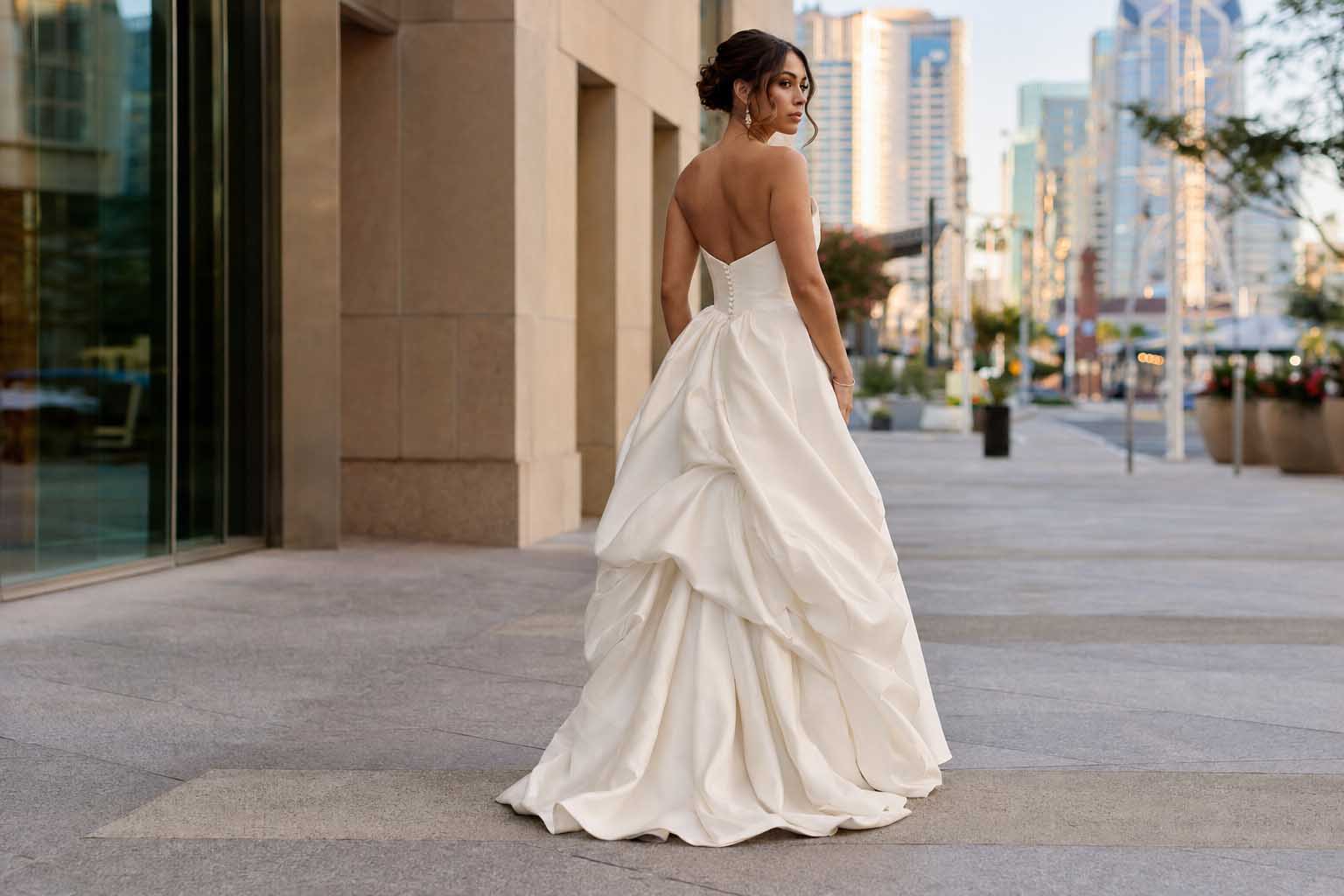
Which Bustle Is Best for Your Wedding Dress?
The best bustle cannot be selected by silhouette alone. Two mermaid gowns may need completely different systems if one is made from lightweight crepe and the other features layered lace, beadwork, and a structured lining.
A-Line Wedding Dresses
An A-line gown may accommodate an American, French, ballroom, train-flip, or custom bustle. The specialist will consider how the train extends from the skirt panels, whether the fabric holds or collapses into folds, and where the gown can safely carry the train’s weight.
Large lace motifs, appliqués, or a center-back row of buttons may limit the placement of exterior attachment points.
Ball Gown Wedding Dresses
A ball gown bustle must manage the train without disturbing the skirt’s existing volume. American and ballroom bustles may be considered, but the internal support, petticoat, number of layers, and fabric weight are often more important than the bustle name.
Insufficient support can cause the center of the skirt to sag. Unevenly distributed points may also expose the lining or create unbalanced volume.
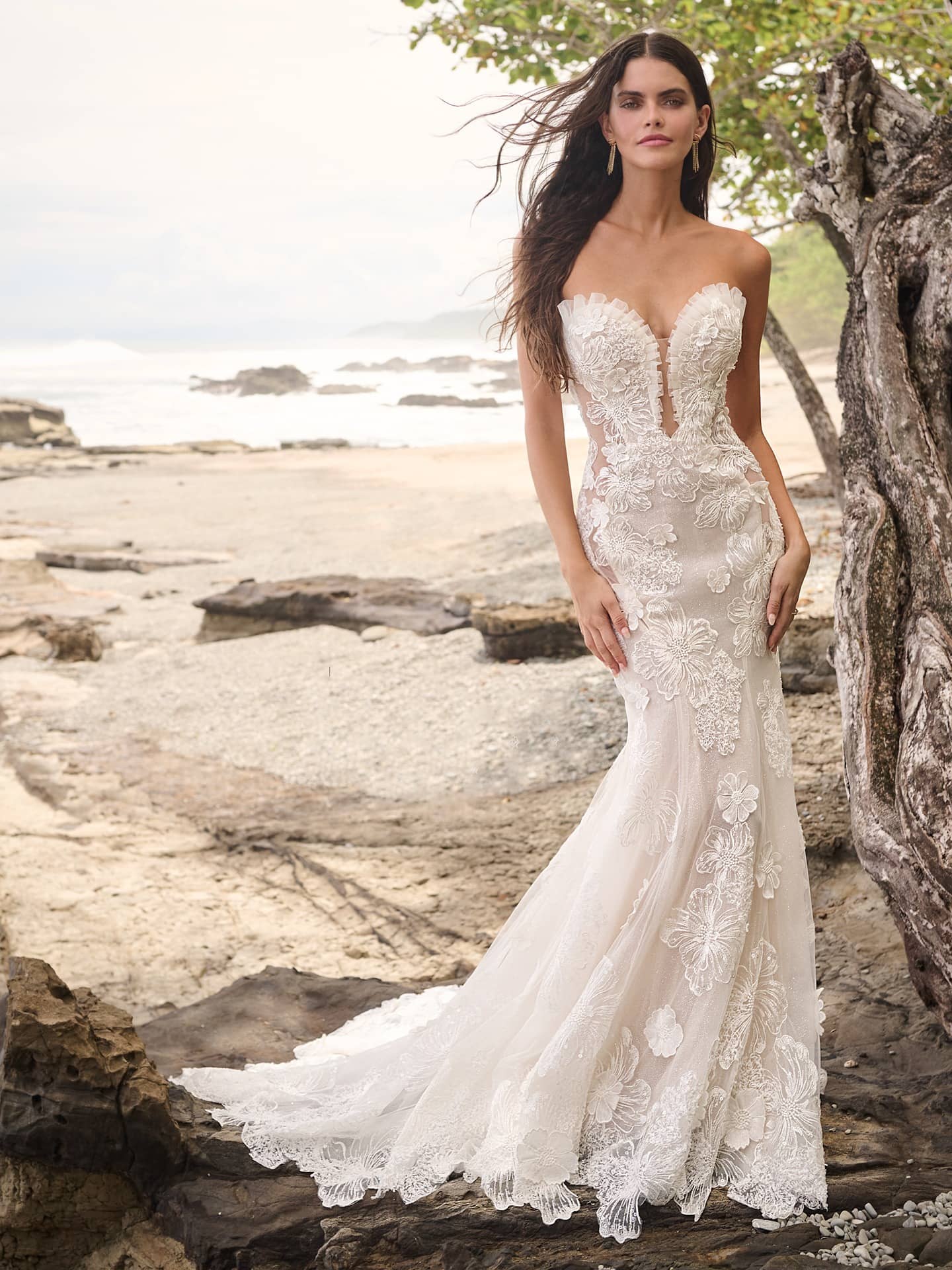
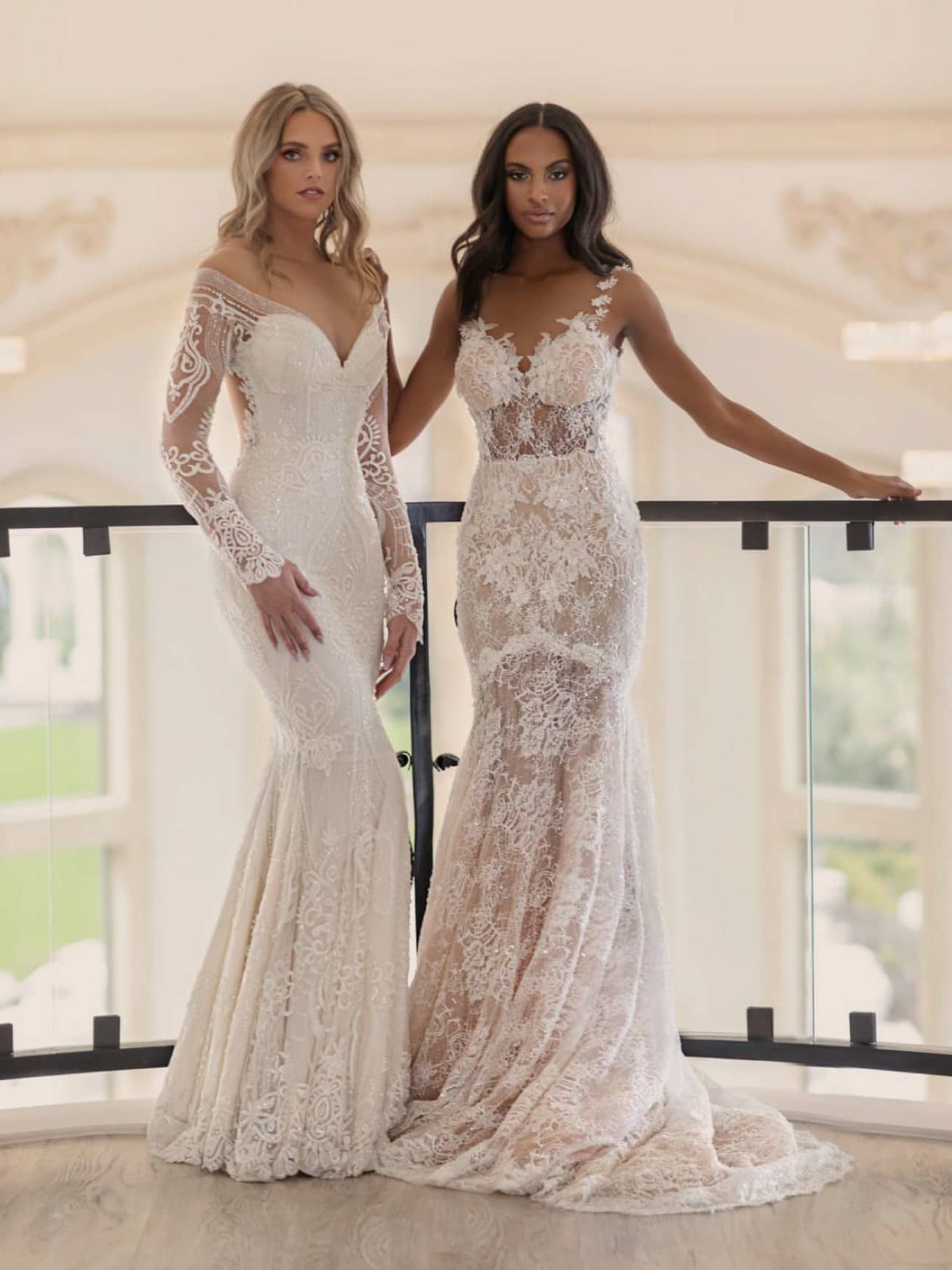
Mermaid and Fit-and-Flare Wedding Dresses
A mermaid or fit-and-flare bustle should preserve the fitted shape through the hips and the gown’s intended flare point. French, American, ballroom, train-flip, and combination systems may all be possible.
Attachment points placed too high may visually shorten the dress or pull against fitted seams. The completed bustle should be viewed from the back and sides while the bride walks, turns, and sits.
Sheath and Column Wedding Dresses
Sheath and column gowns provide limited volume for concealing extra fabric. An under-bustle or train-flip may create unwanted bulk, while an over-bustle may interrupt the dress’s clean vertical line.
Lightweight fabrics can also reveal the outline of internal hooks or attachment points. The system must therefore be both structurally safe and visually discreet.
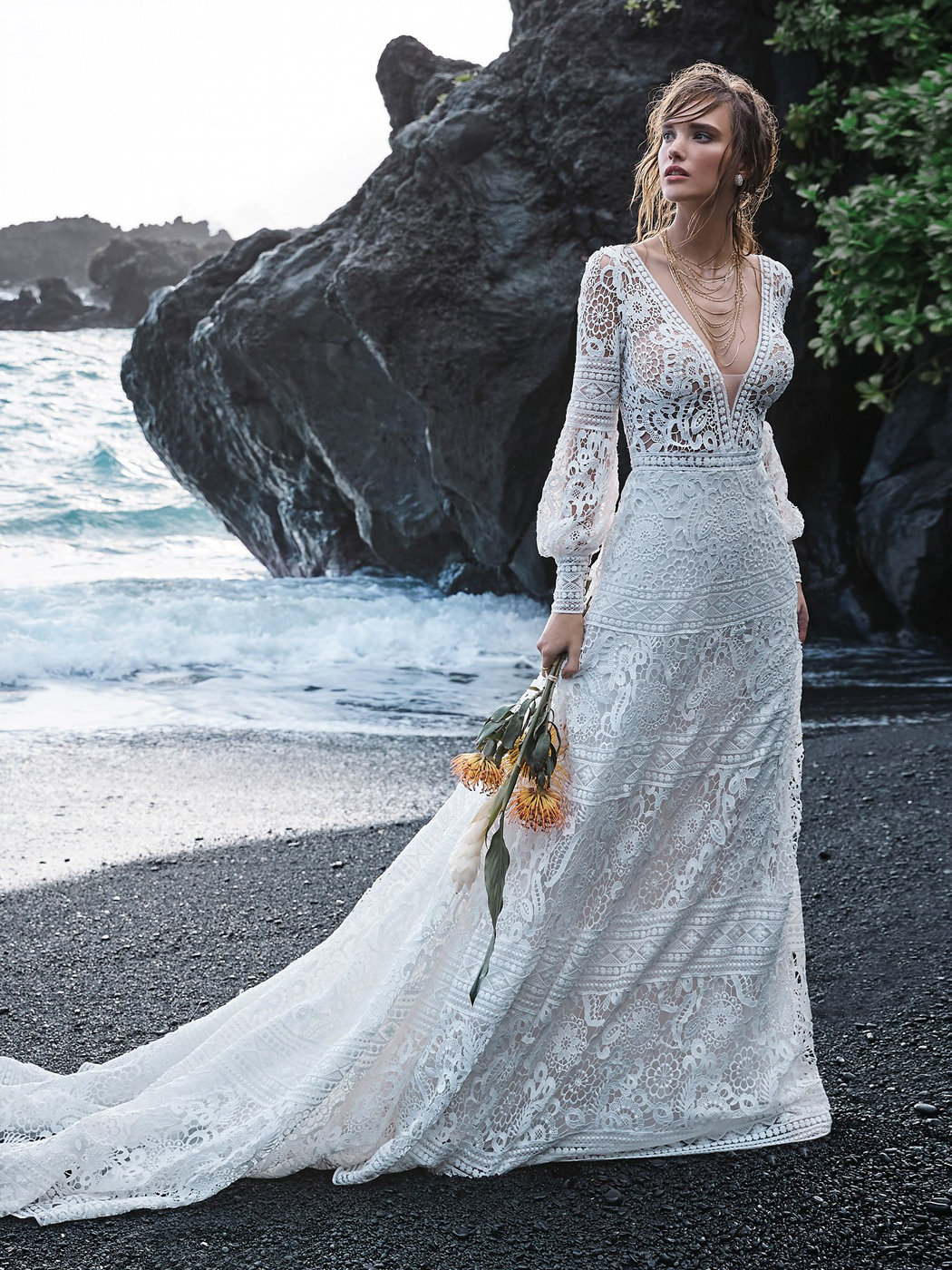
Lace and Appliqué Wedding Dresses
Many lace gowns can be bustled successfully, but supports must respect the placement and direction of the lace motifs. A point may need to sit beneath an appliqué, align with an existing pattern, or connect through a structurally sound layer.
Beadwork and appliqués add weight, meaning the gown may need reinforced or additional bustle points. An attachment should never pull directly on a delicate lace motif simply because the location is visually convenient.
Satin and Minimalist Wedding Dresses
Smooth satin and minimalist gowns reveal subtle changes in tension, symmetry, and surface shape. An American bustle can produce sculptural folds, while a ballroom or train-flip bustle may create a cleaner floor-length effect.
The chosen system should control the fabric’s shine, avoid puckering, and prevent hardware from showing through the skirt.
Chapel and Cathedral Trains
Longer trains contain more fabric and may place greater pressure on each bustle point. A chapel train might use a relatively straightforward system, while a cathedral train may require several reinforced points or a custom combination bustle.
Train length alone does not determine the final design. Fabric weight, lining, embellishment, skirt volume, and seam placement are equally important.
Not sure which bustle will complement your gown? Schedule a bridal alteration consultation with Bridal & Tuxedo Galleria for an in-person evaluation.
How an Alterations Specialist Chooses the Right Bustle
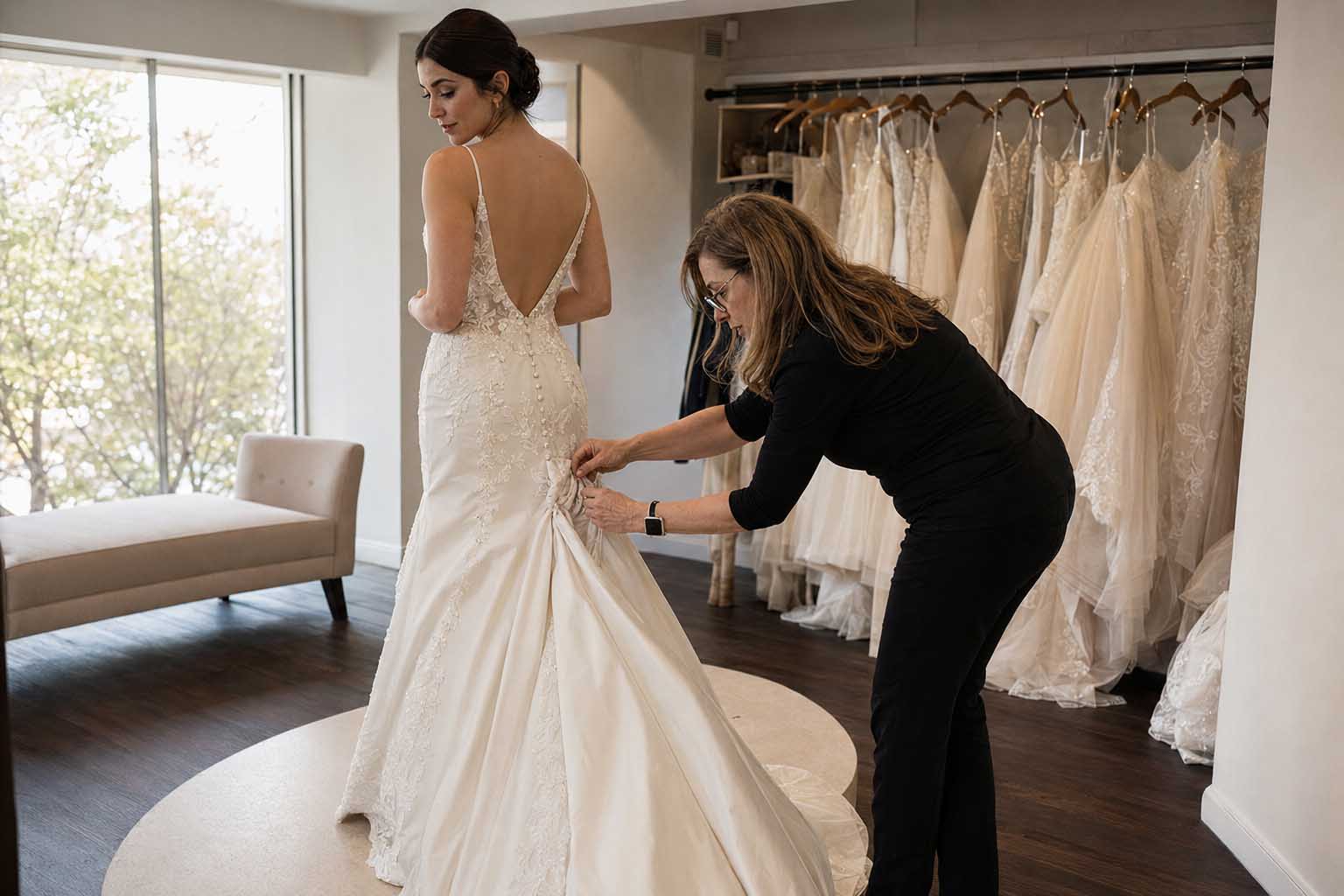
A professional bustle is designed directly on the bride while she is wearing the gown. Online photographs can provide inspiration, but they cannot reveal the dress’s internal construction, altered hem, actual weight, or movement.
An alterations specialist considers:
- Train length: Longer trains require more fabric to be lifted and supported.
- Fabric weight: Mikado, satin, lace, crepe, tulle, and organza respond differently to folding and gathering.
- Skirt and lining layers: Separate layers may need independent support.
- Gown silhouette: The bustle should complement the dress’s fitted line, flare, or volume.
- Seam placement: Structural seams may provide safer and more discreet support locations.
- Lace and embellishment: Points should protect beadwork, appliqués, and lace motifs.
- Weight distribution: The train’s weight should not be concentrated on one fragile area.
- Reception silhouette: Some brides want visible draping, while others prefer to minimize the train.
- Bride’s height and shoes: These factors affect floor clearance and the final hem.
- Movement: Walking, turning, sitting, and dancing may reveal problems that are not visible while standing.
- Fastener visibility: Loops, ribbons, hooks, and buttons should remain discreet but accessible.
- Ease of fastening: The wedding-day helper must be able to understand and repeat the process.
For more information about the complete fitting process, explore what to expect from wedding dress alterations.
Call Now

How Many Bustle Points Does a Wedding Dress Need?
There is no standard number of bustle points. A lightweight chapel train may require fewer points than a multilayered cathedral train or a gown covered in lace and beadwork.
More points are not automatically better. Every additional point makes the fastening process more complex and must connect to an area capable of carrying the necessary weight.
The objective is to create the smallest appropriate system that provides:
- Balanced weight distribution
- Sufficient floor clearance
- A level reception hem
- Reliable support during movement
- An attractive and intentional silhouette
The number of points should be decided only after the alterations specialist examines the gown on the bride.
What Happens During a Bustle Alteration?
A bustle is usually planned as part of the gown’s larger alterations process. The general steps include:
- Evaluating the gown on the bride: The specialist studies the train, lining, fabric, seams, layers, and embellishments.
- Reviewing the final hem and fit: Major changes to the dress can affect where the train begins and how it falls.
- Testing different arrangements: The specialist temporarily lifts the train in several positions.
- Selecting the reception silhouette: The bride views the proposed result from the back and sides.
- Installing the attachment points: Buttons, loops, hooks, or ties are placed as discreetly as possible.
- Testing movement and balance: The bride walks, turns, sits, and simulates dancing.
- Teaching the helper: The designated person practices fastening and releasing the bustle.
- Documenting the process: Photographs or a short video record the correct sequence.
The bustle should generally be finalized after major fit and hem decisions because those alterations can change the position of the train. Brides can also review this complete guide to preparing for wedding dress alterations.
When Should You Add a Bustle?
A bustle should be discussed early in the bridal alterations process, especially when the gown has a long, layered, or heavily embellished train. Enough time should be available to construct the system, test it in motion, and make any necessary adjustments.
Avoid assuming that a bustle can be added during the final pickup. The exact schedule will depend on the gown, the other alterations required, the wedding date, and the alterations provider’s current availability.
What Affects Bustle Alteration Cost?
Bustle alteration pricing depends on the amount and complexity of the work rather than the bustle name alone.
Important cost factors include:
- Number of bustle points
- Train length and weight
- Number of skirt and lining layers
- Lace, beadwork, or appliqués
- Internal gown construction
- Hand-finishing requirements
- Custom or combination designs
- Related hemming or fit alterations
- Existing damage or reconstruction needs
An in-person assessment is generally required for an accurate estimate.
Contact us for Bustle Alteration exact cost
Call Now
How to Prepare for Your Bustle Fitting
Treat the bustle fitting as both a movement test and a wedding-day training session.
- Bring the exact wedding shoes so the hem clearance can be evaluated.
- Wear the planned undergarments or shapewear when requested.
- Bring the person who will fasten the bustle on the wedding day.
- Walk, turn, sit, and simulate the dancing you expect.
- Ask the specialist to identify every button, ribbon, loop, and hook.
- Record a clear video of the complete fastening sequence.
- Ask whether ties or loops can be discreetly labeled.
- Let your helper practice fastening and releasing the bustle.
- Confirm what to do if an attachment point loosens.
- Discuss whether a detachable train or overskirt affects the process.
What Should You Do If the Bustle Breaks?
If a bustle point breaks during the reception, step away from the dance floor and avoid pulling the train. Carry it temporarily while a trusted person determines which point has failed.
A large safety pin may be used cautiously as a temporary measure, but only from inside a structurally sound layer. Do not pin through delicate lace, beadwork, or visible outer fabric. Avoid glue, cutting, or permanent do-it-yourself repairs.
If the train cannot be secured safely, continue carrying it rather than risking a tear. A small wedding-day emergency kit can include safety pins, appropriate thread, a needle for an experienced helper, and the bustle reference video.
Wedding Dress Bustle Alterations in San Diego
Bridal & Tuxedo Galleria provides professional, in-house wedding dress alteration services in San Diego, including American, French, ballroom, and custom bustle creation.
With more than 30 years of bridal and formalwear experience, the alterations team considers the gown’s fit, hem, train, movement, delicate fabrics, lace, and embellishments as part of one coordinated process. The boutique also welcomes gowns purchased from other bridal shops, subject to current appointment availability.
Bridal & Tuxedo Galleria is located at 4242 Camino Del Rio North, Suite 14, San Diego, CA 92108. Brides can get directions through Google Maps or contact the San Diego boutique with questions about their gowns.
Have your train evaluated in person. Book a bridal alteration appointment with Bridal & Tuxedo Galleria.
Frequently Asked Questions
What is the most common wedding dress bustle?
American and French bustles are among the most widely recognized wedding dress bustle types, but neither is automatically appropriate for every gown. The best option depends on the train’s weight, length, fabric, layers, embellishments, and desired reception silhouette.
Does every wedding dress with a train need a bustle?
No. A bustle is optional, but many brides choose one for easier reception movement. Alternatives can include a detachable train, wrist loop, or separate reception dress. The right choice depends on the gown and the bride’s plans.
Is a bustle included with a wedding dress?
A finished bustle is commonly created during alterations rather than included as a standard feature. Existing buttons or loops do not necessarily form a complete and properly fitted bustle.
What is the difference between an American and French bustle?
An American bustle lifts the train over the outside of the skirt, creating visible exterior folds. A French bustle secures the train underneath the skirt, generally using ribbons or ties to create cascading folds.
Can a lace wedding dress be bustled?
Yes, many lace gowns can be bustled. However, attachment points must protect the lace and preserve the alignment of its motifs. The alterations specialist must also consider the weight of beadwork, appliqués, linings, and additional layers.
Can a cathedral train be bustled?
Many cathedral trains can be bustled, but their length and weight may require several reinforced or custom support points. The final system should be tested while the bride walks, turns, sits, and dances.
Can I bustle my wedding dress myself?
Assistance is usually recommended because the attachment points are behind the bride or underneath the skirt. Assign one trusted person and have that helper practice during the final fitting.
Can a bustle be added to any wedding dress?
Most gowns with trains can be evaluated for some form of bustle, but not every bustle method works with every dress. Delicate fabrics, unusual hems, detachable components, or limited internal support may require a custom solution.
How much does a wedding dress bustle alteration cost?
Cost depends on the number of attachment points, fabric, train length, weight, layers, embellishments, construction, and finishing requirements. An in-person evaluation is necessary for accurate pricing.
Choosing the Right Bustle for Your Gown
The right bustle should support comfortable movement, help protect the train, and create a reception silhouette that looks intentional from every angle. Among the different wedding dress bustle types, the best solution is the one designed around the individual gown, not one selected from the silhouette name alone.
Bridal & Tuxedo Galleria offers professional bustle alterations and comprehensive bridal alterations in San Diego. Bring your gown for a personalized evaluation so its fabric, train, fit, construction, and wedding-day movement can all be considered together.
Schedule your bridal alteration appointment and create a secure, beautifully tailored transition from ceremony to reception.

Author : Kayla Garett
Author bio :
Kayla brings more than 10 years of hands-on experience in bridal fashion and boutique styling, specializing in personalized bridal consultations and luxury client experiences. As the manager of the San Diego location of Bridal and Tuxedo Galleria, she is known for her keen eye for detail, deep understanding of couture wedding dress design, and ability to guide brides toward a gown that reflects their unique vision and wedding aesthetic. Her approach blends fashion expertise with genuine care, ensuring every bride feels confident, understood, and unforgettable on her wedding day
Call Now
Your Personalized Wedding Dress Shopping Experience in San Diego With over 30 years of styling expertise, our dedicated team is passionate about helping you find the perfect wedding dress and tuxedo.


Leave a Reply